

1. Summary
Regenerative Thermal Oxidizers (RTOs) have become indispensable in the asphalt and building materials sector due to increasingly stringent global emissions regulations and the industry’s high-temperature processing nature. Asphalt plants, concrete batching facilities, and roofing material manufacturers emit volatile organic compounds (VOCs), polycyclic aromatic hydrocarbons (PAHs), and odorous sulfur compounds during production—especially during binder heating, mixing, and coating operations. RTO systems effectively destroy these pollutants at destruction efficiencies exceeding 98%, aligning with environmental mandates while enabling heat recovery for process reuse. This article explores how RTO technology meets regulatory demands across key markets like Australia, the EU, and North America, outlines technical specifications tailored for high-dust, high-moisture exhaust streams, and highlights Ever-Power’s custom-engineered solutions that balance compliance, durability, and cost-efficiency for global clients.
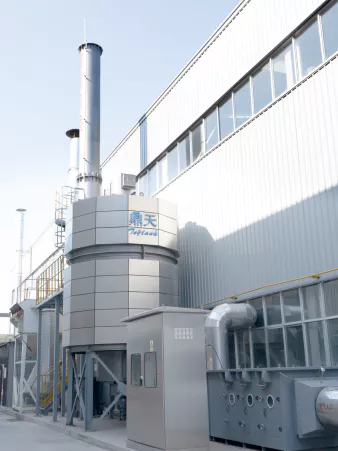
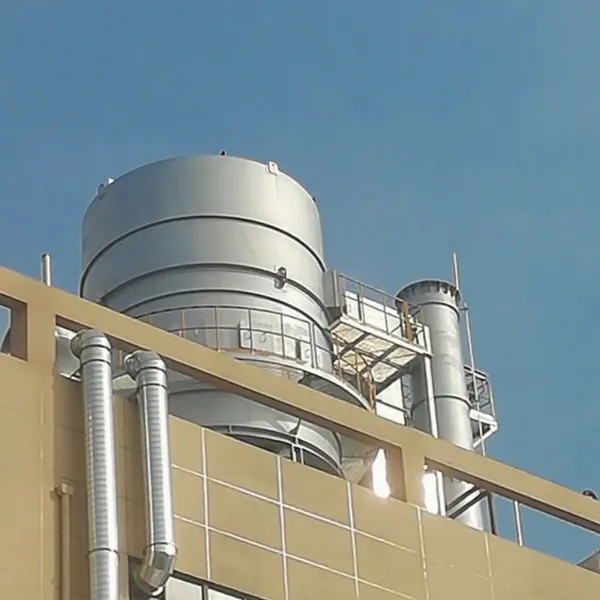


2. Global Regulatory Landscape for Asphalt & Building Materials Emissions
Australia enforces VOC and particulate matter limits under the National Environment Protection (Air Toxics) Measure and state-level frameworks like NSW EPA’s “Approved Methods for Sampling and Analysis of Air Pollutants.” Facilities must demonstrate >95% VOC destruction efficiency when using thermal oxidizers. In the European Union, the Industrial Emissions Directive (IED 2010/75/EU) and BREF documents for non-ferrous metals and mineral industries require Best Available Techniques (BAT), mandating RTO or equivalent control with ≥98% removal for organic pollutants. The U.S. EPA regulates asphalt plants under NESHAP Subpart DDD, requiring capture efficiency ≥90% and control devices achieving ≥95% reduction of total hydrocarbons. China’s GB 16297-1996 and newer local standards in provinces like Jiangsu impose strict benzene and PAH limits, often necessitating multi-stage RTO with pre-filtration. Meanwhile, Canada, Brazil, and South Africa are adopting similar thresholds, emphasizing real-time monitoring and annual performance testing.
3. How RTO Works in Asphalt & Building Materials Applications
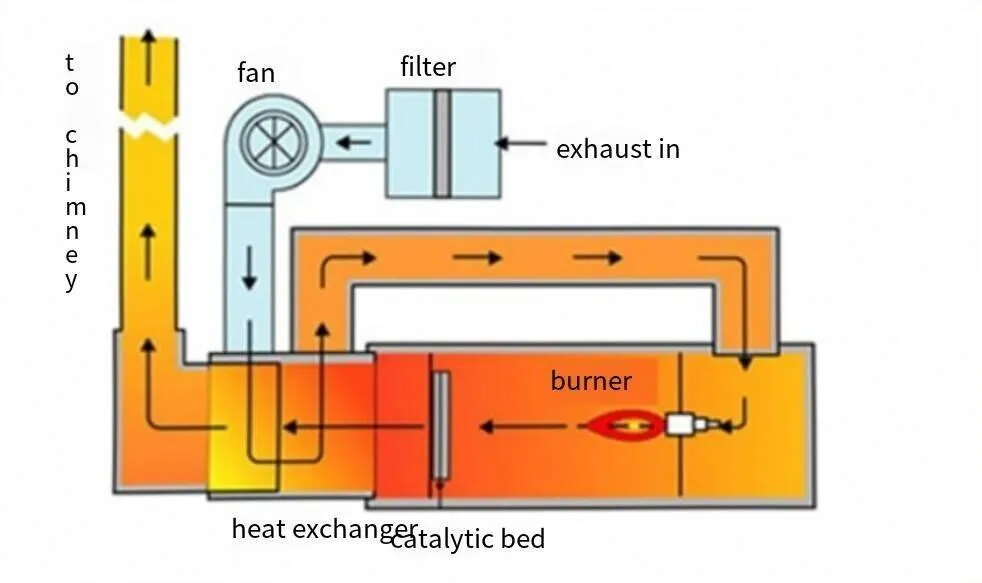
In asphalt mixing plants and modified bitumen production lines, exhaust gases contain sticky tars, fine dust, moisture from aggregates, and VOCs like naphthalene and toluene. Ever-Power’s RTO systems integrate a robust pre-treatment stage—including cyclones, bag filters, and condensers—to protect the ceramic media beds from fouling. The core three- or five-bed RTO then heats the cleaned gas to 760–850°C, oxidizing organics into CO₂ and H₂O. High thermal efficiency (≥95%) is achieved through alternating flow direction across structured ceramic saddles, minimizing natural gas consumption. For roofing felt or SBS-modified bitumen lines, where halogenated additives may be present, optional caustic scrubbers and corrosion-resistant alloys (e.g., Hastelloy C-276, duplex stainless steel 2205) ensure long-term reliability. Heat recovered from the clean stack gas can preheat combustion air or supply hot water for plant utilities—reducing net energy costs by up to 30%.

4. Ever Power RTO Technical Specifications
| Performance | 2-bed RTO | 3-bed RTO | Rotary Valve RTO | Notes |
|---|---|---|---|---|
| Technicality | First generation | Second generation | Third generation | |
| Number of chambers | 2 | 3 | 12 | Rotary valve operates continuously |
| Number of valves | 4 | 9 | / | |
| Reliability | Valve switching times per year: 350,000 | Valve switching times per year: 520,000 | / | |
| Piping pressure fluctuation | ±500pa | ±250pa | ±25pa | |
| Discharge compliance | Total purification efficiency: 95% | Total purification efficiency: 99% | Total purification efficiency: 99.5% | 99.5% |
| Maximum treating range | < 1g | < 5g | < 10g | 50mg/m³ discharge standard |
| Heat dissipation surface area | 100m² | 145m² | 95m² | |
| Energy saving | Thermal efficiency: 90% | Thermal efficiency: 95% | Thermal efficiency: 96% | 96% |
| Start-up heating time | 2.5h | 2.5h | 2h | Cold furnace start-up (Ethyl acetate) |
| Self-operation concentration | 2.5g/m³ | 2.2g/m³ | 1.8g/m³ | |
| Economy | Regenerative ceramic filling volume: 18m³ | Regenerative ceramic filling volume: 26m³ | Regenerative ceramic filling volume: 17m³ | 17m³ |
| Practicality | Occupation of land: L12×W7 | Occupation of land: L16×W7 | Occupation of land: L12×W7 | L12×W7 |
*Disclaimer: The other brand names mentioned above are provided solely for illustrative purposes. We do not offer original products or equipment bearing these brand names.
6. Market Trends & Future Outlook
The global push toward net-zero emissions is accelerating RTO adoption in construction materials. Australia’s National Reconstruction Fund now prioritizes low-emission infrastructure tech, offering grants for VOC abatement retrofits. Hybrid systems combining RTO with carbon capture (post-combustion CO₂ scrubbing) are emerging in EU pilot projects. Additionally, digital twins and AI-driven predictive maintenance—already embedded in Ever-Power’s latest control platforms—reduce downtime by forecasting ceramic bed clogging or valve wear. With stricter PAH monitoring expected under Australia’s 2026 Air Quality Strategy, modular, scalable RTO units with real-time emission reporting will become standard. Ever-Power is also developing bio-based binder compatibility protocols to support green asphalt innovation.
7. Custom Engineering & Local Support in Australia
Ever-Power specializes in bespoke RTO solutions for the unique challenges of Australian asphalt producers—from high-silica dust in outback quarries to coastal humidity in Queensland plants. Our engineering team conducts on-site exhaust profiling to size pre-filters, select corrosion-resistant alloys, and optimize heat recovery based on your utility needs. With service hubs in Sydney and Perth, we offer rapid spare parts delivery, operator training in English, and 24/7 remote diagnostics. Unlike generic suppliers, we deliver full turnkey projects including civil works coordination, commissioning, and compliance documentation aligned with NSW EPA or VIC DELWP requirements. Every system is factory-tested before shipment to ensure seamless startup.
8.Application Scenarios
8.1 Hot Mix Asphalt Concrete Plant
• Exhaust composition: Polycyclic aromatic hydrocarbons (PAHs), blue smoke, and particulate matter.
• Treatment method: Fiber bed filtration, thermal bypass RTO for waste heat recovery.
• Representative cases: Astec (USA), Lintec (Germany), several asphalt plants in Vietnam, Fiorasi (Brazil), Bin Quraya (Saudi Arabia), Arab Contractors (Egypt).
8.2 Modified Asphalt (SBS/Rubber Powder)
• Exhaust composition: Polymer-modified off-gas.
• Treatment method: High-temperature RTO; materials must resist acidic gases released by asphalt and rubber powder.
8.3 Waterproof Membrane/Coating Production
• Exhaust composition: Blowing/impregnation fumes.
• Treatment method: Dust removal RTO.
8.4 Asphalt Shingle/Felt Production
• Exhaust composition: VOCs from coating and covering processes.
• Treatment method: Three-bed RTO.
9. Customer Success Case
“Ever-Power’s RTO system significantly reduced VOC emissions at our Queensland hot-mix asphalt plant. The upgraded three-bed oxidizer operates extremely reliably, and our EPA audit passed without a single issue for the first time.”
— Operations Manager, Queensland Asphalt Plant (Australia)
“Our SBS-modified bitumen process releases chlorine, and our previous system suffered from constant corrosion problems. Ever-Power’s Hastelloy + ceramic solution completely resolved the issue and improved long-term reliability.”
— Technical Director, Polymer-Modified Bitumen Plant (Saudi Arabia)
“After upgrading to Ever-Power’s RTO, VOC emissions from our roofing felt production line dropped below the strictest North American standards. Energy consumption is now 28% lower compared to our previous system.”
— Plant Superintendent, Roofing Felt Factory (USA)
“NSW EPA compliance requirements are extremely demanding. Ever-Power not only delivered a compliant RTO but also supported us with formatted reports, DRE documentation, and CEMS data integration. The audit process was smoother than ever.”
— Compliance Manager, Building Materials Producer (NSW, Australia)
“Our asphalt shingle line produces heavy tar and blue smoke, and traditional systems failed due to clogging. Ever-Power’s pre-treatment + five-bed RTO combination eliminated the issue completely. The system has run for over 14 months without unplanned downtime.”
— Production Manager, Asphalt Shingle Manufacturing Plant (South Korea)
“Our hot-mix asphalt plant in Vietnam is close to a residential area and used to receive frequent complaints. After installing the RTO, blue smoke and PAH odors disappeared completely, and the local community officially thanked us.”
— General Manager, HMA Plant (Vietnam)
“Dust loading is extremely high at our Germany operation, yet the cyclone + bag filter + RTO setup from Ever-Power has been running impressively stable. It offers high energy efficiency and low maintenance—our best environmental investment in years.”
— Environmental Supervisor, Asphalt & Aggregates Group (Germany)
9. Related Solutions


11. FAQ
Q1. What is the typical RTO installation cost for an asphalt plant in Australia?
A1. For a mid-sized plant (20,000–50,000 Nm³/h), Ever-Power’s turnkey RTO system ranges from AUD 850,000 to AUD 1.6 million, including pre-filtration and heat recovery—roughly 35–40% below European OEM quotes.
Q2. How does an RTO handle high dust loads from aggregate drying in Australian conditions?
A2. We deploy cyclone + bag filter combos rated for 500 mg/Nm³ inlet dust, with automatic reverse-pulse cleaning and explosion venting per AS/NZS 60079.0.
Q3. Can your RTO work with polymer-modified bitumen that releases chlorine?
A3. Yes—our halogen-resistant option uses Hastelloy C-276 ducting, acid-resistant ceramics, and downstream NaOH scrubber to meet EU BREF chlorine limits.
Q4. Where can I find RTO suppliers with local service in Western Australia?
A4. Ever-Power maintains a Perth-based engineering team for rapid response across WA mining and construction zones, including Kalgoorlie and Karratha.
Q5. What’s the payback period for an RTO in a Queensland asphalt facility?
A5. With current gas prices and 95%+ thermal recovery, most clients see ROI in 2.5–3.5 years through fuel savings and avoided EPA penalties.
Q6. How often do ceramic beds need replacement in high-tar applications?
A6. Using our structured Al₂O₃ media and weekly air-blow cycles, lifespan exceeds 8 years—even with sticky bitumen vapors.
Q7. Which RTO brand offers the best compliance support for NSW EPA audits?
A7. Ever-Power provides full documentation packages: DRE test reports, CEMS integration logs, and maintenance records formatted for NSW EPA submission.
Q8. Can you retrofit an RTO onto an existing batch asphalt mixer?
A8. Absolutely—we’ve completed 12+ retrofits in Australia using compact three-bed designs with minimal footprint disruption.
Q9. What safety certifications do your RTOs hold for Australian hazardous areas?
A9. All electrical components comply with AS/NZS 60079, and systems include LEL monitoring, flame arrestors, and SIL2-rated emergency shutdown.
Q10. How quickly can you deliver an RTO to a site near Melbourne?
A10. Standard lead time is 14–18 weeks from PO, with expedited options (10 weeks) available for urgent EPA compliance deadlines.
*Disclaimer: The other brand names mentioned above are provided solely for illustrative purposes. We do not offer original products or equipment bearing these brand names.
Editor: PXY