

1. Redefining Air Quality in Australian Furniture Manufacturing
2. Compliance with Australian & International Standards
Navigating the environmental regulatory framework in Australia is complex, with enforcement varying by state but unified under the National Environment Protection Measures (NEPM). For wood furniture manufacturers, compliance is non-negotiable. Our RTO systems are engineered to meet and exceed the following specific regulations:
- National Pollutant Inventory (NPI): Facilities using more than 10 tonnes of specific solvents per year must report emissions. Styrene and toluene are key reporting substances. Our systems achieve >99% destruction efficiency (DRE), significantly lowering reportable loads and liability.
- EPA Victoria (Publication 1961): The “Guideline for assessing and minimizing air pollution” imposes strict limits on ground-level concentrations (GLCs) of odorous compounds like acrylates. Our RTOs effectively eliminate the characteristic “chemical smell” of furniture plants, preventing community complaints.
- NSW EPA (Protection of the Environment Operations Act): Requires “Group 6” plant standards for new installations, mandating strict VOC concentration limits in exhaust stacks. Our systems ensure output concentrations are well below the typical 20 mg/m³ threshold.
- International Benchmarks (EU IED & US EPA): We adhere to the European Industrial Emissions Directive (IED 2010/75/EU) best practices for surface treatment using organic solvents, ensuring our Australian clients are future-proofed against tightening global standards.
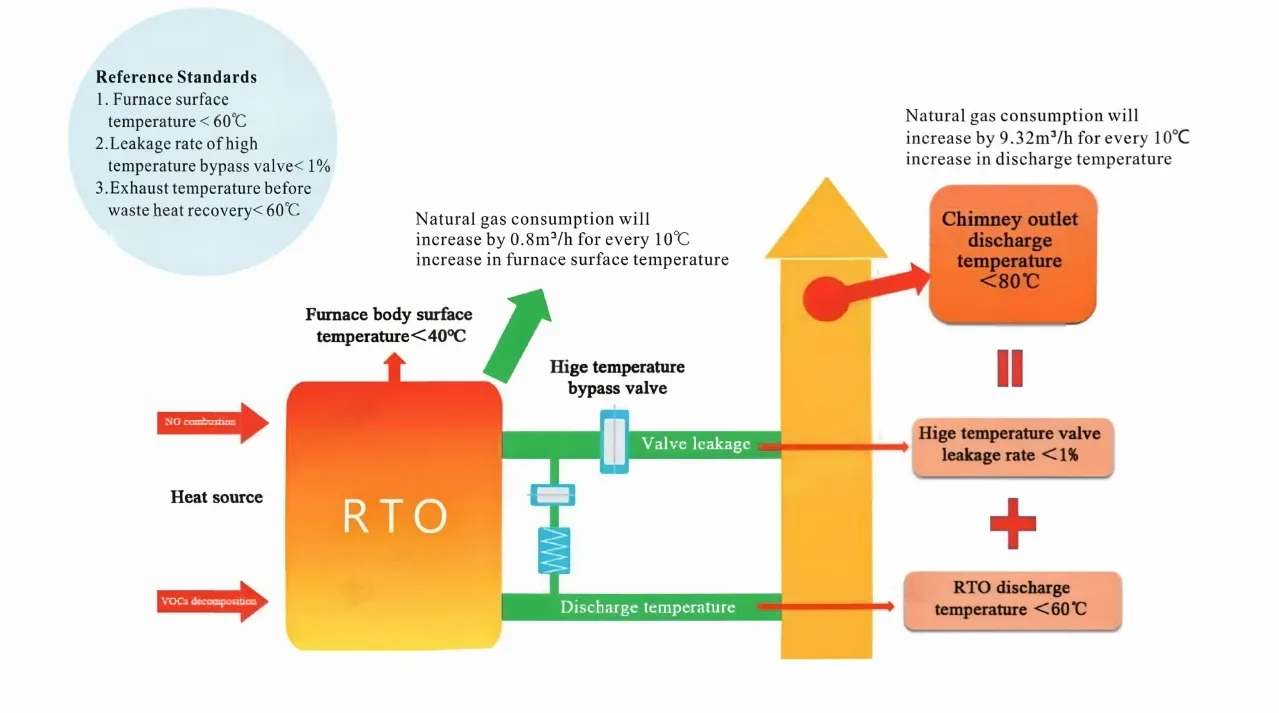

3. The Science of Abatement: Zeolite Concentration + RTO
The most efficient solution for the high-volume, low-concentration nature of wood coating exhaust is not direct combustion, but a two-stage process. Stage 1: Pre-treatment and Concentration. Exhaust from spray booths first passes through a multi-stage dry filtration system (utilizing fiberglass or cardboard maze filters) to strip out sticky paint mist and particulate matter. This is critical to prevent “blinding” the downstream equipment. The clean, VOC-laden air then passes through a Hydrophobic Zeolite Rotor. The zeolite material adsorbs the VOC molecules (like styrene and acetates) while allowing clean air to pass to the atmosphere. The rotor continuously turns into a small desorption zone where a low-volume, hot air stream strips the VOCs off, creating a highly concentrated gas stream.
Stage 2: Regenerative Thermal Oxidation. This concentrated stream, now reduced in volume by up to 20 times, is sent to the 3-Bed RTO. Inside the RTO, the gas is heated to approximately 850°C. The ceramic heat exchange media captures and releases heat with 95%+ thermal efficiency. Because the gas is now highly concentrated, it often contains enough energy to sustain combustion without additional natural gas (self-sustaining mode). The 3-bed design is crucial here; unlike 2-bed systems, the third bed acts as a purge chamber, ensuring that no unburnt VOCs escape during the valve switching cycle, guaranteeing a destruction efficiency of >99% and eliminating the risk of odour spikes during operation.
4. Target Application Scenarios
- Flatline Spraying: Automated lines for panels and doors using UV/PU paints.
- Manual Spray Booths: Complex joinery and bespoke furniture finishing.
- Drying Ovens: Flash-off zones and curing tunnels releasing high concentrations.
- Edge Banding & Gluing: Control of hot-melt adhesive fumes.
5. Technical Specifications:
| Performance | 2-bed RTO | 3-bed RTO | Rotary Valve RTO | Notes |
|---|---|---|---|---|
| Technicality | First generation | Second generation | Third generation | |
| Number of chambers | 2 | 3 | 12 | Rotary valve operates continuously |
| Number of valves | 4 | 9 | / | |
| Reliability | Valve switching times per year: 350,000 | Valve switching times per year: 520,000 | / | |
| Piping pressure fluctuation | ±500pa | ±250pa | ±25pa | |
| Discharge compliance | Total purification efficiency: 95% | Total purification efficiency: 99% | Total purification efficiency: 99.5% | 99.5% |
| Maximum treating range | < 1g | < 5g | < 10g | 50mg/m³ discharge standard |
| Heat dissipation surface area | 100m² | 145m² | 95m² | |
| Energy saving | Thermal efficiency: 90% | Thermal efficiency: 95% | Thermal efficiency: 96% | 96% |
| Start-up heating time | 2.5h | 2.5h | 2h | Cold furnace start-up (Ethyl acetate) |
| Self-operation concentration | 2.5g/m³ | 2.2g/m³ | 1.8g/m³ | |
| Economy | Regenerative ceramic filling volume: 18m³ | Regenerative ceramic filling volume: 26m³ | Regenerative ceramic filling volume: 17m³ | 17m³ |
| Practicality | Occupation of land: L12×W7 | Occupation of land: L16×W7 | Occupation of land: L12×W7 | L12×W7 |
6. Compatibility & Replacement Matrix
| Component / System | Common Industry Brands | EVER-POWER Solution Status | Integration Capability |
|---|---|---|---|
| Spray Booths | Spray Systems / GFS / Eisenmann | Compatible Retrofit | Seamless ducting integration with existing VFD fans. |
| Zeolite Rotors | Munters / Nichias | Direct Replacement | High-silica zeolite blocks compatible with standard cassettes. |
| Legacy RTOs | Dürr / Anguil | Upgrade / Replace | Cost-effective replacement of ceramic media or full unit with 35% lower CapEx. |
| Control Systems | Siemens / Allen-Bradley | Native Support | Full SCADA integration for centralized plant management. |
*Disclaimer: The other brand names mentioned above are provided solely for illustrative purposes. We do not offer original products or equipment bearing these brand names.
7. Industry Trends: The Shift to Water-Based & High-Solid Finishes
The Australian wood furniture industry is undergoing a significant transition. While solvent-based PU lacquers have long been the standard for high-gloss finishes, the trend is moving towards water-borne and UV-curable coatings to reduce VOCs at the source. However, even these “greener” alternatives release specific VOCs and odours during the curing process that still require abatement.
Furthermore, Energy Recovery is becoming the dominant theme. Manufacturers are no longer viewing RTOs merely as compliance costs but as energy assets. By integrating heat exchangers, the waste heat from the RTO (operating at 850°C) is harvested to warm the fresh air intake for drying ovens. This “closed-loop” thermal management can reduce the factory’s overall natural gas bill by up to 40%, making the ROI on the environmental equipment attractive to CFOs, not just EHS managers.
8. About Us | EVER-POWER Manufacturing: Precision & Customization
At EVER-POWER, we understand that no two furniture factories are identical. A bespoke joinery shop in Brisbane has different constraints than a flat-pack manufacturer in Adelaide. Our 30,000+ square meter manufacturing facility allows us to pre-fabricate and test modular RTO systems that fit your specific footprint.
Our Customization Services Include:
• Paint Mist Management: Custom-designed “rotary filter” pre-treatment for heavy overspray environments.
• Space Optimization: Vertical or rooftop-mounted designs to save valuable factory floor space.
• Material Upgrades: SS304/316L internal liners for protection against corrosive acetic acid formed during acetate combustion.
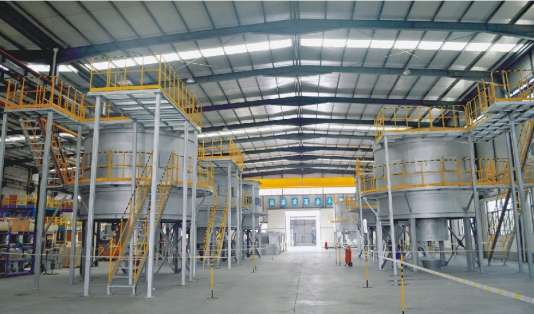
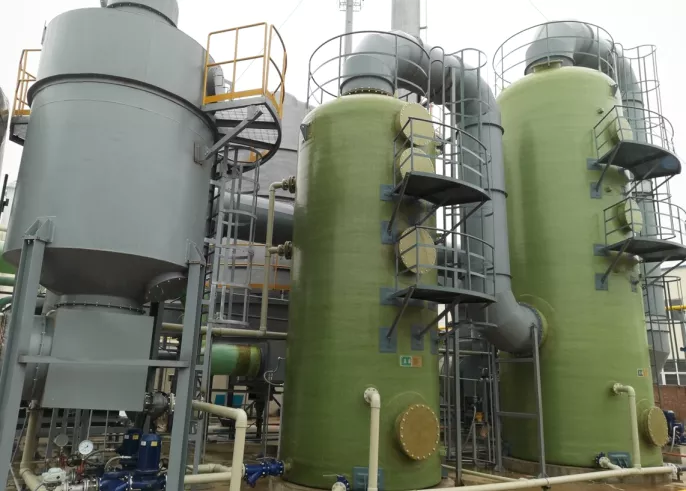
9. Customer Success Story: Efficiency Upgrade for a Victorian Cabinet Maker


11. FAQ
Q1. Why is a Zeolite Wheel necessary for my spray booth exhaust?
A1. Spray booth exhaust typically has high air volume but low VOC concentration. Feeding this directly into an RTO requires a massive unit that consumes huge amounts of gas. A Zeolite Wheel concentrates the VOCs, reducing the air volume by up to 20 times, allowing for a much smaller, cheaper, and self-sustaining RTO.
Q2. Can the system handle the sticky paint mist from PU lacquers?
A2. Yes, but pre-treatment is key. We install a multi-stage dry filtration bank (F7/F9 efficiency) before the wheel to capture sticky particles. For heavy-duty lines, we recommend an automatic roll filter or limestone dosing system to prevent the zeolite media from clogging.
Q3. What are the operating costs for an RTO in Australia given high gas prices?
A3. Our systems are designed for thermal efficiency. Once the VOC concentration exceeds roughly 1.5 g/Nm³ (achieved via the concentrator wheel), the system becomes “auto-thermal,” meaning it runs on the energy of the solvent combustion alone, requiring zero additional natural gas during normal operation.
Q4. Do you provide local service and spare parts in Australia?
A4. Absolutely. We have established partnerships with local Australian engineering firms for installation and maintenance. Critical spares like ceramic media, valves, and burner components are stocked or readily available to ensure minimal downtime for your production line.
Q5. Is the system compliant with Australian Standard AS 1375 (Gas fired appliances)?
A5. Yes, our burner trains and gas safety systems are engineered to meet AS 1375 and AS 3814 requirements. We work with local Type B gas fitters to ensure final certification and compliance with state-specific gas safety regulations.
Q6. Can the heat from the RTO be used to cure the timber coatings?
A6. Definitely. This is a standard feature of our design. We install a secondary heat exchanger to capture clean hot air from the RTO exhaust, which is then ducted back to your flash-off zones or drying ovens, replacing the need for separate burners.
Q7. How does the system handle the fluctuation between spraying and downtime?
A7. Our systems feature a Variable Frequency Drive (VFD) and a “Hot Bypass” mode. When spraying stops (e.g., lunch breaks or shift changes), the system ramps down to an idle state, maintaining temperature without full airflow, ensuring it’s ready to go immediately when production resumes.
Q8. Does the zeolite wheel work effectively in humid Australian summers?
A8. We use hydrophobic (water-repelling) zeolite. Unlike activated carbon, which absorbs moisture and loses efficiency in high humidity (common in QLD or Sydney summers), our zeolite preferentially adsorbs VOCs even in humid conditions, ensuring consistent performance year-round.
Q9. What happens to the styrene odour? Is it completely removed?
A9. Styrene has a very low odour threshold. Our 3-Bed RTO design ensures a residence time of >1 second at >800°C, which thermally destructs styrene molecules completely. The “puff” of odour common in 2-bed systems during valve switching is eliminated by the 3rd purge bed.
Q10. Can you help with the EPA Works Approval application?
A10. Yes, we provide comprehensive technical documentation, mass balance calculations, and expected emission data sheets that are required for your EPA Works Approval or license amendment applications in Victoria, NSW, or QLD.
Editor: PXY