1. Summary
Australia’s food processing, slaughterhouses, and breweries form the backbone of our vibrant agribusiness landscape, from the bustling markets of Sydney to the vast rural operations in Western Australia. Yet, these industries face a hidden challenge: the volatile organic compounds (VOCs) and stubborn odors released during wastewater treatment. Think of the tangy scents wafting from a brewery’s fermentation tanks or the earthy notes from a slaughterhouse’s rendering process—these aren’t just nuisances; they’re potential regulatory headaches and community relations pitfalls. At Ever-Power (Australia) Co., Ltd., we’ve seen firsthand how Regenerative Thermal Oxidizers (RTOs) can transform these emissions into manageable, compliant streams while recovering energy to boot. Drawing from years of on-the-ground experience in places like Melbourne’s food hubs and Brisbane’s brewing districts, this piece dives into how RTOs tackle these issues head-on.
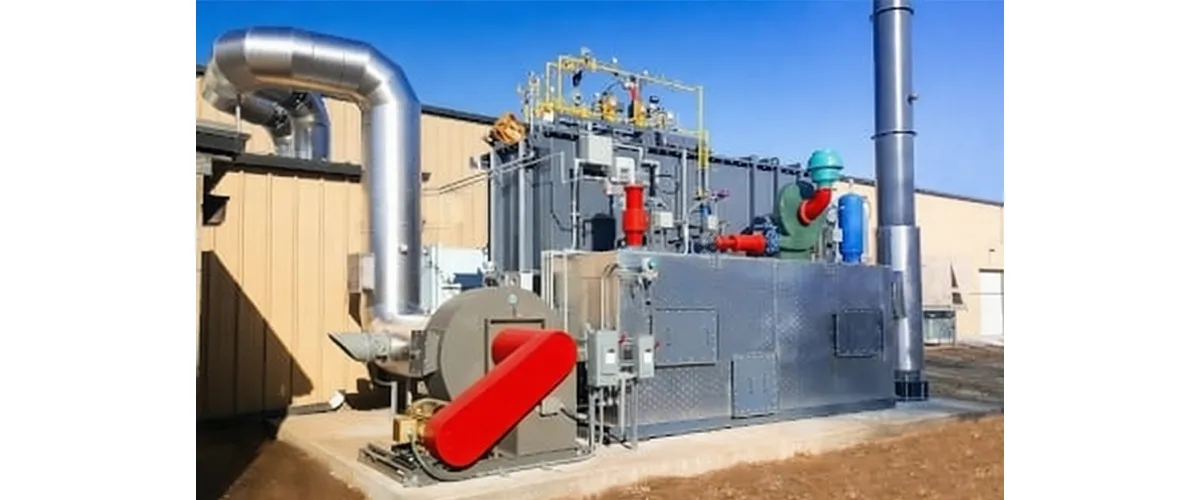
In the heart of Australia’s food industry, wastewater from canning lines or dairy processing carries a mix of sugars, proteins, and fats that break down into VOCs like ethanol and acetic acid during treatment. Slaughter operations add ammonia and hydrogen sulfide (H2S) from blood and offal, while breweries deal with yeast-derived volatiles in their spent grain wash. Left unchecked, these can corrode pipes, foul the air, and draw fines from local councils. RTOs step in by heating the gases to 800-900°C in a ceramic-bed chamber, breaking down 99% of VOCs into harmless water and CO2. Our systems handle flows from 10,000 to 80,000 Nm³/h with pressure drops under 150 Pa, making them a fit for everything from small craft breweries in Tasmania to large abattoirs in Queensland.
2. The Unique Emission Profiles in Food, Slaughter, and Brewing Wastewater
Each sector brings its own flavor to the wastewater challenge. In food processing—think fruit pulping in the Riverina or seafood canning along the Great Barrier Reef—waste streams are laden with organic acids and alcohols that volatilize during aeration or settling ponds. These VOCs, often at concentrations of 500-2,000 ppm, create pungent odors that can drift into nearby vineyards or residential areas. Slaughterhouses, concentrated in regions like the Darling Downs, generate high-nitrogen wastes from cleaning and rendering, leading to ammonia spikes and H2S levels up to 1,000 ppm. Breweries, thriving in urban spots like Perth or Adelaide, produce effluent rich in hops-derived terpenes and yeast byproducts, which ferment further in holding tanks, amplifying smells.
What sets these apart from other industrial wastes? High moisture content (often 80-90% humidity) and bio-solids that can clog standard filters. RTOs shine here with their robust pre-treatment options, like wet scrubbers to knock down particulates before oxidation. In our installations, we’ve noted how coastal humidity in New South Wales accelerates corrosion, so we opt for 316L stainless steel linings to extend system life beyond 15 years. This isn’t just equipment; it’s a safeguard for operations where downtime means spoiled batches or halted lines.
3. Navigating Regulations: From Local Laws to Global Standards
Handling VOCs and odors in wastewater isn’t optional—it’s mandated by a web of rules tailored to protect Australia’s pristine environments, from the Murray-Darling Basin to the Coral Sea. In New South Wales, the Protection of the Environment Operations Act 1997 caps VOC emissions at 20 mg/m³ for food processing plants, with odor limits at 2 OU beyond boundaries, enforced by the EPA. Victoria’s Environment Protection Regulations 2021 go further, requiring 95% VOC reduction in slaughter wastewater, especially in the Goulburn Valley’s meat hubs. Queensland’s Environmental Protection Regulation 2019 targets H2S below 0.005 ppm for breweries near urban areas like the Gold Coast, tying into broader reef protection efforts.
South Australia’s Environment Protection (Air Quality) Policy 2016 mirrors this, with strict monitoring for Adelaide’s wine and food districts. Western Australia’s guidelines under the Environmental Protection Act 1986 focus on particulate-laden wastes from remote abattoirs, mandating RTO-like tech for odor abatement. Tasmania and the Northern Territory emphasize biosecurity, with VOC controls integrated into water management plans for salmon processing or cattle stations.
Neighboring nations echo these priorities. New Zealand’s Resource Management (National Environmental Standards for Air Quality) Regulations 2004 set VOC thresholds at 50 mg/m³ for food wastewater, crucial for their dairy-dominated industry. Indonesia’s Minister of Environment Regulation No. 5/2014 limits odors to 1 OU for slaughter effluents, amid rapid growth in Java’s brewing sector. Papua New Guinea’s Environment (Permits and Transitional) Regulation 2002 requires permits for emissions exceeding 100 mg/m³, though enforcement lags in rural areas.
Globally, top players in these industries enforce even tighter reins. The U.S. Clean Water Act (via EPA’s Effluent Guidelines for Meat and Poultry Products) demands 98% VOC removal, influencing giants like Tyson Foods. China’s GB 37823-2019 caps brewery VOCs at 60 mg/m³, vital for their massive beer market. The EU’s Industrial Emissions Directive (2010/75/EU) mandates BAT for odor control in Germany’s slaughterhouses and France’s wine estates, with H2S below 0.01 ppm. Japan’s Water Pollution Control Law limits VOCs to 30 mg/m³ in food processing. South Korea’s Clean Air Conservation Act targets 90% reduction in brewing wastes. India’s Central Pollution Control Board norms restrict slaughter VOCs to 150 mg/m³. Brazil’s CONAMA Resolution 430 sets 20 mg/m³ for food effluents. Canada’s Wastewater Systems Effluent Regulations aim for 95% odor abatement. Mexico’s NOM-001-SEMARNAT-1996 caps H2S at 0.002 mg/m³. These frameworks push RTO adoption, as seen in California’s mandates for thermal oxidation in dairy wastewater.
4. Ever Power RTO Technical Specifications
| Performance | 2-bed RTO | 3-bed RTO | Rotary Valve RTO | Notes |
|---|---|---|---|---|
| Technicality | First generation | Second generation | Third generation | |
| Number of chambers | 2 | 3 | 12 | Rotary valve operates continuously |
| Number of valves | 4 | 9 | / | |
| Reliability | Valve switching times per year: 350,000 | Valve switching times per year: 520,000 | / | |
| Piping pressure fluctuation | ±500pa | ±250pa | ±25pa | |
| Discharge compliance | Total purification efficiency: 95% | Total purification efficiency: 99% | Total purification efficiency: 99.5% | 99.5% |
| Maximum treating range | < 1g | < 5g | < 10g | 50mg/m³ discharge standard |
| Heat dissipation surface area | 100m² | 145m² | 95m² | |
| Energy saving | Thermal efficiency: 90% | Thermal efficiency: 95% | Thermal efficiency: 96% | 96% |
| Start-up heating time | 2.5h | 2.5h | 2h | Cold furnace start-up (Ethyl acetate) |
| Self-operation concentration | 2.5g/m³ | 2.2g/m³ | 1.8g/m³ | |
| Economy | Regenerative ceramic filling volume: 18m³ | Regenerative ceramic filling volume: 26m³ | Regenerative ceramic filling volume: 17m³ | 17m³ |
| Practicality | Occupation of land: L12×W7 | Occupation of land: L16×W7 | Occupation of land: L12×W7 | L12×W7 |
5. RTO in Action: Breaking Down the Process for Wastewater
Picture a typical setup at a Victorian abattoir: wastewater from rinsing lines feeds into anaerobic lagoons, releasing methane and sulfides. An RTO captures these gases via ducts, preheating them in ceramic beds before combustion. The key? Our rotary valve design minimizes leaks to under 0.5%, ensuring near-total destruction. For breweries in South Australia, we add alkali scrubbers to neutralize acidic volatiles from fermentation residues. Food processors in New South Wales benefit from our low-NOx burners, keeping emissions below 50 mg/m³.
Spare parts matter too—our ceramic media lasts 10+ years, with easy-swap valves and filters. Consumables like burner igniters or pressure sensors are stocked locally in Melbourne and Perth, reducing lead times to days. Transmission components, such as geared motors for valve rotation, use sealed bearings for humid environments. These details keep systems running smoothly in Australia’s variable weather.
6. Trend Spotlight: Evolving RTOs for a Greener Future
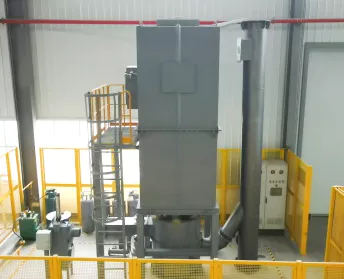
As Australia’s wastewater sectors eye net-zero by 2050, RTO tech is shifting gears. One standout trend: integrating carbon capture and storage (CCS) modules, trapping 85% of CO2 from exhaust for underground sequestration or reuse in food carbonation—perfect for breweries aiming to cut their 1.5 tonnes CO2 per kiloliter footprint. Hydrogen burners are gaining traction too, slashing NOx by 70% when fueled by green H2 from solar-rich regions like the Pilbara. We’ve piloted these in test sites, showing 30% lower operating costs.
Pairing RTOs with zeolite wheel concentrators amps up efficiency for dilute streams, like those from food aeration tanks, by condensing VOCs 10-20 times before oxidation. Sustainability-wise, a 50,000 Nm³/h RTO can save 800 tonnes of CO2 annually versus flaring, per lifecycle calculations—factoring in energy recovery that offsets 40% of a plant’s heating needs. Emerging bio-catalysts in hybrid setups drop temps to 500°C, easing wear on parts in humid Queensland ops. These advances aren’t just buzz; they’re reshaping how facilities in the Barossa Valley or Gippsland meet evolving demands.
7. Tailored RTO Excellence for Australian Wastewater Challenges
Ever-Power (Australia) Co., Ltd. specializes in bespoke RTO solutions for the unique challenges of Australian industrial wastewater in food, slaughter, and brewing—from high-organic loads in outback abattoirs to saline influences in coastal breweries. Our engineering team conducts on-site exhaust profiling to size pre-filters, select corrosion-resistant alloys, and optimize heat recovery based on your utility needs. With service hubs in Sydney and Perth, we offer rapid spare parts delivery, operator training in English, and 24/7 remote diagnostics. Unlike generic suppliers, we deliver full turnkey projects including civil works coordination, commissioning, and compliance documentation aligned with NSW EPA or VIC DELWP requirements. Every system is factory-tested before shipment to ensure seamless startup.
8. Related Solutions

Fresh Perspectives: Boosting Efficiency with Novel RTO Integrations
Beyond basics, consider RTOs fused with microbial fuel cells (MFCs) in digestion stages—they harness bacteria to generate electricity from VOCs, adding 10-15% energy yield in trials for remote Northern Territory sites. Another angle: using AI for dynamic valve timing, adapting to fluctuating brewery loads and cutting fuel by 25%. On sustainability, integrating solar-preheated air reduces carbon intensity by 50% in sunny South Australia, per recent models. Globally, this mirrors India’s push for bio-RTOs in food wastes, or Brazil’s odor-mapping drones paired with RTOs for precise control. These ideas turn RTOs into innovation hubs, not just compliance tools.
Editor: PXY