Descripción
What Is a Vapor Combustion Unit?
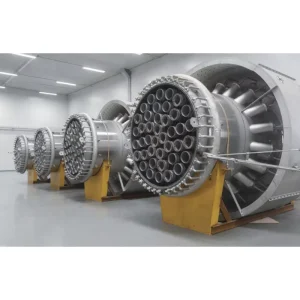
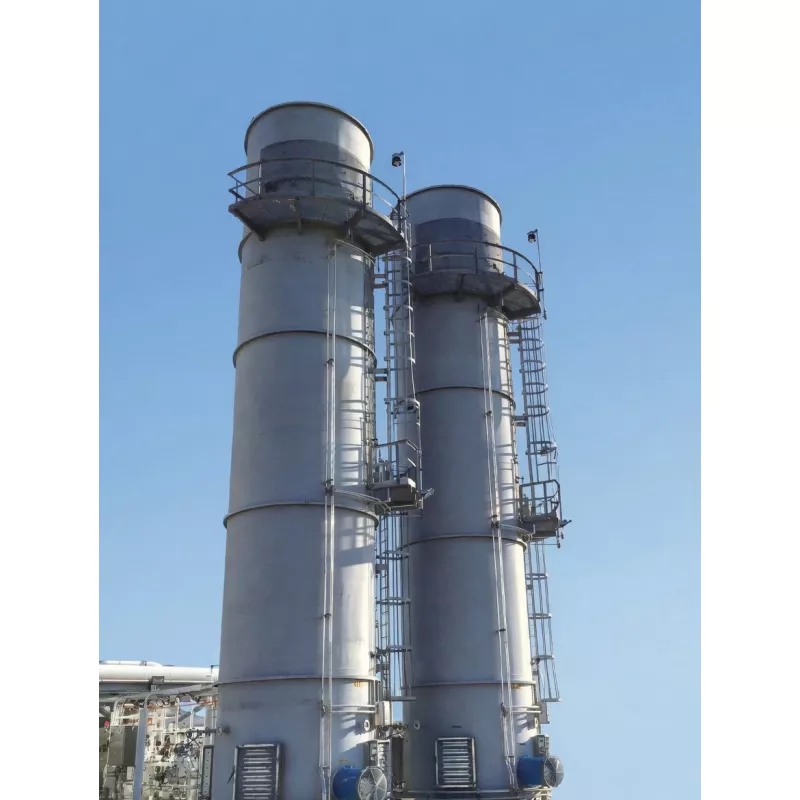
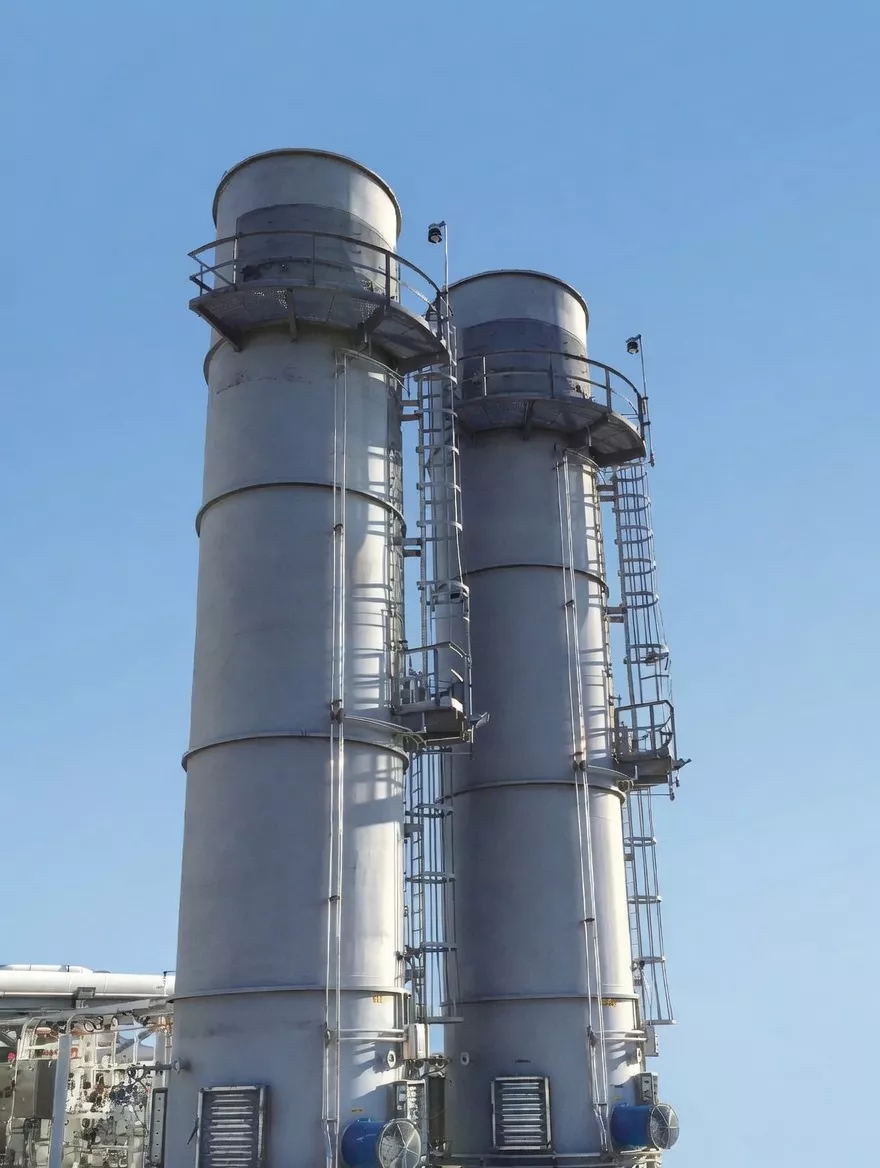
A vapour combustion unit (VCU) — sometimes called an enclosed combustion device or low-emission flare — is a purpose-built thermal oxidiser for VOCs and combustible waste gases. Unlike an open flare, the VCU encloses the flame inside a refractory-lined chamber, holds the gas at oxidation temperature for a controlled residence time, and delivers measurable, repeatable destruction efficiency under audit conditions.
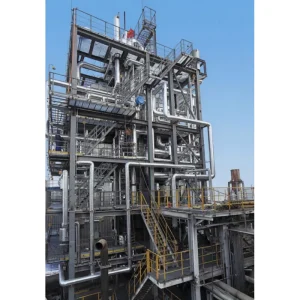
Ever-power VCUs are skid-mounted packages that integrate combustion, fuel-gas, vapour-handling, safety and control hardware into a single delivery. They are designed for marine and truck loading terminals, tank-farm vapour control, gasoline distribution depots, ethanol production and any application where regulators require demonstrable VOC destruction.
Core Components Explained
Combustion System
- Anti-flashback main burner
- Continuous-monitored pilot light
- Refractory-lined combustion chamber rated 1,400 °C
- Sized for 0.5–2.0 second residence time at 760–1,100 °C
Gas Supply Unit
- Combustion-air blower with VFD
- Fuel-gas piping with redundant block-and-bleed
- Modulating control dampers
- Inlet flow and pressure transmitters with continuous logging
Safety Control
- Detonation/flame arrestor (FM/UL listed)
- Dual UV/IR flame detection
- Ignition controller with NFPA 86 sequencing
- SIL 2 BMS as standard, SIL 3 available
Waste Gas Handling
- Vapour piping with isolation valving
- Booster blower (where vapour pressure is insufficient)
- Liquid knock-out and demister
- Sample point per AS 4323 for performance verification
Performance & Specifications
| Parameter | Specification |
|---|---|
| VOC destruction efficiency | 99.0% (typical) up to 99.99% (engineered) |
| Outlet hydrocarbon | <10 mg/L (terminal-grade) |
| Operating temperature | 760–1,100 °C in combustion chamber |
| Residence time | ≥0.75 s (per 40 CFR 60 Subpart QQQ) |
| Vapour flow capacity | 100 Nm³/h to 80,000 Nm³/h |
| VOC concentration range | 200 g/Nm³ down to lean cases (with assist fuel) |
| Fuel | Natural gas, propane, fuel gas, LPG |
| Control | Allen-Bradley / Siemens PLC, HMI, remote dial-in |
| Hazardous area | Zone 1 / Zone 2 IECEx / ATEX as required |
| Compliance | AS 3814, AS 1940, NFPA 86, IEC 61511, API 537 |
VCU vs Open Flare vs RTO — Which Fits Your Site?
| Criterion | VCU | Open Flare | RTO |
|---|---|---|---|
| Visible flame | No | Yes | No |
| DRE typical | 99–99.99% | 98–99% | 95–99% |
| Best VOC concentration | Medium-high (with assist fuel possible) | High | Low (<25% LEL) |
| Capital cost | Medium | Low (small) / High (large) | High |
| OPEX | Low (self-sustaining at design VOC) | Medium (assist gas/steam) | Medium-low |
| Audit-ready | Yes — sample port + CEMS option | Indirect | Yes |
Where Australian Operators Deploy VCUs
- Marine loading terminals: petrol, jet fuel, diesel and crude vapour control during ship and barge loading.
- Truck and rail-car loading racks: displaced vapours during top- and bottom-loading captured and oxidised.
- Tank farms & storage terminals: floating-roof emissions, breathing losses, and degassing during tank cleaning.
- Refineries: small to mid-rate continuous vents that should not go to a main flare.
- Petrochemical & specialty chemical: reactor vents, distillation off-gas, batch process emissions.
- Ethanol & bioenergy: fermenter and storage vapour streams under increasingly tight licence conditions.
Why Specifiers Choose Ever-power VCUs
Our combustion engineering history is detailed on the company page. For VCU procurement specifically, here is what changes the conversation:
Audit-Ready Documentation
Each unit ships with a performance-test report aligned with EPA Method 25A / AS 4323, IEC 61511 functional safety dossier, and a complete operations & maintenance manual — the package your environmental manager actually needs.
Engineered for the Worst Day
Anti-flashback main burner, dual flame detection, and SIL 2 BMS as standard. We do not de-rate safety to meet a price target.
Skid Modular Delivery
Pre-piped, pre-wired and FAT-tested in our shop. Site installation reduces from months to weeks, with predictable schedule and cost.
Full Lifecycle Service
Refractory programme, burner refurbishment, instrumentation re-calibration and 24/7 phone support — over the full 20-year asset life.
Australian Project Highlights
Port Botany Marine Loading VCU
Location: Sydney, NSW | Year: 2024
A 24,000 Nm³/h petrol vapour stream from product loading was previously sent to an ageing candlestick flare. Ever-power supplied a twin-chamber VCU package with 99.6% measured destruction efficiency under variable loading rates.
Outcome: EPA NSW emission licence variation approved; VOC fugitive losses reduced by an estimated 320 tonnes/year.
SA Tank Farm Degassing VCU
Location: Port Adelaide, SA | Year: 2025
A relocatable skid VCU was supplied for tank cleaning campaigns across multiple storage terminals. Mobile design with road-transport-compliant skid base and quick-connect vapour piping enabled redeployment within 48 hours per site.
Outcome: Audited 99.4% DRE; six campaigns completed in twelve months with zero unplanned downtime.
Frequently Asked Questions
Get an EPA-Ready VCU Specification
Send us your vapour flow profile, composition, site classification and licence conditions. You will receive a sized VCU configuration, performance-test methodology and indicative pricing within five working days.