

1. Summary
In the heart of Australia’s manufacturing sector, the conveyor belt and sealing strip vulcanization industry plays a pivotal role in mining, automotive, and construction. These processes involve heating rubber compounds with sulfur to create durable, flexible products. However, they also generate volatile organic compounds (VOCs), sulfur compounds like hydrogen sulfide (H2S), and odorous emissions that pose environmental and health risks. At Ever-Power (Australia) Co., Ltd., we specialize in Regenerative Thermal Oxidizers (RTOs) tailored to these challenges, ensuring compliance while boosting operational efficiency.
Our classic rotary valve RTO stands out with a thermal efficiency of up to 95%, VOC destruction rates exceeding 99%, and customizable airflow handling from 5,000 to 100,000 m³/h. This blog explores how RTOs address the unique demands of vulcanization in Australia, drawing on our expertise in local and global markets. For more on our story, visit our about us page. If you’re ready to discuss your needs, head to our contact section.
2. Understanding Vulcanization Processes and Emission Challenges in Conveyor Belts and Sealing Strips
Vulcanization transforms raw rubber into tough, elastic materials essential for conveyor belts used in Australia’s vast mining operations—from iron ore in Western Australia to coal in Queensland—and sealing strips in automotive assembly lines in Victoria. The process heats rubber with sulfur or peroxides at 140-180°C, often in continuous extruders or molds, releasing VOCs like styrene, butadiene, and amines, alongside H2S and mercaptans from sulfur additives.
These emissions are sticky and corrosive, leading to equipment fouling if not managed properly. In humid coastal areas like Sydney or Brisbane, high moisture content exacerbates condensation issues, potentially clogging systems. Dust from fillers like carbon black adds another layer of complexity, risking particulate buildup. Without effective control, factories face fines, shutdowns, or community complaints—especially in densely populated states like New South Wales.
RTOs excel here by oxidizing pollutants at high temperatures (around 850°C) with minimal fuel use, thanks to ceramic heat recovery beds. Unlike basic scrubbers, our systems handle variable loads, ensuring steady operation during peak production shifts. For more industry insights, check our blog archive.
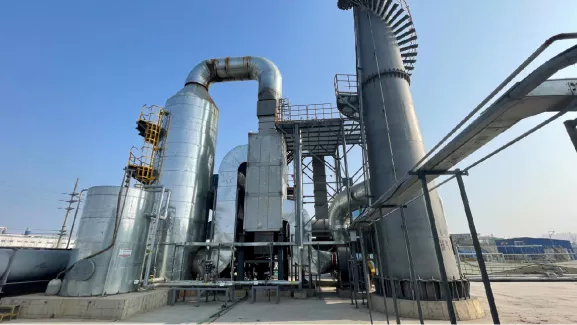

3. Ever Power RTO Technical Specifications
| Performance | 2-bed RTO | 3-bed RTO | Rotary Valve RTO | Notes |
|---|---|---|---|---|
| Technicality | First generation | Second generation | Third generation | |
| Number of chambers | 2 | 3 | 12 | Rotary valve operates continuously |
| Number of valves | 4 | 9 | / | |
| Reliability | Valve switching times per year: 350,000 | Valve switching times per year: 520,000 | / | |
| Piping pressure fluctuation | ±500pa | ±250pa | ±25pa | |
| Discharge compliance | Total purification efficiency: 95% | Total purification efficiency: 99% | Total purification efficiency: 99.5% | 99.5% |
| Maximum treating range | < 1g | < 5g | < 10g | 50mg/m³ discharge standard |
| Heat dissipation surface area | 100m² | 145m² | 95m² | |
| Energy saving | Thermal efficiency: 90% | Thermal efficiency: 95% | Thermal efficiency: 96% | 96% |
| Start-up heating time | 2.5h | 2.5h | 2h | Cold furnace start-up (Ethyl acetate) |
| Self-operation concentration | 2.5g/m³ | 2.2g/m³ | 1.8g/m³ | |
| Economy | Regenerative ceramic filling volume: 18m³ | Regenerative ceramic filling volume: 26m³ | Regenerative ceramic filling volume: 17m³ | 17m³ |
| Practicality | Occupation of land: L12×W7 | Occupation of land: L16×W7 | Occupation of land: L12×W7 | L12×W7 |
4. Global and Local Regulations Driving RTO Adoption in the Vulcanization Sector
Compliance is non-negotiable in the vulcanization industry, where emissions can impact air quality and worker safety. In Australia, the Protection of the Environment Operations (POEO) Act 1997 and Environment Protection and Biodiversity Conservation (EPBC) Act 1999 set strict limits on VOCs and odorous compounds. For instance, New South Wales EPA guidelines cap non-methane VOCs at 20 mg/m³ for industrial stacks, with even tighter rules in sensitive areas like the Sydney Basin. Victoria’s Department of Environment, Land, Water and Planning (DELWP) enforces similar standards under the Environment Protection Act 2017, emphasizing best practice technology like RTOs for sulfur-rich processes.
Neighboring countries echo these priorities. In New Zealand, the Resource Management Act 1991 requires resource consents for emissions, often mandating RTO-level destruction efficiency (>98%) for rubber processing plants in Auckland or Christchurch. Indonesia’s Ministry of Environment Regulation No. 5/2018 limits VOCs to 150 mg/m³, pushing Java’s manufacturing hubs toward advanced oxidizers amid growing air quality concerns. Papua New Guinea’s Environment Act 2000, while less prescriptive, aligns with Australian standards for mining-related vulcanization, focusing on H2S control in Port Moresby facilities.
Globally, top vulcanization markets enforce rigorous laws. In China—the world’s largest rubber producer—GB 27632-2011 caps VOC emissions at 10 mg/m³ for tire and belt manufacturing in provinces like Shandong and Guangdong. The United States’ EPA under the Clean Air Act’s NESHAP for Rubber Tire Manufacturing (Subpart XXXX) requires 95% VOC reduction in states like Ohio and South Carolina. Germany’s TA Luft sets benzene limits at 1 mg/m³, favoring RTOs in Bavaria’s automotive clusters. Japan’s Air Pollution Control Act mandates 98% efficiency for odorous emissions in Tokyo’s industrial zones. South Korea’s Clean Air Conservation Act limits VOCs to 50 ppm in Gyeonggi Province. Brazil’s CONAMA Resolution 430/2011 enforces 80 mg/m³ VOC caps in São Paulo’s manufacturing belt. India’s Central Pollution Control Board under the Air Act 1981 requires 95% control in Gujarat’s rubber hubs. France’s IED Directive (2010/75/EU) demands BAT like RTOs in Rhône-Alpes. The UK’s Environment Act 1995 aligns with EU standards, capping VOCs at 50 mg/m³ in Manchester’s factories. These regulations underscore RTOs as essential for global compliance, with Ever-Power systems designed to meet or exceed them.
5. Emerging Trends in RTO Technology for Vulcanization: Towards Sustainability and Innovation
The vulcanization industry is evolving rapidly, driven by sustainability goals and technological advancements. One key trend is integrating RTOs with carbon capture units (CCU) to trap CO2 from exhaust streams, reducing the carbon footprint by up to 30% in high-volume Australian plants. For instance, in Perth’s mining supply chains, this could offset emissions equivalent to 500 tons of CO2 annually per facility.
Another innovation is pairing RTOs with zeolite wheel concentrators for low-concentration VOC streams, concentrating pollutants 10-20 times before oxidation, slashing energy use by 40%. In humid Queensland, this prevents moisture-related inefficiencies. Hydrogen-fueled burners are gaining traction as a zero-emission alternative to natural gas, aligning with Australia’s Hydrogen Strategy 2019, potentially cutting operational costs by 15% in long-term scenarios.
Sustainable analysis shows RTOs reduce overall carbon footprint: a standard unit processing 20,000 m³/h of vulcanization exhaust avoids 1,200 tons of VOC releases yearly, equivalent to removing 250 cars from roads. By recovering 95% of heat, they also lower Scope 1 emissions by recycling energy for process heating. These trends position RTOs not just as compliance tools but as strategic assets for net-zero ambitions in global markets like China and Germany.
6. Customized RTO Solutions for Australian Vulcanization Challenges
Ever-Power specializes in bespoke RTO solutions for the unique challenges of Australian asphalt producers—from high-silica dust in outback quarries to coastal humidity in Queensland plants. Our engineering team conducts on-site exhaust profiling to size pre-filters, select corrosion-resistant alloys, and optimize heat recovery based on your utility needs. With service hubs in Sydney and Perth, we offer rapid spare parts delivery, operator training in English, and 24/7 remote diagnostics. Unlike generic suppliers, we deliver full turnkey projects including civil works coordination, commissioning, and compliance documentation aligned with NSW EPA or VIC DELWP requirements. Every system is factory-tested before shipment to ensure seamless startup.
In vulcanization, customization is key. Our RTOs feature extended valve lifespans (over 1 million cycles), anti-corrosive 316L stainless steel for H2S resistance, and automated bypass for safety during sulfur spikes. Delivery cycles average 12-16 weeks, with low pressure drops (<200 Pa) minimizing fan energy. Ceramic beds withstand 1,100°C peaks, ideal for variable loads in conveyor belt curing. We’ve served clients across neighboring Indonesia and New Zealand, plus top markets like the US and Brazil, adapting to local dust profiles and regulations.


7. Customer Success Stories
“Ever-Power’s RTO system has revolutionized our tire vulcanization process in Sydney. The VOC destruction efficiency is impressive, and the local support from their team made installation seamless. We’re now meeting New South Wales’ strict air quality standards and saving on energy costs. Highly recommend them!”
— James M., Production Manager
“As an industrial hub in Jakarta, we were struggling with VOC emissions from our conveyor belt vulcanization. After installing Ever-Power’s rotary valve RTO, we saw an immediate reduction in emissions and energy consumption. Their tailored solutions for local air quality compliance have been a game-changer for us.”
— Ahmad S., Environmental Compliance Officer
“Ever-Power’s RTO system has been crucial for our São Paulo plant’s rubber conveyor belt production. The heat recovery features saved us significant costs, and the integration of carbon capture is a big plus for our sustainability goals. Their team helped us meet CONAMA 430 compliance effortlessly!”
— Pedro G., Sustainability Coordinator
“In our Bavarian automotive plant, we needed a solution for sulfur emissions in sealing strip vulcanization. Ever-Power’s RTO, combined with hydrogen-fueled burners, has exceeded our expectations. We’re reducing emissions by 50%, which helps us stay on track with Germany’s strict TA Luft standards. Fantastic investment!”
— Markus L., Environmental Manager
“Working with Ever-Power on our Ohio tire manufacturing plant has been a smooth experience. Their RTO solutions are top-notch, offering high VOC destruction efficiency and significant energy savings. Their systems helped us meet EPA guidelines and improve operational performance. We’re looking forward to a long-term partnership!”
— Richard T., Operations Manager
8. Related Solutions

9. FAQ
Q1. How much does a custom RTO system cost for a medium-sized conveyor belt vulcanization plant in Sydney, Australia?
A1. Costs typically range from AUD 500,000 to 1.5 million, depending on airflow capacity and add-ons like zeolite concentrators. Contact us for a free quote tailored to your Sydney facility’s VOC load.
Q2. What is the best RTO supplier for sealing strip vulcanization emissions control in Queensland’s humid coastal factories?
A2. Ever-Power (Australia) Co., Ltd. stands out with moisture-resistant designs and local service in Brisbane, ensuring 99% VOC destruction without condensation issues.
Q3. Where can I find reliable RTO installation services for conveyor belt manufacturing in Western Australia’s mining regions?
A3. Our Perth hub provides turnkey installations, including on-site profiling for high-dust environments, with compliance to WA’s Environmental Protection Act.
Q4. Which RTO model offers the lowest operating price for H2S control in New Zealand’s rubber sealing strip vulcanization plants?
A4. Our rotary valve RTO minimizes fuel costs at under AUD 0.05 per m³ treated, ideal for Auckland factories meeting Resource Management Act standards.
Q5. How to get a price quote for an RTO system handling VOCs from conveyor belt sulfurization in Indonesia’s industrial zones?
A5. Submit your specs via our contact form; quotes start from USD 300,000, compliant with Indonesia’s Ministry of Environment VOC limits for Java-based operations.
Q6. What are the maintenance costs for RTOs in top vulcanization countries like China’s Shandong Province conveyor belt factories?
A6. Annual maintenance averages 2-5% of initial cost, with our systems featuring long-life valves to keep expenses low under GB 27632-2011 regulations.
Q7. When should I upgrade to a hydrogen-fueled RTO for sustainable sealing strip vulcanization in Germany’s Bavaria automotive hubs?
A7. Upgrade now for net-zero goals; our models integrate hydrogen burners, reducing emissions by 50% while meeting TA Luft standards—get a feasibility quote today.
Q8. Which features make RTOs ideal for VOC reduction in Brazil’s São Paulo rubber conveyor belt manufacturing, and what’s the supplier price range?
A8. Features include 95% heat recovery and carbon capture integration; prices from BRL 1-3 million, ensuring CONAMA 430 compliance with minimal downtime.
Q9. How does an RTO with zeolite concentrator lower costs for sealing strip vulcanization emissions in India’s Gujarat industrial belts?
A9. It concentrates VOCs for efficient burning, cutting energy bills by 40%; contact for a customized quote aligned with Central Pollution Control Board limits.
Q10. What is the turnaround time for delivering an RTO to a conveyor belt vulcanization plant in South Korea’s Gyeonggi Province, including installation costs?
A10. Delivery in 12-16 weeks, with installation costs around KRW 50-100 million; our systems meet Clean Air Conservation Act for rapid, compliant setup.
Q11. Where to source affordable RTO spare parts for rubber sealing strip factories in the UK’s Manchester area, and what’s the average quote?
A11. Ever-Power supplies parts with next-day delivery; quotes from GBP 5,000-20,000 per set, fully compliant with Environment Act 1995 odorous emission rules.
Q12. How can RTOs with carbon capture reduce carbon footprint in France’s Rhône-Alpes vulcanization plants, and what’s the initial investment price?
A12. Capture up to 30% CO2, aligning with IED Directive; investment starts at EUR 400,000—request a detailed quote for your facility’s sustainable upgrade.
Editor: PXY