

1. Summary
Soil vapor extraction (SVE) is a cornerstone technique in environmental remediation, particularly in Australia where contaminated sites from mining, agriculture, and urban development pose ongoing challenges. At Ever-Power (Australia) Co., Ltd., we specialize in regenerative thermal oxidizers (RTOs) tailored for SVE applications. These systems efficiently destroy volatile organic compounds (VOCs) extracted from soil, ensuring compliance with stringent environmental standards while minimizing operational costs. In this article, we’ll explore how RTOs integrate with SVE processes, key regulatory considerations across Australia and beyond, emerging trends, and practical insights for site managers.
Whether you’re dealing with benzene-contaminated groundwater in Perth or trichloroethylene plumes in Sydney’s industrial zones, RTOs provide a reliable, high-efficiency solution for VOC abatement. Let’s dive into the details.
2. Understanding Soil Vapor Extraction and the Role of RTOs
Soil vapor extraction, often abbreviated as SVE, involves pulling contaminated vapors from the subsurface using vacuum wells. This method is highly effective for removing volatile contaminants like petroleum hydrocarbons, chlorinated solvents, and other VOCs from unsaturated soils. In Australia, SVE is commonly applied at sites regulated under the National Environment Protection Measure (NEPM) for contaminated land management.
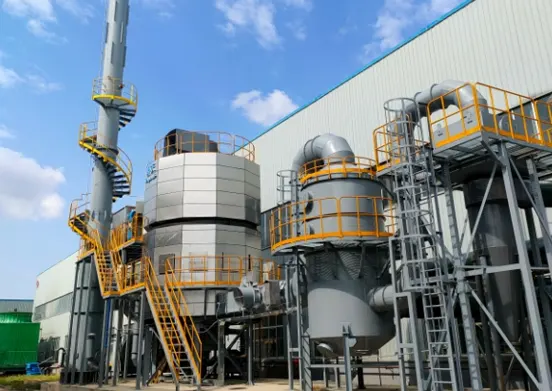
However, the extracted vapors—typically laden with high concentrations of VOCs—cannot be released directly into the atmosphere. That’s where regenerative thermal oxidizers come in. An RTO uses high temperatures (around 760-820°C) to oxidize VOCs into harmless water vapor and carbon dioxide, achieving destruction efficiencies of over 99%. Our classic rotary valve RTO is designed for SVE workflows, handling variable flow rates from 5,000 to 50,000 m³/h with thermal recovery rates up to 97%, which significantly cuts fuel use.
What sets RTOs apart in SVE is their ability to manage fluctuating contaminant loads. During early extraction phases, VOC concentrations can spike to 10,000 ppm or more, requiring robust safety features like explosion-proof valves and LEL monitoring. As remediation progresses, concentrations drop, and the RTO’s regenerative beds ensure energy efficiency even at low loads. For Australian operators, this means lower electricity bills in remote sites where grid power is unreliable.

3. Global and Local Regulations Shaping RTO Use in SVE
Environmental regulations play a pivotal role in dictating how SVE projects incorporate VOC treatment technologies like RTOs. In Australia, the primary framework is the Environment Protection Act 2017 (in Victoria) and similar state-based laws, enforced by bodies such as the New South Wales Environment Protection Authority (NSW EPA) and the Western Australia Department of Water and Environmental Regulation (DWER). These require VOC emissions from remediation activities to stay below 10 mg/m³ for total hydrocarbons, with stack monitoring mandatory for sites over 1,000 m². Non-compliance can lead to fines up to AUD 1.6 million, emphasizing the need for proven systems like RTOs.
Neighboring countries echo these standards. In New Zealand, the Resource Management Act 1991 mandates air discharge consents for SVE operations, limiting VOCs to 5 ppmv at the boundary, often necessitating RTOs for high-risk sites. Indonesia, a key Pacific neighbor, follows the Ministry of Environment Regulation No. 5/2019, capping VOC emissions at 20 mg/m³ for industrial remediation, with penalties including operational shutdowns.
Globally, leading nations in the SVE industry set even stricter benchmarks. The United States, under the EPA’s Clean Air Act and state-specific rules like California’s South Coast AQMD Regulation XIII, requires 99% DRE for VOCs in soil remediation, making RTOs standard for Superfund sites. In the European Union, the Industrial Emissions Directive (IED) 2010/75/EU demands best available techniques (BAT), with VOC limits as low as 2 mg/m³ in Germany (TA Luft). Canada’s National Pollutant Release Inventory (NPRI) tracks VOC releases, enforcing 95% control efficiency in provinces like Ontario. Japan’s Air Pollution Control Act sets VOC thresholds at 0.5 ppm for benzene in remediation exhaust. South Korea’s Clean Air Conservation Act requires 98% removal for chlorinated compounds. China’s GB 37822-2019 standard limits VOCs to 60 mg/m³, with RTOs increasingly mandated in provinces like Guangdong. Brazil’s CONAMA Resolution 430/2011 caps emissions at 150 mg/m³, while India’s Central Pollution Control Board guidelines under the Air Act 1981 push for 99% efficiency in urban areas. Saudi Arabia’s PME standards align with the US EPA for oil-contaminated sites, and Mexico’s NOM-085-SEMARNAT-2011 requires 95% VOC reduction.
4. Ever Power RTO Technical Specifications
| Performance | 2-bed RTO | 3-bed RTO | Rotary Valve RTO | Notes |
|---|---|---|---|---|
| Technicality | First generation | Second generation | Third generation | |
| Number of chambers | 2 | 3 | 12 | Rotary valve operates continuously |
| Number of valves | 4 | 9 | / | |
| Reliability | Valve switching times per year: 350,000 | Valve switching times per year: 520,000 | / | |
| Piping pressure fluctuation | ±500pa | ±250pa | ±25pa | |
| Discharge compliance | Total purification efficiency: 95% | Total purification efficiency: 99% | Total purification efficiency: 99.5% | 99.5% |
| Maximum treating range | < 1g | < 5g | < 10g | 50mg/m³ discharge standard |
| Heat dissipation surface area | 100m² | 145m² | 95m² | |
| Energy saving | Thermal efficiency: 90% | Thermal efficiency: 95% | Thermal efficiency: 96% | 96% |
| Start-up heating time | 2.5h | 2.5h | 2h | Cold furnace start-up (Ethyl acetate) |
| Self-operation concentration | 2.5g/m³ | 2.2g/m³ | 1.8g/m³ | |
| Economy | Regenerative ceramic filling volume: 18m³ | Regenerative ceramic filling volume: 26m³ | Regenerative ceramic filling volume: 17m³ | 17m³ |
| Practicality | Occupation of land: L12×W7 | Occupation of land: L16×W7 | Occupation of land: L12×W7 | L12×W7 |
5. Emerging Trends in RTO Technology for SVE Applications
The RTO landscape is evolving rapidly, driven by sustainability demands and technological innovation. One key trend is the integration of carbon capture and storage (CCS) with RTOs. In SVE projects, where CO₂ is a byproduct of VOC oxidation, advanced RTO designs now incorporate amine-based scrubbers to capture up to 90% of emissions, aligning with Australia’s Carbon Credits (Carbon Farming Initiative) scheme. This not only reduces your site’s carbon footprint—potentially by 50-70 tons of CO₂ per year for a mid-sized remediation—but also qualifies for carbon offset credits.
Another innovation is the use of hydrogen fuel burners in RTOs. As Australia ramps up its hydrogen economy under the National Hydrogen Strategy, hydrogen-fired RTOs eliminate fossil fuel dependency, cutting NOx emissions by 80% compared to natural gas. We’ve seen early adopters in mining remediation sites achieve net-zero operations.
Pairing RTOs with zeolite wheel concentrators is gaining traction for low-concentration SVE vapors. This hybrid boosts efficiency by concentrating VOCs 10-20 times before oxidation, reducing energy use by 40%. Sustainable practices, like heat recovery for on-site groundwater heating, further lower footprints—our calculations show a typical Australian SVE site can save AUD 20,000 annually in utilities.
6. Custom RTO Solutions Tailored for Australian SVE Challenges
Ever-Power specializes in bespoke RTO solutions for the unique challenges of Australian soil vapor extraction projects—from high-silica dust in outback mining sites to coastal humidity in Queensland remediation areas. Our engineering team conducts on-site exhaust profiling to size pre-filters, select corrosion-resistant alloys, and optimize heat recovery based on your utility needs. With service hubs in Sydney and Perth, we offer rapid spare parts delivery, operator training in English, and 24/7 remote diagnostics. Unlike generic suppliers, we deliver full turnkey projects including civil works coordination, commissioning, and compliance documentation aligned with NSW EPA or VIC DELWP requirements. Every system is factory-tested before shipment to ensure seamless startup.
7. Success Stories
7.1. Client Profile: Tobacco Processing in North Carolina, USA
Industry: Tobacco Processing
Application: VOC and Odor Control in Tobacco Drying and Flavoring
Success Story:
A large tobacco processing plant in North Carolina was facing challenges with volatile organic compound (VOC) emissions during tobacco drying and flavoring. The plant had stringent EPA NESHAP requirements for VOC reduction, with a need to minimize odors and ensure compliance. They chose Alfa Laval’s RTO system, which efficiently destroyed VOCs at temperatures above 800°C, achieving a destruction removal efficiency (DRE) of 99%. The system also incorporated heat recovery technology, reducing the plant’s fuel consumption by 30% and significantly lowering operational costs. The solution not only complied with environmental standards but also helped the facility reduce its carbon footprint, positioning it as a leader in sustainable tobacco processing.
7.2. Client Profile: Landfill Gas Management in Germany
Industry: Waste Management
Application: Landfill Gas Purification
Success Story:
A major landfill site in Germany was experiencing high methane emissions from its waste decomposition process. The site was subject to EU regulations under the Industrial Emissions Directive (IED), which mandates a reduction of VOCs and methane in landfill gas streams. The facility chose Schmidt-Scott’s RTO system, which was able to effectively oxidize methane and VOCs to CO₂ and water vapor at a destruction efficiency of over 98%. With a heat recovery rate of 95%, the RTO reduced energy costs by utilizing the thermal energy to preheat incoming gas. This not only ensured compliance but also allowed the facility to capture excess heat, repurposing it for on-site power generation, reducing reliance on external energy sources. This project became a benchmark in sustainable waste management in Europe.
7.3. Client Profile: Chemical Manufacturing in Jiangsu Province, China
Industry: Chemical Manufacturing
Application: VOC Emissions Control in Chemical Production
Success Story:
A chemical manufacturing plant in Jiangsu Province, China, was grappling with high levels of volatile organic compounds (VOCs) during its production of solvents and plastics. The Chinese government had recently enacted stricter environmental standards under the GB 16297-1996 regulations, which set VOC emission limits to protect air quality. The plant opted for a system from Catalytic Combustion Corporation, integrating an RTO designed for high-efficiency VOC destruction. The system was customized with a zeolite concentrator to handle low-concentration VOC streams, increasing the efficiency of oxidation while reducing fuel consumption. As a result, the plant exceeded the 99% destruction efficiency requirement, achieved regulatory compliance, and reduced operational costs by 25% through energy recovery.
7.4. Client Profile: Petroleum Refining in Saudi Arabia
Industry: Oil and Gas
Application: VOC and Sulfur Emission Control in Oil Refining
Success Story:
A petroleum refining facility in Saudi Arabia was facing high VOC and hydrogen sulfide (H2S) emissions, which were causing significant environmental concerns and regulatory scrutiny. The facility required a solution that could effectively treat high sulfur and VOC levels while minimizing operational costs in the extreme desert conditions. Thermatrix provided an RTO system with a dual-bed configuration that handled both VOC and H2S emissions at temperatures of 900°C, achieving destruction efficiencies greater than 99%. The system also incorporated a sulfur recovery unit that captured H2S for further processing, which allowed the facility to comply with the Kingdom’s strict environmental standards. The system’s heat recovery feature contributed to substantial energy savings, making the entire process both environmentally friendly and cost-effective.
7.5. Client Profile: Wastewater Treatment in São Paulo, Brazil
Industry: Wastewater Treatment
Application: Odor and VOC Control in Sewage Treatment Plants
Success Story:
In São Paulo, Brazil, a large sewage treatment plant was struggling with severe odor issues and VOC emissions from its aeration tanks. These emissions were affecting the surrounding community and led to complaints, while also breaching local air quality regulations under CONAMA Resolution 430/2011. Babcock & Wilcox was brought in to design and install an RTO system capable of treating the plant’s emissions. The RTO system was able to reduce VOC levels by over 95%, ensuring compliance with local regulations. The system’s heat recovery function also significantly reduced the plant’s fuel consumption, helping it to operate more sustainably. As a result, the plant saw not only a reduction in emissions but also a dramatic improvement in community relations and a reduction in energy costs.
*Disclaimer: The other brand names mentioned above are provided solely for illustrative purposes. We do not offer original products or equipment bearing these brand names.
8. Related Solutions


9. FAQ:
Q1. How much does an RTO system cost for soil vapor extraction in Sydney, Australia?
A1. Costs for RTO systems in Sydney typically range from AUD 150,000 to 500,000, depending on flow rates and customization. Factors like site-specific VOC loads and integration with existing SVE wells influence the price—contact us for a free quote tailored to NSW EPA standards.
Q2. What is the best RTO supplier for soil remediation projects in Perth, Western Australia?
A2. Ever-Power stands out as a top supplier in Perth, offering locally serviced, high-efficiency RTOs with 99% VOC destruction. We handle everything from design to compliance with DWER regulations, ensuring minimal downtime for your outback sites.
Q3. Where can I find RTO price quotes for VOC control in New Zealand soil extraction sites?
A3. For New Zealand sites, quotes start at NZD 200,000; we provide competitive pricing aligned with Resource Management Act consents. Our team assesses your site’s contaminant profile to deliver cost-effective solutions—reach out via our [contact form](#contacts).
Q4. Which RTO model is ideal for benzene removal in Indonesian soil vapor extraction operations?
A4. Our rotary valve RTO excels in benzene-heavy Indonesian sites, achieving 99.5% removal under Ministry of Environment Regulation No. 5/2019. It’s designed for tropical humidity, with quotes available for Jakarta or Bali projects.
Q5. When should I install an RTO for groundwater remediation in California, USA?
A5. Install an RTO early in California projects to meet South Coast AQMD rules—typically within the first phase for VOC plumes. We offer US-compliant systems with fast quotes, ensuring 99% efficiency from day one.
Q6. How to choose an RTO supplier for soil vapor extraction in Germany’s contaminated sites?
A6. Select suppliers like us who comply with TA Luft standards; our RTOs handle chlorinated solvents with low emissions. Get a detailed quote for Berlin or Munich sites, focusing on energy-efficient models for EU BAT requirements.
Q7. What are the ongoing costs of RTO maintenance for SVE in South Korean industrial zones?
A7. Maintenance costs in South Korea average KRW 50 million annually, covering filters and monitoring under Clean Air Conservation Act. We provide affordable service plans with quotes for Seoul or Busan, minimizing long-term expenses.
Q8. Where to get a custom RTO quote for VOC abatement in Brazilian soil remediation projects?
A8. For Brazil, quotes for CONAMA-compliant RTOs start at BRL 800,000; we customize for Amazonian humidity or São Paulo urban sites. Contact our team for a site-specific assessment and pricing.
Q9. Which features make RTOs cost-effective for soil vapor extraction in Indian urban areas?
A9. Cost-effectiveness comes from 97% heat recovery and low fuel use under Air Act 1981 guidelines. Quotes for Mumbai or Delhi projects include these features, helping you save on operations while meeting CPCB limits.
Q10. How can I compare RTO prices for SVE in Saudi Arabian oil-contaminated soils?
A10. Compare prices starting at SAR 600,000 for PME-standard RTOs; our models offer superior corrosion resistance for desert conditions. Request a quote for Riyadh or Jeddah sites to see the value in our turnkey approach.
Editor: PXY
*Disclaimer: The other brand names mentioned above are provided solely for illustrative purposes. We do not offer original products or equipment bearing these brand names.