

2. Five Key Words
-
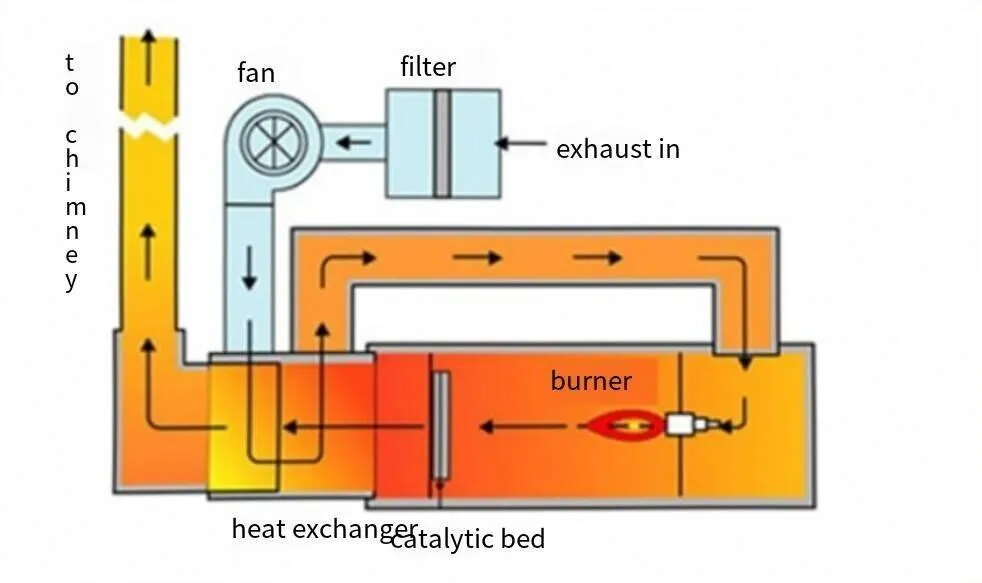
High Efficiency and Low Operating Costs: Ever-Power’s Regenerative Thermal Oxidizer (RTO) systems achieve thermal efficiency of up to 95-97%, enabling them to operate autothermally (without supplemental fuel) at low VOC concentrations. This high efficiency significantly reduces operational costs.
-
VOC Destruction Efficiency: The RTO systems provide an exceptional VOC destruction efficiency (DRE) of over 99%, ensuring compliance with strict environmental regulations such as those from the Australian EPA and other global standards.
-
Advanced Technology for Solvent Recovery: Ever-Power integrates Zeolite Wheel Concentrators and solvent recovery systems with RTOs to manage fluctuating VOC concentrations and to recover valuable solvents, turning compliance challenges into operational assets.
-
Compliance with Australian and Global Regulations: Ever-Power’s RTO systems are designed to meet the stringent emission standards of Australian state and federal bodies (e.g., NSW EPA and EPA Victoria), as well as international regulations like the European Industrial Emissions Directive (IED).
-
Customizable Solutions for Specific Applications: The RTO systems are highly customizable for various industries, including chemical manufacturing, pharmaceuticals, printing, and lithium battery manufacturing, with specific configurations tailored for solvent recovery and high-efficiency operation.

3. Ever Power RTO Technical Specifications
| Performance | 2-bed RTO | 3-bed RTO | Rotary Valve RTO | Notes |
|---|---|---|---|---|
| Technicality | First generation | Second generation | Third generation | |
| Number of chambers | 2 | 3 | 12 | Rotary valve operates continuously |
| Number of valves | 4 | 9 | / | |
| Reliability | Valve switching times per year: 350,000 | Valve switching times per year: 520,000 | / | |
| Piping pressure fluctuation | ±500pa | ±250pa | ±25pa | |
| Discharge compliance | Total purification efficiency: 95% | Total purification efficiency: 99% | Total purification efficiency: 99.5% | 99.5% |
| Maximum treating range | < 1g | < 5g | < 10g | 50mg/m³ discharge standard |
| Heat dissipation surface area | 100m² | 145m² | 95m² | |
| Energy saving | Thermal efficiency: 90% | Thermal efficiency: 95% | Thermal efficiency: 96% | 96% |
| Start-up heating time | 2.5h | 2.5h | 2h | Cold furnace start-up (Ethyl acetate) |
| Self-operation concentration | 2.5g/m³ | 2.2g/m³ | 1.8g/m³ | |
| Economy | Regenerative ceramic filling volume: 18m³ | Regenerative ceramic filling volume: 26m³ | Regenerative ceramic filling volume: 17m³ | 17m³ |
| Practicality | Occupation of land: L12×W7 | Occupation of land: L16×W7 | Occupation of land: L12×W7 | L12×W7 |
*Disclaimer: The other brand names mentioned above are provided solely for illustrative purposes. We do not offer original products or equipment bearing these brand names.
4. Scenario Analysis: Characteristics & Advantages in Solvent Recovery
4.1. Adaptability to Concentration Fluctuations
During the desorption phase of a carbon bed, VOC concentrations can spike. An RTO is robust enough to handle these peaks.
Advantage: Our systems include a “Hot Bypass” and fresh air dilution valve to manage exothermic reactions safely, preventing over-temperature trips.
4.2. Energy Efficiency in Low-Concentration Streams
Often, the tail gas is too lean to burn on its own but too rich to vent.
Advantage: The high thermal mass of the ceramic media allows the RTO to run autothermally. This means once the unit is up to temperature, the VOCs themselves provide the fuel, often requiring zero natural gas usage during operation.
4.3. Applicable Industries in Australia:
- Chemical Manufacturing: Treatment of exhaust from reactor vents and distillation columns.
- Pharmaceuticals: Control of methylene chloride, acetone, and ethanol emissions from API production.
- Printing & Packaging: Managing ethyl acetate and toluene emissions from rotogravure printing solvent recovery.
- Lithium Battery Mfg: Handling NMP (N-Methyl-2-pyrrolidone) recovery tail gas.
5. RTO System Components & Ecosystem Support
A reliable RTO is more than just a combustion chamber. It requires a suite of high-quality components to ensure longevity and safety.
Ceramic MediaStructured or Saddle Media. We select the media type (honeycomb vs. saddles) based on the particulate load to prevent fouling and minimize pressure drop.
Switching ValvesPoppet or Butterfly Valves. Featuring pneumatic actuation for rapid, tight sealing (< 1s switch time) to maintain high destruction efficiency.
Burner SystemLow-NOx Burners. Designed to operate efficiently across a wide turndown ratio, maintaining temperature stability during low-load conditions.
Safety SystemsLEL Analyzers & Flame Arrestors. Critical for solvent recovery applications to prevent flashbacks and ensure safe operation below explosive limits.
6. Global & Local Market Application: Regulatory Compliance in Australia
6.1. Australian Regulatory Context
- National Pollutant Inventory (NPI): Australian facilities must report emissions of listed substances (e.g., Toluene, Xylenes) if they exceed thresholds. Installing an RTO can significantly reduce reportable emissions.
- EPA Victoria & NSW EPA: State bodies enforce strict limits on ground-level concentrations (GLC) of odorous and toxic compounds. Our RTOs are guaranteed to meet these dispersion modeling requirements.
- Work Safe Australia: Controlling VOCs is also a workplace health and safety issue. Effective capture and destruction protect workers from exposure to hazardous solvents.
6.2. Global Best Practices
Globally, from the USA (EPA Method 25A) to Germany (TA Luft) and China (GB 37822-2019), the trend is towards stricter limits (< 20-50 mg/m³). EVER-POWER RTOs are designed to meet these international benchmarks, ensuring your facility remains compliant even as Australian standards evolve.
6.3. Industry Trends: Sustainability & Carbon Footprint
Decarbonization: Modern RTOs are not just pollution control devices; they are energy recovery units. By integrating secondary heat recovery (e.g., waste heat boilers), Australian plants can reduce their natural gas consumption, lowering both OpEx and Scope 1 carbon emissions.

7. Customer Success Story
“We installed an Ever-Power RTO in our chemical manufacturing facility, and the results have been fantastic. Not only did the system reduce our VOC emissions by over 99%, but we’re also seeing significant energy savings thanks to the regenerative heat recovery. It’s a win-win for compliance and our bottom line!”
– Andrew M., Chemical Manufacturing Plant Manager
“We had an old solvent recovery system that was outdated and inefficient. The retrofit process with Ever-Power’s RTO was seamless, and now we’re running a much more efficient system. The integration was smooth, and the energy savings have been impressive. It’s a great solution for anyone looking to upgrade without a complete overhaul.”
– James R., Industrial Engineering Lead
“Our Ever-Power RTO has been running flawlessly for over a year. The maintenance is straightforward and minimal. We appreciate the remote monitoring feature, which helps us stay on top of things before they become issues. The system has really improved our uptime and overall efficiency.”
– Rebecca T., Operations Manager
“Safety is always our top priority, especially when dealing with flammable solvents. The Ever-Power RTO’s safety features, like the hot bypass and fresh air dilution valve, have kept our operations running smoothly without the risk of hazardous incidents. It’s a great system that combines performance and safety.”
– Chris B., Safety Manager
“Switching to Ever-Power’s RTO has significantly lowered our energy consumption, thanks to the high thermal efficiency and waste heat recovery capabilities. Our production facility in Melbourne has reduced its operational costs, and we’re able to recycle valuable solvents. It’s a cost-effective solution that aligns perfectly with our sustainability goals.”
– Laura F., Sustainability Director
8. Future-Proofing Your Facility: Innovation & Trends
We are constantly pushing the boundaries of RTO technology to offer more value to our clients.
- Carbon Capture Readiness: As Australia moves towards net-zero, we are exploring RTO designs that are compatible with post-combustion carbon capture technologies.
- Hydrogen Fuel Compatibility: Our burners are being adapted to handle hydrogen-enriched natural gas blends, aligning with Australia’s future green hydrogen economy.
- Zeolite Concentrator Integration: For high-volume, low-concentration streams, we combine RTOs with Zeolite Rotary Concentrators. This hybrid system concentrates the VOCs before oxidation, allowing for a much smaller RTO unit and massive energy savings.
9. Related Solutions



10. Frequently Asked Questions (FAQ)
Q1. How much does an RTO cost for a typical solvent recovery application in Australia?
A1. The cost varies significantly based on airflow (scfm) and solvent type. However, for a mid-sized unit (e.g., 10,000 scfm), EVER-POWER offers highly competitive pricing, often 30-40% lower than European alternatives, without compromising on component quality (using Siemens/Allen-Bradley PLCs, Honeywell burners). Contact us for a precise quote.
Q2. Can the RTO handle chlorinated solvents like Methylene Chloride?
A2. Yes, but it requires special design considerations. Chlorinated compounds produce hydrochloric acid (HCl) when burned. We use corrosion-resistant alloys (like Hastelloy) for the combustion chamber and include a downstream scrubber to neutralize the acid gas before release.
Q3. What is the typical maintenance schedule for an RTO system?
A3. RTOs are relatively low maintenance. Key tasks include quarterly burner tuning, checking valve seals, and inspecting ceramic media. We offer remote monitoring packages to predict maintenance needs, ensuring high availability for your Australian facility.
Q4. Is it possible to retrofit an RTO to an existing solvent recovery plant?
A4. Absolutely. We specialize in retrofits. Our engineering team can design the ducting and control integration to seamlessly connect the RTO to your existing adsorption or condensation units, often with minimal downtime.
Q5. How does the “puff” chamber in a 3-Tower RTO work?
A5. In a 2-tower design, a small amount of untreated gas can escape during valve switching. A 3-tower design uses the third tower to purge this residual gas back into the combustion chamber, ensuring zero bypass and maintaining >99% destruction efficiency continuously.
Q6. What happens if the VOC concentration spikes unexpectedly?
A6. Safety is paramount. Our systems include LEL (Lower Explosive Limit) monitors. If concentrations approach unsafe levels (e.g., 25% LEL), the system automatically opens a fresh air dilution valve or triggers a hot bypass to protect the equipment and facility.
Q7. Can we use the heat from the RTO for other processes?
A7. Yes! This is a major benefit. Secondary heat exchangers can be installed on the exhaust stack to generate hot water, steam, or thermal oil, which can then be fed back into your process heating loops or used for facility heating.
Q8. How long does it take to manufacture and ship to Australia?
A8. Our typical manufacturing lead time is 12-16 weeks. Shipping to major Australian ports (Sydney, Melbourne, Brisbane, Perth) usually takes an additional 3-4 weeks. We provide full logistics support and installation guidance.
Q9. Do you provide local support for commissioning in Australia?
A9. Yes, we provide comprehensive commissioning support. We can deploy engineers to your site in Australia for start-up, operator training, and final EPA compliance testing to ensure the system performs as guaranteed.
Q10. Which industries benefit most from your RTO solutions?
A10. Any industry using solvents benefits. Specifically, chemical processing, pharmaceutical manufacturing (API), printing and packaging, and coating lines (automotive, coil) see the fastest ROI due to the high calorific value of their waste streams.
Editor: PXY