


1. Robust Emissions Control for Complex Waste Streams
The operational philosophy of our TO systems centers on “Absolute Reliability under Extreme Conditions.” We understand that for petrochemical plants in Queensland, pharmaceutical facilities in Victoria, or chemical storage terminals in New South Wales, downtime is not an option. Therefore, our Thermal Oxidizers are engineered with a focus on simplicity and ruggedness. They feature fewer moving parts than regenerative systems, reducing maintenance requirements and eliminating the risk of bed plugging in applications with particulates or sticky condensables. Whether you are dealing with a batch process that fluctuates wildly in flow rate or a continuous stream containing halogenated compounds requiring acid gas scrubbing, EVER-POWER provides a tailored solution that guarantees compliance with the strictest environmental licenses while prioritizing operational safety.
2. Engineering Mechanics: How Thermal Oxidizers Work, Materials
-
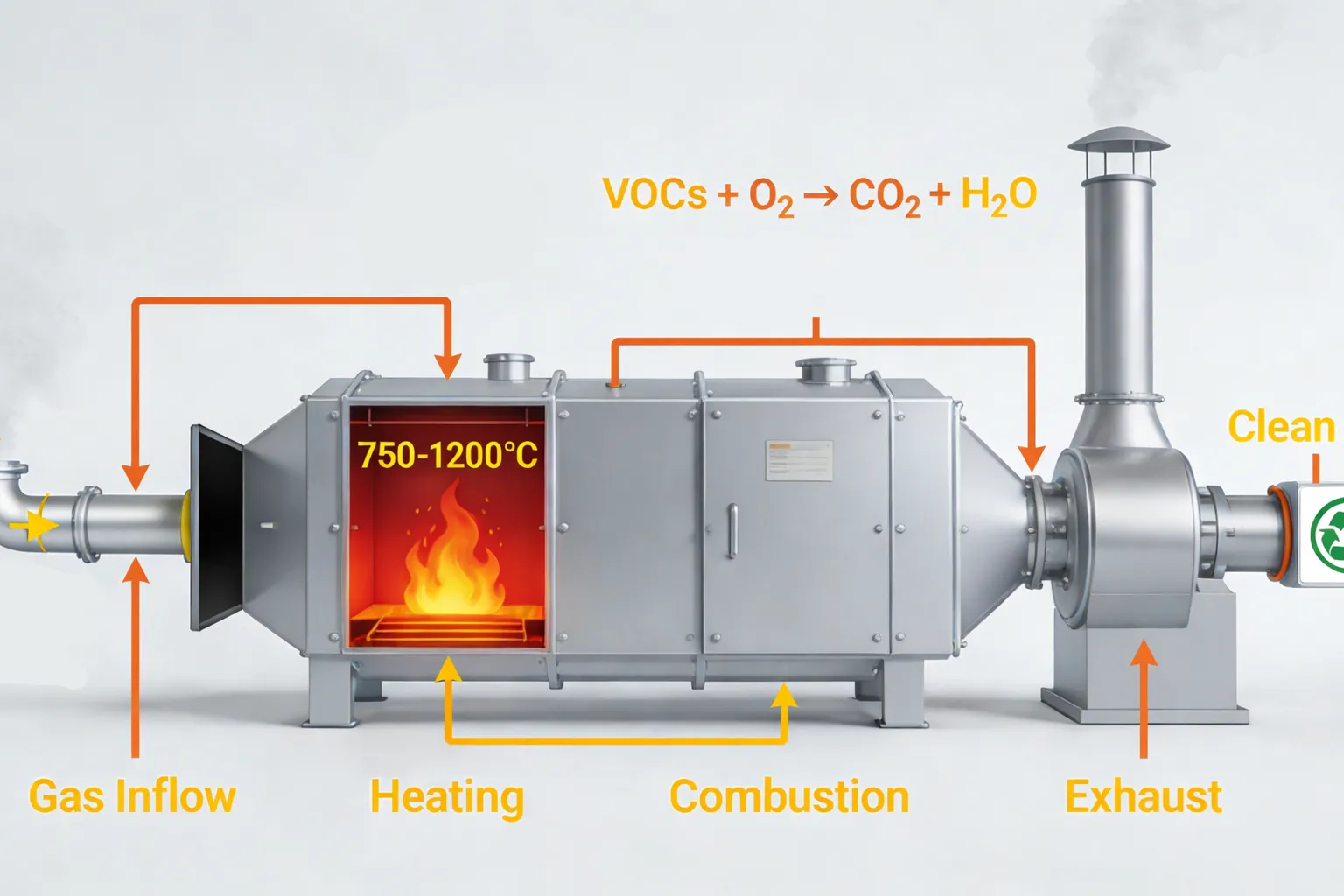
Gas Inflow: Polluted air containing VOCs or other harmful gases is introduced into the thermal oxidizer.
-
Heating: The polluted air is heated to a high temperature, usually between 750°C to 1,200°C (1,382°F to 2,192°F), in a combustion chamber. This high temperature causes the organic compounds in the air to break down into simpler, non-toxic substances.
-
Combustion: The process relies on the principle of oxidation, where the VOCs are reacted with oxygen, resulting in the formation of carbon dioxide (CO2) and water vapor (H2O), which are much less harmful.
-
Exhaust: The clean, treated air is then released into the atmosphere, ensuring that harmful emissions are effectively reduced or eliminated.

4. The TO’s Advantages:
-
Efficient Destruction of VOCs: Thermal oxidizers are effective at destroying a wide range of harmful organic pollutants, achieving high destruction efficiencies (up to 99% or more).
-
Regulatory Compliance: They help industries meet environmental regulations by reducing harmful emissions.
-
Energy Recovery (RTO): Regenerative systems can recover heat, leading to lower operational costs and reduced fuel consumption.
5. Technical Specifications & Performance Parameters
| Parameter | Specification Range | Engineering Note |
|---|---|---|
| Airflow Capacity | 500 – 50,000 Nm³/h | Ideal for low-to-medium flows |
| VOC Concentration | 0 – 50% LEL (Higher with dilution) | Handles rich streams safely |
| Operating Temperature | 760°C – 1100°C | High temp for hazardous waste |
| Destruction Efficiency (DRE) | 99% – 99.99% | Highest in the industry |
| Residence Time | 0.5 – 2.0 Seconds | Customizable for specific pollutants |
| Heat Recovery | Up to 70% (Recuperative) | Optional Shell & Tube Exchanger |
| Burner Type | Low-NOx / Multi-fuel | Natural Gas, LPG, Diesel, Biogas |

6. Types of Thermal Oxidizers:
-
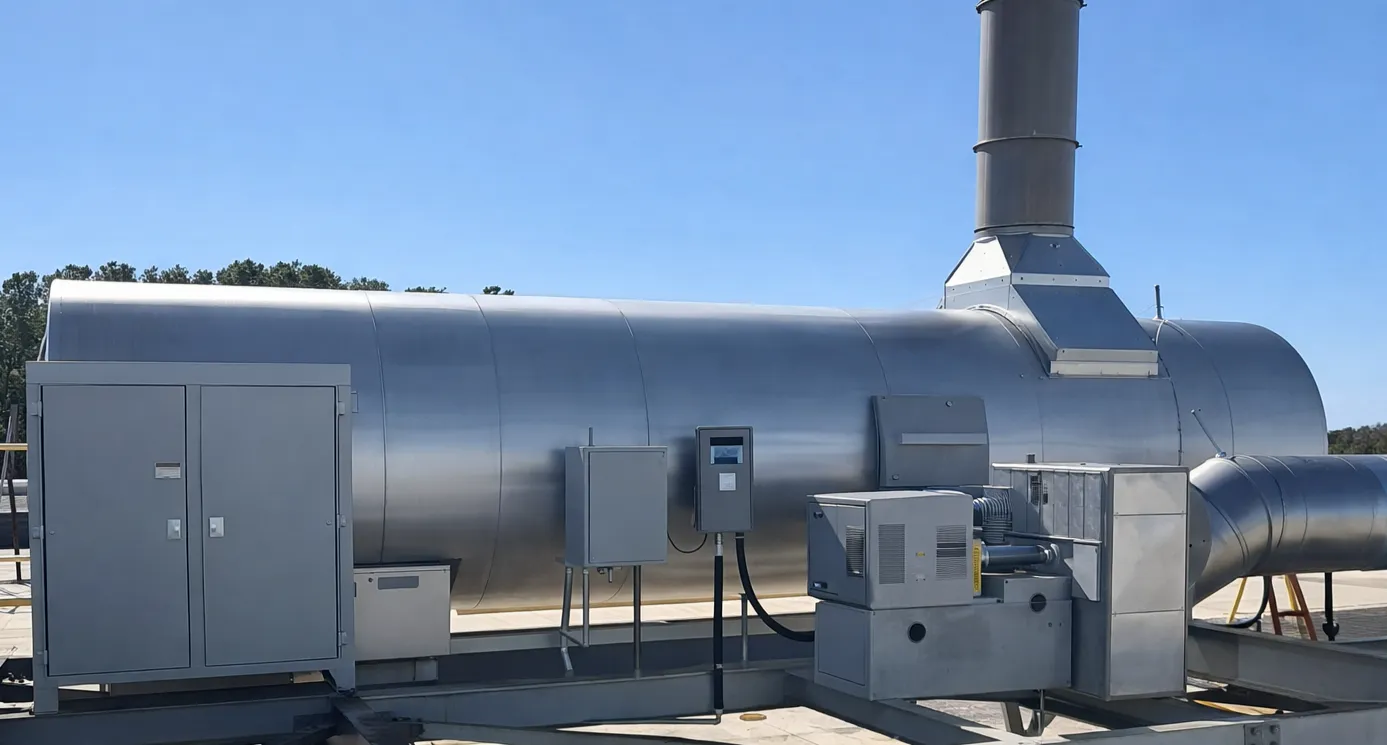
Direct Thermal Oxidizers (DTO): In this type, the contaminated air is directly heated by a burner and sent to the combustion chamber for oxidation.
-
Regenerative Thermal Oxidizers (RTO): This variation incorporates heat recovery, allowing the system to reuse the heat from the exhaust gases to preheat the incoming polluted air, improving energy efficiency.
7. Market Trend Analysis: The Resurgence of Thermal Oxidation in High-Value Sectors
As regulations tighten around emerging contaminants like PFAS and high-potency pharmaceutical ingredients, the need for high-temperature destruction (>1100°C) is growing. Standard RTOs cannot achieve these temperatures without damaging their media. TOs, with their robust refractory linings, are the only viable solution for these hazardous applications. Additionally, there is a push towards Hydrogen-Ready Burners. As Australia invests in a green hydrogen future, industrial equipment must be adaptable. EVER-POWER is leading this curve by offering burner systems capable of firing on hydrogen-natural gas blends, ensuring our clients’ assets are future-proofed against the decarbonization of the gas grid.
8. Applications:
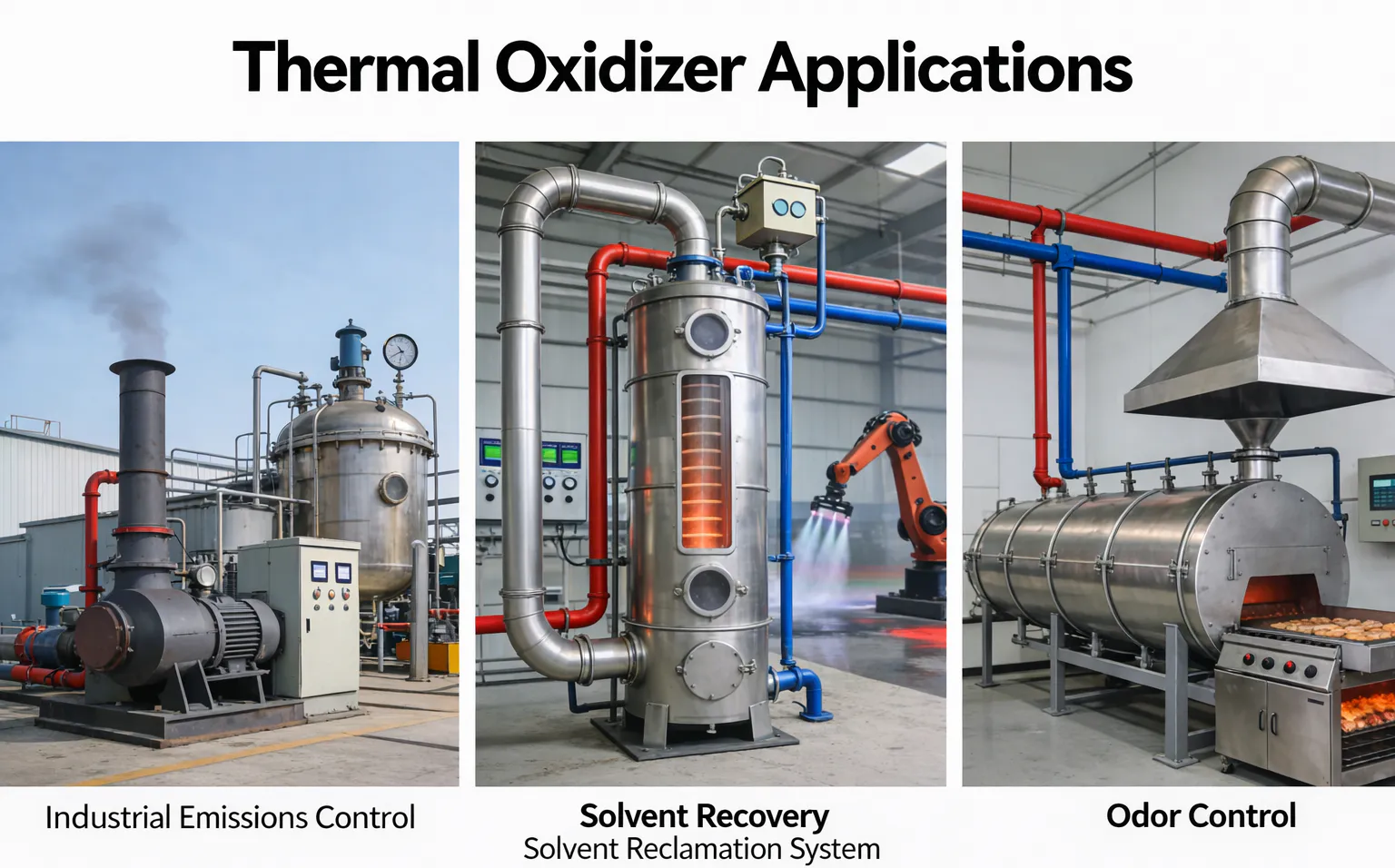
Typical application scenarios for our TO systems include Vent Gas Treatment from storage tanks, Pharmaceutical Manufacturing vents, Paint and Resin Production, and Wastewater Treatment Plant odour control. In these scenarios, the TO’s ability to handle high LEL (Lower Explosive Limit) spikes and variable flows makes it the safest and most reliable choice.
-
Industrial Emissions Control: Thermal oxidizers are commonly used in industries such as chemical production, automotive manufacturing, and waste treatment to reduce air pollution from volatile organic compounds and hazardous air pollutants.
-
Solvent Recovery: In processes like painting or coating, thermal oxidizers can be used to recover solvents from exhaust air streams.
-
Odor Control: They are also used to eliminate odors from food processing or wastewater treatment facilities.

9. Customer Reviews
1. John, Chemical Plant Manager – Australia
“We’ve been using EVER-POWER’s Thermal Oxidizer system for our VOC treatment, and I couldn’t be happier. The system handles our high concentrations of hazardous gases efficiently, with no risk of clogging, and requires minimal maintenance. It operates flawlessly, even in the harsh Australian climate. The added benefit of heat recovery to lower energy costs has been a game-changer for us. Highly recommend this to anyone in industrial emissions control!”
2. Carlos, Environmental Officer – Brazil
“At our chemical manufacturing facility in São Paulo, we needed a solution that could reliably treat the VOCs and odors from our processes. EVER-POWER’s TO system has been the ideal choice. It works without interruptions, even with fluctuating gas concentrations, and provides full regulatory compliance. The system’s efficiency and the heat recovery feature are real winners for us. It’s been a solid investment.”
3. Michael, Pharmaceutical Operations Head – United Kingdom
“In the pharmaceutical industry, managing emissions is a critical part of compliance. EVER-POWER’s Thermal Oxidizer system has made a significant difference in how we manage hazardous air pollutants. It runs smoothly and safely, even with our variable flow rates, and the efficiency is outstanding. The system’s ability to deal with halogenated compounds makes it particularly suited for our production needs. A great choice for those looking for a long-term solution!”
4. Taro, Plant Engineer – Japan
“We installed EVER-POWER’s TO system at our automotive manufacturing plant in Osaka, and it’s been running perfectly. The system is simple, durable, and handles the high VOC concentrations from our paint processes without issue. Plus, the added heat recovery helps reduce our energy costs. We’ve seen significant operational savings and increased efficiency. I would definitely recommend it to anyone in a similar industry.”
5. Sofia, Production Manager – Mexico
“At our food processing plant in Mexico City, we’ve struggled with odor control and VOC emissions for years. After installing EVER-POWER’s Thermal Oxidizer system, we’ve seen an immediate improvement. The unit’s destruction efficiency is incredible, and it’s capable of managing our waste streams safely and effectively. Plus, it meets all the local environmental regulations, which gives us peace of mind. Excellent product, excellent service!”
Frequently Asked Questions (FAQ)
Q1. What is the primary advantage of a Thermal Oxidizer (TO) over a Regenerative Thermal Oxidizer (RTO)?
A1. The primary advantage is the ability to handle very high VOC concentrations and particulate-laden streams without clogging. TOs have no heat exchange media to foul, making them ideal for “dirty” processes or batch operations where RTOs would require frequent maintenance.
Q2. What maintenance is required for the burner system?
A2. Routine maintenance includes checking the flame scanner, cleaning the pilot assembly, and verifying the air/fuel ratio linkage. We recommend an annual burner tuning and safety audit to ensure optimal efficiency and compliance with Australian Gas Association (AGA) standards.
Q3. Can a Thermal Oxidizer handle chlorinated or halogenated waste gas streams?
A3. Yes, absolutely. TOs are the preferred technology for halogenated streams. However, the system must be constructed with acid-resistant materials (like Hastelloy) and typically requires a downstream Quench and Scrubber system to remove the acid gases (HCl, HF) formed during combustion.
Q4. Does EVER-POWER offer heat recovery options to reduce fuel consumption?
A4. Yes, we offer Recuperative Thermal Oxidizers. We can integrate a shell-and-tube or plate heat exchanger to preheat the incoming air using the hot exhaust gas, recovering up to 70% of the thermal energy and significantly reducing burner fuel usage.
Q5. What is the expected lifespan of the refractory lining in your TO systems?
A5. With proper operation and maintenance, our high-density ceramic fiber or refractory brick linings typically last 10 to 15 years. We use premium materials rated for temperatures well above the operating setpoint to prevent thermal shock and degradation.
Q6. Can the TO system handle explosive gas mixtures safely?
A6. Safety is critical. We install LEL (Lower Explosive Limit) monitors on the inlet. If the concentration exceeds 25% LEL, the system automatically introduces dilution air. For streams inherently above the LEL, we can design specialized “inerted” oxidizers, though this is a custom engineering application.
Q7. How does the destruction efficiency of a TO compare to a Flare?
A7. A TO offers significantly higher and more stable destruction efficiency (99.9%) compared to a standard flare (often 98%). TOs are enclosed, controlled combustion environments, whereas flares are open and subject to wind and weather, making TOs the superior choice for strict compliance.
Editor: PXY