توضیحات
What Is a Modular Waste Heat Boiler?
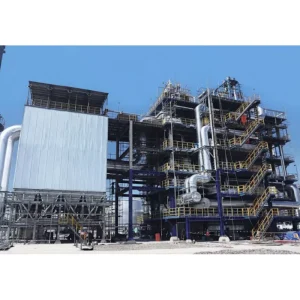
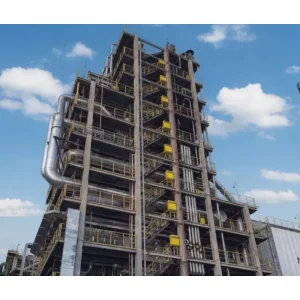
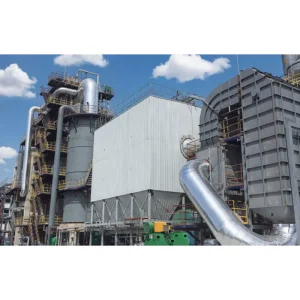
The Ever-power modular waste heat boiler is a skid-mounted, pre-assembled heat recovery steam generator (HRSG) engineered to capture thermal energy from hot flue gas produced by incinerators, rotary kilns, thermal oxidisers and other high-temperature processes. Instead of venting 800–1,200 °C gas to atmosphere, the unit cools it through radiant and convective sections, delivering saturated or superheated steam for in-plant use or power generation.
What distinguishes this product from a stick-built boiler is its modular architecture. Pressure parts, drums, economiser coils, steel frame and piping arrive on site pre-fabricated and hydro-tested. Bolt-up erection replaces most field welding, which cuts installation time by roughly 40% and keeps the critical path of a waste liquid incinerator retrofit under control. For Australian brownfield projects where shutdown windows are measured in days not weeks, that speed matters.
The product line covers 2 t/h package units through to 80 t/h industrial trains, with steam pressures from 0.8 MPa to 5.3 MPa. Every configuration is fired by process heat alone — no fuel burner — so the payback comes entirely from avoided gas purchases or new power generation revenue. Thermal efficiency above 90% is routine, and tube metallurgy is selected to match the dew-point chemistry of your specific flue gas.
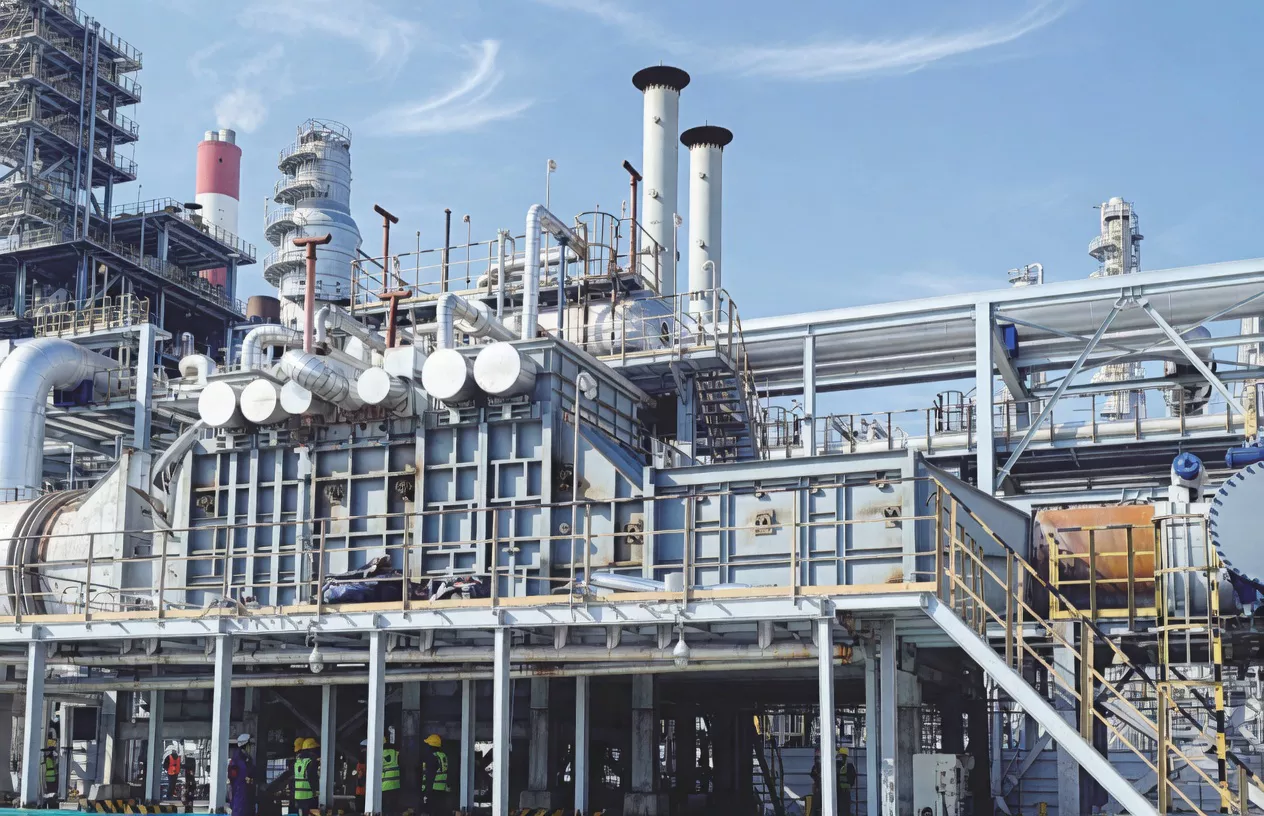
Compatible Upstream Heat Sources
Hazardous Waste Incinerators
Rotary kiln and static hearth units producing 900–1,100 °C flue gas. Integrates directly with the secondary combustion chamber outlet.
Liquid Injection & Thermal Oxidisers
Post-oxidiser heat recovery for VOC, tail gas and waste-liquid destruction systems at chemical and pharmaceutical sites.
Municipal Waste-to-Energy
Moving-grate boiler back-ends for Australian MSW plants. Designed for high chloride and alkali metal content.
Rotary Kilns & Sponge Iron
Post-combustion chamber gas at 900–950 °C feeds a water-tube radiant section sized for dusty, abrasive service.
Gasifier & Syngas Off-Gas
Biomass and coal gasifier tail-gas streams with low calorific value — custom burner inlets maintain stable combustion.
Process Furnaces & Kilns
Cement pre-heater exhaust, glass melting furnace off-gas, non-ferrous smelter off-take and steel reheating flue gas.
How the Modular Waste Heat Boiler Works
Heat is transferred from flue gas to water and steam in four engineered stages, arranged in a counter-flow geometry that maximises log-mean temperature difference and extends tube life.
Gas Inlet & Distribution
A refractory-lined inlet chamber distributes flue gas evenly across the tube bundle. Sacrificial erosion shields protect leading-edge tubes in dusty service.
Radiant Cooling Section
Membrane water-wall panels drop gas temperature from ~1,100 °C to about 650 °C. Natural circulation draws heat to a mud drum and steam drum.
Convective Evaporator & Superheater
Bundled bare or finned tubes raise steam quality to saturation or superheat. An optional attemperator trims steam temperature to process tolerance.
Economiser & Gas Outlet
Boiler feed water is preheated against the coolest flue gas zone. Stack temperature is normally held above acid dew point to protect downstream ducting.
Soot Blowing & Cleaning
Steam or sonic soot blowers maintain heat transfer. Automatic shot cleaning is available where flue gas is heavily laden with sticky particulates.
Key Features & Engineering Advantages
Skid-Mounted Modular Build
Pre-assembled modules arrive hydro-tested and wired. Bolt-up erection cuts site welding by up to 70% and removes critical-path risk on brownfield jobs.
Flexible Circulation Logic
Natural-circulation evaporators for stable base-load; forced-circulation for compact footprints or rapid load swings — selected to match your duty curve.
Acid & Chloride Resistant Tubes
Inconel cladding, Alloy 625 overlay and SA213 T22/T91 tube options tuned to flue gas chemistry, extending life well beyond generic carbon-steel bundles.
Tangential Soot Blowers
PLC-scheduled retractable soot blowers clean heat transfer surfaces without operator intervention and hold thermal efficiency within ±1%.
Full Instrument Package
Steam drum level, trim control, feedwater safety, O₂/CO analysers, and stack CEMS — all pre-wired to a marshalling cabinet, not left to site teams.
AS/NZS 3788 Ready
Pressure parts stamped to ASME Section I with full AS/NZS 3788 inspection data — a drop-in replacement of legacy European HRSG in most Australian sites.
Technical Specifications
Standard capacity bands are shown below. Custom HRSGs matched to specific flue-gas envelopes, dust loadings and downstream steam users are available — the engineering team builds each unit against your actual heat balance rather than a catalogue curve.
| Model | Steam Output (t/h) | Steam Pressure (MPa) | Steam Temp. (°C) | Gas Flow (Nm³/h) | Heat Efficiency |
|---|---|---|---|---|---|
| EP-MW-2 | 2 | 0.8 / 1.6 | Saturated | 8,000 | ≥ 88% |
| EP-MW-6 | 6 | 1.6 / 2.5 | Sat / 350 | 24,000 | ≥ 90% |
| EP-MW-15 | 15 | 2.5 / 3.82 | 350 / 450 | 60,000 | ≥ 91% |
| EP-MW-35 | 35 | 3.82 / 5.3 | 450 / 485 | 140,000 | ≥ 92% |
| EP-MW-80 | 80 | 5.3 / 9.8 | 485 / 540 | 320,000 | ≥ 92% |
Design Basis & Compliance
| Parameter | Ever-power Value | Reference Standard |
|---|---|---|
| Pressure Part Code | ASME Section I + U-stamp | AS/NZS 3788 |
| Material (radiant section) | SA210 C / SA213 T22 / T91 | ASTM / EN 10216-2 |
| Tube Corrosion Margin | 2.0–3.5 mm (duty-based) | EN 12952-3 |
| Stack Temp. (min.) | ≥ 180 °C (acid-safe) | AS 3814 |
| Insulation Surface Temp. | ≤ 60 °C at 25 °C ambient | ISO 12241 |
| Noise Level | ≤ 85 dB(A) at 1 m | AS 1055 |
Applications Across Australian Industry
Waste-to-Energy Plants
MSW moving-grate boilers, refuse-derived fuel lines and C&I waste sorting facilities across metropolitan councils.
Licensed Hazardous Waste Centres
Rotary-kiln incinerators serving third-party collectors, medical waste aggregators and chemical-industry clients.
Chemical & Petrochemical
RTO / thermal oxidiser back-ends, sulfur recovery units, spent caustic oxidiser exhaust.
Cement & Lime
Pre-heater tower exhaust, AFR (alternative fuel & raw material) co-processing flue gas, clinker cooler vent air.
Metals & Mining
Smelter off-gas, roaster exhaust, sponge iron kiln post-combustion gas at 900–950 °C.
Biogas & Landfill Flare Recovery
Enclosed flare retrofit adding a small modular HRSG to monetise a flare that was previously burning off destruction-only.
Why Choose Ever-power
A modular waste heat boiler is only as good as the heat-balance behind it. Oversized units choke on low-calorific gas; undersized units never meet steam contract. The Ever-power engineering approach is built on six practical commitments — the kind a replacement of imported HRSG rarely carries through to commissioning.
See how our engineering team supports waste liquid incinerator and HRSG retrofits on the Ever-power company page, or browse the full boiler line-up on our home page.
Australian Project Case Studies
Hazardous Waste Treatment Centre — Kwinana
A Category C and D licensed waste centre was operating a 1990s-era incinerator without a heat recovery section. Flue gas at 1,050 °C was being quenched straight to the scrubber, wasting roughly 9 MW of thermal energy per operating hour.
Ever-power solution: EP-MW-15 skid-mounted HRSG with bypass duct for incinerator start-up, 15 t/h saturated steam at 2.5 MPa.
Result: Site replaced natural-gas-fired auxiliary boiler. Annual gas saving A$1.8M, full payback in 21 months, zero unplanned outage in first 18 months.
Waste-to-Energy Plant — Western Sydney
A green-field MSW WTE project needed a 35 t/h HRSG for two moving-grate lines. Local EPC wanted a supplier who could deliver modules in 10 containers and erect them inside a 90-day civil-to-first-fire window.
Ever-power solution: EP-MW-35 units with Alloy 625 overlay on first-bank tubes (high chloride MSW), dual Inconel soot blowers, ASME U-stamp + AS/NZS 3788 documentation.
Result: Site erection completed in 82 days, first steam on spec, performance guarantee met at 92.4% heat efficiency on acceptance test.
Frequently Asked Questions
How is a modular waste heat boiler different from a stick-built HRSG?
A modular unit is pre-assembled in the fabrication shop and shipped in transportable skids. Pressure parts, drums, economiser coils, steel structure and piping are hydro-tested before despatch. On site, erection becomes bolt-up work instead of full welding — cutting labour, scaffolding and NDE volume by around 40%.
Can the boiler handle dusty or corrosive flue gas from an incinerator?
Yes. For dusty service (rotary kiln, sponge iron, MSW) we specify low gas velocity across tube bundles, sacrificial erosion shields on leading edges, and retractable soot blowers. For corrosive service (high Cl, high S) we use Alloy 625 or Inconel 825 overlay on the first radiant bank and keep stack temperature above acid dew point.
What is the typical payback period in Australia?
For sites above 6,000 operating hours per year that would otherwise buy natural-gas steam at current Australian tariffs, payback typically sits between 18 and 30 months. Waste-to-energy and hazardous waste sites with no existing steam user usually pair the HRSG with a small condensing turbine for faster payback via electricity sales.
Do you supply the full HRSG island or only the pressure parts?
Both scopes are available. A typical Ever-power package covers pressure parts, steel structure, refractory inlet duct, soot blowers, valves and safety valves, instrumentation, feedwater pumps, deaerator, and a pre-programmed control panel. An EPC wrap including piling, erection and commissioning is offered where the customer prefers a single responsibility.
How is capacity selected when my flue gas flow varies across the year?
We design around two heat-balance cases — “normal” and “worst day” — plus a turn-down case if batch operation is expected. The evaporator and economiser are sized on worst day; the steam drum and feedwater system are sized with margin on turn-down. This prevents the common failure mode of HRSGs that perform at nameplate but stall at 40% load.
Can it be integrated with an existing waste liquid incinerator?
Yes. Retrofit is the most common Ever-power scope in Australia. We carry out a site survey, tie-in sketch and heat-balance study, then engineer the HRSG to match the incinerator’s existing secondary combustion chamber outlet duct. Shutdown windows are usually kept under 21 days.
What warranty and long-term support do you offer?
Standard pressure-part warranty is 24 months from commissioning or 30 months from shipment, whichever expires first. Performance guarantees on steam output and heat efficiency are backed by acceptance testing at site. Optional 3-, 5- and 10-year condition-monitoring service agreements are available for Australian clients through our partner network.
Need a Tailored Heat Balance?
Send your upstream process data, flue gas composition and steam demand to [email protected] or reach our engineering team through the contact page. A full heat-balance, GA drawing and budget price will be returned within 10 working days — free of charge.