1. Summary
The pharmaceutical industry faces critical challenges in managing Volatile Organic Compounds (VOCs) and Hazardous Air Pollutants (HAPs) such as Dichloromethane, DMF, and Acetone from processes like tablet coating and API synthesis.
Regenerative Thermal Oxidizers (RTO), specifically designed with sanitary and corrosion-resistant features, are the proven solution to achieve >99% destruction efficiency required by Australian TGA and EPA regulations.
Ever Power integrates these RTOs with Zeolite Concentrators and Acid Scrubbers to provide a complete, energy-efficient abatement system that ensures GMP compliance and operational safety.
2. Five Key Facts
2.1. Process Ready: Handles Coating, Fermentation & API.
2.2. Corrosion Proof: Hastelloy & Stainless for Halogens.
2.3. TGA/EPA Compliant: Meets NPI & Odour Unit limits.
2.4. Sanitary Design: GMP-friendly cleanable ducts.
2.5. Solvent Recovery: Optional pre-condensing stages.
3. Critical Air Pollution Control in Pharma Manufacturing
The pharmaceutical industry operates under some of the strictest regulatory environments in the world. Manufacturing processes for active pharmaceutical ingredients (API), tablet coatings, and soft gel encapsulations utilize a vast array of organic solvents including Ethanol, Isopropanol, Acetone, and more hazardous chlorinated compounds like Dichloromethane (Methylene Chloride). These solvents are essential for product quality but pose significant risks if released into the atmosphere, including toxicity, smog formation, and offensive odours.
For Australian manufacturers, compliance is not just about meeting VOC concentration limits; it is about adhering to Good Manufacturing Practices (GMP) while satisfying the National Pollutant Inventory (NPI) reporting requirements. Traditional scrubbers often fail to handle the high VOC loads and complex mixtures found in modern pharma. Ever Power’s Pharma-Grade Regenerative Thermal Oxidizers (RTO) offer a robust solution. By oxidizing these contaminants at temperatures above 850°C, we achieve near-zero emissions while recovering thermal energy to power facility boilers or HVAC systems, perfectly aligning with the industry’s push towards sustainability and carbon neutrality.
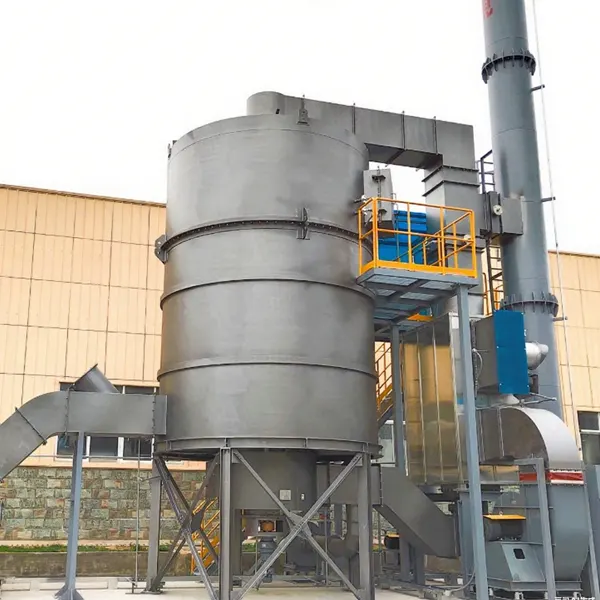
4. Deep Dive: RTO Applications
4.1 Tablet/Capsule Fluidized Bed Coating
• Exhaust Gas Composition: Ethanol, isopropanol, dichloromethane, peak concentrations 20–100 g/Nm³.
• Treatment Method: Air volume diluted to <25% LEL followed by triple-bed RTO treatment.
• Representative Cases: Pfizer Michigan (USA), Novartis (Switzerland), Sun Pharma (India), EMS (Brazil), Julphar (UAE), EIPICO (Egypt).
4.2 Soft Capsule/Injection Extraction and Concentration
• Exhaust Gas Composition: Acetone, ethanol, etc.
• Treatment Method: Solvent recovery via condensation followed by RTO treatment of tail gas.
• Representative Cases: Cantel (USA), Rotendorf (Germany), DHG Pharma (Vietnam), Acer (Brazil), Aspen (South Africa), Sotema (Morocco).
4.3 Alcohol Precipitation/Spray Drying for Traditional Chinese Medicine Preparations
• Exhaust Gas Composition: High-humidity alcohols.
• Treatment Method: Anti-condensation triple-bed RTO.
• Representative Cases: Tong Ren Tang Global Plants (China), Schwabe Germany Extraction Line (2025).
4.4 Fermenter Tail Gas
• Exhaust composition: Esters, alcohols, and trace sulfides.
• Treatment method: Three-bed RTO with thermal recovery insulation.
• Representative cases: Merck (USA), Novo Nordisk (Denmark), Thailand Biotech, Eurofarma (Brazil), SPIMACO (Saudi Arabia), Universal Corporation (Kenya).
4.5 Sterile API Crystallization/Drying
• Exhaust composition: Acetonitrile, DMF.
• Treatment method: Rotor concentration + RTO.
• Representative cases: Teva (USA), Recordati (Italy), Kalbe (Indonesia), Cristália (Brazil), Neopharma (UAE), Holdipharma (Egypt).
4.6 Solvent Recovery System Off-Gases
• Exhaust composition: Multi-component low-concentration mixture.
• Treatment method: Rotary concentrator + compact RTO, cost-effective and efficient.
5. Technical Specifications: Pharma-Series RTO
| Performance | 2-bed RTO | 3-bed RTO | Rotary Valve RTO | Notes |
|---|---|---|---|---|
| Technicality | First generation | Second generation | Third generation | |
| Number of chambers | 2 | 3 | 12 | Rotary valve operates continuously |
| Number of valves | 4 | 9 | / | |
| Reliability | Valve switching times per year | 350,000 | 520,000 | / |
| Piping pressure fluctuation | ±500pa | ±250pa | ±25pa | |
| Discharge compliance | Total purification efficiency | 95% | 99% | 99.5% |
| Maximum treating range | < 1g | < 5g | < 10g | 50mg/m³ discharge standard |
| Heat dissipation surface area | 100m² | 145m² | 95m² | |
| Energy saving | Thermal efficiency | 90% | 95% | 96% |
| Start-up heating time | 2.5h | 2.5h | 2h | Cold furnace start-up (Ethyl acetate) |
| Self-operation concentration | 2.5g/m³ | 2.2g/m³ | 1.8g/m³ | |
| Economy | Regenerative ceramic filling volume | 18m³ | 26m³ | 17m³ |
| Practicality | Occupation of land | L12×W7 | L16×W7 | L12×W7 |
6. Retrofit & Compatibility Guide
Many Australian pharmaceutical plants still rely on outdated scrubbers or carbon beds that generate secondary waste. Ever Power RTOs offer a direct, cleaner upgrade path.
| Company/Brand | Technical Solution | Case Example | Key Features |
|---|---|---|---|
| Anguil | Provides a two-bed RTO system combined with NMP recovery, suitable for high-temperature solvent recovery. | Used by Pfizer Michigan plant to treat wastewater, achieving over 99% destruction efficiency, and used in the CATL Rayong battery plant for solvent recovery. | Safe operation, suitable for strict compliance with industry standards. |
| Dürr | Provides specialized systems for the pharmaceutical industry, focusing on VOC treatment with automatic control for energy recovery. | Used by Novartis for exhaust treatment, applying high-efficiency processes to reduce emission concentrations. | Highly automated, compliant with GMP (Good Manufacturing Practice) standards. |
| Teeam | Provides three-bed systems, suitable for solvent recovery. | Used by Sun Pharma in India and EMS in many other locations for solvent recovery and energy saving. | Efficient and cost-effective with easy maintenance. |
| Ever-Power | Fast response and intelligent RTO systems that can be installed in 2.5 hours, designed for solvent recovery and VOC treatment. | Used in Tong Ren Tang in China for solvent recovery and energy-saving RTO systems. | Highly efficient, saves up to 30% in energy costs. |
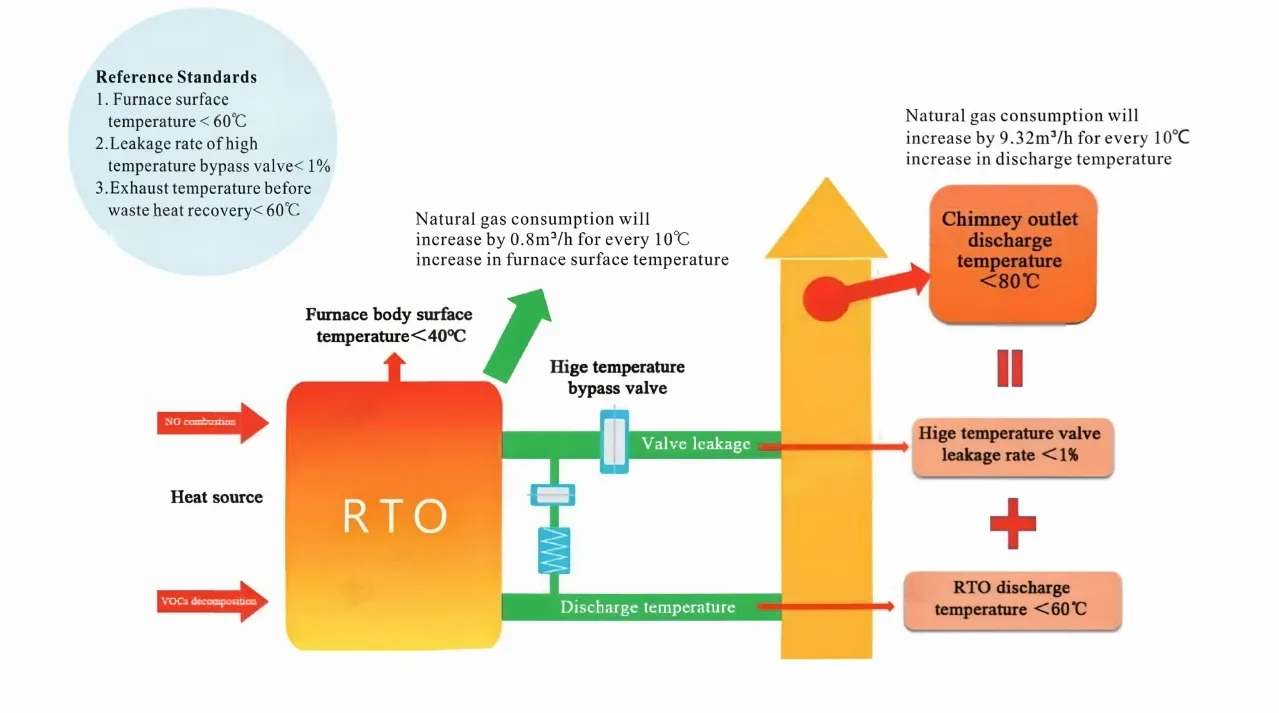
7. Summary of the RTO Process Flow:
-
Heat Source and VOC Decomposition:
-
The RTO receives natural gas (NG) as a combustion source to help break down VOCs (Volatile Organic Compounds) in the exhaust stream.
-
-
Furnace Surface Temperature:
-
The furnace surface temperature should be maintained below 60°C to avoid excessive heat loss.
-
For every 10°C increase in the furnace surface temperature, the natural gas consumption increases by 0.8m³/h.
-
-
Bypass Valve Leakage:
-
A high-temperature bypass valve should have a leakage rate of less than 1%. This ensures minimal heat loss and optimal system performance.
-
-
Discharge Temperature:
-
The discharge temperature from the chimney should be kept below 80°C.
-
For every 10°C increase in discharge temperature, the natural gas consumption increases by 9.32m³/h.
-
-
Waste Heat Recovery:
-
The temperature before waste heat recovery should be maintained below 60°C to prevent heat inefficiency.
-
8. Australian Regulatory Landscape
- TGA (Therapeutic Goods Administration): While focusing on product safety, the TGA requires manufacturing environments to be controlled. Our RTOs prevent backflow and cross-contamination, supporting GMP compliance.
- EPA Victoria & NSW EPA: Strict limits on “Odour Units” (OU) and VOCs. For example, in NSW, new plants must generally achieve < 2 mg/m³ for Group 6 pollutants (carcinogens). Ever Power systems are guaranteed to meet these stringent limits.
- National Pollutant Inventory (NPI): Facilities using >10 tonnes of Ethanol, Acetone, or Dichloromethane per year must report emissions. Implementing an RTO can reduce your reportable emissions to near zero, improving your corporate environmental scorecard.
9. Strategic Analysis: RTO for Pharma
💪 Strengths (Ever Power)
- Sanitary Design: Smooth internal surfaces prevent bacterial growth.
- Halogen Ready: Hastelloy options for chlorinated solvents.
- Energy Recovery: Integration with facility steam loops.
📉 Weaknesses (Generic RTO)
- Acid Corrosion: Standard steel RTOs fail quickly with pharma solvents.
- Size: Requires space (can be mitigated with roof mounting).
🚀 Opportunities
- Solvent Recovery: Combine RTO with Cryogenic condensation for profit.
- Expansion: Modular designs allow for plant capacity growth.
⚠️ Threats
- Explosion Risk: High LEL peaks require advanced safety controls (which we provide).
- Regulations: EPA limits are becoming stricter every year.
10. Industry Trends: Green Chemistry & Efficiency
The Australian pharma sector is moving towards Green Chemistry, reducing the use of chlorinated solvents. However, legacy products still require them. The trend is to integrate Solvent Recovery Units (SRU) before the RTO to recover up to 80% of solvents like Acetone for reuse, sending only the “polishing” load to the RTO.
Ever Power is at the forefront of this hybrid approach.
11. Why Choose Ever Power?
Ever Power delivers pharmaceutical-grade engineering at a competitive price point. Unlike general industrial RTO providers, we understand GMP.
- Material Mastery: We use legitimate Hastelloy C276 and 2205 Duplex Stainless Steel for acid-gas applications, verified by material certificates.
- Safety First: Our systems include redundant LEL monitors, flame arrestors, and explosion relief vents compliant with ATEX and Australian Standards.
- Custom Footprints: We design vertical units for tight utility spaces common in Sydney and Melbourne pharma parks.
- Documentation: Full DQ/IQ/OQ validation support documentation provided.
- 25 Core Safety Measures:
25 Core Safety Measures Fire prevention facilities Concentration detection Dilution measures Emergency bypass Safety bypass High-temperature bypass valve Explosion relief facilities Temperature control Differential pressure monitoring Temperature difference monitoring Flame detection Gas dual control Valve dual control Electrical explosion-proof Ignition control Power failure control Emergency stop control APP remote monitoring Exhaust temperature control Waste heat recovery control Equipment self-inspection Fault self-stop Abnormal alarm Intelligent interlock Overall plan
12. Customer Success Case:
“Ever Power’s RTO system helped us overcome a major challenge. We were struggling with volatile organic compound emissions. After evaluating multiple products, we chose EVER POWER. It improved our air quality and ensured regulatory compliance. Not to mention, the heat recovery feature saved us thousands of dollars in energy costs!”
— Operations Manager, U.S. Manufacturing Plant
“We have long been plagued by odor complaints from the local community and high operating costs. EVER POWER’s triple-bed RTO unit, equipped with an integrated solvent recovery system, has solved our major problem.”
—Production Director, Brazilian Packaging Plant
“Ever Power’s RTO system has been a tremendous asset to our production line thanks to its exceptional flexibility. During manufacturing, we utilize multiple solvents, and this system effectively reduces volatile organic compound emissions to regulatory compliance levels. Furthermore, the integrated heat recovery functionality has lowered our energy costs, which couldn’t be better.”
—Environmental Health and Safety Manager, U.S. Cosmetics Manufacturer
“After installing the Ever Power system, our exhaust emissions have significantly improved. The combination of the flow-back oxidizer and zeolite rotor concentrator operates flawlessly. Not only have emissions been drastically reduced, but we’ve also achieved substantial energy savings.”
— Environmental Compliance Officer, German Chemical Processing Plant
“We’ve been using Ever Power’s 3-Bed RTO for several months now, and it has exceeded our expectations. The system runs with minimal fuel, and the solvent recovery has been a key factor in reducing both emissions and costs. It’s a vital part of our GMP compliance strategy.”
– Production Head, API Manufacturer, India
13. Related Solutions
14. FAQ:
Q1. What is the cost of an RTO for a pharmaceutical plant in Australia?
A1: Costs vary based on airflow (Nm³/h) and materials (Stainless vs. Hastelloy). However, Ever Power’s direct-from-factory model typically saves Australian clients 30-40% compared to European suppliers, while maintaining full AS/NZS compliance.
Q2. How do you prevent cross-contamination in the RTO?
A2: Our RTOs feature a “negative pressure” design and distinct purge cycles. The 3-bed or Rotary Valve configuration ensures that untreated gas never bypasses into the clean stack, maintaining separation critical for GMP environments.
Q3. Can the RTO handle batch processing fluctuations?
A3: Yes. We use a VFD (Variable Frequency Drive) on the main fan and a “Hot Gas Bypass” system. When production stops or slows, the RTO goes into “idle mode,” maintaining temperature with minimal fuel, ready to ramp up instantly when the next batch starts.
Q4. Do you support IQ/OQ validation?
A4: Yes. Ever Power provides complete documentation packages (Design Qualification, Installation Qualification, Operational Qualification) to support your internal validation teams and TGA audits.
Q5. Where can I find a supplier for Activated Carbon replacement in Melbourne?
A5: While Ever Power focuses on RTOs, which eliminate the need for carbon, we can recommend local partners. However, we strongly suggest evaluating a Zeolite Rotor concentrator to replace carbon entirely, eliminating disposal costs and risks.
Q6. What is RTO (Regenerative Thermal Oxidizer) and how does it work?
A6: RTO is a system used to reduce Volatile Organic Compounds (VOCs) and hazardous pollutants by using high temperatures to break them down, achieving destruction efficiencies of over 99%. The system recycles heat to improve energy efficiency.
Q7. What industries benefit from RTO technology?
A7: RTO systems are beneficial for industries such as pharmaceutical manufacturing, automotive painting, food packaging, and any sector where high-volume VOC emissions need to be treated for compliance and safety.
Q8. What is the difference between an RTO and an RCO system?
A8: An RTO (Regenerative Thermal Oxidizer) works by recycling heat during VOC destruction, making it more energy-efficient compared to an RCO (Regenerative Catalytic Oxidizer), which uses a catalyst for VOC destruction and is better suited for lower concentration VOCs.
Q9. Can RTO systems be integrated with existing systems?
A9: Yes, RTO systems can be integrated with existing setups like solvent recovery units, scrubbing systems, or heat exchangers to enhance overall system efficiency and compliance with environmental standards.
Q10. How does the RTO technology ensure safety in hazardous environments?
A10: RTO systems are equipped with advanced safety features like automatic shutdown, leak detection, and flame arrestors to protect both the system and the surrounding environment from hazardous emissions and potential explosions.
Contact [email protected] for a tailored proposal.
*Disclaimer: The other brand names mentioned above are provided solely for illustrative purposes. We do not offer original products or equipment bearing these brand names.
Editor: PXY