Description
What Is a Large-Cavity Membrane Wall Boiler?
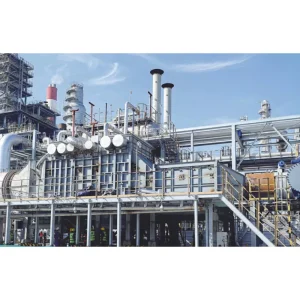
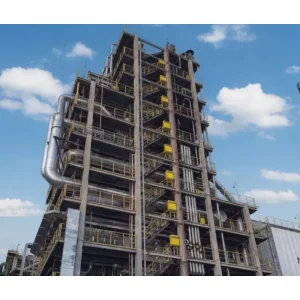
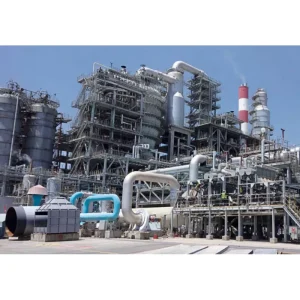
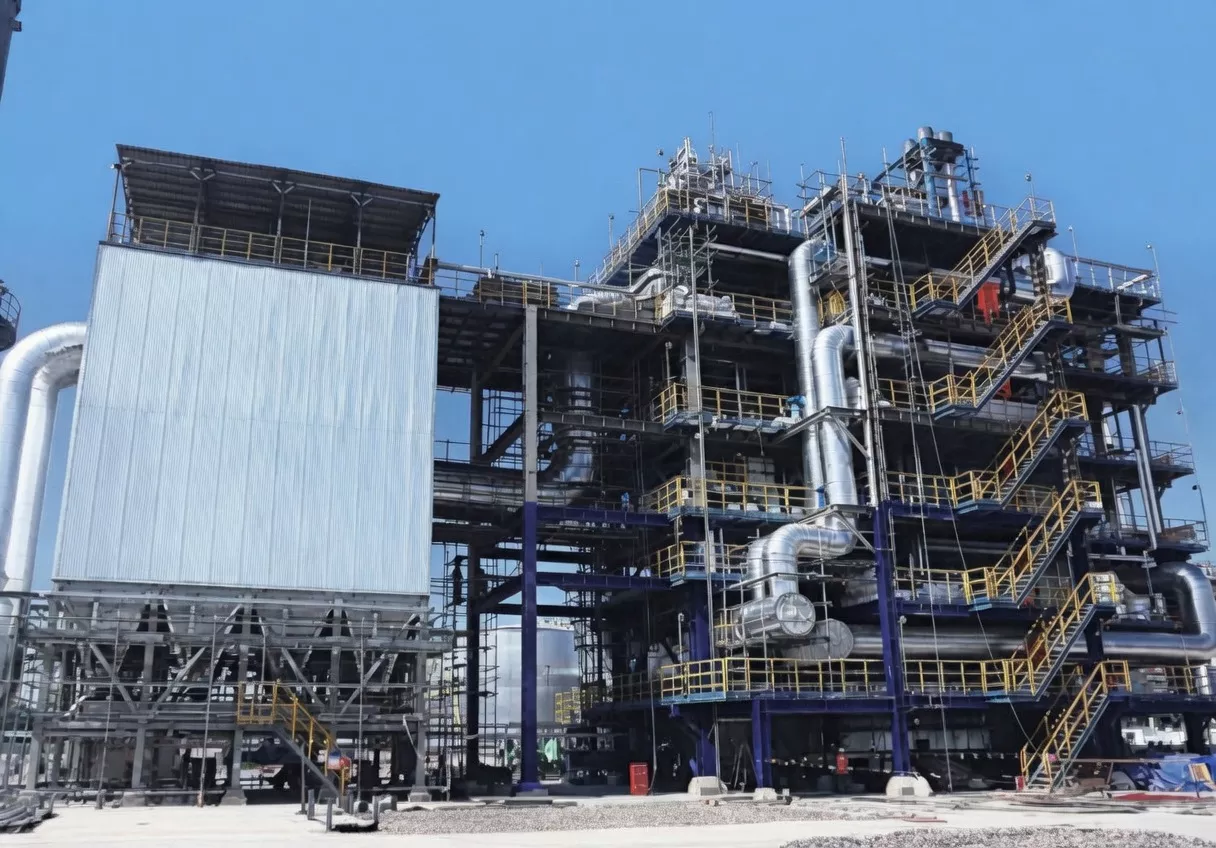
The Ever-power large-cavity membrane wall boiler is a water-tube industrial boiler built around an oversized radiant furnace fitted with welded, gas-tight membrane water walls. The volume of the combustion chamber is deliberately larger than a comparable package boiler — giving combustion gases 2.5 seconds or more of residence time at ≥ 1,100 °C. That extra dwell is what turns low-calorific, difficult fuels into complete combustion instead of CO and unburnt hydrocarbons.
The membrane wall itself is a continuous weld of fin tubes, which replaces most of the refractory in traditional fire-tube designs. That means no refractory spalling, no seasonal relining, and a far lower heat loss through the casing. For Australian sites burning coke oven gas, blast furnace gas, refinery tail gas or waste-derived fuels, the design removes two of the biggest maintenance headaches on the same pass.
Capacity ranges from 10 t/h process steam for medium industrial plants up to 130 t/h for refinery and metals installations. Superheater and economiser bundles are sized around the specific fuel envelope — a precaution most catalogue boilers skip and which shows up later as tube failure. The product line doubles as a waste liquid incinerator back-end on refinery sites where flare gas displaces natural gas.
 Fuels It Burns Completely
Coke Oven Gas (COG)
4,000–4,500 kcal/Nm³. High H₂, high CH₄, with H₂S and tar traces. Tangential firing with high-temperature safety interlocks.
Blast Furnace Gas (BFG)
700–900 kcal/Nm³. Ultra-low CV, dusty, typically co-fired with natural gas for flame stability.
LD Converter Gas (LDG)
1,800–2,200 kcal/Nm³. Batch availability from BOF steelmaking; buffered in gasholder, fired on demand.
Refinery Fuel Gas & Off-Gas
Hydrogenation off-gas, FCC tail gas, LPG vent streams. Variable composition handled by adaptive burner control.
Biogas & Landfill Gas
4,800–5,500 kcal/Nm³ after scrubbing. Siloxane-resistant combustion head and corrosion-protected convective banks.
Waste-Derived & Liquid Fuels
Spent oil, waste solvent, non-condensable gas (NCG) from pulp mills. Full compatibility with upstream waste liquid incinerator tie-in.
How the Large-Cavity Membrane Wall Boiler Works
Heat transfer is split deliberately between radiant and convective zones. The oversized furnace does the heavy lifting on radiant cooling; a staged convective pass polishes the flue gas and raises steam superheat to contract.
Fuel Blending & Preheating
Primary and support fuel are blended to a target Wobbe index. Air is preheated through a regenerative or tubular APH to raise adiabatic flame temperature.
Tangential Firing
Low-NOx burners on furnace corners inject fuel tangentially. The vortex flame completes combustion before touching the water walls, minimising tube stress.
Radiant Heat Absorption
Membrane water walls capture radiant heat. Over-fire air ports manage CO burnout and NOx staging in the upper furnace volume.
Convective Superheat & Evaporation
Two-stage platen and pendant superheaters raise steam temperature to contract. Evaporator bundles finish steam quality in saturation.
Feedwater Preheat & Exit
Economiser recovers final enthalpy. Flue gas exits to air preheater, then to SCR/ESP or bag filter before the stack.
Key Features & Engineering Advantages
Oversized Combustion Chamber
Furnace volume sized for ≥ 2.5 s residence at 1,100 °C — complete CO burnout even on 700 kcal/Nm³ BFG without auxiliary-fuel overshoot.
Gas-Tight Membrane Walls
Welded fin-tube construction eliminates refractory from the radiant zone. Casing heat loss below 2% of heat input.
Turn-Down Ratio 25–110%
Wide turn-down on primary fuel; no support-fuel spike until fuel CV drops below 450 kcal/Nm³. Matches real-world refinery gas swings.
Low-NOx Staged Combustion
Tangential low-NOx burners plus over-fire air typically deliver < 150 mg/Nm³ NOx without SCR — saving catalyst cost and ammonia logistics.
Corrosion-Resistant Convective Pack
T22 / T91 / Inconel 625 tube options selected against HCl and SOx exposure — critical for refinery tail-gas duty.
Retrofit-Friendly Footprint
Designed as a drop-in replacement of legacy D-type package boiler where steam demand has grown beyond the original rating.
Technical Specifications
Published capacity bands cover the most common Australian refining, metals and coal-chemical duties. Custom builds against specific Wobbe envelopes and steam contract parameters are available.
| Model | Steam Output (t/h) | Steam Pressure (MPa) | Steam Temp. (°C) | Furnace Volume (m³) | Thermal Efficiency |
|---|---|---|---|---|---|
| EP-LM-10 | 10 | 2.5 | Sat / 350 | 45 | ≥ 92% |
| EP-LM-25 | 25 | 3.82 | 450 | 115 | ≥ 93% |
| EP-LM-50 | 50 | 5.3 | 485 | 230 | ≥ 93% |
| EP-LM-75 | 75 | 5.3 / 9.8 | 485 / 540 | 340 | ≥ 93% |
| EP-LM-130 | 130 | 9.8 / 13.7 | 540 | 580 | ≥ 93.5% |
Emission & Compliance Performance
| Parameter | Ever-power Typical | Australian State EPA Limit |
|---|---|---|
| NOx without SCR | < 150 mg/Nm³ | 350 mg/Nm³ |
| CO | < 30 mg/Nm³ | 125 mg/Nm³ |
| SO₂ (on BFG/LDG) | < 50 mg/Nm³ | 200 mg/Nm³ |
| Particulates | < 10 mg/Nm³ | 30 mg/Nm³ |
| Unburned Hydrocarbons | < 5 mg/Nm³ | 20 mg/Nm³ |
| Casing Heat Loss | < 2% | — |
Applications Across Australian Industry
Oil Refineries
Refinery fuel gas, hydrotreater off-gas, FCC tail gas. Displaces purchased natural gas for steam generation.
Iron & Steel
Combined BFG + COG + LDG firing for central power stations at integrated steelworks.
Coal Chemical & Gasification
Purge gas from methanol, ammonia and Fischer-Tropsch synthesis loops. Often paired with waste liquid incinerator feed.
Pulp & Paper
Non-condensable gas incineration, black-liquor off-gas. Corrosion-resistant convective pack sized for chloride exposure.
Biogas / LFG to Power
Wastewater digester gas and landfill gas plants pairing a steam boiler with a backpressure turbine for power export.
District & Process Steam
Industrial estate steam utilities, hospital campuses, large food processing sites with multi-fuel optionality.
Why Choose Ever-power
A large-cavity membrane wall boiler built badly is almost impossible to fix once the walls are welded. Sizing and metallurgy decisions have to be right at design stage, not discovered on commissioning. These six engineering commitments separate the Ever-power build from a generic replacement of catalogue D-type boiler.
More on our reference list and factory capability sits on the Ever-power company page, or browse the full boiler range on our home page.
Australian Project Case Studies
Oil Refinery — Kwinana Strip
A refinery was flaring about 12,000 Nm³/h of off-gas while simultaneously purchasing natural gas to feed an ageing D-type steam boiler. The flare was under state EPA scrutiny for methane slip and the boiler was due for a major overhaul.
Ever-power solution: EP-LM-50 large-cavity membrane wall boiler with multi-fuel burner for refinery gas + natural gas + liquid waste assist; 50 t/h steam at 485 °C / 5.3 MPa.
Result: Flare volume reduced 92%, natural gas import cut by 63,000 GJ/year, boiler NOx measured at 124 mg/Nm³ on acceptance testing.
Integrated Pulp & Board Mill — Hunter Valley
A pulp mill needed to destroy 4,200 Nm³/h of non-condensable gas (NCG) while covering a 28 t/h process steam gap. The previous approach — a dedicated flare plus a package boiler — failed odour complaints under the NSW EPA POEO licence.
Ever-power solution: EP-LM-25 large-cavity membrane wall boiler with CNCG/DNCG burner set and corrosion-resistant convective pack.
Result: Odour complaints eliminated. Thermal efficiency measured at 93.7% on NCG-dominant operation. Steam contract deficit closed without new gas import.
Frequently Asked Questions
What is the minimum fuel calorific value this boiler can burn without support fuel?
The design point is 450 kcal/Nm³ without continuous support fuel, using preheated combustion air and a tangential-firing low-NOx burner set. Below that point, a small natural gas trim burner (typically 5–8% of thermal input) is used to hold flame stability and maintain required NOx performance.
How is the membrane wall protected from refractory thermal shock?
The radiant zone is largely refractory-free — that is the core design idea. Only the burner throat and inlet nose carry localised refractory, selected as high-alumina or SiC castable depending on fuel chemistry. Thermal cycling is limited by controlled ramp-up and ramp-down sequences in the PLC.
Can it replace an existing package boiler inside a small boiler house?
Often yes, but with careful layout planning. The large cavity means the unit is taller than an equivalent fire-tube boiler at the same capacity. We carry out a 3D laser scan of the existing boiler house at quote stage and only commit to a retrofit scope once clearances, steam piping and stack ducting are confirmed.
How does NOx performance compare with a CFB boiler?
For gaseous and light liquid fuels, a well-engineered large-cavity membrane wall boiler with tangential low-NOx burners reaches < 150 mg/Nm³ NOx — comparable to or better than a CFB with the same fuel. A CFB retains an advantage on solid and low-rank fuels where in-bed limestone injection plus staged combustion manages both NOx and SOx simultaneously.
What is the expected pressure-part lifespan?
Design life for the main pressure parts is 25 years or 200,000 operating hours, whichever arrives first, assuming water chemistry is maintained inside AS 3814 and boiler feed standards. Superheater and economiser tubes in aggressive fuels (high S, high V) are often life-limited to 10–15 years and are planned retubes.
Is the boiler compatible with future SMR-based power cycles or green hydrogen?
Hydrogen-ready burner designs are available on new builds. Existing installations can be retrofitted with dedicated H₂ burners once the site commits to a green hydrogen supply path. Material selection in the radiant zone already accommodates hydrogen flame temperatures; only burner tips and valve trains require upgrade.
What is the typical commissioning duration?
Hydrostatic test, chemical boilout, steam blow-out, functional I/O checks and performance test together typically run 5–7 weeks on a mid-size EP-LM-25. Larger units with superheater alignment and multi-fuel burner tuning normally take 8–10 weeks.
Need a Fuel-Fit Engineering Study?
Send your fuel analysis, flow envelope and steam demand to [email protected] or use the contact page. A full heat balance, CFD-based furnace sizing and budget price will be returned within 10 working days — free of charge.