2. Navigating Australian & International Emission Regulations
Operating in the heavy engineering sector in Australia requires strict adherence to a multi-layered regulatory framework. Our RTO systems are designed to guarantee compliance with the following specific standards:
- 🇦🇺 Australian National Pollutant Inventory (NPI): Facilities exceeding usage thresholds for VOCs and specific air toxics (like toluene, xylenes, and isomers) must report emissions. Our RTOs reduce reportable loads by >99%, simplifying NPI reporting and reducing liability.
- 🇦🇺 State EPA Guidelines (VIC/NSW/WA): For example, EPA Victoria’s strict licensing conditions for “Scheduled Premises” require Best Practice Environmental Management (BPEM). Our 3-Bed RTO is recognized as BAT (Best Available Technique) for controlling large-volume VOC emissions.
- 🚢 IMO MARPOL Annex VI: For shipyards engaging in maintenance and repair, controlling Ozone Depleting Substances (ODS) and VOCs is critical for international compliance certification.
- ✈️ Aerospace Standards (AS9100/MIL-STD): The stability of airflow and temperature in our abatement systems ensures that the delicate curing process of aerospace composites and coatings is not disrupted, maintaining adherence to military and civil aviation quality standards.
3. Working Principle: The 3-Bed RTO + Scrubber Advantage
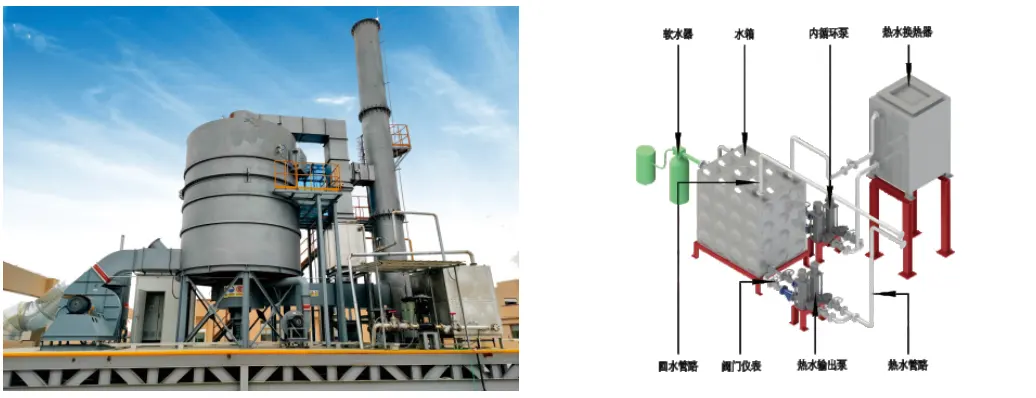
The EVER-POWER solution for large component coating is a two-stage integrated system. First, the exhaust gas, often laden with sticky paint overspray and isocyanates, enters a High-Efficiency Wet Scrubber. Here, a turbulent water curtain captures particulate matter and heavy metal precursors, preventing them from glazing the RTO’s ceramic media. This pre-treatment is crucial for maintaining thermal efficiency and reducing maintenance downtime.
The cleaned, VOC-laden air then enters the 3-Bed Regenerative Thermal Oxidizer. Unlike 2-bed systems, a 3-bed design utilizes a dedicated purge cycle.
Phase 1 (Intake): Process gas enters Bed A, absorbing heat from the ceramic media before reaching the combustion chamber.
Phase 2 (Oxidation): The gas is heated to ~850°C, where VOCs are oxidized into CO2 and H2O.
Phase 3 (Exhaust): Hot gas exits through Bed B, transferring its heat to the ceramics for the next cycle.
Phase 4 (Purge): Bed C is purged with clean air to remove any trapped raw gas, ensuring zero leakage during valve switching. This architecture is essential for handling the high air volumes (100,000+ Nm³/h) typical of ship and aircraft hangars.
4. Target Application Scenarios
- Commercial Shipyards: Hull blasting and coating halls.
- Naval Maintenance Bases: Submarine and frigate surface treatment.
- Aerospace Manufacturing: Wing and fuselage painting booths.
- Wind Energy: Coating of massive offshore wind turbine blades.
4. Technical Specifications & Performance Parameters
| Performance | 2-bed RTO | 3-bed RTO | Rotary Valve RTO | Notes |
|---|---|---|---|---|
| Technicality | First generation | Second generation | Third generation | |
| Number of chambers | 2 | 3 | 12 | Rotary valve operates continuously |
| Number of valves | 4 | 9 | / | |
| Reliability | Valve switching times per year: 350,000 | Valve switching times per year: 520,000 | / | |
| Piping pressure fluctuation | ±500pa | ±250pa | ±25pa | |
| Discharge compliance | Total purification efficiency: 95% | Total purification efficiency: 99% | Total purification efficiency: 99.5% | 99.5% |
| Maximum treating range | < 1g | < 5g | < 10g | 50mg/m³ discharge standard |
| Heat dissipation surface area | 100m² | 145m² | 95m² | |
| Energy saving | Thermal efficiency: 90% | Thermal efficiency: 95% | Thermal efficiency: 96% | 96% |
| Start-up heating time | 2.5h | 2.5h | 2h | Cold furnace start-up (Ethyl acetate) |
| Self-operation concentration | 2.5g/m³ | 2.2g/m³ | 1.8g/m³ | |
| Economy | Regenerative ceramic filling volume: 18m³ | Regenerative ceramic filling volume: 26m³ | Regenerative ceramic filling volume: 17m³ | 17m³ |
| Practicality | Occupation of land: L12×W7 | Occupation of land: L16×W7 | Occupation of land: L12×W7 | L12×W7 |
*Disclaimer: The other brand names mentioned above are provided solely for illustrative purposes. We do not offer original products or equipment bearing these brand names.
5. Brand & Component Compatibility Matrix
EVER-POWER systems are designed with open architecture to serve as direct replacements or upgrades for existing European or American systems installed in Australian facilities. We use globally sourced components for ease of local maintenance.
| System Component | Standard Global Brand | EVER-POWER Solution (Replacement/Upgrade) | Compatibility Notes |
|---|---|---|---|
| Burner System | Maxon / Eclipse | Low-NOx High Velocity Burner | Full retrofitting capability for existing gas trains. |
| PLC Control | Siemens S7 / Allen Bradley | Siemens Smart-PAC | Seamless integration with shipyard SCADA/BMS systems. |
| Ceramic Media | Lantec / Koch | EP-Honeycomb™ | Direct drop-in replacement with 15% lower pressure drop. |
| Legacy RTO Unit | Dürr / Anguil / Eisenmann | EVER-POWER Sky-Marine Series | Cost-effective total system replacement with ~35% CapEx savings. |
*Disclaimer: The other brand names mentioned above are provided solely for illustrative purposes. We do not offer original products or equipment bearing these brand names.
6. Customer Success Story:
7. Industry Trends: The Future of Green Aerospace & Marine
The global trend in large component manufacturing is moving towards “Green Shipyards” and “Sustainable Aviation”. In Australia, this is driven by the government’s push for net-zero emissions by 2050. We are observing a significant shift away from traditional solvent-based paints towards high-solid and water-borne coatings, yet the curing of these advanced coatings still requires precise temperature control and VOC abatement.
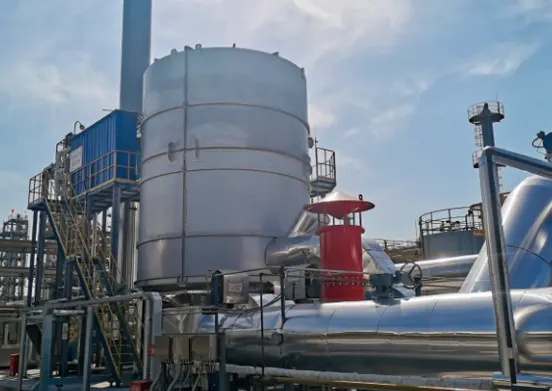
Furthermore, Energy Recovery is no longer optional. Modern RTOs are now acting as energy hubs, where the excess heat generated from VOC oxidation is captured via heat exchangers to provide hot air for the paint curing ovens themselves. This “Closed-Loop Energy System” drastically reduces the carbon footprint of the coating facility, aligning with ESG (Environmental, Social, and Governance) investment criteria.
8. Custom Engineering & Manufacturing Capabilities
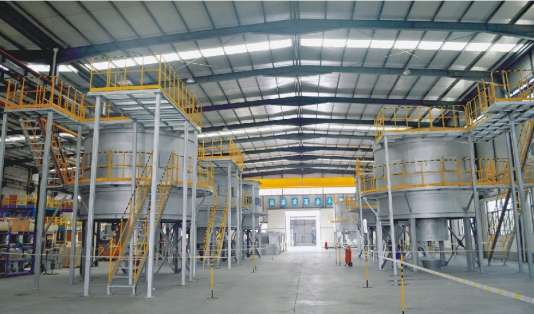
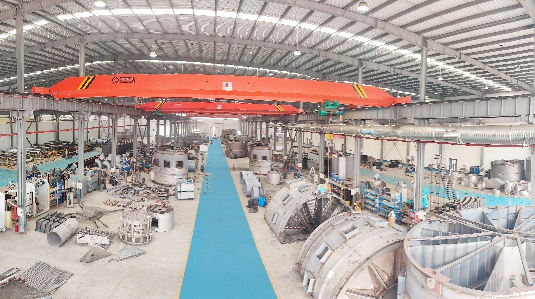
At EVER-POWER, we don’t just assemble; we engineer. Our 30,000+ square meter manufacturing facility is equipped to build massive RTO modules that are pre-assembled and tested before shipping to Australia. This modular “Plug-and-Play” approach minimizes on-site disruption at busy shipyards or hangars.
Our Customization Services Include:
• Layout Adaptation: Vertical or horizontal layouts to fit constrained hangar spaces.
• Marine-Grade Protection: C5-M standard coating on all exterior RTO surfaces to withstand salty coastal environments.
• Fuel Flexibility: Burners adapted for Natural Gas, LPG, or LNG, depending on site availability.
9. Related Solutions
10. Frequently Asked Questions (FAQ)
Q1. How does the 3-Bed RTO handle the intermittent airflow typical of aircraft painting cycles?
A1. Aircraft painting involves stop-start cycles. Our RTO features a Variable Frequency Drive (VFD) on the main fan and a “Hot Bypass” system. This allows the RTO to idle at temperature during low flow without shutting down, ensuring it’s ready to handle full load instantly when spraying resumes.
Q2. Can this system handle isocyanates found in polyurethane marine paints?
A2. Yes, isocyanates require stable combustion to prevent toxic byproducts. Our RTO maintains a chamber temperature above 850°C with a residence time of >1 second, ensuring complete thermal destruction of isocyanates into harmless inert gases.
Q3. What is the typical maintenance schedule for an RTO in a shipyard environment?
A3. For shipyard applications, we recommend a bi-annual inspection of the ceramic media and valves. However, thanks to our integrated wet scrubber pre-treatment, the risk of particulate clogging is minimized, often extending major maintenance intervals to 12-18 months.
Q4. Does the system comply with Australian wiring and safety standards (AS/NZS)?
A4. Absolutely. All electrical components, motors, and control panels for our Australian projects are specified to meet AS/NZS 3000 wiring rules, and gas trains comply with AS 3814 (Industrial and Commercial Gas Fired Appliances).
Q5. How much space does a 100,000 Nm³/h RTO system require?
A5. A typical 3-Bed RTO of this capacity requires a footprint of approximately 15m x 8m. However, we offer skid-mounted and double-deck designs to minimize the ground footprint.
Q6: How does the 3-Bed RTO handle the intermittent airflow typical of aircraft painting cycles?
A6: Aircraft painting involves stop-start cycles. Our RTO features a Variable Frequency Drive (VFD) on the main fan and a “Hot Bypass” system. This allows the RTO to idle at temperature during low flow without shutting down, ensuring it’s ready to handle full load instantly when spraying resumes.
Q7: Can this system handle isocyanates found in polyurethane marine paints?
A7: Yes, isocyanates require stable combustion to prevent toxic byproducts. Our RTO maintains a chamber temperature above 850°C with a residence time of >1 second, ensuring complete thermal destruction of isocyanates into harmless inert gases.
Q8: What is the typical maintenance schedule for an RTO in a shipyard environment?
A8: For shipyard applications, we recommend a bi-annual inspection of the ceramic media and valves. However, thanks to our integrated wet scrubber pre-treatment, the risk of particulate clogging is minimized, often extending major maintenance intervals to 12-18 months.
Q9: Does the system comply with Australian wiring and safety standards (AS/NZS)?
A9: Absolutely. All electrical components, motors, and control panels for our Australian projects are specified to meet AS/NZS 3000 wiring rules, and gas trains comply with AS 3814 (Industrial and Commercial Gas Fired Appliances).
Q10: How much space does a 100,000 Nm³/h RTO system require?
A10: A typical 3-Bed RTO of this capacity requires a footprint of approximately 15m x 8m. However, we offer skid-mounted and double-deck designs to minimize the ground footprint.
Editor: PXY