

1. Regenerative Thermal Oxidizer (RTO): Efficient Industrial Waste Gas Treatment Solution
2. Five Key Facts
-
High VOC Destruction Efficiency: EVER-POWER’s RTO systems are designed to achieve over 99.5% VOC destruction efficiency, ensuring compliance with Australian regulations and global standards, even when dealing with complex solvents like Methylene Chloride in pharmaceutical manufacturing.
-
Advanced Heat Recovery and Energy Savings: By utilizing high-density ceramic heat recovery media, EVER-POWER’s RTO systems can recover up to 97% of thermal energy, significantly reducing natural gas consumption and operational costs, often running in a self-sustaining mode once operational temperature is reached.
-
Tailored Solutions for Pharmaceutical Applications: EVER-POWER provides customized RTO solutions for pharmaceutical facilities, including features like GMP hygiene design, stainless steel internals, and easy integration with existing control systems, making it ideal for softgel and injection extraction processes.
-
Global Compliance with Stringent Regulations: The EVER-POWER RTO systems are built to meet the toughest local and international standards, including those from Australia (EPA Victoria, NSW EPA, TGA), the EU, and the US EPA NESHAP, ensuring your facility is compliant with environmental regulations and maintains its social license to operate.
-
Solvent Recovery Integration: EVER-POWER’s systems integrate multi-stage condensation and Zeolite Rotor Concentrators to recover valuable solvents like Acetone and Isopropanol, reducing raw material costs while efficiently handling waste emissions, turning compliance costs into savings opportunities.
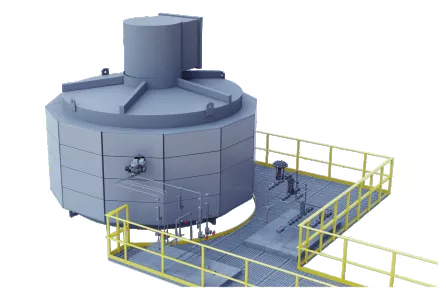

3. Core Technical Parameters of EVER-POWER RTO
| Performance | 2-bed RTO | 3-bed RTO | Rotary Valve RTO | Notes |
|---|---|---|---|---|
| Technicality | First generation | Second generation | Third generation | |
| Number of chambers | 2 | 3 | 12 | Rotary valve operates continuously |
| Number of valves | 4 | 9 | / | |
| Reliability | Valve switching times per year: 350,000 | Valve switching times per year: 520,000 | / | |
| Piping pressure fluctuation | ±500pa | ±250pa | ±25pa | |
| Discharge compliance | Total purification efficiency: 95% | Total purification efficiency: 99% | Total purification efficiency: 99.5% | 99.5% |
| Maximum treating range | < 1g | < 5g | < 10g | 50mg/m³ discharge standard |
| Heat dissipation surface area | 100m² | 145m² | 95m² | |
| Energy saving | Thermal efficiency: 90% | Thermal efficiency: 95% | Thermal efficiency: 96% | 96% |
| Start-up heating time | 2.5h | 2.5h | 2h | Cold furnace start-up (Ethyl acetate) |
| Self-operation concentration | 2.5g/m³ | 2.2g/m³ | 1.8g/m³ | |
| Economy | Regenerative ceramic filling volume: 18m³ | Regenerative ceramic filling volume: 26m³ | Regenerative ceramic filling volume: 17m³ | 17m³ |
| Practicality | Occupation of land: L12×W7 | Occupation of land: L16×W7 | Occupation of land: L12×W7 | L12×W7 |
*Disclaimer: The other brand names mentioned above are provided solely for illustrative purposes. We do not offer original products or equipment bearing these brand names.
4. RTO in Softgel & Injection Extraction: Scene Analysis
The production of soft gelatin capsules and injectable formulations involves specific stages—extraction, impregnation, evaporation, and concentration—that generate unique emission profiles.
4.1. The Challenge: High Concentration & Solvent Value
Solvent Characteristics: The waste gas typically contains high concentrations (5–20 g/Nm³) of solvents like Acetone, Ethanol, and Isopropanol. In injection molding extraction, solvents like Methanol or Ether might also be present. These are not just pollutants; they are valuable resources.
Process Flow: The extraction process is often intermittent. When a batch is dried or concentrated, VOC levels spike rapidly, potentially exceeding the Lower Explosive Limit (LEL).
The EVER-POWER Solution Strategy:
We do not simply burn these valuable resources. Our integrated solution follows a logic of “Recovery First, Destruction Second”:
- Condensation Recovery: Multi-stage condensers chill the exhaust to -20°C or lower, recovering up to 90% of the solvent for reuse, significantly lowering raw material costs.
- Zeolite Rotor Concentration (Optional): For high-volume, low-concentration tail gas, a hydrophobic zeolite rotor concentrates the stream to reduce the RTO size.
- LEL Safety Dilution: Automatic fresh air dilution ensures the stream entering the RTO remains below 25% LEL to prevent explosion risks.
- Thermal Oxidation: The remaining stripped gas enters the 3-Bed RTO for final purification before release.
4.2. Advantages & Limitations
- Advantages: High energy efficiency (self-sustaining combustion), robust against flow fluctuations, minimal secondary pollution (NOx), and capability to recover waste heat for steam generation (used back in the extraction process).
- Limitations: High initial capital expenditure (CapEx) compared to simple carbon filters; requires careful engineering for halogenated solvents (e.g., Dichloromethane) to prevent acid corrosion.


5. RTO System Components & Ecosystem Support
A pharmaceutical RTO is more than just a combustion chamber; it is a complex ecosystem of high-grade components designed for safety and longevity.
Heat Storage Media: Structured Ceramic Monoliths or Saddles. We recommend high-alumina porcelain resistant to thermal shock and chemical attack from solvent acids.
Switching Valves: Pneumatic Poppet Valves with air-seal technology. Crucial for ensuring zero leakage of untreated pharma-grade solvents during bed regeneration.
Burner Systems: Low-NOx Modulating Burners (e.g., Maxon/Eclipse). Capable of high turndown ratios to maintain temperature stability during solvent spikes.
Safety Systems: LEL Analyzers & Flashback Arrestors. Mandatory for handling flammable solvents like Ethanol/Acetone to prevent duct fires.
6. Global & Local Market Application: Navigating Compliance in Australia
6.1. Australian Regulatory Landscape
- Therapeutic Goods Administration (TGA): While TGA focuses on product safety, the manufacturing process (GMP) requires validation of all critical utilities, including air handling. Our RTOs prevent cross-contamination and ensure exhaust air does not re-entrain into HVAC intakes.
- National Pollutant Inventory (NPI): Australian facilities exceeding specific thresholds for Acetone, Ethanol, or TVOCs must report emissions. Our >99% destruction efficiency significantly lowers your reportable load, simplifying NPI compliance.
- State EPAs (Victoria/NSW/QLD): For example, EPA Victoria’s Environment Reference Standard (ERS) places strict limits on odor and ground-level concentrations of air toxics. Our 3-Bed RTO design with a dedicated purge cycle eliminates the “puff” of untreated gas, ensuring odor-free operations near residential zones in Melbourne or Sydney.
6.2. Global Context
From the pharmaceutical hubs of India (Sun Pharma, Dr. Reddy’s) to the biotech parks of Germany (Bayer) and the USA (Pfizer), RTO technology is the mandated standard for solvent handling. EVER-POWER leverages learnings from these global markets to bring world-class, compliant solutions to Australian shores.
7. Industry Trends: The Future of Pharma Emissions
1. Green Solvents & Carbon Neutrality: As the industry shifts towards “Green Chemistry,” emissions profiles are changing. RTOs are evolving to handle wider ranges of biodegradable solvents while integrating with carbon capture systems to achieve Net Zero manufacturing.
2. Energy Circularity: The trend is moving away from standalone treatment. Modern RTOs in softgel plants are coupled with waste heat boilers to generate low-pressure steam, which is fed directly back into the gelatin melting tanks or drying tunnels, creating a closed energy loop.
8. About us | EVER-POWER Factory: Precision Engineering & Customization
Our Customization Services:
- Stainless Steel Internals: For hygienic areas or corrosive exhaust streams (e.g., HCl from acid chlorides), we use SS316L or Hastelloy.
- Skid-Mounted Units: Pre-wired and pre-piped systems for rapid deployment in existing Australian facilities with limited space.
- Integration Logic: We program our PLC (Siemens/Allen-Bradley) to handshake seamlessly with your extraction line’s DCS, ensuring the RTO ramps up before the solvent load hits.


9. Customer Success Story
“We switched to Ever-Power’s RTO system for our softgel production line, and the results have been fantastic. Not only did we meet the tough VOC destruction standards set by the Australian EPA, but we also saved a significant amount on energy costs. The self-sustaining combustion feature means we’re using way less natural gas, which is a huge win for us!”
“Our facility needed to stay compliant with the TGA and EPA guidelines, and Ever-Power’s RTO delivered. Their system was designed specifically for our needs, ensuring that we passed every audit with flying colors. Plus, the integration with our existing control systems was smooth—no headaches at all.”
“Working with solvents like Ethanol can be tricky, but Ever-Power’s RTO systems made sure we were always in safe territory. The LEL analyzers and explosion protection features give us peace of mind, especially during the high-concentration spikes in our extraction process. It’s built for safety.”
“Whether it’s our smaller R&D batches or large-scale production, Ever-Power’s RTO handles both with ease. The system adapts to the fluctuating solvent concentrations in batch extraction without missing a beat. It’s been an absolute game-changer for our production efficiency.”
“Since we installed Ever-Power’s RTO, we’ve seen a drastic reduction in our energy bills. The thermal energy recovery feature has been especially helpful. It’s impressive how their system recycles heat to run on minimal fuel during solvent-rich phases.”
“We needed a fast turnaround, and Ever-Power delivered. The installation and commissioning in Melbourne were seamless, and their team provided top-notch support throughout the entire process. It’s great to work with a company that understands the urgency and complexity of the pharmaceutical industry.”
10. Related Solutions
11. FAQ
Q1. How does an RTO handle the fluctuation of solvent concentration in batch extraction processes?
A1. Excellent question. Batch extraction creates “peaks and valleys” in emissions. Our RTOs are equipped with a “hot bypass” and a rapid-response burner modulation system. When concentration spikes, the hot bypass opens to prevent overheating; when it drops, the ceramic media retains heat to maintain oxidation temperature. For extreme fluctuations, we install a buffer tank or a zeolite concentrator to smooth out the load.
Q2. Can the RTO system recover the expensive solvents like Acetone before destroying them?
A2. Absolutely. We prioritize recovery. We typically install a multi-stage condensation unit (using chilled glycol) upstream of the RTO. This allows you to recover highly concentrated solvents for reuse or purification, sending only the residual lean gas to the RTO for destruction. This turns a compliance cost into a savings opportunity.
Q3. Is your RTO system compliant with Australian TGA and GMP hygiene standards?
A3. Yes, we understand the pharma environment. While the RTO is usually outside the “clean room,” we design the ductwork and capture hoods with stainless steel and sanitary welds to prevent particle accumulation. We also ensure the system maintains negative pressure to prevent any backflow of exhaust into the clean manufacturing zone.
Q4. What safety measures are in place for handling explosive solvents like Ethanol?
A4. Safety is non-negotiable. Our systems include real-time LEL (Lower Explosive Limit) analyzers at the inlet. If solvent concentration exceeds 25% LEL, a fresh air dilution valve automatically opens to lean out the mixture. We also include flame arrestors and explosion relief vents (burst discs) throughout the ductwork.
Q5. How does a 3-Bed RTO differ from a 2-Bed design for odor control?
A5. For pharmaceutical odors, a 3-Bed design is superior. In a 2-Bed system, when valves switch, a small “puff” of untreated gas trapped in the inlet piping escapes. A 3-Bed system uses the third chamber to purge this trapped gas back into the combustion zone, ensuring continuous, 99%+ destruction efficiency and zero odor spikes.
Q6. Can the heat generated by the RTO be used for our gelatin melting tanks?
A6. Yes, this is a very popular integration. We can install a waste heat boiler or a thermal oil heat exchanger on the RTO stack. The captured energy can generate steam or hot water, which can then be piped back to jacketed gelatin tanks or drying tunnel radiators, significantly offsetting your facility’s boiler fuel usage.
Q7. Do you provide installation and commissioning services in cities like Melbourne or Sydney?
A7. We do. EVER-POWER partners with local Australian engineering firms for on-site installation and mechanical works. Our senior engineers fly in for the final commissioning, software setup, and operator training to ensure the system runs perfectly from day one.
Q8. What maintenance is required for the ceramic media in a softgel application?
A8. Generally, ceramic media is very durable. However, if your process exhaust contains sticky aerosols (like gelatin dust or oil mist), we recommend upstream filtration. We also include a “bake-out” mode in the RTO software, which raises the temperature periodically to burn off any organic buildup on the cold face of the media.
Q9. How much space does a typical 10,000 Nm³/h RTO system occupy?
A9. A skid-mounted 10,000 Nm³/h unit is quite compact. Typically, you would need a footprint of approximately 6m x 4m, plus clearance for maintenance. We can custom design the layout to fit vertical spaces or rooftops if ground space at your facility is limited.
Q10. What is the typical lead time for a custom-engineered pharmaceutical RTO?
A10. For a custom project requiring specific metallurgy and recovery integration, engineering and fabrication typically take 14-18 weeks. Shipping to Australian ports (Melbourne/Sydney) adds about 3-4 weeks. We recommend engaging early to align with your plant shutdown or expansion schedules.
Editor: PXY