

1. Regenerative Thermal Oxidizer (RTO): High-Efficiency Industrial Exhaust Treatment

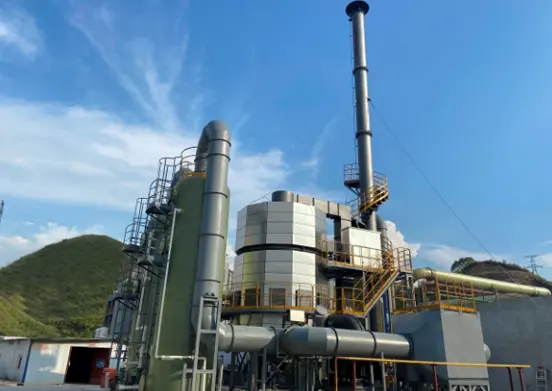
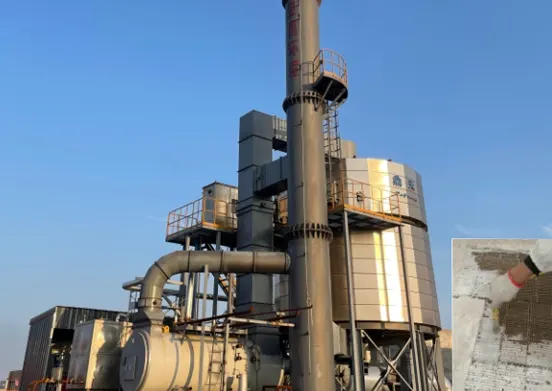
2. Core Technical Parameters of RTO for F&F Applications
Fragrance manufacturing exhaust is characterized by its complexity—often a mix of dozens of different chemical species. Our RTOs are engineered to handle this variability while maintaining strict temperature control to prevent incomplete combustion products (which can smell worse than the original VOCs).
| Technical Parameter | Specification Range | Relevance to F&F Industry |
|---|---|---|
| Operating Temperature | 815°C – 980°C | High temperature ensures complete breakdown of stable aromatic rings and complex esters. |
| VOC Destruction Efficiency | ≥ 99.5% | Critical for eliminating low-threshold odours (e.g., mercaptans, amines). |
| Thermal Efficiency (TER) | 95% – 97% | Allows for autothermal operation (no fuel needed) at VOC concentrations above 1.5 g/m³. |
| Residence Time | 0.8 – 1.2 seconds | Sufficient time for full oxidation of heavy molecules like terpenes and essential oils. |
| System Pressure Drop | 2500 – 3500 Pa | Optimized ceramic media minimizes fan power consumption. |
| Valve Leakage Rate | < 0.1% | Zero-leakage poppet valves prevent raw odorous gas from bypassing the combustion chamber. |
| Solvent Recovery Integration | Optional (Condensation/Zeolite) | Can be integrated upstream to recover high-value solvents like ethanol or hexane. |
Note: Data is based on EPA guidelines and industry best practices. Custom configurations available for specific solvent mixes.
3. Ever Power RTO Technical Specifications
| Performance | 2-bed RTO | 3-bed RTO | Rotary Valve RTO | Notes |
|---|---|---|---|---|
| Technicality | First generation | Second generation | Third generation | |
| Number of chambers | 2 | 3 | 12 | Rotary valve operates continuously |
| Number of valves | 4 | 9 | / | |
| Reliability | Valve switching times per year: 350,000 | Valve switching times per year: 520,000 | / | |
| Piping pressure fluctuation | ±500pa | ±250pa | ±25pa | |
| Discharge compliance | Total purification efficiency: 95% | Total purification efficiency: 99% | Total purification efficiency: 99.5% | 99.5% |
| Maximum treating range | < 1g | < 5g | < 10g | 50mg/m³ discharge standard |
| Heat dissipation surface area | 100m² | 145m² | 95m² | |
| Energy saving | Thermal efficiency: 90% | Thermal efficiency: 95% | Thermal efficiency: 96% | 96% |
| Start-up heating time | 2.5h | 2.5h | 2h | Cold furnace start-up (Ethyl acetate) |
| Self-operation concentration | 2.5g/m³ | 2.2g/m³ | 1.8g/m³ | |
| Economy | Regenerative ceramic filling volume: 18m³ | Regenerative ceramic filling volume: 26m³ | Regenerative ceramic filling volume: 17m³ | 17m³ |
| Practicality | Occupation of land: L12×W7 | Occupation of land: L16×W7 | Occupation of land: L12×W7 | L12×W7 |
*Disclaimer: The other brand names mentioned above are provided solely for illustrative purposes. We do not offer original products or equipment bearing these brand names.
4. Scenario Analysis: Managing Complex Scent Emissions
4.1. Extraction Process Emissions
Challenge: Extraction using solvents like hexane or ethanol produces high-concentration VOC streams. The gas may also contain plant particulate matter (dust) and essential oil mists (sticky aerosols).
Solution: A multi-stage pre-treatment system is essential. We employ a Bag Filter or Cyclone to remove particulates, followed by a Demister to strip oil mists. The pre-treated gas enters the RTO where high temperatures destroy the solvent vapors.
4.2. Compounding and Blending
Challenge: Mixing tanks release a cocktail of esters, aldehydes, and ketones. While the overall VOC concentration might be low to medium (1–5 g/m³), the odour potency is extremely high.
Solution: A 3-Canister RTO is recommended. The third canister acts as a purge chamber, recirculating any trapped gas back into the combustion zone to ensure no “puffs” of untreated odour escape during valve switching. For very low concentration streams, a Zeolite Rotor Concentrator can be added upstream to reduce airflow volume and increase fuel efficiency.
4.3. Key Application Sectors:
- Essential Oil Distilleries: Eucalyptus, Tea Tree, and Lavender extraction (common in regional Australia).
- Flavour Manufacturing: Production of savoury and sweet flavourings for the food and beverage industry.
- Fragrance Compounding: Blending of perfumes, colognes, and functional scents for detergents/cosmetics.
- Aroma Chemicals: Synthesis of specific molecules like Vanillin or Menthol.


5. RTO System Components & Ecosystem Support
Heat Exchange Media : Structured Ceramic Monoliths. Selected for their resistance to plugging from sticky organic oils and low pressure drop properties.
Switching Valves: Zero-Leakage Poppet Valves. Critical for odour control. Our pneumatic valves feature a seal-air system to ensure 100% isolation of dirty gas.
Pre-Treatment: Coalescing Filters & Demisters. Essential for removing aerosolized essential oils that could otherwise foul the ceramic media.
Secondary Heat Recovery: Waste Heat Boilers. Capture the clean, hot exhaust from the RTO to generate steam or hot water for your extraction distillation processes.
6. Global Brand Comparison Analysis
Choosing the right partner for odour control is critical. Here is how EVER-POWER compares to other global providers in the Australian market.
| Feature | Dürr (Ecopure) | Anguil | EVER-POWER |
|---|---|---|---|
| Primary Focus | Large Auto/Chemical | General Industrial | Specialized Niche (Pharma/F&F) |
| Odour Control Logic | Standard | Standard | Enhanced (3-Tower + Purge) |
| Capital Cost (CAPEX) | Premium (100%) | High (85-90%) | Competitive (40-50%) |
| Customization | Standard Models | Flexible | Highly Flexible (Custom Footprints) |
| Australian Support | Local Office | Distributor | Direct Engineering + Local Partners |
The Verdict: While Dürr and Anguil are excellent for massive petrochemical applications, EVER-POWER provides a more agile, cost-effective solution specifically tailored for the batch-processing nature and strict odour requirements of the F&F industry.
7. Local Market Application & Regulatory Compliance in Australia
7.1. Australian Regulatory Framework
- State EPA Guidelines: Facilities in NSW (POEO Act) and Victoria (Environment Protection Act 2017) face strict licensing conditions regarding offensive odours. Our RTOs are guaranteed to meet the “< 1 Odour Unit (OU)” boundary conditions often imposed on new developments.
- National Pollutant Inventory (NPI): Reporting is mandatory for facilities emitting certain thresholds of VOCs. Our high-efficiency destruction (>99.5%) helps keep your facility below reporting thresholds or significantly reduces reportable loads.
- Explosion Protection: All our systems handling flammable solvents (hexane, ethanol) are designed in accordance with Australian Standards for explosive atmospheres (AS/NZS 60079 series) and include LEL monitors and blast relief panels.
7.2. Global Context: Top Markets for F&F RTOs
The demand for high-end odour control is global. We support clients across the top 10 markets including the USA (EPA Method 25A compliance), Switzerland & France (home to major fragrance houses like Givaudan and Firmenich), Germany (TA Luft standards), and emerging hubs in China, India, and Brazil.
Local Trend: Australian consumers are increasingly demanding “natural” products. This has led to a boom in botanical extraction facilities. However, “natural” does not mean odour-free. The distinct smell of tea tree or eucalyptus processing, while natural, is still classified as a pollutant if it impacts neighbors. RTO technology bridges the gap between natural production and community comfort.
8. Customer Success Story:
“Ever-Power’s RTO system has transformed how we manage emissions from our fragrance production. The odour reduction is over 99%, and we’ve had no complaints from the community. The system handles the high humidity and oily exhaust with ease, and it’s really easy to maintain. Highly recommend it for anyone in the fragrance industry!” – Natalie F., Fragrance Production Manager
“We were originally looking at European solutions, but Ever-Power’s RTO came in at a much better price without compromising on quality. The system’s thermal efficiency has been great for our bottom line, and we’ve saved on energy costs by utilizing the waste heat for our distillation process. It’s a win-win!” – David L., Plant Operations Lead
_”Our essential oil extraction process used to create a lot of visible smoke and odours that led to community complaints. Since installing the Ever-Power RTO, the smoke has disappeared, and the odour is virtually gone. The system handles the sticky oil mists and high humidity without any issues, and the integration was seamless.”* – Claire H., Essential Oils Extraction Facility
_”We’ve been using the Ever-Power RTO for over a year, and it’s been fantastic. The system is low-maintenance, and we rarely have to deal with any issues. The safety features are top-notch, and it’s always running smoothly, which gives us peace of mind knowing we’re compliant with local regulations.”* – John M., Manufacturing Supervisor
_”Ever-Power’s team really understood our specific needs in the flavour manufacturing industry. They designed a custom RTO solution that’s perfect for our facility, handling everything from high VOC concentrations to occasional spikes. Their engineering flexibility was key to our decision, and we couldn’t be happier with the results.”* – Sarah R., Senior Engineer
_”We’ve significantly reduced our energy costs thanks to the waste heat recovery system integrated into the RTO. The recovered heat is now being used for our extraction processes, which has cut down on our natural gas usage by nearly 40%. It’s an environmentally friendly solution that actually saves us money!”* – Mark P., Energy Manager
9. Innovative Approaches for the F&F Industry
1. Solvent Recovery + RTO Hybrid: For extraction processes using expensive solvents like absolute ethanol, we can integrate a condenser/cryogenic unit before the RTO. This recovers 80-90% of the solvent for reuse, sending only the lean tail gas to the RTO for destruction. This turns a compliance cost into a profit center.
2. Zeolite Rotor Concentration: For facilities with huge air volumes (HVAC ventilation) but very low odour concentrations, a Zeolite Rotor can concentrate the VOCs by 20x before sending them to a much smaller RTO. This drastically reduces the capital and operating costs.
3. Carbon Footprint Reduction: By coupling the RTO with a waste heat boiler, the energy from destroying VOCs can generate steam for your distillation columns, lowering your site’s total carbon footprint.
10. EVER-POWER Factory: Customization for Hygienic Standards
Ever-Power specializes in bespoke RTO solutions for the unique challenges of Australian asphalt producers—from high-silica dust in outback quarries to coastal humidity in Queensland plants. Our engineering team conducts on-site exhaust profiling to size pre-filters, select corrosion-resistant alloys, and optimize heat recovery based on your utility needs. With service hubs in Sydney and Perth, we offer rapid spare parts delivery, operator training in English, and 24/7 remote diagnostics. Unlike generic suppliers, we deliver full turnkey projects including civil works coordination, commissioning, and compliance documentation aligned with NSW EPA or VIC DELWP requirements. Every system is factory-tested before shipment to ensure seamless startup.
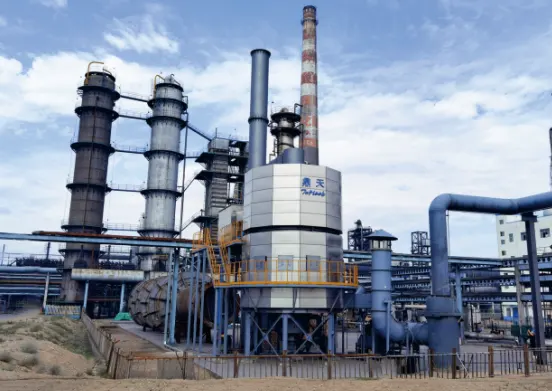
11. Related Solutions


12. FAQ
Q1. Why is an RTO better than a carbon filter for fragrance manufacturing?
A1. Carbon filters are excellent for low concentrations but struggle with the complex, high-load mixtures often found in F&F. Humidity competes with VOCs for adsorption sites, and different chemicals adsorb at different rates (chromatographic effect), leading to breakthrough. An RTO destroys everything thermally, regardless of humidity or chemical mix, providing consistent >99% efficiency without the need for frequent media changes.
Q2. How much does an RTO cost for a flavour extraction plant in Australia?
A2. Costs vary based on airflow (Nm³/h) and solvent load. However, EVER-POWER RTOs are typically priced 30-50% lower than European alternatives while using the same Tier-1 components (Honeywell burners, Siemens PLC). For a precise quote including shipping to Sydney or Melbourne, please click “Inquire Now”.
Q3. Can the RTO handle “sticky” emissions like essential oils without clogging?
A3. Yes, but design is key. We use specialized “structured” ceramic media that resists plugging better than random saddles. More importantly, we install upstream demisters and coalescing filters to capture oil droplets before they reach the RTO. We also include a “bake-out” mode to thermally clean the ceramic beds periodically.
Q4. What is the typical lead time for delivery to Brisbane or Perth?
A4. Our standard production time is 12-16 weeks. Shipping to major Australian ports takes approximately 3-4 weeks. We provide full logistics support, handling customs clearance and inland transport to your facility.
Q5. Will the RTO eliminate sulfur smells like rotten eggs or cabbage?
A5. Yes. Thermal oxidation at temperatures above 850°C converts sulfur compounds (mercaptans, H2S) into SO2 and water. While SO2 has its own limits, the threshold for smell is much higher. For high sulfur loads, we can add a small caustic scrubber downstream to neutralize the SO2.
Q6. Is the system compliant with Australian hazardous area standards (Ex-rated)?
A6. Absolutely. If your exhaust stream is classified as a hazardous zone, we supply the RTO with ATEX/IECEx certified instrumentation and motors. We also strictly adhere to NFPA 86 standards for LEL (Lower Explosive Limit) safety controls.
Q7. Can we recover heat from the RTO to power our distillation columns?
A7. Yes, this is highly recommended. We can install a waste heat boiler on the RTO stack to generate steam, or a thermal oil heat exchanger. This recovered energy can directly power your distillation or extraction processes, significantly improving your plant’s energy efficiency.
Q8. Does the RTO require a lot of natural gas to run?
A8. Not if designed correctly. RTOs are up to 97% thermally efficient. If your VOC concentration is above 3% LEL (approx. 1.5 g/m³), the system will run “autothermally,” meaning the heat released from burning the solvents is enough to sustain the temperature without any additional natural gas.
Q9. Do you offer maintenance services in Australia?
A9. We work with local mechanical and electrical partners across Australia for installation and ongoing maintenance. We also provide remote monitoring services to diagnose issues before they become problems, ensuring your uptime remains high.
Q10. How do we prove compliance to the EPA?
A10. Our systems come with continuous emission monitoring ports and data logging capabilities. We can assist in arranging independent stack testing to validate the DRE (Destruction Removal Efficiency) and provide the necessary reports for your environmental license.
Solve Your Odour & Emission Challenges Today
Contact us for a customized proposal. We provide compliant, high-efficiency RTO solutions for the Flavour & Fragrance industry in Australia.
Editor: PXY