

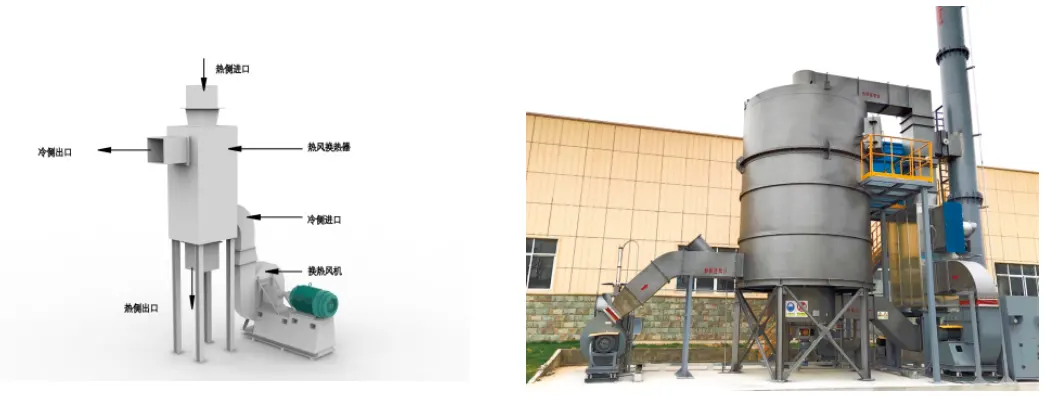
Furthermore, energy recovery in flexographic plants is not just an option; it’s a competitive necessity. The oxidation process in the RTO releases significant thermal energy. EVER-POWER integrates secondary heat exchangers to capture this energy, returning it to the printing press drying ovens. This closed-loop thermal management system can reduce the facility’s total gas consumption by up to 40%, aligning with the Australian Packaging Covenant’s (APCO) sustainability goals. Whether you are printing labels in Adelaide or flexible pouches in Brisbane, our modular RTO systems provide the reliability needed for 24/7 production cycles.
2. Compliance with Australian & Global Environmental Standards
- National Pollutant Inventory (NPI): Printing facilities emitting over certain thresholds of Total VOCs, Ethanol, or Ethyl Acetate must report to the NPI. Our systems reduce reportable emissions by >99%, often dropping facilities below reporting thresholds and improving public perception.
- EPA Victoria (Environment Protection Act 2017): The General Environmental Duty (GED) requires businesses to minimize risks to human health. Flexo solvents have distinct odours that travel. Our systems eliminate odour complaints, a critical factor for plants in mixed industrial-residential zones like Dandenong South.
- NSW EPA (Protection of the Environment Operations Act 1997): For “Paper, Pulp or Pulp Products Industries” and printing, strict Group 6 emission standards apply. We guarantee exhaust concentrations < 20 mg/Nm³, well below the typical 40-50 mg/Nm³ limits.
- Industrial Emissions Directive (IED): We adhere to the European “Best Available Techniques” (BAT) for the printing industry. This includes specific mandates for fugitive emission capture and solvent mass balance, ensuring your Australian facility meets global best practices.

3. The Technology: Zeolite Concentration + RTO
The efficiency of the EVER-POWER solution lies in the synergy between Adsorption and Oxidation. Flexographic exhaust is typically too dilute to burn efficiently. Sending 50,000 Nm³/h of 1 g/Nm³ solvent-laden air directly to an RTO would require immense amounts of natural gas to maintain combustion temperatures.
Step 1: The Zeolite Rotor Concentrator. We utilize a high-efficiency, hydrophobic zeolite wheel. Unlike activated carbon, zeolite is non-combustible and does not absorb water vapour, making it perfect for the humid exhaust of water-based or solvent-based flexo inks. As the massive volume of dirty air passes through the rotor, VOCs are trapped in the zeolite pores. The clean air is vented to the atmosphere.
Step 2: Desorption. A small stream of hot air (about 1/15th to 1/20th of the original volume) is passed through a isolated sector of the rotor. This releases the trapped VOCs, creating a low-volume, high-concentration stream.
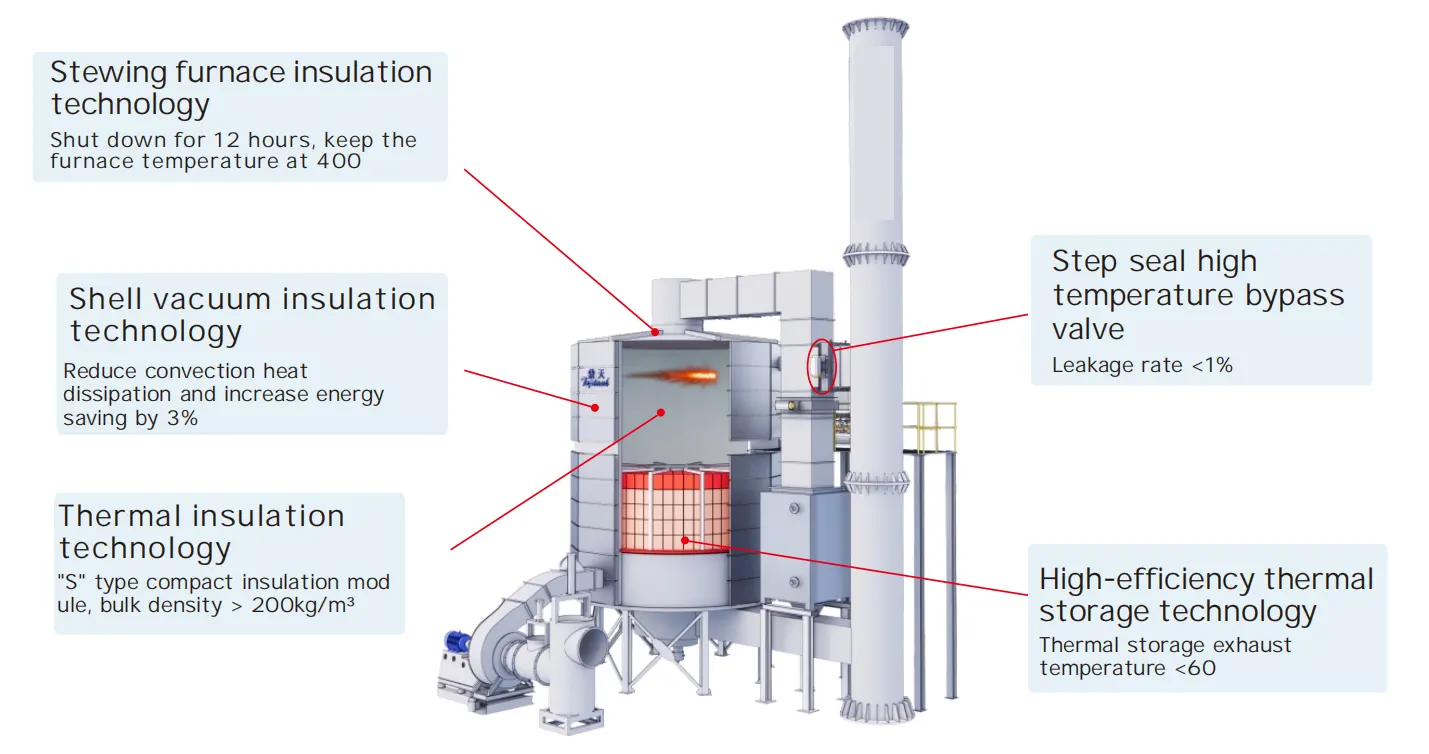
Step 3: Thermal Oxidation & Energy Recovery. This concentrated stream is sent to the 3-Bed RTO. Because the concentration is now much higher, the VOCs themselves provide the fuel for combustion. The RTO operates at ~850°C, destroying the solvents. The 3-Bed design ensures no untreated “puffs” escape during valve switching. The heat generated is recovered by the ceramic media beds (95% thermal efficiency) and surplus heat is diverted via a Waste Heat Boiler or air-to-air exchanger to power the printing press drying zones, completing the energy cycle.
4. Ever Power RTO Technical Specifications
| Performance | 2-bed RTO | 3-bed RTO | Rotary Valve RTO | Notes |
|---|---|---|---|---|
| Technicality | First generation | Second generation | Third generation | |
| Number of chambers | 2 | 3 | 12 | Rotary valve operates continuously |
| Number of valves | 4 | 9 | / | |
| Reliability | Valve switching times per year: 350,000 | Valve switching times per year: 520,000 | / | |
| Piping pressure fluctuation | ±500pa | ±250pa | ±25pa | |
| Discharge compliance | Total purification efficiency: 95% | Total purification efficiency: 99% | Total purification efficiency: 99.5% | 99.5% |
| Maximum treating range | < 1g | < 5g | < 10g | 50mg/m³ discharge standard |
| Heat dissipation surface area | 100m² | 145m² | 95m² | |
| Energy saving | Thermal efficiency: 90% | Thermal efficiency: 95% | Thermal efficiency: 96% | 96% |
| Start-up heating time | 2.5h | 2.5h | 2h | Cold furnace start-up (Ethyl acetate) |
| Self-operation concentration | 2.5g/m³ | 2.2g/m³ | 1.8g/m³ | |
| Economy | Regenerative ceramic filling volume: 18m³ | Regenerative ceramic filling volume: 26m³ | Regenerative ceramic filling volume: 17m³ | 17m³ |
| Practicality | Occupation of land: L12×W7 | Occupation of land: L16×W7 | Occupation of land: L12×W7 | L12×W7 |

5. Brand Compatibility & Retrofit Matrix
Many Australian printers are running legacy abatement systems or looking to upgrade from older catalytic oxidizers. EVER-POWER systems are designed for seamless retrofitting.
| Global Brand / System | Industry Application | EVER-POWER Replacement Advantage |
|---|---|---|
| Anguil Environmental | Wide Web Flexo | Hydrophobic Rotor Upgrade: Better performance with water-based inks/high humidity. |
| Dürr (Ecopure®) | Packaging & Converting | Cost-Efficiency: 30-40% lower CapEx with equivalent German-standard ceramic media. |
| Megtec (B&W) | Publication Printing | Modern PLC Controls: Replacement of obsolete controls with remote-access ready systems. |
| Legacy Catalytic Oxidizers | Older Label Presses | No Catalyst Poisoning: RTOs handle acetate/additives without expensive catalyst changes. |
*Disclaimer: The other brand names mentioned above are provided solely for illustrative purposes. We do not offer original products or equipment bearing these brand names.
6. Trends in Flexographic Sustainability
The flexographic industry is at a crossroads. The “Green Packaging” movement, driven by brand owners like Woolworths and Coles, is pushing converters to demonstrate lower carbon footprints. This has led to two major trends:
1. Shift to Water-Based Inks: While “water-based” sounds clean, these inks still contain 10-20% VOCs (often alcohols and amines) to assist drying. Paradoxically, water-based inks require more energy to dry than solvent inks. This makes the EVER-POWER RTO’s heat recovery feature critical. We capture the VOC energy and use it to drive the drying process, offsetting the energy penalty of water-based conversion.
2. Scope 1 & 2 Emission Reporting: Australian companies are increasingly required to report Scope 1 emissions (direct fuel usage). A traditional oxidizer is a massive consumer of natural gas (Scope 1). Our Rotor+RTO concentrator system minimizes gas usage, often running in “auto-thermal” mode where the solvent itself provides all necessary heat, drastically lowering the printer’s carbon footprint.
7. About us | EVER-POWER Manufacturing: Tailored for Your Press
We don’t sell “off-the-shelf” boxes. We engineer systems that fit your specific press room constraints. Located in our 30,000 sqm ISO-certified facility, we fabricate RTOs that address specific Australian needs.
Customization Services
- Space Constraints: We offer vertical (tower) designs for facilities in Sydney/Melbourne with limited footprint but available vertical clearance.
- Humidity Handling: Custom rotor substrates designed for Australia’s coastal humidity and water-based ink evaporation loads.
- Energy Integration: We design the ducting and heat exchangers to plumb waste heat directly back into your specific press model (Bobst, W&H, Comexi).
8. Customer Success Story: Transforming Emissions for a Flexible Packaging Leader
“We were constantly searching for efficient exhaust gas treatment solutions, and after installing this system, we not only completely solved the solvent emission problem but also effectively recovered heat energy, helping us save on energy costs.”
“It can stably handle both water-based and solvent-based ink emissions, ensuring the smooth operation of our production process, which is ideal for our high-speed printing needs.”
“As an environmentally conscious company, achieving APCO’s sustainability goals is crucial for us. EVER-POWER’s solution not only meets environmental requirements but also helps us reduce Scope 1 emissions and enhances our brand image.”
“Previously, we faced solvent odor complaints every year, but after installing this 3-bed RTO system, the odor problem was completely solved, and the production environment became much cleaner.”
“This system has fundamentally solved our exhaust gas treatment problems, and the heat recovery function is truly excellent, directly providing additional energy for our drying equipment and improving overall production efficiency.”
“As a high-efficiency flexographic printing plant, we need an exhaust gas treatment solution that can operate stably 24/7. EVER-POWER’s RTO system perfectly meets our needs; it’s easy to operate and maintain, and highly recommended!”
9. Related Solutions

FAQ
Q1. Why is a Zeolite Rotor better than Activated Carbon for flexo printing exhaust?
A1. Flexographic exhaust, especially from water-based inks, is very humid. Activated carbon absorbs water, which clogs its pores and ruins its efficiency. Zeolite is hydrophobic, meaning it ignores water and only captures the solvent (ethanol/acetate), ensuring stable performance even on humid days in Brisbane or Sydney.
Q2. Can the RTO system handle the airflow fluctuation when we change jobs or wash down?
A2. Yes. Our systems use Variable Frequency Drives (VFDs) on the main fans. The system automatically detects pressure changes in the print room ducting during job changeovers or wash-downs and ramps the fan speed up or down to maintain constant negative pressure, saving electricity.
Q3. How much money can we save by recovering heat from the RTO?
A3. It’s significant. For a typical wide-web press, the RTO exhaust is clean air at ~150°C-200°C. By feeding this into your drying ovens via a heat exchanger, you can reduce the burner load on the press by 40-60%. For many Australian clients, this energy saving pays for the RTO CapEx in 2-3 years.
Q4. Do you provide local support for maintenance and EPA compliance testing in Australia?
A4. Absolutely. We partner with local Australian combustion engineering firms for installation and 24/7 support. We also assist with the annual NPI reporting and EPA compliance stack testing to ensure you always meet your licence conditions.
Q5. Is the equipment certified to Australian Standards (AS 3814 / AS 1375)?
A5. Yes. All our gas trains and burner management systems are built to comply with AS 3814 (Industrial and Commercial Gas-fired Appliances) and AS 1375. We handle the Type B Gas Approval process required in states like Victoria and Queensland.
Q6. What happens if the solvent concentration gets too high during a high-coverage print job?
A6. Safety is paramount. Our system includes LEL (Lower Explosive Limit) monitors. If the concentration exceeds 25% LEL, the system automatically opens a fresh air dilution valve to lower the concentration to safe levels before it enters the RTO, preventing any safety risks.
Q7. Can we install the RTO on the roof to save factory floor space?
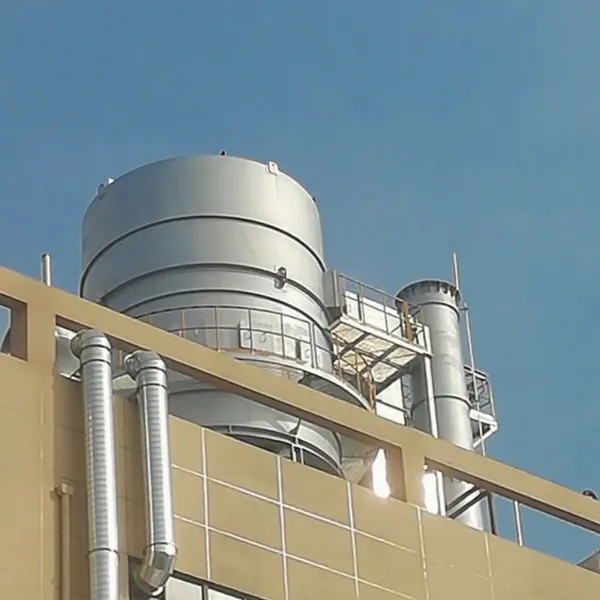
A7. Yes, rooftop installation is very common in crowded industrial areas like Alexandria or Laverton. Our units are designed with weather-proof casings and structural frames suitable for roof mounting, provided your building structure allows it.
Q8. How does the system handle the smell of solvents like Ethyl Acetate?
A8. Ethyl Acetate has a distinctive sweet smell even at low concentrations. Our 3-Bed RTO design includes a “purge” cycle that prevents any unburnt solvent from escaping during valve switches. This guarantees >99% destruction and zero odour at the stack.
Q9. What is the typical lead time for a custom RTO project in Australia?
A9. From design approval to shipping, manufacturing typically takes 12-14 weeks. Shipping to major Australian ports (Melbourne, Sydney, Fremantle) adds about 3-4 weeks. We work with your production schedule to plan the installation during shutdown periods (e.g., Christmas/Easter).
Q10. Will this system help us with our “Green Packaging” certification?
A10. Yes. Implementing a high-efficiency abatement system with heat recovery significantly lowers your Scope 1 emissions. This data directly supports your sustainability reporting for APCO (Australian Packaging Covenant Organisation) and appeals to eco-conscious brand owners.
Editor: PXY