


Why Ground-Level Flaring Is Gaining Traction in Australia
Tighter community noise limits, stricter NGER reporting and the growing footprint of urban-adjacent industrial facilities have made ground flares the preferred relief device for many new Australian projects. Unlike an elevated flare, a ground flare conceals the flame inside a refractory-lined enclosure or distributes combustion across multiple low-radiation burners, eliminating visible flame, slashing noise and minimising ground-level thermal load.
Ever-power supplies two ground flare configurations: the Enclosed Ground Flare (EGF) for low-to-medium continuous duty with high turndown, and the Multi-Point Ground Flare (MPGF) for large emergency-relief loads where staged smokeless combustion is required. Both are engineered to API 537, API 521 and ISO 25457, with full HAZOP, SIL and CFD support delivered as standard.
Ground Flare Configurations
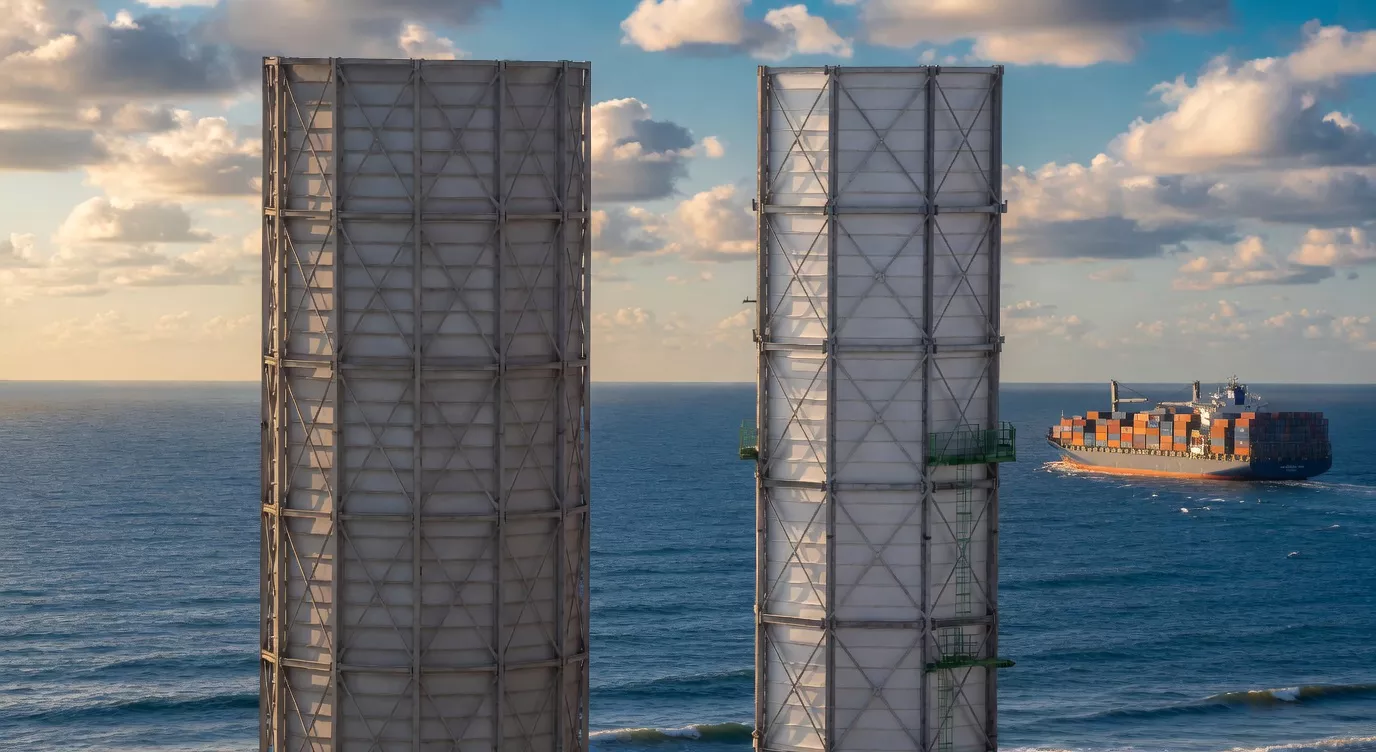

Enclosed Ground Flare (EGF)
A vertical, refractory-lined enclosure that houses the combustion zone entirely. The flame is invisible from outside, noise is reduced by an order of magnitude versus an open flare, and ground-level radiation is effectively eliminated — making the EGF ideal for sites near population centres or with strict visual amenity requirements.
- Combustion efficiency: ≥98%
- Equipment spacing: 40% less than an open flare
- Capital cost: 40% reduction versus tall stack alternative
- Asset life: 20+ years with refractory programme
- Construction: explosion-proof, quick-disassembly access
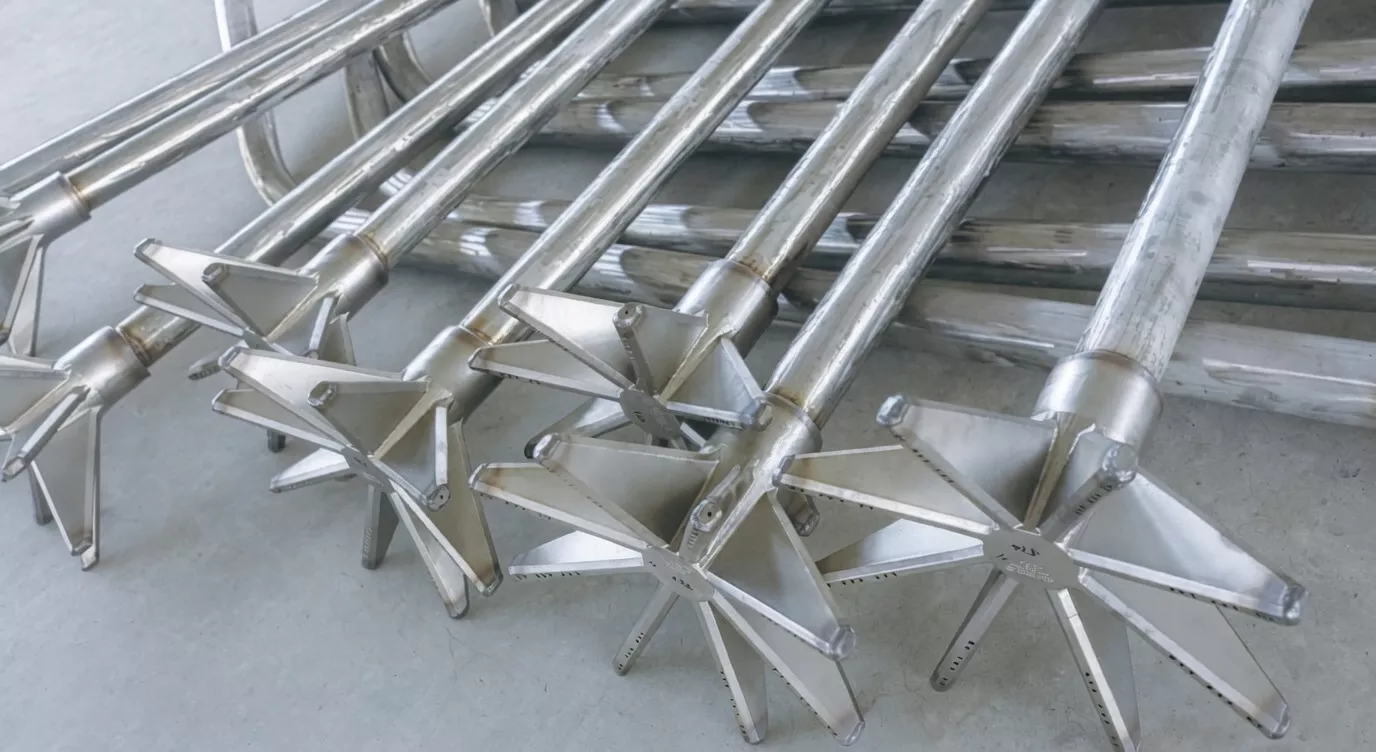
Multi-Point Ground Flare (MPGF)
A horizontally distributed array of stage-able sonic-velocity burners. As relief flow rises, additional stages are valved in automatically — smokeless performance is preserved across the full turndown band. The MPGF is the workhorse for very large emergency-relief loads where an enclosed design becomes physically impractical.
- Auto control: dynamic burner staging by relief rate
- Acoustic profile: low noise, minimal community impact
- Reliability: fast start/stop, modular burner replacement
- Economics: low energy consumption, reduced lifecycle cost
- Best for: large refinery and petrochemical relief duty
Technical Specifications & Comparison
| Parameter | Enclosed Ground Flare (EGF) | Multi-Point Ground Flare (MPGF) |
|---|---|---|
| Combustion efficiency | ≥98% (typically 99%+) | ≥98% across full staging |
| Visible flame | None | Limited / minimal |
| Smokeless capacity | 100% of design | 100% via staging |
| Typical capacity | Up to 200 t/h | Up to 1,500 t/h |
| Footprint advantage | 40% less spacing required | Distributed grade-level array |
| Noise level (typical) | <75 dB(A) at 100 m | <85 dB(A) at 100 m |
| Refractory life | 10–15 years (programmable) | N/A — open array |
| Asset life | 20+ years | 20+ years (burner refurb cycle) |
| Capital cost | 40% lower than equivalent stack | Lower than steam-assisted elevated |
| Best application | Continuous duty, urban-adjacent sites | High-rate emergency relief duty |
EGF Engineering Features
Refractory-Lined Combustion Chamber
High-density ceramic-fibre refractory rated to 1,400 °C maintains chamber temperature, suppresses flame visibility and protects the carbon-steel shell across thermal cycling.
Modulating Combustion Air
Natural-draft louvres or forced-draft blower with VFD trim air-to-fuel ratio across the full turndown band, holding destruction efficiency above 98% even at 10% load.
Quick-Disassembly Access
Bolted access doors and removable burner cassettes mean planned maintenance is measured in shifts, not days. Ideal for plants with limited turnaround windows.
Explosion Protection
Integrated detonation arrestors, purge sequencing, and BMS interlocks per AS 3814 and IEC 61511. SIL 2 standard, SIL 3 available on request.
MPGF Engineering Features
Auto-Staged Burner Banks
Dynamic staging valves bring burner groups online as header pressure rises, holding sonic exit velocity and smokeless burn from minimum to peak relief flow.
Radiation Fence & Shield Wall
Engineered radiation fence keeps perimeter heat flux below 4.7 kW/m² at occupied boundary, simplifying site layout and reducing exclusion-zone real estate.
Fast Start / Stop
Multi-pilot ignition with redundant FFG ensures rapid light-off across all stages. Cool-down is managed without thermal shock to manifold or burner heads.
Modular Field Replacement
Individual burner heads can be unbolted and replaced without taking the full array out of service — meaningful uptime gain on continuous-relief duty.
Where Ground Flares Are the Right Choice
- LNG export terminals: dry-out and end-flash duty within tight community visual constraints.
- Refineries near urban areas: Geelong, Lytton, Altona, Kwinana — light pollution and flame visibility are recurring concerns.
- Petrochemical complexes: ethylene, polyolefin and methanol plant emergency relief.
- Landfill & biogas sites: low-calorific gas duty, often EGF, with NGER-aligned destruction reporting.
- Storage terminals & marine loading: fugitive vapour control during loading and tank breathing.
- Mining-sector ammonia and fertiliser plants: remote sites where elevated stack erection is uneconomic.
Why Choose Ever-power for Ground Flare Projects
You can browse our wider combustion-system portfolio from the Ever-power home page, but here is what specifically matters for ground flare procurement:
| Buying Concern | How Ever-power Addresses It |
|---|---|
| Will the EPA accept ≥98% DRE? | Yes — we deliver an independently witnessed performance-test report at site acceptance, accepted by EPA NSW, EPA Victoria and DES Queensland on previous projects. |
| Footprint constraint | EGF cuts equipment spacing by 40% versus elevated alternatives — we provide a layout study during FEED to prove the footprint claim. |
| Lifecycle cost | 40% capital cost reduction documented; 20+ year asset life with structured refractory replacement schedule. |
| HAZOP & SIL alignment | Standard delivery with SIL 2 burner management; SIL 3 available. Functional safety documentation maps directly to your operating site’s IEC 61511 register. |
| Spares & service | Australian spare-parts stocking and 24/7 remote support — minimal mean-time-to-repair on critical relief equipment. |
Australian Project Highlights
Victorian Refinery EGF Replacement
Location: Geelong, Victoria | Year: 2024
A legacy candle-stick flare visible from a residential corridor was replaced with a 12 m enclosed ground flare. Combustion efficiency was independently tested at 99.1%, and noise at the property boundary fell from 78 dB(A) to 62 dB(A).
Outcome: EPA Victoria emission licence variation approved; community complaints reduced to zero.
QLD Petrochemical Complex MPGF
Location: Brisbane, Queensland | Year: 2023
Ever-power supplied a 1,200 t/h multi-point ground flare for emergency relief on an olefins facility. Six staging banks with 96 sonic burners were factory pre-assembled into modular skids for rapid site erection.
Outcome: Mechanical completion four weeks ahead of schedule; full performance acceptance achieved during the next planned turnaround.
Frequently Asked Questions
Choose an EGF when community boundaries are close, when visible flame and noise must be eliminated, or when relief duty is continuous and moderate (under 200 t/h). Elevated stacks remain preferable for very large emergency loads above 1,500 t/h.
EGFs routinely achieve 98% to 99.5% combustion efficiency, verified by EPA-accepted stack testing methods including EPA Method 25A or AS 4323.
Dynamic burner staging brings only the burner banks needed for the current relief flow online — each active burner stays at sonic exit velocity, which is the condition required for smokeless burn.
With proper purging and controlled cooling cycles, our high-density ceramic-fibre refractory delivers 10–15 years of service. A refractory monitoring programme and spares stocking plan ship with each unit.
Yes — design, fabrication and burner management align with AS 3814, IEC 61511 (SIL 2 standard, SIL 3 optional), API 537, API 521 and ISO 25457.
EGF packages: 22–30 weeks. MPGF packages: 28–40 weeks depending on burner count and skid configuration.
Often yes. We perform a relief-load review against current EPA permit conditions and propose either a partial retrofit (new tip + KO drum) or a full replacement, depending on the economics.
Engineer-to-Engineer Conversation
Send us your relief load, gas composition, site noise/visual constraints and EPA licence conditions. Our combustion engineers will return a recommended configuration and budget pricing within five working days.