Flare & VOC Treatment Systems — Engineered Combustion & Recovery Solutions
Ever-power designs and manufactures a complete portfolio of flare systems, vapour combustion units and cryogenic recovery skids for refining, LNG, petrochemical and chemical operators across Australia. From safe relief flaring to high-efficiency VOC destruction and solvent recovery — one engineering partner, four proven technologies.
The Complete Flare & VOC Treatment Portfolio
Modern emission compliance is no longer a single-device problem. A typical Australian refinery, LNG terminal or petrochemical complex must manage emergency relief flaring, continuous low-rate venting, marine and tank loading vapours, and high-value solvent emissions — each with its own destruction-efficiency target, footprint constraint and EPA reporting obligation.
Our flare and VOC treatment portfolio covers all four scenarios. Every package is engineered to API 521, API 537 and ISO 25457, documented for AS 3814 and IEC 61511 functional safety, and supported in-country with spares stocking and 24/7 technical service.
Discuss Your Project
Product Categories
Four engineered product lines, each tuned to a specific gas composition, flow profile and compliance objective. Click through for full specifications, case studies and request-for-quote.
Elevated Flare System
Three-path steam flare and pipe flare configurations for refinery, LNG and petrochemical service. Patented tip geometry cuts steam consumption by more than 35% while maintaining 99.7% hydrocarbon destruction across the full load range.
View Specifications
Ground Flare Systems
Enclosed Ground Flare (EGF) and Multi-Point Ground Flare (MPGF) for sites where community boundaries, light spill or noise rule out an elevated stack. Refractory-lined chamber or staged sonic burner array — both compliant, both quiet, both built for 20-year service.
View Specifications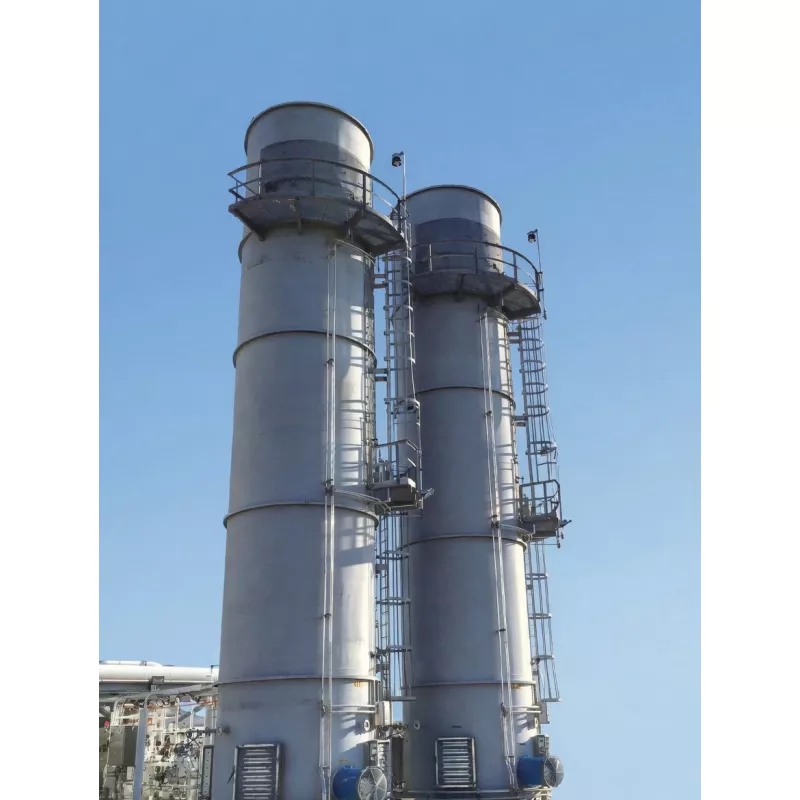
Vapor Combustion Unit (VCU)
Skid-mounted thermal oxidiser for marine loading, tank breathing, rail-car blow-down and process venting. Refractory-lined chamber holds VOCs at 760–1,100 °C with audited destruction efficiency of up to 99.99% — the package your environmental manager actually needs.
View Specifications
LN2 Cryogenic Recovery System
Multi-stage liquid-nitrogen condensation system that recovers high-value solvents instead of destroying them. Cools to −130 °C, returns clean GAN for blanketing, and turns waste streams into measurable margin — ideal for pharmaceutical, specialty chemical and terminal duty.
View SpecificationsTechnical Advantages
Every Ever-power flare or VOC system is built around the same engineering DNA — documented destruction efficiency, life-cycle economics, and regulatory clarity. Here is what consistently shows up in the audit pack.
Documented Destruction Efficiency
From 99.7% on elevated flares through 99.99% on VCUs to 99% solvent recovery on cryogenic skids — each unit ships with an EPA Method 25A or AS 4323 performance test pack ready for submission.
Steam & Utility Reduction
Patented three-path nozzle geometry cuts steam draw by more than 35% versus legacy centre-steam tips. Multi-stage cryogenic design cuts LN2 duty by 12–16%. OPEX savings show on day one.
Functional Safety Built In
Burner management system delivered SIL 2 as standard, SIL 3 on request. IEC 61511 dossier maps directly into your operating site's safety register — no rework at handover.
Long Asset Life
Three-path tip rated for 15 years across 0–100% load. Enclosed ground flare engineered for 20+ years. Material selection, FEA thermal cycling and full-scale flame testing back every life claim.
Single-Source Delivery
Process design, fabrication, instrumentation, factory acceptance test, site supervision and commissioning under one contract. Schedule risk and interface risk reduce dramatically versus split-scope procurement.
Australian Project Support
Local project managers, regional spares stocking, AS/NZS-aligned documentation, and integration with site HAZOP and SIL studies. Mean-time-to-repair stays low on critical relief equipment.
Selection Guide — Which Technology Fits Your Duty?
Use this comparison as a first pass. Your final selection should account for site layout, EPA licence conditions, and economic factors that we will model during a no-cost FEED conversation.
| Criterion | Elevated Flare | Ground Flare | VCU | LN2 Cryogenic |
|---|---|---|---|---|
| Primary purpose | Emergency relief | Continuous / relief | Continuous VOC destruction | Solvent recovery |
| Visible flame | Yes | None / minimal | None | None — no combustion |
| Typical efficiency | 99.7% DRE | ≥98% combustion | up to 99.99% DRE | up to 99% recovery |
| Best flow range | Up to 1,500 t/h | Up to 1,500 t/h | 100 to 80,000 Nm3/h | 50 to 5,000 Nm3/h |
| Best concentration | Variable | Variable | Medium-high | High-concentration |
| Recovers product | No | No | No | Yes |
Industrial Applications
Our flare and VOC treatment systems serve the full breadth of Australian heavy industry — from Pilbara LNG trains to Surat Basin gas processing, from Geelong refinery boundary fences to Melbourne pharmaceutical plants.
Oil Refining
FCC off-gas, depressurisation, sour-water stripper venting, tail-gas treatment at Lytton, Geelong and Kwinana scale.
LNG & Gas Processing
Commissioning dry-out, end-flash gas, BOG management and routine relief at Pilbara, Curtis Island and Darwin.
Petrochemical & Olefins
Ethylene cracker emergency relief, polymer reactor blow-down, distillation off-gas across Brisbane and Altona complexes.
Coal-Seam Gas Upstream
Well-pad and central processing facility relief duty in the Surat and Bowen Basins, with NGER-aligned destruction reporting.
Marine & Truck Loading
Petrol, jet fuel, diesel and crude vapour control during ship, barge, rail and road tanker loading at coastal terminals.
Tank Farms & Storage
Floating-roof emissions, breathing losses and degassing during tank cleaning campaigns — relocatable VCU options available.
Pharmaceutical & API
Acetone, methanol, ethyl acetate, dichloromethane and toluene recovery from reactor and dryer vents — turn waste back into solvent inventory.
Specialty Chemicals
Resin, ink, adhesive and coatings plants with concentrated solvent vents that an open flare or RTO would burn at significant cost.
Landfill & Biogas
Low-calorific lean-gas duty, often EGF-style, with destruction efficiency aligned with NGER and methane abatement reporting.
Frequently Asked Questions
Q1. What is the difference between a flare and a vapour combustion unit?
A flare burns gas with a visible flame at the tip exit and is sized primarily for emergency relief. A VCU encloses the flame inside a refractory chamber and operates with controlled residence time and temperature, producing audit-grade destruction efficiency. VCUs are preferred for continuous duty and where regulators expect documented performance; flares are preferred for very large emergency relief loads.
Q2. When should I choose a ground flare over an elevated flare?
Choose a ground flare when community boundaries are nearby, when visible flame and noise must be eliminated, or when relief duty is continuous and moderate. Elevated stacks remain preferable for very large emergency relief loads where the ground flare footprint becomes impractical.
Q3. Can cryogenic recovery replace my thermal oxidiser?
For high-concentration, high-value solvent streams, yes. Liquid nitrogen cryogenic recovery captures the solvent for direct reuse instead of destroying it. The recovered product value plus avoided fuel-gas cost commonly delivers payback within 18 to 36 months.
Q4. Are these systems compliant with Australian regulations?
Yes. Every package ships with documentation aligned to AS 3814, AS 1940 and IEC 61511 functional safety, plus international codes API 521, API 537 and ISO 25457. Performance testing follows EPA Method 25A or AS 4323 to support state EPA emission licence approval.
Q5. What destruction or recovery efficiency can I expect?
Elevated flares: 99.7% hydrocarbon destruction. Enclosed ground flares: 98 to 99.5% combustion. VCUs: up to 99.99% destruction. LN2 cryogenic systems: up to 99% recovery on single-component streams with single-digit ppm outlet.
Q6. How long does a project typically take from purchase order to commissioning?
Tip-only flare retrofits: 14 to 18 weeks. Standard VCU skids: 22 to 28 weeks. Full elevated or ground flare packages with stack, KO drum and instrumentation: 28 to 40 weeks. Cryogenic recovery skids: 26 to 34 weeks. Every schedule includes factory acceptance testing prior to shipment.
Ready to Specify Your Flare or VOC Treatment System?
Send us your gas composition, flow profile, site constraints and EPA licence conditions. Our combustion engineers will return a configured system, performance documentation methodology and indicative pricing within five working days.