

WAM Gas Treatment-RTO
Engineered by EVER-POWER (Australia) Company Ltd. for the Mining, Chemical, and Manufacturing Sectors.
Noxs
Odor
Haps
PM 2.5
Wam
Acidic Gas
We are a professional RTO manufacturer focused on sustainable development.
We possesses four core technologies: thermal energy, combustion, sealing, and automatic control. It has the ability to simulate temperature fields and air flow fields for modeling and calculation. It has the ability to test the performance of ceramic heat storage materials, the comparison and selection of zeolite molecular sieve adsorption materials, and the high-temperature incineration oxidation characteristics of VOCs organic substances.




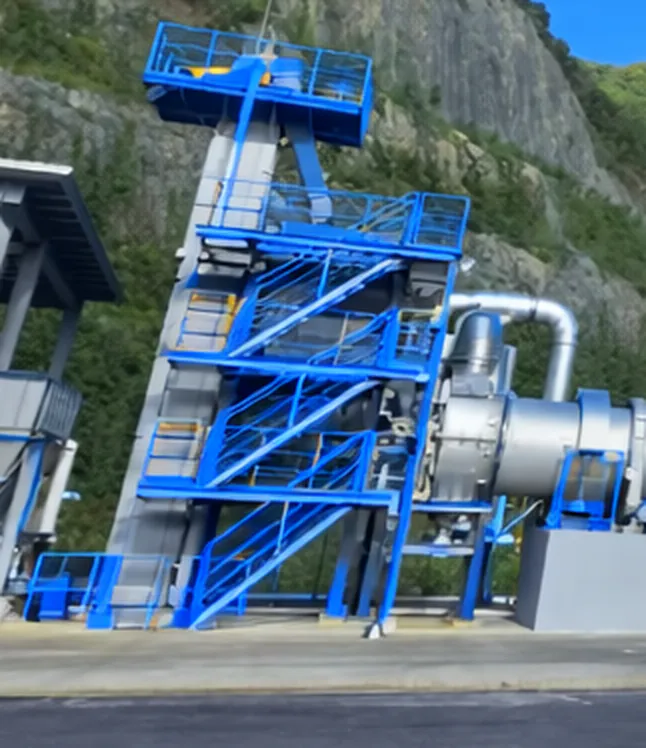

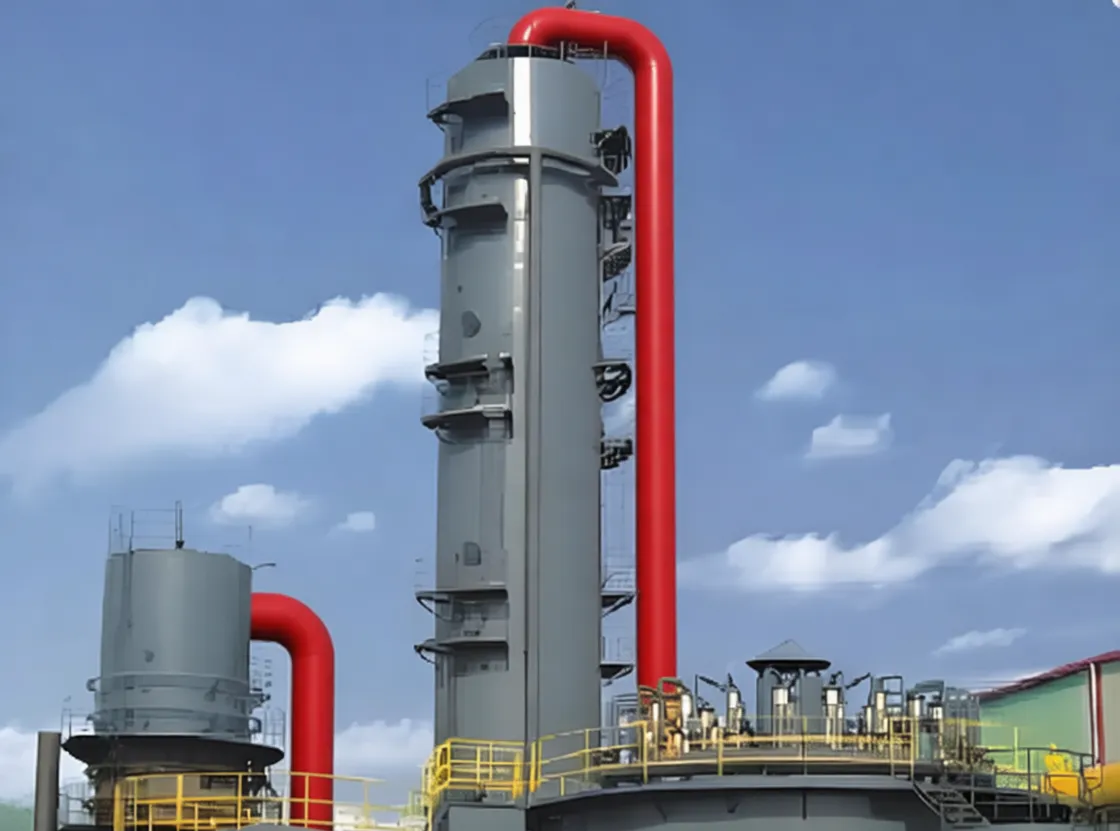



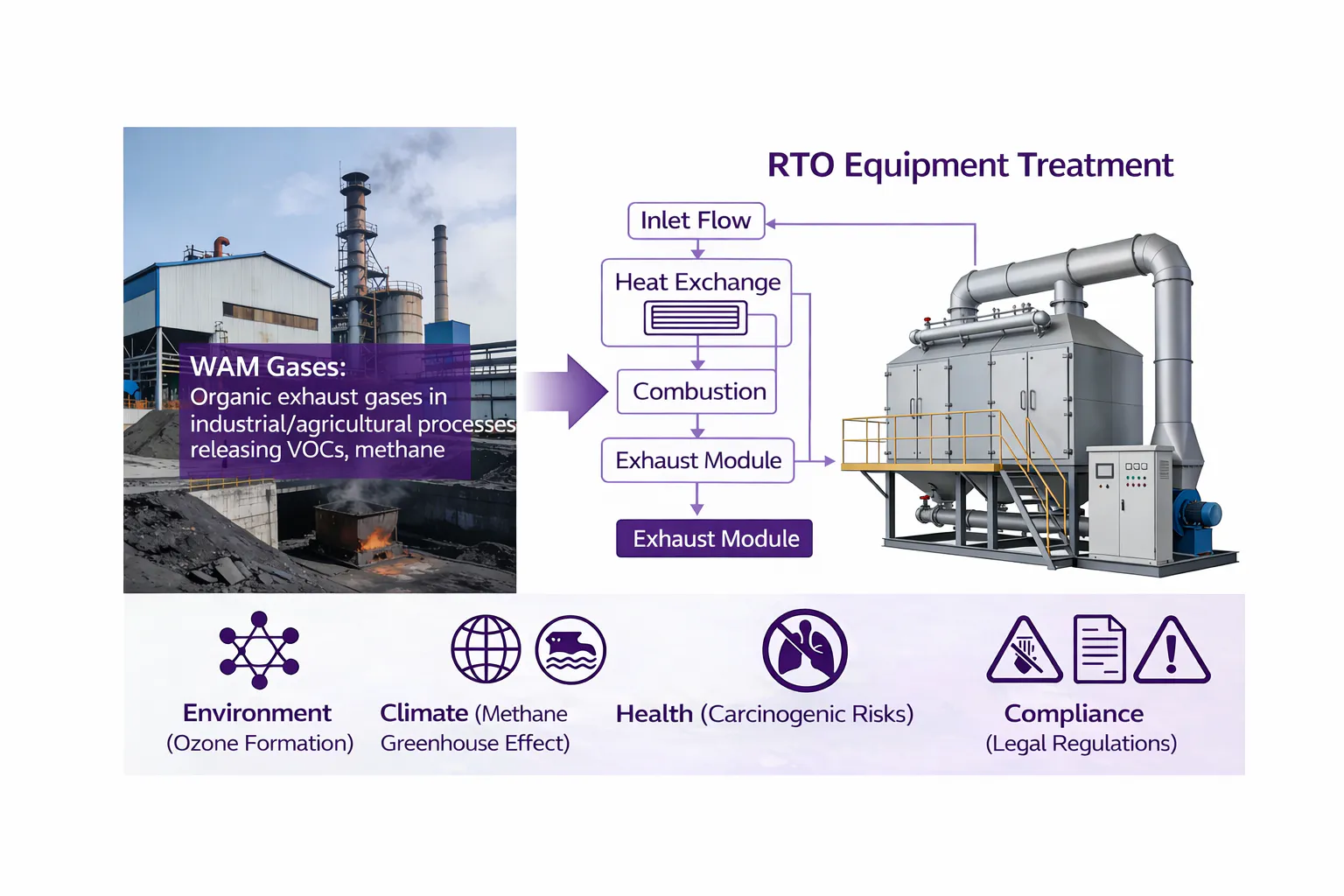
Hazards of WAM Gases:
- Environmental Pollution:
- Greenhouse Gas Emissions:
- Health Impacts:
- Impact on Ecosystems:
- Regulatory Compliance and Penalties:
WAM
WAM (Waste Air Management) gas refers to waste gases generated in industrial and agricultural processes, typically due to the volatilization of organic materials, solvents, fuels, or other harmful substances during production. These gases include large amounts of volatile organic compounds (VOCs), such as benzene, toluene, xylene, and may also include methane (Ventilation Air Methane, VAM) and other greenhouse gases. WAM gases are produced in many industries, especially in coal mining, chemical plants, pharmaceutical factories, and waste treatment processes.
Advantages of RTO for WAM Gas Treatment:
1. High Efficiency in Handling Low Concentration Gases:
Our RTO systems are specifically designed to treat WAM (Waste Air Management) gases, which often have low pollutant concentrations. The regenerative heat exchange cycle allows the system to preheat gases using stored thermal energy, achieving up to 97% thermal efficiency. This means that even low-concentration WAM gases can be treated efficiently, without excessive fuel consumption, ensuring auto-thermal operation (self-sustaining) even in challenging conditions.
2. Cost-Effective Energy Consumption:
Compared to conventional thermal oxidizers, the RTO system utilizes high-efficiency ceramic heat recovery media that enables it to operate on low fuel consumption. Once the system reaches its operational temperature, the RTO’s thermal recovery allows for fuel-free operation for a large portion of the time. This results in lower operational costs (OPEX), which is crucial in industries like mining and chemical processing where WAM gas streams are prevalent.
3. Advanced Control Systems for Variable Gas Concentrations:
The RTO system features Siemens PLC-based controls with LEL (Lower Explosive Limit) modulation to manage fluctuating WAM gas concentrations. This advanced control logic ensures that the system can adjust automatically to changes in gas concentration, maintaining stable combustion temperatures and preventing safety shutdowns or operational inefficiencies.
4. Compliance with Australian and Global Standards:
Our RTO systems are engineered to meet both Australian environmental regulations (such as EPA Victoria, NSW EPA, and National Greenhouse and Energy Reporting (NGER) Act 2007) and international standards. The VOC destruction efficiency of our RTO systems is 99%+, significantly exceeding regulatory requirements and enabling your business to meet stringent emission reduction goals.

Products


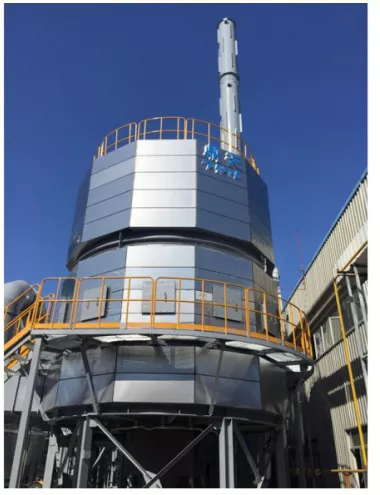
Classic Rotary Valve RTO

Toptank Rotary Valve RTO
Working Principle
The efficacy of the EVER-POWER RTO lies in its regenerative heat exchange cycle. The process begins when the WAM or VOC-laden rto flue gas enters the system through an inlet manifold. It is directed into a ceramic heat recovery bed by a set of high-cycle switching valves. As the gas passes through this hot ceramic media (typically structured packing or saddles), it absorbs stored thermal energy, preheating the gas to near-oxidation temperatures before it even reaches the combustion chamber. This preheating is the key differentiator of the regenerative thermal oxidizer how it works compared to a direct thermal oxidizer. Once in the combustion chamber, the gas is held at a temperature of approximately 800°C to 850°C (1472°F – 1562°F) for a specific residence time (usually 0.5 to 1.0 seconds). Under these conditions, the covalent bonds of the organic compounds break down, converting the pollutants into CO2 and H2O. This reaction is exothermic, releasing heat which further sustains the process.
After oxidation, the purified, hot gas leaves the combustion chamber and passes through a second ceramic bed. Here, the process reverses: the hot gas releases its thermal energy into the ceramic media, cooling the gas down before it is exhausted through the stack as clean rto off gas. This stored heat is then used to preheat the next cycle of incoming gas when the valves switch (typically every 90 to 120 seconds). For WAM applications where volumes are high but concentrations might be low, this high thermal efficiency (up to 97%) is crucial. It means that once the system is up to temperature, the burner often remains in low-fire or pilot mode, running almost entirely on the energy value of the waste gas itself. We offer both 3-Chamber RTOs and Rotary RTOs.
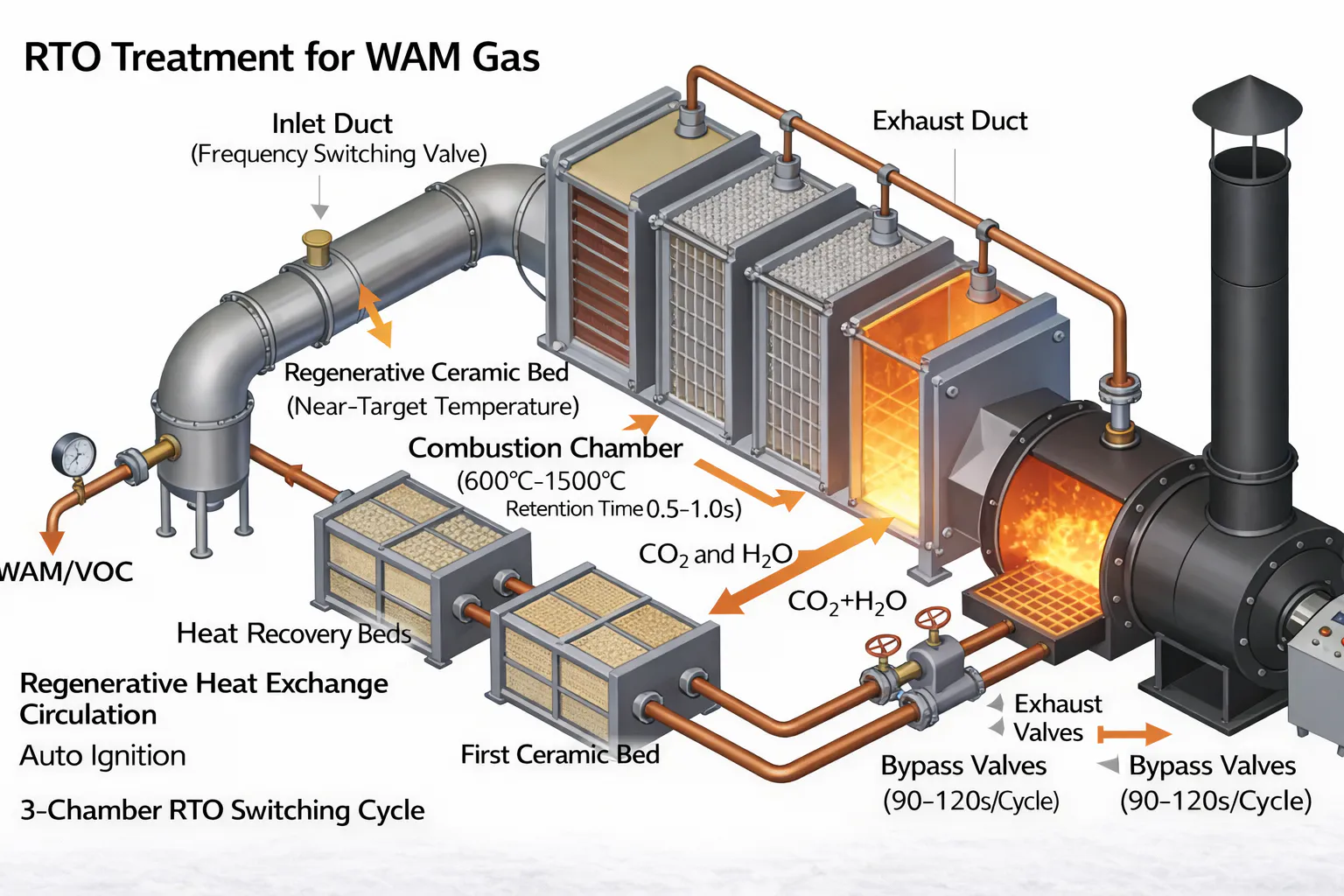
How Our RTO Treats WAM & VOCs
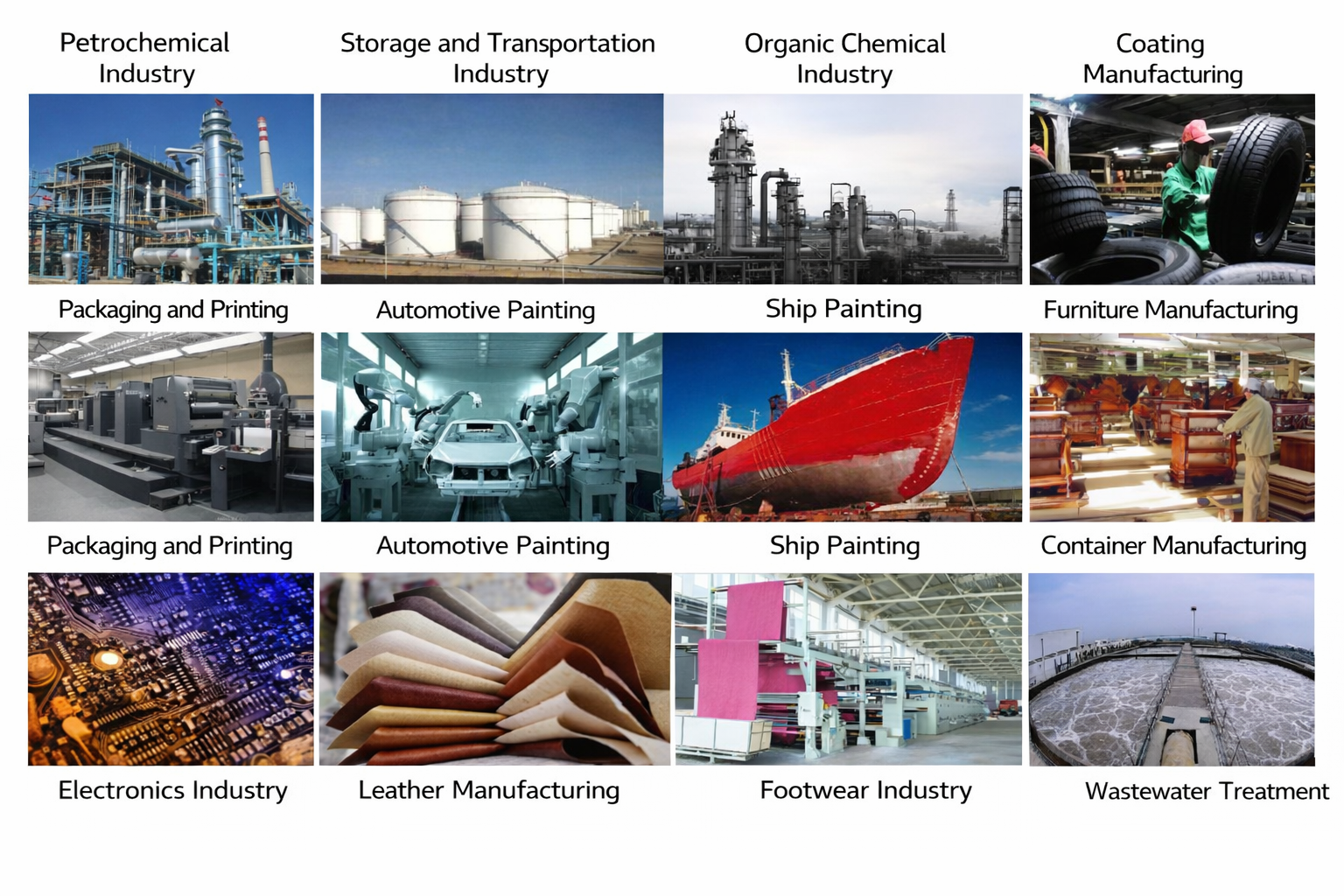
RTO Applications
Petrochemical industry
Storage and transportation industry
Organic chemical industry
Coatings manufacturing
Rubber manufacturing
Packaging and printing
Automotive painting
Customer Reviews
Tom, Facilities Manager at a US refinery
“As a refinery dealing with large volumes of volatile organic compound emissions, we needed a solution that could handle both high airflow rates and low pollutant concentrations simultaneously. The EVER-POWER RTO system not only met these requirements but exceeded our expectations. The system’s high thermal efficiency and automated operation allow us to maintain compliance without worrying about fuel consumption.”
Michael, Environmental Manager – Coal Mining Company, Australia
“We’ve been using the EVER-POWER RTO system for our WAM emissions treatment, and the results have been exceptional. The system has significantly reduced methane emissions, operating nearly 90% of the time without additional fuel consumption. The waste heat recovery has also been an added bonus, powering our site office’s steam turbine. The system not only helps us comply with regulations but also offers cost-effective solutions, making it a crucial part of our operation.”
Juan, Sustainability Officer – Paper Mill, Spain
“After upgrading to the EVER-POWER RTO system, we’ve significantly improved our environmental footprint. The ability of the RTO to manage and treat WAM gases efficiently has allowed us to exceed our emission reduction targets. The system’s self-sustaining operation, with minimal fuel usage, has greatly reduced our energy expenses. This technology has made us much more competitive in the sustainability space and has been crucial for meeting European emission standards.”
FAQ:
Q1. How does a regenerative thermal oxidizer differ from a standard thermal oxidizer regarding operating costs?
A1. The main difference lies in the heat exchanger. A standard thermal oxidizer uses a metal shell-and-tube exchanger with ~60% efficiency, requiring high fuel usage. An RTO uses ceramic beds with 95%+ efficiency, meaning it uses very little fuel once running, making it far cheaper to operate for WAM streams.
Q2. Can your RTO equipment handle variable gas concentrations without shutting down?
A2. Yes, absolutely. Our EVER-POWER RTOs feature “Hot Gas Bypass” and “Fresh Air Dilution” valves controlled by the PLC. If the rto gas concentration spikes towards the LEL limit, the system automatically dilutes it; if it drops, the burner modulates to maintain temperature, ensuring 24/7 uptime.
Q3. Which industries in Australia are legally required to use RTO gas cleaning technology?
A3. Industries such as spray painting (automotive), printing, chemical manufacturing, pharmaceutical production, and mining (for VAM/WAM) are heavily regulated by the EPA. If your facility emits significant VOCs or odorous gases, an rto gas cleaning system is likely required to meet license conditions.
Q4. Does the RTO system produce any secondary pollution like NOx during the process?
A4. Standard combustion can produce NOx (Nitrogen Oxides). However, EVER-POWER RTOs use Low-NOx burner technology and operate at carefully controlled temperatures to minimize thermal NOx formation, ensuring the rto flue gas is clean and compliant.