Description
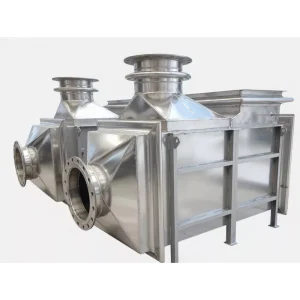
Plate-Type Economizer (Plate-Type Evaporator)
Inflated honeycomb-plate waste-heat recovery for low-temperature flue gas in petrochemical, thermal-power and process industries across Australia.
Why the Plate-Type Economizer Outperforms Tubular Designs
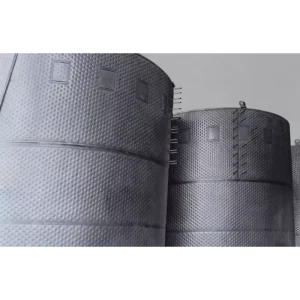
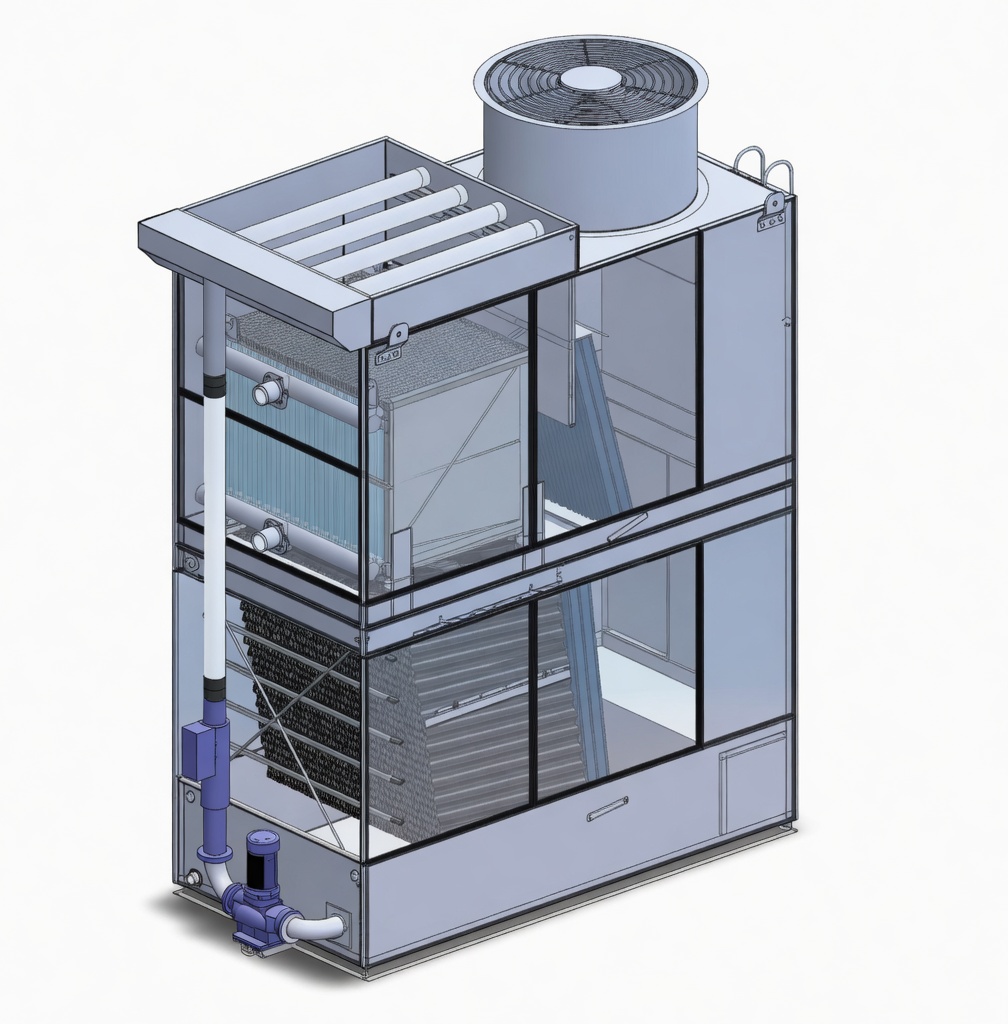
Conventional evaporative coolers and economisers rely on shell-and-tube construction because flat-plate exchangers struggle with spray-water evaporation and heavy fouling. The Ever-power plate-type economizer solves this with an inflated honeycomb plate — bulge height and channel spacing are precisely tuned so that water sprays evaporate uniformly across the plate surface.
Heat transfer climbs, equipment shrinks, and the old limitation of flat-plate designs disappears.
Plate-Type Economizer
Hot flue gas flows across the plate pack while boiler feedwater or heat-transfer fluid flows inside the plates. Recovers sensible heat from 180 °C down to 90–110 °C, typically boosting boiler efficiency by 3–6 %.
Typical duty: 0.5 – 35 MW thermal recovery.
Core Technical Advantages
⚡ 2.1× Higher K-Value
Honeycomb dimples generate micro-turbulence, lifting the overall heat-transfer coefficient to 55–90 W/m²·K versus 25–40 for bare tubes.
📐 Compact Footprint
The same thermal duty fits in roughly 45 % of the plot space of a tubular economiser — critical for retrofit projects with tight stack yards.
🛡️ Corrosion Managed by Zone
Cold-end plates in 2205, 904L or ND steel; hot-end in 304 or 316L — optimised plate-by-plate for lowest lifetime cost.
💧 Spray-Water Ready
Bulge geometry holds and evaporates water film without channelling — the feature that gives this design its evaporator capability.
🧹 Low-Fouling Surface
Smooth pillow-plate faces drain condensate readily and support online steam or sonic cleaning without disassembly.
🔧 Fully Drainable
Slopes engineered into the plate stack allow complete drainage for freeze protection during Australian winter maintenance periods.
Specification Sheet
| Parameter | Economizer Mode | Evaporator Mode |
|---|---|---|
| Gas-side flow | 10,000 – 1,200,000 m3/h | 10,000 – 1,200,000 m3/h |
| Gas-side inlet temp. | 150 – 350 °C | 180 – 450 °C |
| Gas-side outlet temp. | 90 – 120 °C | down to acid dew point ± 5 °C |
| Tube-side fluid | Water / thermal oil / glycol | Demin water spray |
| Tube-side pressure | up to 2.5 MPa | atmospheric |
| Plate material | 304 / 316L / 2205 / ND | 316L / 2205 / 904L |
| Heat recovery | up to 92 % of available sensible heat | up to 85 % of latent + sensible |
| Design code | AS 1210, ASME VIII, PED | AS 1210, ASME VIII, PED |

Where Australian Customers Deploy It
Oil Refineries
Heater flue-gas heat recovery feeding boiler feedwater preheat loops.
Ethylene & Olefins
Cracker furnace tail-gas economiser retrofits to boost site steam balance.
Thermal Power
Low-temperature economiser downstream of air preheater to recover deep flue-gas heat.
Alumina Refining
Calciner off-gas heat recovery for bauxite processing plants in WA.
Textile & Dyeing
Stenter exhaust heat recovery feeding hot-water and steam loops.
Hazardous Waste
Paired with our incinerator and oxidiser lines for total energy capture — explore the full thermal-system portfolio.
Why Ever-power Is the Right Partner
▶ Process Engineering, Not Just Fabrication
Our thermal team delivers duty specification, plate-count calculation and plant-integration drawings — included, not extra.
▶ Automated Laser Seam Welding
Consistent penetration and grain structure across every weld node. Every seam is ultrasonic-tested; no hand-welded shortcuts.
▶ Local Aftermarket Network
Spare plates, instrumentation and soot-blower parts stocked through our Australian logistics partner for same-week dispatch.
▶ Transparent Commercial Terms
Fixed-price quotations, milestone payments, and no hidden change-orders — details on our company overview.
Case Study — Queensland Petrochemical Complex
Gladstone Petrochem Cluster — 180 t/h Steam Boiler
Challenge: Stack flue-gas temperature of 195 °C meant 4.3 MW of recoverable energy was venting to atmosphere. Space for retrofit was less than 3.5 m × 4 m.
Scope: Twin inflated-plate economiser modules, 2205 duplex cold-end, skid-mounted with integral bypass damper.
Outcome: Flue-gas leaving temperature dropped to 104 °C; boiler efficiency gained 4.7 percentage points; payback 19 months based on AGL gas tariff.
South Australian Waste-to-Energy Plant
Challenge: Require deep flue-gas cooling before bag-filter without risking acid condensation on metal surfaces.
Scope: Plate-type evaporator with demin-water spray, 904L cold-end plates, full automation for spray-rate control.
Outcome: Flue-gas cooled from 210 °C to 138 °C with precise ± 3 °C control; eliminated a 2.2 MW trim cooler downstream.
Frequently Asked Questions
Q1. What is the difference between a plate-type economizer and a plate-type evaporator?
The mechanical platform is identical — laser-welded inflated plates. An economiser transfers sensible heat to a liquid flowing inside the plates. An evaporator sprays water directly onto the hot-gas side, extracting latent heat through evaporation. Both modes can be built into the same plate pack if required.
Q2. Can a plate-type economizer replace an existing tubular unit?
In most Australian retrofits, yes. The plate version delivers equivalent thermal duty in about 45 % of the footprint, so the existing ductwork is usually oversized rather than undersized after replacement.
Q3. How do you handle sulfuric acid dew-point corrosion in the cold end?
Three layers of defence: material upgrade (2205, 904L, ND steel), wall-temperature management, and condensate-drainage pathways built into the pillow-plate geometry. Material selection is tied to measured SO3 content — we do not over-specify.
Q4. What is the typical payback period?
Australian installations on natural-gas-fired boilers typically pay back in 18–30 months. Coal-fired and waste-fuel applications pay back even faster thanks to higher available heat and offset carbon costs.
Q5. Do plate-type economisers need a separate fouling allowance?
We design with application-specific fouling factors (typically 0.00009 – 0.00034 m²·K/W), and we include online soot-blowing where fly-ash loading exceeds 30 mg/Nm³. No generic safety margin is used blindly.
Q6. What spare parts should I keep on site?
A single spare plate cassette, header gaskets, soot-blower nozzles and temperature sensors. We provide an Australian-stocked consumable list with every commissioned project.
Q7. Can the economiser integrate with my DCS?
Yes. We supply 4–20 mA outputs and Modbus RTU/TCP as standard; Profinet or HART is available on request. Signal lists are issued during detailed engineering.
Capture the Heat You Are Currently Venting
Send your flue-gas analysis, flow and temperature data. Our process team will return a sized proposal, projected fuel savings and quote within 48 hours — backed by Australian project references.