

RTO for wastewater treatment and municipal/industrial
Odorous emissions from sewage treatment plants’ bar screens, grit chambers, and pumping stations are a major source of public complaints. These gases contain volatile sulfur compounds (e.g., H₂S, methyl mercaptan) and ammonia, with highly variable concentrations: H₂S can reach hundreds of ppm, while other VOCs are dilute but pungent. Due to the large, open layout of treatment facilities, end-of-pipe systems must handle large-volume, low-concentration waste gas reliably and with minimal maintenance.
Municipal/Industrial Odor Control Applications
| Industry/Scenario | Main Odor Components | Characteristics |
|---|---|---|
| Landfill | Hydrogen Sulfide, Methane, VOCs | High concentration with large fluctuations; requires explosion-proof design |
| Wastewater Treatment Plant | Ammonia, Hydrogen Sulfide, Methyl Mercaptan | Low odor threshold (e.g., H₂S detectable at 0.0005 ppm) |
| Food Processing | Organic Acids, Amines, Sulfides | Complex mixture requiring broad-spectrum treatment |
| Rubber/Tire Manufacturing | Benzene Series, Sulfides, PAHs | Contains highly toxic polycyclic aromatic hydrocarbons (PAHs) |
Wastewater Treatment Scenarios
| Process Stage | Main Pollutants | Chemical Formula | Characteristics |
|---|---|---|---|
| Storage/Equalization Tank | Hydrogen sulfide, Ammonia, VOCs | H₂S, NH₃, Benzene derivatives | High-concentration odor with trace VOCs |
| Biochemical Treatment System | Methane, Mercaptans, Organic sulfides | CH₄, R-SH, R-S-R | Prone to odor generation and corrosive |
| Sludge Dewatering/Drying | Volatile organic compounds, Particulate Matter | VOCs, PM10 | Contains tar and high-boiling-point organics |
RTO Working Principle Of Wastewater & Industrial Use:

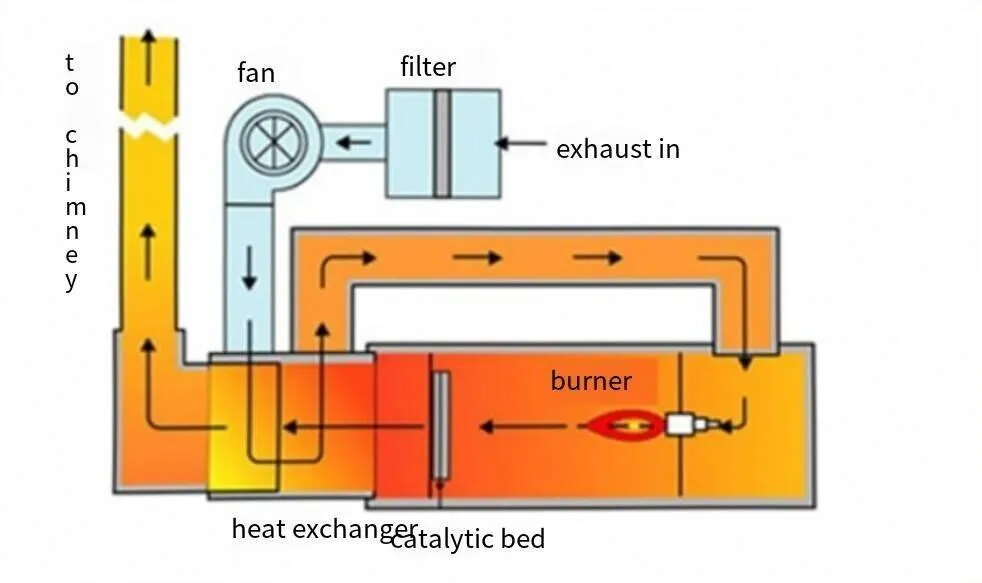
- VOC Destruction: Exhaust air containing VOCs (like those from petrochemicals, chemicals, paints, or food processing) enters the RTO.
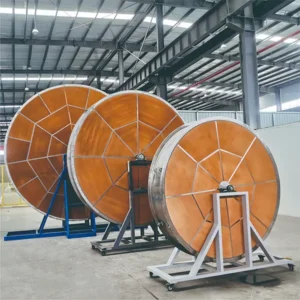
- Heat Recovery: Ceramic media beds pre-heat the incoming contaminated air using heat from the outgoing clean air, achieving high energy efficiency (up to 97% heat recovery).
- Oxidation: A burner raises the air to high temperatures (around 850°C) in a combustion chamber, breaking down VOCs and HAPs into harmless carbon dioxide and water vapor.
- Scrubbing (Optional): A flue gas scrubber can be added to remove acidic byproducts before release.
Exhaust Gas Characteristics & Treatment Requirements
- Sudden H₂S Peaks: When sewage load increases or sludge is disturbed, H₂S concentrations can spike rapidly, requiring fast system response. Long-term average concentrations typically range from 10–200 ppm.
- Complex Malodor: Besides sulfur compounds, the gas contains amines, volatile fatty acids, and trace hydrocarbons, resulting in a high overall odor intensity.
- Large Air Volume, Low Concentration: Ventilation rates often exceed 100,000 m³/h, while VOC concentrations are low. Traditional activated carbon adsorption or scrubbing has limited effectiveness, leading to rapid saturation and high maintenance.

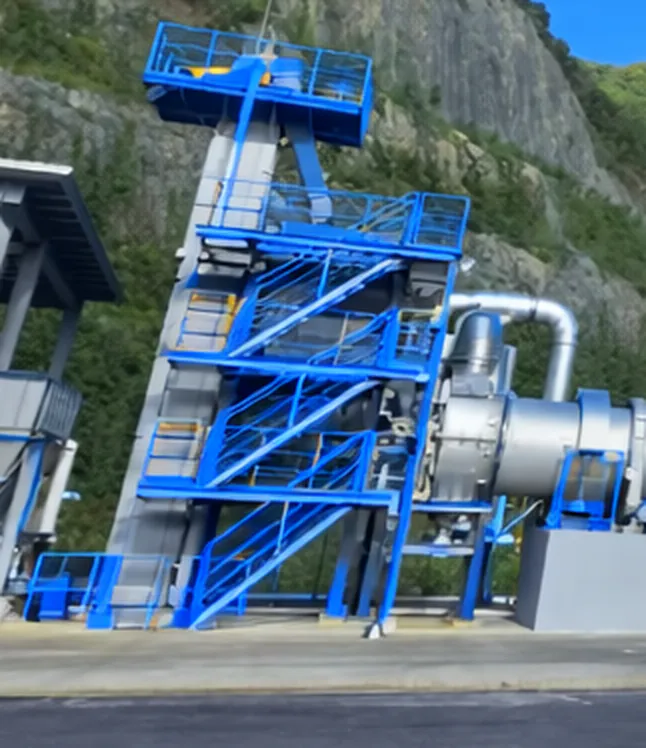
Process Selection & RTO Design
1. Pre-Treatment: An acid scrubber can be installed before the RTO to remove partial acidic gases, reducing RTO corrosion and fouling. For peak loads, a dilution or bypass system is essential.
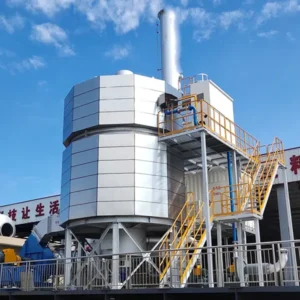
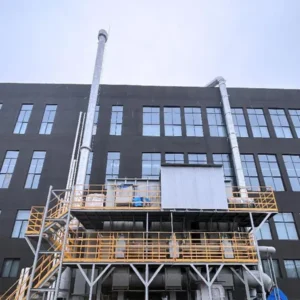
2. Large Air Volume: Three-Chamber/Five-Chamber RTO: To handle the large ventilation rates of sewage treatment plants, a three-chamber or five-chamber RTO is typically used, operating in a multi-module parallel configuration. Since waste gas concentrations are low, supplementary fuel is required to maintain temperature, and waste heat recovery can be used to reduce energy consumption.


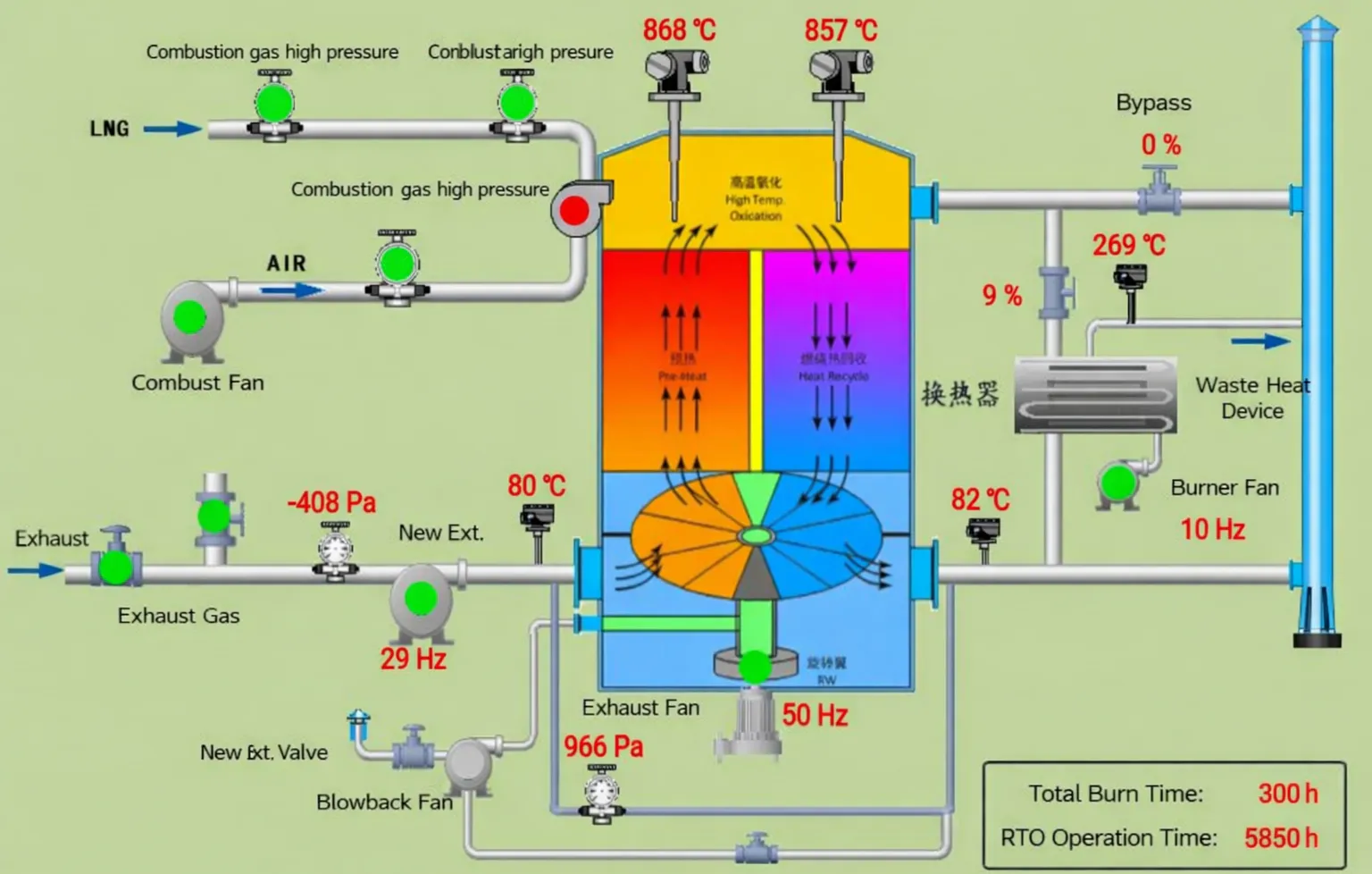
3. Purge Chamber: Adding a purge chamber to the five-chamber RTO prevents instantaneous leakage of H₂S and maintains a stable outlet concentration. The purge chamber also facilitates cleaning of the regenerator beds to remove sulfur compound deposits.
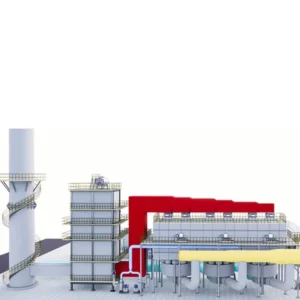
Performance Comparison Chart
| Indicator | Type | Remarks | ||
|---|---|---|---|---|
| 2-Chamber RTO | 3-Chamber RTO | Rotary RTO | ||
| Technology Generation | First Generation | Second Generation | Third Generation | |
| Number of Heat Storage Chambers | 2 | 3 | 12 | |
| Purification Efficiency | 95% | 99% | 99.5% | |
| Land Area | 100% | 130% | 65% | Based on two-chamber |
| Weight | 100% | 150% | 80% | Based on two-chamber |
| Cost | 100% | 150% | 130% | Based on two-chamber |
| Number of Valves | 4 | 9 | 1 | Failure Rate |
| Maximum Treatment Concentration | <1g | <5g | <10g | 50mg/m³ Emission Standard |

RTO vs. Other Odor Removal Technologies: A Comparison
| Technology Type | Applicable Scenarios | Advantages |
|---|---|---|
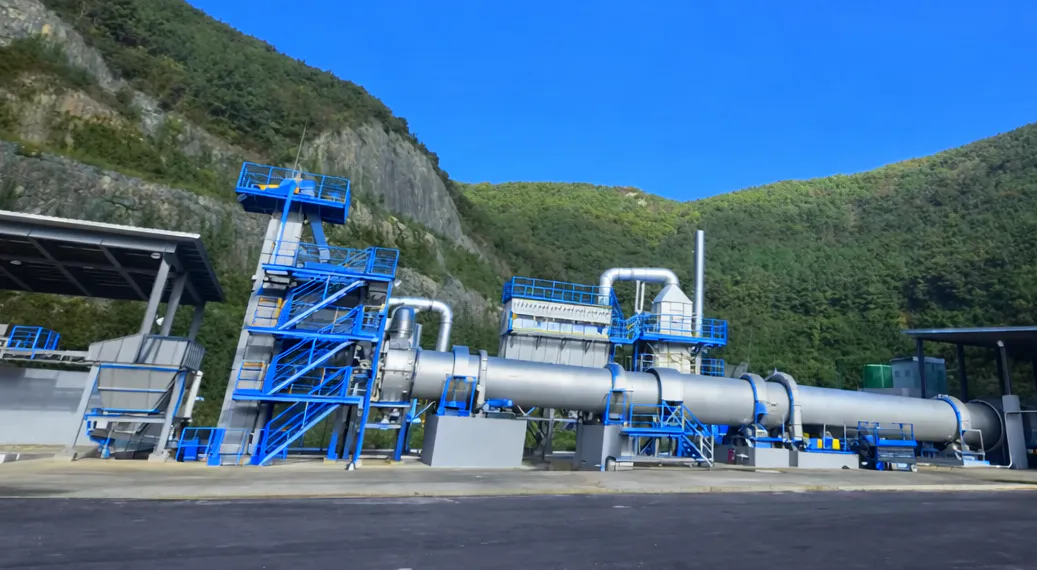
| RTO | High-volume, medium-high concentration VOCs + odor | ✅ High efficiency, stable operation, high thermal recovery rate |
| Biofilter | Low-concentration odor (H₂S <50 ppm) | ✅ Low cost, environmentally friendly |
| Activated Carbon Adsorption | Small-volume, intermittent emissions | ✅ Simple and easy to use |
| Plasma Technology | Medium-low concentration VOCs | ✅ No secondary pollution |

EVER-POWER Advantages
High Air Volume Handling Capacity
A single five-chamber RTO module can treat 150,000–200,000 Nm³/h of airflow. Multiple modules operating in parallel can meet the needs of large-scale sewage treatment plants.
Corrosion-Resistant Materials
Uses corrosion-resistant stainless steel and specialized ceramics to extend equipment lifespan. The purge chamber design prevents acid condensation.
Intelligent Control
Real-time monitoring of H₂S and airflow, with automatic adjustment of switching cycles and fuel supply to ensure treatment efficiency and safety.
Economic Efficiency
Lower investment cost compared to European and American brands, with long-term technical support. Waste heat recovery can provide energy for sludge drying or heating systems.

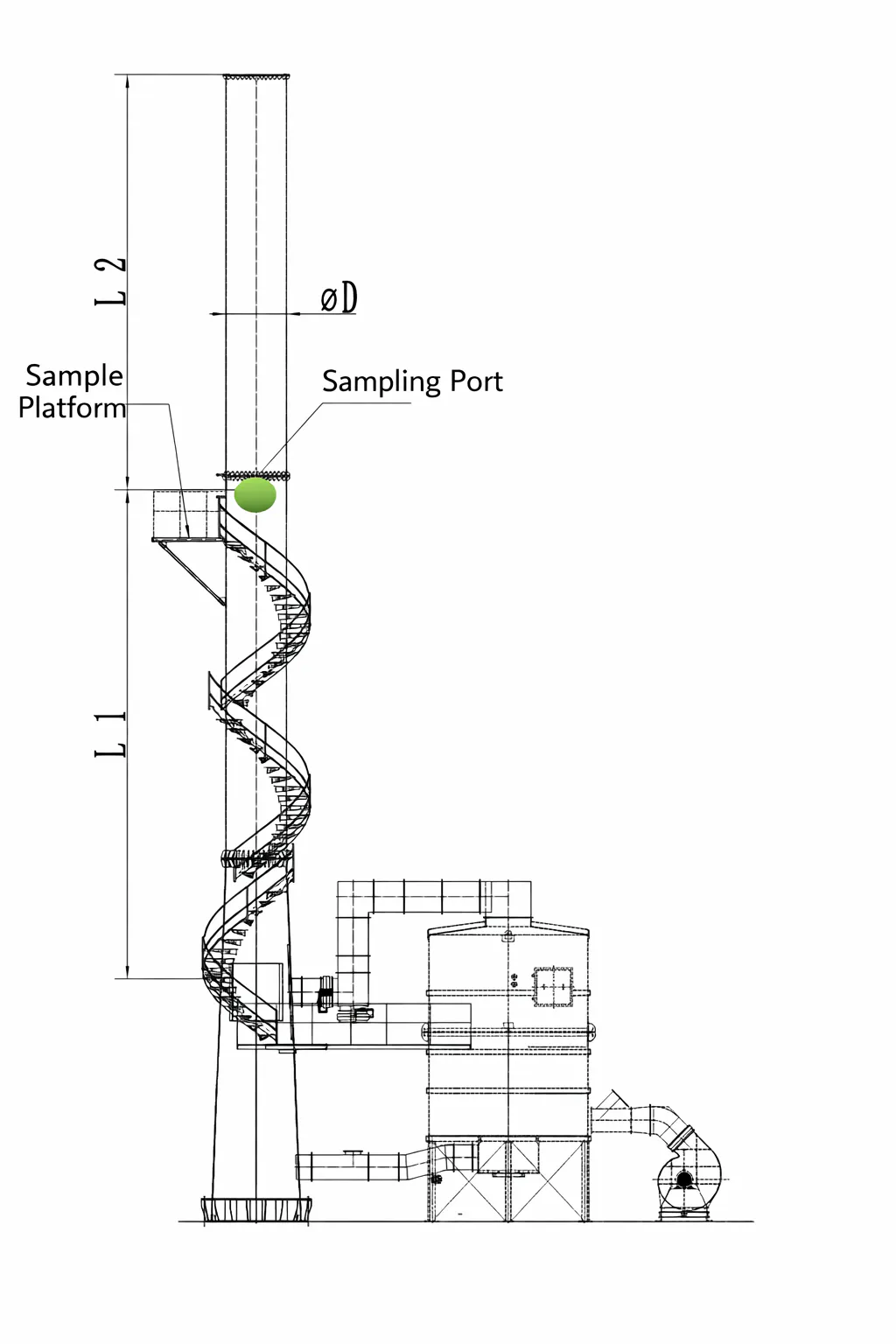

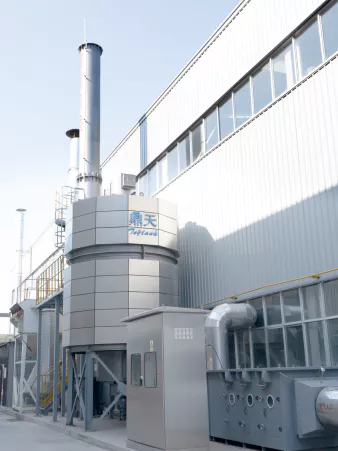
Why Choose Us?
-
Europe & U.S.: The U.S. EPA provides guidance standards for sewage treatment plant odor emissions, encouraging the use of high-efficiency treatment technologies such as RTO. EU member states under the IED framework set their own odor emission limits; for example, Germany mandates that odor concentration at sewage plant boundaries must not exceed 1 OU/m³.
-
China: The GB 14554-2023 Emission Standard for Odor Pollutants specifies emission limits for different process units at sewage treatment plants (e.g., H₂S ≤ 4 mg/m³), requiring the use of biological deodorization or thermal oxidation technologies.
-
Brazil & Middle East: Local environmental authorities are imposing stricter regulations on sewage plant odor control. Common solutions include biofilters and chemical scrubbing combined with RTO systems.
FAQ:
Q1. What is the role of RTO in odor removal?
A1: RTO (Regenerative Thermal Oxidizer) effectively removes odorous compounds, such as H₂S (hydrogen sulfide) and NH₃ (ammonia), by using high-temperature oxidation. The process destroys the odor molecules, converting them into harmless by-products like CO₂ and H₂O, ensuring clean and safe emissions for municipal and industrial applications.
Q2. What types of odors can RTO systems treat?
A2: RTO systems are highly effective in treating a wide range of odorous compounds, including hydrogen sulfide (H₂S), ammonia (NH₃), volatile organic compounds (VOCs), and mercaptans. These compounds are commonly found in industrial facilities such as sewage treatment plants, landfills, food processing, and chemical manufacturing.
Q3. How does RTO work in removing odors?
A3. RTO systems work by heating odorous air to high temperatures (typically between 750–900°C), where oxidation reactions occur. This high temperature decomposes the odorous molecules into non-toxic substances like CO₂ and H₂O, leaving no residual odor or harmful by-products.
Q4. Can RTO systems be used for treating odorous gases in municipal wastewater treatment plants?
A4: Yes, RTO systems are ideal for treating the odorous gases emitted by municipal wastewater treatment plants. They efficiently handle the sulfur-based odors (e.g., H₂S) and ammonia emissions, ensuring regulatory compliance with local air quality standards and improving the surrounding air quality.
Q5. What are the advantages of using RTO for industrial odor control over other methods?
A5: The key advantages of using RTO for industrial odor control include:
-
High removal efficiency (typically greater than 99% for sulfur and ammonia odors)
-
Energy recovery through regenerative heat exchange, which reduces operating costs
-
Low operational maintenance, as RTO systems are robust and require minimal upkeep
-
Long-term solution for consistent and continuous odor removal
Q6. How much energy is consumed in an RTO system for odor removal?
A6: RTO systems are highly energy-efficient due to their heat recovery mechanism. The energy used to treat odorous gases is largely recovered and reused to maintain the system’s operating temperature, making RTO one of the most energy-efficient technologies for industrial and municipal odor control.
Q7. What is the typical temperature range for RTO to effectively oxidize odors?
A7: RTO systems typically operate within a temperature range of 750–900°C. This high temperature ensures the complete oxidation of odorous compounds like H₂S and NH₃, preventing the escape of harmful odors into the environment.
Q8. Can RTO systems treat mixed odors from various sources in industrial applications?
A8: Yes, RTO systems are highly versatile and can handle mixed odorous compounds from various industrial sources. Whether the odors originate from chemical plants, landfills, food processing, or sewage treatment, RTO systems can efficiently treat multiple compounds simultaneously.
Q9. What maintenance is required for an RTO system used in odor treatment?
A9: RTO systems are relatively low-maintenance. Regular maintenance typically includes:
-
Checking and cleaning the ceramic media used for heat recovery
-
Inspecting valves and seals for wear
-
Cleaning and servicing the burner system as needed
-
Annual checks to ensure optimal performance and efficiency, especially in industrial environments with high odor loads.
Q10. Is RTO a cost-effective solution for odor control in municipal or industrial facilities?
A10: Yes, RTO systems are a cost-effective solution for long-term odor control in municipal and industrial facilities. While the initial investment can be higher than some alternative technologies, the energy recovery feature significantly reduces operating costs. Furthermore, RTO’s high efficiency and low maintenance needs ensure long-term savings and a positive return on investment.