

1. Summary
This engineering guide examines the critical application of Regenerative Thermal Oxidizers (RTO) in the pharmaceutical sector, specifically targeting the high-concentration, toxic, and intermittent exhaust streams from Sterile Active Pharmaceutical Ingredient (API) crystallization and drying processes. We analyze the challenges of handling solvents like Acetonitrile (ACN) and DMF, detail compliance with Australian EPA and global GMP standards, and demonstrate how Ever-Power’s integrated “Condensation + Concentration + RTO” systems provide a cost-effective, high-efficiency alternative to legacy Western brands.
2. The Critical Interface of Pharmaceutical Purity and Environmental Compliance
In the high-stakes world of pharmaceutical manufacturing, specifically regarding Sterile Active Pharmaceutical Ingredients (APIs), the margin for error is non-existent. The processes of crystallization, centrifugal separation, and vacuum drying are the heartbeat of API production, often utilizing aggressive organic solvents such as Acetonitrile (ACN), Dimethylformamide (DMF), Acetone, and Ethanol to ensure product purity. However, these essential solvents create a significant environmental and safety challenge. As the solvents evaporate during the drying and recovery phases, they generate exhaust streams characterized by high toxicity, fluctuating concentrations (often reaching 5–30 g/Nm³), and distinct flammability risks. For pharmaceutical plant managers in Australia and across the Asia-Pacific region, managing these emissions is not merely about regulatory adherence; it is about maintaining the social license to operate and ensuring the safety of personnel against toxic exposure and explosion hazards.
Traditional emission control methods, such as simple carbon adsorption, often fail in these scenarios due to the high polarity and boiling points of solvents like DMF, leading to rapid breakthrough and bed saturation. Furthermore, the stringent Good Manufacturing Practice (GMP) standards required in sterile environments necessitate equipment that eliminates the risk of cross-contamination and allows for Clean-in-Place (CIP) protocols. This brings us to the modern solution: the Regenerative Thermal Oxidizer (RTO). By integrating upstream Zeolite Wheel Concentration and solvent recovery systems, Ever-Power RTOs transform these hazardous waste streams. We do not just destroy pollutants; we recover valuable thermal energy and, where feasible, the solvents themselves, turning a compliance burden into an operational asset. This holistic approach ensures that facilities in Sydney, Melbourne, and beyond meet the rigorous standards of the 21st-century bio-pharma landscape.
3. Navigating Regulatory Frameworks: Australian EPA, Global GMP, and Emission Standards
Operating a pharmaceutical facility in Australia requires navigating a complex, multi-layered regulatory environment. The primary driver for emission control is the National Environment Protection Measure (NEPM) for Ambient Air Quality, which sets the baseline for pollutants. However, state-level regulations often impose stricter limits. For instance, EPA Victoria’s Environment Reference Standard (ERS) and New South Wales EPA’s Protection of the Environment Operations (Clean Air) Regulation mandate rigorous control over Volatile Organic Compounds (VOCs), particularly those classified as air toxics like DMF and Acetonitrile. Australian regulators are increasingly adopting the “Best Practice” approach, often benchmarking against the European Union’s Industrial Emissions Directive (IED). This means that simply diluting exhaust is no longer acceptable; destruction efficiencies of 99% or higher are becoming the standard expectation for new API facilities.
On a global scale, the pharmaceutical industry is bound by the International Council for Harmonisation (ICH) guidelines, specifically ICH Q3C regarding residual solvents. While ICH Q3C focuses on the final product, the manufacturing process emissions are scrutinized under regional laws such as the US EPA’s NESHAP (National Emission Standards for Hazardous Air Pollutants) and China’s GB 37822-2019 standard for pharmaceutical pollutants. For a sterile API plant, there is the added layer of GMP (Good Manufacturing Practice) regulations. The exhaust treatment system must be designed to prevent any backflow of contaminants into the sterile processing zone. Ever-Power’s systems are engineered with these specific constraints in mind, utilizing sanitary-grade stainless steel for intake manifolds and ensuring negative pressure maintenance to satisfy both environmental regulators in Canberra and GMP auditors from the TGA (Therapeutic Goods Administration).
4. Deep Dive: RTO Application in API Crystallization and Drying
The exhaust profile from API crystallization and drying is unique and demanding. During the vacuum drying or centrifugal separation steps, solvent concentrations can spike dramatically, creating a “batch” emission profile rather than a steady stream. Solvents like Acetonitrile pose a dual threat: they are highly flammable and, upon combustion, generate Nitrogen Oxides (NOx) and potentially Hydrogen Cyanide if not oxidized at precise temperatures. DMF creates similar challenges, as it can decompose into amines. Therefore, a standard off-the-shelf RTO is insufficient. The solution lies in a multi-stage process. First, a deep condensation unit (chilled to -20°C or lower) recovers the bulk of the valuable solvents, offering a return on investment. The remaining gas, still rich in VOCs but below the recovery threshold, is then passed to a hydrophobic Zeolite Wheel Concentrator.
The concentrator increases the VOC concentration ratio (typically 15:1), significantly reducing the air volume that needs thermal treatment. This concentrated stream is then fed into the Ever-Power 3-Chamber RTO. The 3-chamber design is critical for pharmaceutical applications because it eliminates the “puff” of untreated gas that occurs during valve switching in 2-chamber systems, ensuring a constant Destruction Removal Efficiency (DRE) of >99%. Furthermore, our RTOs for this sector are built with high-grade Hastelloy or 316L Stainless Steel liners to resist the corrosive nature of acidic byproducts. We also integrate a Quench Tower downstream to neutralize any acid gases (like HCl or NOx) formed during the oxidation of halogenated or nitrogen-containing solvents. This integrated “Condensation + Concentration + Oxidation + Scrubbing” approach provides the robust reliability required for continuous pharmaceutical production.

5. Technical Specifications & Performance Data
| Performance | 2-bed RTO | 3-bed RTO | Rotary Valve RTO | Notes |
|---|---|---|---|---|
| Technicality | First generation | Second generation | Third generation | |
| Number of chambers | 2 | 3 | 12 | Rotary valve operates continuously |
| Number of valves | 4 | 9 | / | |
| Reliability | Valve switching times per year: 350,000 | Valve switching times per year: 520,000 | / | |
| Piping pressure fluctuation | ±500pa | ±250pa | ±25pa | |
| Discharge compliance | Total purification efficiency: 95% | Total purification efficiency: 99% | Total purification efficiency: 99.5% | 99.5% |
| Maximum treating range | < 1g | < 5g | < 10g | 50mg/m³ discharge standard |
| Heat dissipation surface area | 100m² | 145m² | 95m² | |
| Energy saving | Thermal efficiency: 90% | Thermal efficiency: 95% | Thermal efficiency: 96% | 96% |
| Start-up heating time | 2.5h | 2.5h | 2h | Cold furnace start-up (Ethyl acetate) |
| Self-operation concentration | 2.5g/m³ | 2.2g/m³ | 1.8g/m³ | |
| Economy | Regenerative ceramic filling volume: 18m³ | Regenerative ceramic filling volume: 26m³ | Regenerative ceramic filling volume: 17m³ | 17m³ |
| Practicality | Occupation of land: L12×W7 | Occupation of land: L16×W7 | Occupation of land: L12×W7 | L12×W7 |
*Disclaimer: The other brand names mentioned above are provided solely for illustrative purposes. We do not offer original products or equipment bearing these brand names.
6. Industry Trends: The Future of API Emission Control
As we move towards 2025, the pharmaceutical manufacturing landscape is shifting towards “Green Chemistry” and carbon neutrality. We are observing a distinct trend where RTOs are no longer viewed solely as waste treatment devices but as integral parts of the facility’s energy management system. **Energy Integration** is key; modern plants are demanding RTOs equipped with high-efficiency heat exchangers to harvest the thermal energy from VOC destruction and channel it back into the production loop—for example, to generate steam for the very drying ovens creating the emissions. This creates a circular energy economy within the plant.
Another significant trend is **AI-Driven Predictive Maintenance (AIO)**. Pharmaceutical compliance requires 100% uptime; an RTO failure can halt an entire production batch worth millions. New Ever-Power systems feature smart IoT sensors that monitor valve timing, pressure differentials across the ceramic bed, and burner efficiency in real-time. By utilizing machine learning algorithms, the system can predict component fatigue weeks in advance, allowing maintenance to be scheduled during planned shutdowns rather than causing emergency stoppages. Furthermore, there is a growing demand for **Solvent Recovery Efficiency**. As raw material costs rise, the ability to recover high-purity solvents like DMF before oxidation is becoming a primary purchasing driver, shifting the focus from simple destruction to sophisticated recovery-then-destruction models.
7. Factory Capabilities: Customization for the Pharma Sector
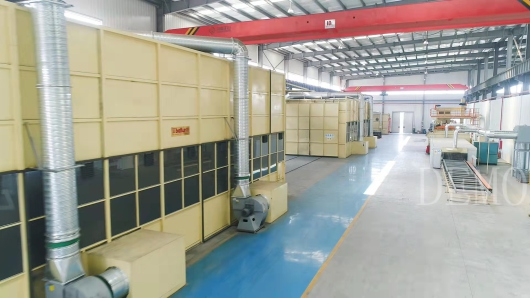
Ever-Power distinguishes itself as a true “Source Factory” with deep OEM/ODM capabilities, not just a trading intermediary. We understand that a sterile API plant in Queensland has different spatial constraints and ambient conditions than a facility in Harbin. Our manufacturing facility utilizes advanced laser cutting and robotic welding to ensure air-tight seals, critical for handling toxic gases like Acetonitrile. We offer a level of customization that standard suppliers cannot match. Do you need a vertical layout to save footprint? Do you require a specific brand of instrumentation (e.g., Rockwell vs. Siemens) to match your plant standard? We accommodate these needs without the exorbitant engineering fees charged by European competitors.
Our “Pharma-Grade” customization package includes sanitary polishing of all ductwork entering the RTO to prevent dust accumulation, installation of double-dump valves for safe particulate handling, and integration of redundant LEL monitors for absolute safety. We also provide full documentation support for IQ/OQ (Installation Qualification / Operational Qualification) to assist with your validation processes. By choosing Ever-Power, you are partnering with a manufacturer that combines heavy industrial durability with pharmaceutical-grade precision.
8. Customer Success Story: Transforming Emissions in the Middle East
“We were struggling with outdated emission control systems that couldn’t handle the high VOC levels in our API production. Ever-Power’s RTO system solved our issues efficiently, meeting both Australian EPA regulations and GMP standards. The whole process from consultation to installation was smooth and professional. Highly recommend!”
“We were looking for a way to reduce operational costs and improve compliance with local environmental standards. The integrated ‘Condensation + Concentration + RTO’ system from Ever-Power not only saved us money on energy but also ensured we stayed within legal limits. Excellent value for money.”
“After implementing Ever-Power’s RTO system, our production facility runs smoother than ever. The system’s reliability has minimized downtime, and we’ve seen a noticeable increase in our productivity. Plus, the energy recovery feature has significantly cut our heating costs.”
“Safety is paramount in the pharmaceutical industry, especially when dealing with solvents like Acetonitrile. Ever-Power’s RTO system is designed with built-in safety measures, including real-time monitoring and emergency protocols. We now feel much safer with the equipment running smoothly.”
“We had an old Anguil system in our Melbourne facility that needed replacing. Ever-Power’s team made the retrofit process painless. They customized the RTO to fit our existing infrastructure, and the installation was quick, with minimal disruption. We were back up and running faster than expected!”
“We’ve been using Ever-Power’s RTO system for over a year now, and it’s been rock-solid. The technology is top-notch, and we’ve experienced no major issues. The system’s maintenance features have kept everything running efficiently, and it’s clear this was a great long-term investment for our API production line.”
9. Related Solutions



Frequently Asked Questions (FAQ)
Q1. How does the RTO system handle the high flammability of Acetonitrile during the drying process?
A1. Safety is paramount. We install fast-acting LEL (Lower Explosive Limit) analyzers at the inlet. If the concentration exceeds 25% LEL, our system automatically triggers a fresh air dilution valve to lower the concentration instantly. If it reaches critical levels, a safety bypass diverts the gas to a stack or emergency vent, protecting the RTO from explosion risks.
Q2. Can your RTO system replace my aging Anguil oxidizer at a facility in Melbourne, Australia?
A2. Absolutely. We specialize in retrofitting and replacing legacy systems. Our engineering team can design the RTO to fit your existing concrete pad and ductwork connections. We ensure full compliance with EPA Victoria regulations and provide local support for installation and commissioning, often at a cost 30-40% lower than buying a new unit from the original US supplier.
Q3. What is the advantage of using a Zeolite Wheel before the RTO for API drying exhaust?
A3. API drying often produces large volumes of air with relatively low concentrations of VOCs. Heating all that air is energy-expensive. The Zeolite Wheel acts like a sponge, absorbing the VOCs and releasing them into a much smaller, highly concentrated air stream (ratio up to 20:1). This allows you to use a much smaller RTO, significantly reducing both capital investment (CAPEX) and daily fuel consumption (OPEX).
Q4. How do you prevent corrosion from DMF and chlorinated solvents in the RTO?
A4. When DMF or chlorinated solvents burn, they create acidic byproducts. To combat this, we use high-nickel alloys like Hastelloy C276 for the combustion chamber and hot bypass valves. We also use specialized acid-resistant ceramic media. Finally, we install a downstream Quench Tower (Scrubber) to wash the exhaust gas with a caustic solution, neutralizing the acids before they are released into the atmosphere.
Q5. What is the typical delivery time for a custom pharmaceutical RTO to Australia?
A5. Once the design is approved, our typical manufacturing lead time is 10-12 weeks. Shipping to major Australian ports like Sydney, Melbourne, or Brisbane takes approximately 3-4 weeks. So, you can expect the unit on-site in about 4 months. We provide comprehensive documentation packages beforehand to help you speed up local permitting processes.
Q6. Does Ever-Power provide IQ/OQ documentation support for GMP validation?
A6. Yes, we understand the pharmaceutical industry’s specific needs. We provide a full technical dossier, including material certificates, functional design specifications (FDS), and factory acceptance test (FAT) protocols. This supports your engineering team in completing the Installation Qualification (IQ) and Operational Qualification (OQ) required for GMP compliance.
Q7. How much maintenance does the ceramic heat storage media require in an API plant?
A7. In clean solvent applications, ceramic media can last 5-10 years. However, if your process generates fine crystal dust, we recommend an upstream bag filter to protect the bed. We also include a “Bake-Out” feature in the RTO software, which raises the temperature during idle modes to burn off any organic buildup on the cold face of the ceramics, reducing maintenance frequency.
Q8. Can the heat generated by the RTO be reused in the crystallization process?
A8. Definitely. This is a key feature of our energy-efficient design. We can install a waste heat boiler or a thermal oil heat exchanger at the RTO outlet. The recovered thermal energy can be used to generate steam or hot water, which can then be fed back into the jacketed reactors for crystallization or used in the drying ovens, reducing your boiler fuel costs.
Q9. What makes the Rotary RTO different from the 3-Chamber design for pharma applications?
A9. The Rotary RTO uses a single rotating valve instead of multiple poppet valves. It offers a smaller footprint and fewer moving parts, which is great for space-constrained pharma plants. However, for applications with very corrosive gases or strictly segregated gas streams, the 3-Chamber design is often preferred due to its robust isolation capabilities. We will analyze your specific layout to recommend the best fit.
Q10. How do I get a quote for a retrofit project in Brisbane?
A10. It is simple. Click the “Inquire Now” button below or email us your process parameters (airflow, VOC type, temperature). Our engineering team will perform a preliminary simulation and provide a technical proposal and budget quote within 48 hours. We can also arrange a video conference to discuss your specific site constraints.
Ready to Upgrade Your API Facility’s Emission Control?
Don’t let outdated equipment compromise your compliance or production safety. Partner with Ever-Power for engineering excellence, rapid delivery, and unbeatable value. Whether you need a replacement for a Dürr system or a new installation for a sterile drying line, our team is ready to engineer a solution that meets Australian standards and your budget.
Editor: PXY