

1. Summary
Across Australia’s vast landscapes, from bustling urban centers to remote rural areas, composting and anaerobic digestion facilities are stepping up as essential players in managing organic waste. These processes turn food scraps, green waste, and agricultural residues into valuable resources like biogas and nutrient-rich soil amendments. Yet, they also release volatile organic compounds (VOCs) and potent odors from decomposing matter, which can drift into nearby communities and spark complaints. At Ever-Power(Australia) Co., Ltd., we’ve honed Regenerative Thermal Oxidizers (RTOs) to neutralize these emissions, ensuring operations run smoothly while meeting tough environmental standards. This piece walks through how RTO technology fits into the composting and anaerobic digestion scene down under, touching on practical setups, regulatory hurdles, and ways to make your site more efficient.
If you’re overseeing a facility in Perth dealing with high-moisture green waste or a biogas plant in rural New South Wales pushing for better energy recovery, grasping RTO integration could be a game-changer. We’ll cover the basics of emissions in these processes, global rules shaping the industry, fresh approaches making waves, and tailored options that fit local needs.
2. Breaking Down Emissions from Composting and Anaerobic Digestion
Composting breaks down organic materials aerobically, relying on oxygen-loving microbes to turn waste into stable humus. Anaerobic digestion, on the other hand, happens in sealed tanks without oxygen, producing methane-rich biogas for energy while leaving digestate for fertilizer. Both methods are booming in Australia, with over 1.2 million tonnes of food and garden organics diverted from landfills annually, but they come with air quality issues.
Key emissions include VOCs like terpenes from plant matter, ammonia from nitrogen-rich wastes, and sulfur compounds such as hydrogen sulfide that create that rotten egg smell. In open composting windrows, odors can spike during turning, reaching thresholds where even low concentrations (parts per billion) bother neighbors. Anaerobic systems might leak methane or volatile fatty acids if not sealed properly, adding to greenhouse gas concerns. RTO units step in by heating exhaust gases to 800-1000°C, breaking down these compounds into water vapor and carbon dioxide with destruction efficiencies over 99%. For facilities handling wet sludge in Queensland’s humid tropics or dry manure in South Australia’s arid zones, RTOs paired with scrubbers can capture acids first, preventing corrosion in the system.


3. Navigating Regulations on VOCs and Odors in Composting and Anaerobic Digestion Worldwide
Rules around air emissions from organic waste processing vary, but they’re tightening everywhere to curb smells and climate impacts. In Australia, the Environment Protection Authorities (EPAs) in each state oversee this. New South Wales’ Protection of the Environment Operations Act 1997 requires facilities to keep odors below nuisance levels, often mandating biofilters or RTOs for larger sites under the EPA’s Air Emissions Guideline. Victoria’s Environment Protection Act 2017 sets VOC limits at 10 mg/m³ for total organics, pushing anaerobic digesters to capture 90% of methane. Queensland’s Environmental Protection Regulation 2019 demands odor modeling for new compost yards, with thresholds like 2 odor units at boundaries. South Australia’s Environment Protection (Air Quality) Policy 2016 caps hydrogen sulfide at 0.005 ppm, common in digestion exhausts. Western Australia’s Environmental Protection (Noise) Regulations 1987 extend to odors indirectly via nuisance provisions, while Tasmania and the Northern Territory align with national standards under the National Environment Protection Measure for Air Quality.
Neighboring spots face similar pressures. New Zealand’s Resource Management Act 1991 requires regional consents for composting emissions, with Auckland’s plan limiting VOCs to 5 mg/m³. Indonesia’s Ministry of Environment Regulation No. 5/2018 caps odors at 20 dilution threshold odor units for waste sites near homes. Papua New Guinea’s Environment Act 2000 is evolving, focusing on methane from digesters amid growing urban waste.
In top global producers, standards are rigorous. China’s GB 16297-1996 limits VOCs to 120 mg/m³ for composting, but provinces like Guangdong enforce 50 mg/m³ for anaerobic facilities. The USA’s EPA under the Clean Air Act (40 CFR Part 60) requires 95% VOC reduction for large digesters via MACT standards. The EU’s Industrial Emissions Directive (2010/75/EU) mandates best available techniques, with Germany’s TA Luft capping odors at 500 odor units/hour. India’s Central Pollution Control Board (Air Act 1981) sets 150 mg/m³ for organics, tighter in states like Maharashtra. Brazil’s CONAMA Resolution 430/2011 limits VOCs to 150 mg/m³, with São Paulo pushing RTO for biogas plants. Vietnam’s QCVN 19:2021/BTNMT caps at 200 mg/m³, but Ho Chi Minh City zones require advanced odor control. South Korea’s Clean Air Conservation Act limits to 60 ppm for digesters. Japan’s Air Pollution Control Act sets 0.01-0.1 ppm for specific odors like ammonia. Bangladesh’s Environment Conservation Rules 1997 aim for 100 mg/m³, while Pakistan’s NEQS cap at 400 mg/m³, dropping in Punjab. These push facilities toward RTOs, especially where odors trigger community backlash.
4. Ever Power RTO Technical Specifications
| Performance | 2-bed RTO | 3-bed RTO | Rotary Valve RTO | Notes |
|---|---|---|---|---|
| Technicality | First generation | Second generation | Third generation | |
| Number of chambers | 2 | 3 | 12 | Rotary valve operates continuously |
| Number of valves | 4 | 9 | / | |
| Reliability | Valve switching times per year: 350,000 | Valve switching times per year: 520,000 | / | |
| Piping pressure fluctuation | ±500pa | ±250pa | ±25pa | |
| Discharge compliance | Total purification efficiency: 95% | Total purification efficiency: 99% | Total purification efficiency: 99.5% | 99.5% |
| Maximum treating range | < 1g | < 5g | < 10g | 50mg/m³ discharge standard |
| Heat dissipation surface area | 100m² | 145m² | 95m² | |
| Energy saving | Thermal efficiency: 90% | Thermal efficiency: 95% | Thermal efficiency: 96% | 96% |
| Start-up heating time | 2.5h | 2.5h | 2h | Cold furnace start-up (Ethyl acetate) |
| Self-operation concentration | 2.5g/m³ | 2.2g/m³ | 1.8g/m³ | |
| Economy | Regenerative ceramic filling volume: 18m³ | Regenerative ceramic filling volume: 26m³ | Regenerative ceramic filling volume: 17m³ | 17m³ |
| Practicality | Occupation of land: L12×W7 | Occupation of land: L16×W7 | Occupation of land: L12×W7 | L12×W7 |
5. Fresh Directions in RTO Tech for Organic Waste Handling
Looking ahead, RTOs in composting and digestion are shifting toward smarter, greener designs. A standout trend is linking RTO with carbon capture units, pulling CO₂ from exhaust before release. For a mid-sized Australian digester processing 50 tonnes of waste daily, this could sequester 200 tonnes of CO₂ yearly, aligning with the federal Safeguard Mechanism and earning credits under the Australian Carbon Credit Unit scheme.
Hydrogen burners are another leap, burning clean fuel to oxidize odors without adding fossil CO₂. With Australia’s Hydrogen Strategy targeting 15% green hydrogen in energy by 2050, facilities in hydrogen hubs like Gladstone could slash emissions by 40%, using biogas-blended hydrogen for self-sustaining ops.
Pairing RTO with zeolite concentrators amps up efficiency for dilute odor streams. Zeolites adsorb VOCs at room temp, desorbing them concentrated for RTO feed, shrinking system size by 80% and energy use—ideal for space-tight urban compost sites in Melbourne.
On sustainability, crunching numbers shows RTOs cut carbon footprints sharply. Treating 10,000 m³/h of digester off-gas avoids 300 tonnes of methane equivalent annually (with methane’s 28x CO₂ warming potential), plus heat recovery saves 150 MWh of electricity yearly. AI-driven controls fine-tune airflow based on real-time sensors, trimming another 10-15% off energy.
6. Tailored RTO Approaches for Australian Composting and Digestion Sites
Ever-Power specializes in bespoke RTO solutions for the unique challenges of Australian composting and anaerobic digestion facilities—from high-humidity coastal sites in Queensland to remote outback operations. Our engineering team conducts on-site exhaust profiling to size pre-filters, select corrosion-resistant alloys, and optimize heat recovery based on your utility needs. With service hubs in Sydney and Perth, we offer rapid spare parts delivery, operator training in English, and 24/7 remote diagnostics. Unlike generic suppliers, we deliver full turnkey projects including civil works coordination, commissioning, and compliance documentation aligned with NSW EPA or VIC DELWP requirements. Every system is factory-tested before shipment to ensure seamless startup.
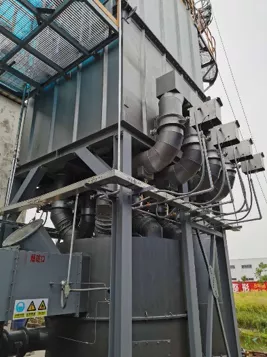
This hands-on method means we adapt for local quirks, like adding extra scrubbers for salty coastal air in Tasmania or robust enclosures for dust in the Northern Territory. Check our classic rotary valve RTO for specs that match these demands.

7. World Success Stories
7.1. Client Profile: US Anaerobic Digestion Facility
Industry: Biogas Production
Location: California, USA
Success Story:
A large anaerobic digestion facility in California, processing organic waste to produce biogas, faced problems with high methane emissions and severe odors. The facility installed a Regenerative Thermal Oxidizer (RTO) system, successfully reducing methane and volatile organic compound (VOC) emissions by over 90%, meeting the stringent requirements of the California Air Resources Board (CARB). Furthermore, the RTO system integrated heat recovery, reducing the facility’s energy costs by over 30%. The plant operators were also able to collect the oxidized carbon dioxide for use in nearby agricultural production, further enhancing sustainability and earning carbon credits. The integration of the RTO system significantly improved air quality in the surrounding community while supporting the plant’s expansion.
7.2. Client Profile: German Composting Facility
Industry: Organic Waste Composting
Location: Berlin, GermanySuccess Story:
A composting facility in Berlin, processing food waste and green waste on a large scale, faced challenges with odor control and volatile organic compound (VOC) emissions. The facility installed an RTO system, achieving a removal efficiency of up to 99% for VOCs such as terpenes, aldehydes, and ammonia. The system complies with strict German TA Luft regulations and also helped the plant reduce hydrogen sulfide levels to well below the legal threshold. The facility utilizes the heat recovered from the RTO to preheat the incoming air, significantly reducing energy consumption and providing additional hot water needed for the composting process. This system was crucial in ensuring the facility’s compliance and enhancing its sustainability.
7.3. Client Profile: UK Anaerobic Digestion Plant
Industry: Biogas Production
Location: London, UK
Success Story:
A biogas plant in London, processing organic waste from urban areas, faced problems with odors and volatile organic compound (VOC) emissions, causing nuisance to local residents. The plant opted for a customized RTO solution. The system was designed to handle large volumes of methane-rich biogas exhaust, achieving a destruction removal efficiency (DRE) of up to 98%. The regenerative thermal oxidizer (RTO) not only ensures compliance with UK air quality standards but also integrates carbon capture technology, capturing the carbon dioxide produced after combustion for use in nearby greenhouses. This collaboration helped the facility reduce its carbon footprint by 30% while recovering valuable heat to improve the plant’s overall energy efficiency. The plant experienced improved operational efficiency and a significant reduction in odor-related community complaints.
7.4. Client Profile: Australian Composting Facility
Industry: Organic Waste Treatment
Location: Brisbane, Queensland, Australia
Success Story:
A composting facility in Queensland, Australia, processing food waste and green waste, faced significant challenges with volatile organic compound (VOC) emissions and odors during peak composting periods. Due to Queensland’s humid climate, the facility required a reliable solution capable of handling variable emissions and high moisture content in the exhaust gas. The plant installed an RTO system, successfully reducing VOC emissions, including terpenes and ammonia, by 99%. The heat recovery system preheats the incoming air, resulting in a 40% reduction in the facility’s energy costs. The RTO design incorporates a unique scrubber function to treat sulfur compounds, ensuring compliance with Queensland’s stringent environmental regulations. The plant experienced reduced operating costs, improved air quality, and enhanced public relations.
7.5. Client Profile: Brazilian Biogas Plant
Industry: Biogas Production
Location: São Paulo, Brazil
Success Story:
A biogas plant in São Paulo, Brazil, producing renewable energy from agricultural waste, had been plagued by VOC and odor emissions, particularly during the anaerobic digestion of sugarcane residue. The plant installed an RTO system, reducing VOC emissions, including methane and hydrogen sulfide, by 95%. The plant utilizes the RTO’s heat recovery function to generate steam for the digestion process, thereby improving the energy efficiency of its operations. The RTO installation helped the plant comply with Brazil’s CONAMA Resolution No. 430/2011 and significantly improved relations with the nearby community, which had previously complained about odor issues. The system also contributes to the facility’s sustainability goals, including reducing its carbon footprint.
*Disclaimer: The other brand names mentioned above are provided solely for illustrative purposes. We do not offer original products or equipment bearing these brand names.
8. Related Solutions

9. Picking Ever-Power for Your RTO Setup
What sets us apart is a focus on reliability in tough Aussie conditions. Our RTOs boast 99% uptime, low NOx burners to meet air quality rules, and modular builds for easy expansion as your facility grows.
Beyond Australia, our tech supports neighbors like Indonesia’s palm oil waste digesters under their odor regs, or New Zealand’s dairy manure facilities. In giants like the USA’s massive California compost ops or China’s rural biogas villages, our systems handle diverse feeds with 97% efficiency.
For insights or a chat about your setup, swing by our blog or reach out. Our about us page shares more about our track record.
10. Frequently Asked Questions:
Q1. How much does an RTO system cost for odor control in a composting facility in Sydney, Australia?
A1. Prices start around AUD 250,000 for mid-sized units handling 15,000 m³/h, including custom scrubbers for local humidity. We provide detailed quotes aligned with NSW EPA standards.
Q2. What is the best RTO supplier for anaerobic digestion emissions in Queensland’s high-humidity areas?
A2. Ever-Power offers corrosion-proof designs with 99% VOC destruction, optimized for coastal conditions. Contact us for a site-specific price estimate.
Q3. Where can I find reliable RTO installers for composting odor management in Melbourne under VIC regulations?
A3. Our Victoria team manages turnkey installs, ensuring DELWP compliance with hydrogen-ready options. Get a free quote today.
Q4. Which RTO features help reduce methane leaks from anaerobic digesters in Perth factories?
A4. Models with carbon capture add-ons cut emissions by 90%, with costs from AUD 300,000. Inquire about supplier details for your setup.
Q5. When should Australian composting plants upgrade to RTO with zeolite concentrators for better efficiency?
A5. If odors exceed 2 units at boundaries per EPA rules, now’s ideal. We offer quotes including sustainability audits for net-zero goals.
Q6. How to get a price quote for RTO in New Zealand anaerobic digestion sites near Auckland?
A6. Starting at NZD 280,000, our systems meet Resource Management Act limits with rapid delivery. Request a customized supplier proposal.
Q7. What maintenance costs come with RTO for composting in Indonesian palm waste facilities?
A7. Around IDR 150 million yearly, compliant with Ministry Regulation No. 5/2018. Contact for a full cost breakdown from our regional suppliers.
Q8. Where to buy affordable RTO for odor control in Chinese rural biogas anaerobic digestion plants?
A8. Ever-Power supplies at competitive prices, meeting GB 16297-1996 with 95% heat recovery. Ask for a quote tailored to Guangdong standards.
Q9. Which RTO model suits VOC reduction in Indian composting under CPCB air pollution rules?
A9. Our rotary units handle 150 mg/m³ limits efficiently, priced from INR 2 crore. Inquire about options for Maharashtra suppliers.
Q10. How does RTO with hydrogen burners lower costs for Brazilian anaerobic digestion in São Paulo?
A10. By 30% through zero-CO₂ operation under CONAMA 430/2011. Get a supplier quote for your facility’s needs.
Q11. What benefits offer RTO for odor governance in Vietnamese composting plants in Ho Chi Minh City?
A11. 99% efficiency meets QCVN 19:2021, with heat recovery saving energy. Request pricing from our HCM suppliers.
Q12. Where can South Korean anaerobic digestion operators find RTO compliant with Clean Air Act?
A12. Ever-Power provides systems capping 60 ppm, at competitive quotes. Contact for supplier details.
Q13. How to calculate RTO installation costs for Japanese composting under Air Pollution Control Act?
A13. From JPY 35 million, including low-odor features. Inquire for a precise supplier estimate.
Q14. What makes RTO ideal for German anaerobic digestion with TA Luft odor limits?
A14. Advanced scrubbers ensure 500 odor units compliance, with quotes starting at EUR 200,000. Reach out for supplier options.
Q15. When is the right time for Bangladeshi composting facilities to invest in RTO per Environment Rules?
A15. Before audits for 100 mg/m³ limits; our systems offer quick ROI. Get a quote from regional suppliers.
Editor: PXY
*Disclaimer: The other brand names mentioned above are provided solely for illustrative purposes. We do not offer original products or equipment bearing these brand names.