Beschrijving
What Is a High-Salinity Waste Liquid Incinerator?
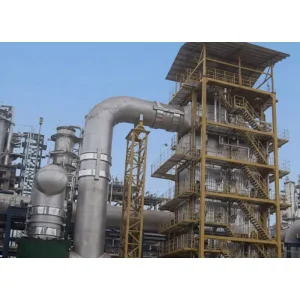
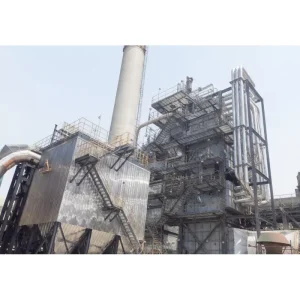
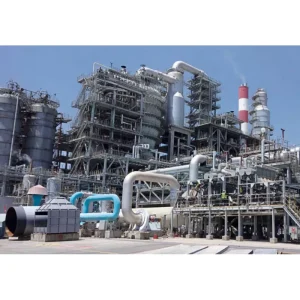
The Ever-power high-salinity waste liquid incinerator is an integrated furnace-boiler unit engineered for the one waste stream that breaks most water treatment plants — hot, concentrated brine that still carries organic contamination. Biological plants cannot survive the salt load; standard waste liquid incinerators foul their heat transfer surfaces within weeks. This product is purpose-built for exactly that duty.
The furnace oxidises organic matter at ≥ 1,000 °C, the dissolved salts melt and drop out as a dry ash or molten slag, and the remaining heat is recovered as saturated steam in a downstream convective bank. Three outputs come off a single footprint: destroyed organics, recovered regenerated salt suitable for industrial reuse, and process-grade steam that offsets natural gas consumption elsewhere on site.
For Australian operators running reverse osmosis, evaporators or crystallisers that already concentrate process wastewater, this unit finishes the job. It turns the stubborn 5–35% TDS reject stream into something auditable under NSW EPA, Victoria EPA and Queensland DES licensing — and into a material line on the P&L rather than a liability.
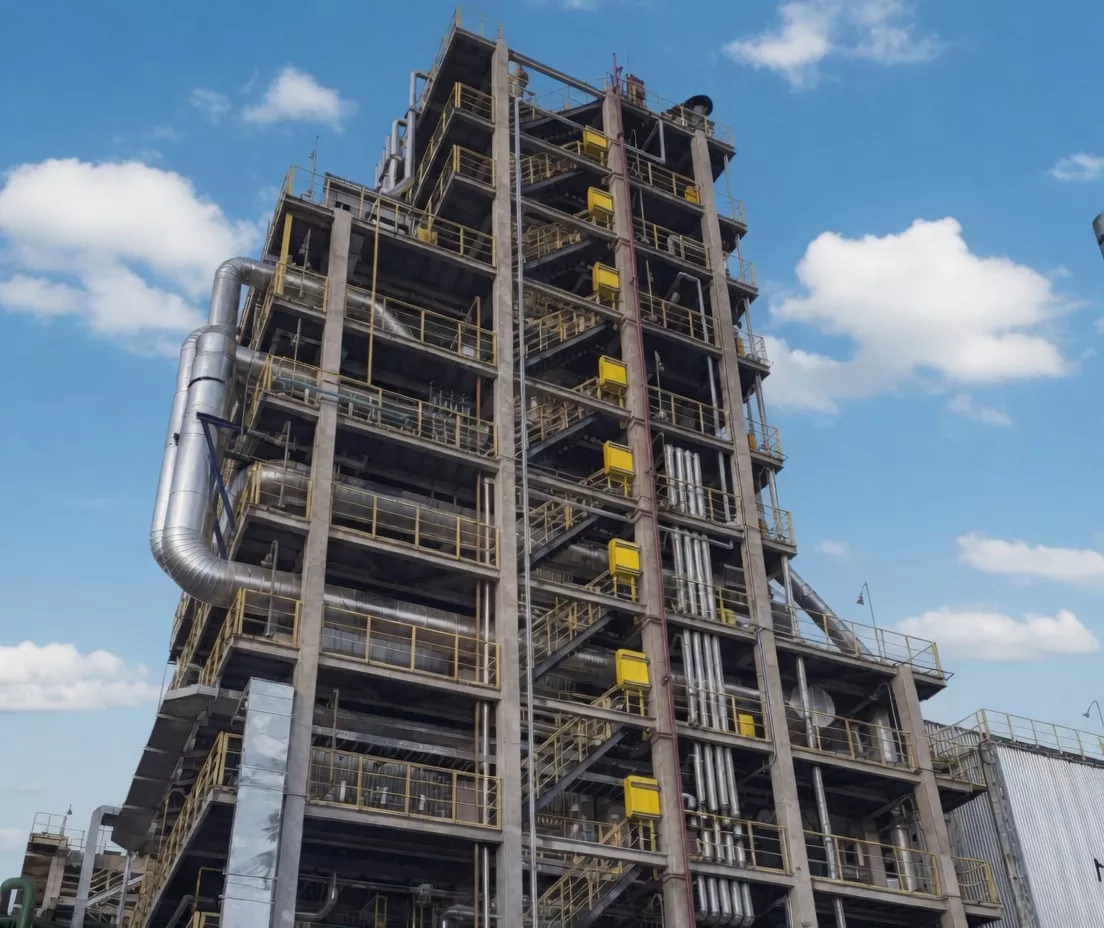
Waste Liquids This Boiler Can Process
RO / Membrane Reject
Reverse osmosis concentrate from coal-seam gas, mine dewatering, food processing and chemical desalination loops. TDS 5–15%.
Pharmaceutical Mother Liquor
Sodium-salt-laden mother liquor from API crystallisation; DMF, DMSO or MeOH residues; pH 2–11.
Textile Dye Concentrate
High-colour azo-dye wash water with sodium sulfate and NaCl. Organic destruction required before salt can be reused.
Coking & Coal Chemical Brine
High-ammonia, high-phenol, high-salt wastewater from coking, gasification and coal-to-chemical plants.
Electroplating & PCB Rinse
Metal-bearing rinse concentrates from electronics and surface-finishing lines; sulfate- and chloride-heavy.
Landfill Leachate Concentrate
Post-evaporator leachate concentrate with persistent organics. Dry-salt discharge removes a contentious liability.
How the High-Salinity Waste Liquid Incinerator Works
Five engineered stages take concentrated brine in and deliver dry salt, clean flue gas and useful steam out. The process is controlled as a single unit through one PLC — no operator juggling multiple skids.
Feed Conditioning
Brine is filtered, heated and pressurised to ~6 bar. A twin-fluid atomiser with steam or compressed air breaks the liquid into fine droplets.
Primary Furnace Combustion
A natural-gas or diesel pilot burner sustains 1,000–1,100 °C. Organic matter is oxidised; water evaporates; salt transforms to dry particulate or molten film.
Salt Separation
Depending on operating mode, salt is captured as (a) dry ash from an inertial separator, or (b) molten slag tapped from a water-cooled hearth for sale as regenerated feedstock.
Steam Generation
Hot flue gas passes through a convective boiler bank and economiser, yielding 1.5–8 t of saturated steam per tonne of waste liquid processed.
Flue Gas Polishing
Bag filter, dry sorbent (Ca(OH)₂ or NaHCO₃), and optional SCR remove HCl, SOx, NOx and fine particulate to Australian licence limits.
Key Features & Engineering Advantages
Integrated Furnace + Boiler
One Class A licensed vessel handles combustion and heat recovery. No third-party tie-ins, no stranded pressure-part approvals.
Anti-Fouling Geometry
Gas velocity and tube spacing are engineered to prevent alkali-salt deposition on heat transfer surfaces. Online rapping keeps efficiency within spec.
Dual Salt Discharge Mode
Switchable between dry-salt drop-out (process reuse) and molten slag tap (disposal or vitrification). One asset, two commercial plays.
High-Alloy Hot Path
Inconel 625, Hastelloy C276 and SiC refractory options cover aggressive Cl/S chemistries that would eat carbon steel within a year.
Zero Liquid Discharge Ready
Directly replaces or complements evaporator-crystalliser trains in ZLD schemes. Works as a replacement of MVR crystalliser where organics defeat thermal concentration.
Auto Load Control
PLC trims auxiliary fuel, atomising media and excess air as brine calorific value swings across the shift. No operator intervention required.
Technical Specifications
Standard capacity bands cover most Australian brine-disposal duties. Every project is ultimately sized to the actual TDS curve, organic load and downstream steam demand of your site.
| Model | Feed Rate (t/h) | Max TDS | Steam Output (t/h) | Aux Fuel (Nm³/h NG) | Salt Recovery Mode |
|---|---|---|---|---|---|
| EP-HS-1 | 1 | 30% | 2–3 | 55 | Dry salt |
| EP-HS-3 | 3 | 30% | 5–8 | 160 | Dry / molten |
| EP-HS-6 | 6 | 35% | 10–16 | 320 | Dry / molten |
| EP-HS-10 | 10 | 35% | 16–25 | 540 | Molten tap |
| EP-HS-20 | 20 | 35% | 32–48 | 1080 | Molten tap |
Performance & Compliance
| Parameter | Ever-power Guarantee | Australian EPA Limit (typical) |
|---|---|---|
| Organic Destruction Efficiency | ≥ 99.99% | 99.99% |
| HCl (as Cl) | < 10 mg/Nm³ | 60 mg/Nm³ |
| SO₂ | < 40 mg/Nm³ | 200 mg/Nm³ |
| NOx (as NO₂) | < 180 mg/Nm³ | 350 mg/Nm³ |
| Particulates | < 8 mg/Nm³ | 30 mg/Nm³ |
| Recovered Salt Purity | > 96% (typical) | — |
Applications Across Australian Industry
Pharmaceutical & Fine Chemical
Brine-laden mother liquor from API crystallisation. Regenerated Na₂SO₄ returned to upstream reactors.
Coal-Seam Gas & Mining
Produced-water RO reject in QLD CSG fields; mine dewatering concentrate in WA iron ore and NSW coal.
Textile & Dye Finishing
Reactive-dye wash water, azo-dye intermediate brines, finishing-line discharge.
Electronics & PCB
Spent electrolyte, nickel-copper rinse, photoresist-laden wash. Metal-bearing salts trapped in ash.
Landfill & Leachate
Post-evaporator leachate concentrate; PFAS-precursor thermal destruction support with SCWO pre-stage.
Food & Beverage
Whey concentrate, fermentation blowdown, CIP waste from high-salt sauce and meat processing plants.
Why Choose Ever-power
Brine destruction is where cheap thermal oxidiser suppliers quietly walk away. Tubes foul, refractory spalls, scrubbers choke on chloride — and the warranty letter becomes a bargaining chip. These six commitments set Ever-power apart from a generic replacement of imported brine incinerator that was never engineered for your actual TDS curve.
Explore our engineering facilities and test centre on the Ever-power company page, or browse our full waste liquid incinerator and boiler range on our home page.
Australian Project Case Studies
Coal-Seam Gas Produced-Water Facility — Surat Basin
A CSG operator was trucking 30,000 t/year of RO reject brine to offsite disposal at A$350/t. The site had reached its existing landfill contract limit and needed a permanent ZLD solution compliant with the Queensland underground water licence.
Ever-power solution: EP-HS-6 integrated furnace-boiler with dry salt recovery, bag filter and HCl scrubber. Steam feeds on-site amine regeneration.
Result: A$8.9M/year disposal cost eliminated. Recovered salt sold to industrial buyer at A$70/t. Payback 32 months, zero offsite brine since commissioning.
Pharmaceutical API Manufacturer — Western Melbourne
A contract API producer was generating 3.5 t/h of sulfate-laden mother liquor. Biological treatment was failing acute toxicity tests, and the site’s trade waste discharge licence was under EPA review.
Ever-power solution: EP-HS-3 high-salinity waste liquid incinerator with Inconel 625 radiant section, as replacement of existing spray dryer.
Result: Acute toxicity reduced to non-detect. Trade waste discharge retained. 5 t/h saturated steam diverted to reactor jackets, saving A$1.6M/year in natural gas.
Frequently Asked Questions
What TDS range can the incinerator actually handle?
Continuous operation is rated from 5% TDS up to 35% TDS. Below 5% the energy penalty from water evaporation is usually uneconomic — we recommend an MVR pre-concentrator in that range. Above 35% the feed handling becomes a slurry problem and we switch to spray-dryer-plus-boiler architecture.
Is the recovered salt actually reusable?
For single-species feeds (e.g. sodium sulfate from a pharma crystalliser) the recovered salt routinely exceeds 96% purity and is directly recycled. For mixed feeds a post-wash stage is added to separate species. Some Australian clients sell the salt to cement or chloralkali buyers; others use it as an upstream raw material credit.
How do you prevent the infamous boiler-tube fouling problem?
Two strategies run in parallel. Mechanical: low gas velocity, wide tube pitch, and in-service soot blowing plus occasional steam washing. Thermodynamic: flue gas is kept above the salt dew point in the convective bank, so sticky condensate never forms on tube walls. Field data from 80+ units shows heat efficiency loss under 3% between cleaning cycles.
What about PFAS, per- and polyfluoroalkyl substances?
A high-salinity waste liquid incinerator alone is not a certified PFAS destruction unit — fluorine chemistry requires supercritical water oxidation or a specialised plasma stage for assured destruction. Ever-power offers SCWO as a pre-stage module bolted to the brine incinerator so the thermal finishing step sees only mineral-laden water.
What is the auxiliary fuel consumption on low-calorific waste?
For a typical 10% TDS brine with 5% organics, auxiliary natural gas consumption is around 50–60 Nm³ per tonne of waste liquid. High-organic feeds (e.g. solvent-laden brines) often run auxiliary-free once the furnace is hot. Every project quotes a fuel envelope based on the exact feed composition.
Can the unit run 24/7 or is campaign operation expected?
Standard Ever-power design is continuous 8,000+ hours per year. Offline time is used for refractory inspection, soot blower checks and scheduled bag filter changes. Campaign operation is possible for sites with seasonal brine generation — we simply engineer the refractory for additional thermal cycling.
Do you have Australian references we can visit?
Yes. Under mutual NDA, we can arrange site visits to operating Ever-power high-salinity waste liquid incinerator installations in Queensland, Victoria and NSW. Reference customer calls are organised during the tender evaluation phase.
Need a Tailored Brine Destruction Study?
Send your waste liquid analysis (TDS, COD, pH, Cl, S, metals) and steam demand to [email protected] or reach us through the contact page. A full destruction study, salt-recovery estimate and budget price will be returned within 10 working days — free of charge.