

1. Summary
In the bustling world of wastewater management, where urban growth meets environmental stewardship, Australian facilities are facing tougher challenges than ever. From Sydney’s coastal treatment plants to remote outback operations, odor complaints and volatile organic compound (VOC) emissions from aeration tanks and biofilters are becoming hot-button issues. At Ever-Power (Australia) Co., Ltd., we’ve seen firsthand how regenerative thermal oxidizer (RTO) systems can transform these headaches into efficient, compliant solutions. In this post, we’ll dive into the practical applications of RTO technology in the wastewater sector, drawing from real-world insights and emerging trends. If you’re a plant manager or engineer grappling with emissions, stick around—this could change how you approach your next upgrade.
2. The Growing Challenge of Odor and Emissions in Australian Wastewater Treatment
Australia’s wastewater infrastructure is a lifeline for our cities and ecosystems, processing millions of liters daily to protect waterways like the Great Barrier Reef and urban rivers. But as population density rises in places like Melbourne and Brisbane, so does the pressure on aeration tanks and biofilters—the workhorses of biological treatment. These processes rely on oxygen infusion to break down organic matter, but they also release a cocktail of odors and VOCs, including hydrogen sulfide (H2S), ammonia, and volatile fatty acids.
What makes this tricky Down Under? Our diverse climates play a big role. In humid Queensland, warmer temperatures accelerate microbial activity, amplifying odors that can drift into nearby communities. In arid South Australia, dust-laden air mixes with emissions, creating hazy plumes that violate visibility standards. Local councils and state environmental agencies are cracking down, with fines reaching tens of thousands for non-compliance. It’s not just about avoiding penalties; it’s about building community trust in an era where sustainability reports are scrutinized by stakeholders.
We’ve worked with facilities across the country, and the common thread is clear: traditional methods like chemical scrubbing or biofiltration alone often fall short in high-load scenarios. That’s where RTO technology steps in, offering a robust, energy-efficient way to destroy odors and VOCs at their source.
3. Ever Power RTO Technical Specifications
| Performance | 2-bed RTO | 3-bed RTO | Rotary Valve RTO | Notes |
|---|---|---|---|---|
| Technicality | First generation | Second generation | Third generation | |
| Number of chambers | 2 | 3 | 12 | Rotary valve operates continuously |
| Number of valves | 4 | 9 | / | |
| Reliability | Valve switching times per year: 350,000 | Valve switching times per year: 520,000 | / | |
| Piping pressure fluctuation | ±500pa | ±250pa | ±25pa | |
| Discharge compliance | Total purification efficiency: 95% | Total purification efficiency: 99% | Total purification efficiency: 99.5% | 99.5% |
| Maximum treating range | < 1g | < 5g | < 10g | 50mg/m³ discharge standard |
| Heat dissipation surface area | 100m² | 145m² | 95m² | |
| Energy saving | Thermal efficiency: 90% | Thermal efficiency: 95% | Thermal efficiency: 96% | 96% |
| Start-up heating time | 2.5h | 2.5h | 2h | Cold furnace start-up (Ethyl acetate) |
| Self-operation concentration | 2.5g/m³ | 2.2g/m³ | 1.8g/m³ | |
| Economy | Regenerative ceramic filling volume: 18m³ | Regenerative ceramic filling volume: 26m³ | Regenerative ceramic filling volume: 17m³ | 17m³ |
| Practicality | Occupation of land: L12×W7 | Occupation of land: L16×W7 | Occupation of land: L12×W7 | L12×W7 |
4. Global and Local Regulations Shaping RTO Adoption in Wastewater
No discussion of emissions control is complete without unpacking the regulatory landscape. In Australia, the National Environment Protection (Ambient Air Quality) Measure sets strict limits on odors and VOCs, with states like New South Wales enforcing them through the Protection of the Environment Operations Act 1997. Facilities must keep H2S below 2 ppb and total VOCs under 10 mg/m³ in sensitive areas, often requiring continuous monitoring. Victoria’s Environment Protection Authority (EPA) goes further, mandating best practice technologies for biofilter exhaust, where RTOs are increasingly recommended for high-odor loads.
Neighboring countries are aligning too. New Zealand’s Resource Management Act requires odor assessments for consents, pushing wastewater plants toward thermal oxidation for compliance. In Indonesia, a key Pacific neighbor, the Ministry of Environment’s Regulation No. 5/2021 caps VOC emissions at 50 mg/Nm³ for industrial wastewater, with RTOs gaining traction in Jakarta’s expanding treatment hubs. Papua New Guinea, another close ally, follows WHO guidelines but is ramping up under the Environment Act 2000 to curb urban odors.
Looking globally at top wastewater-heavy nations: The U.S. EPA’s Clean Air Act Amendments enforce Maximum Achievable Control Technology (MACT) standards, requiring 95%+ VOC destruction in states like California—RTOs are standard here for large aeration systems. China’s GB 16297-1996 limits odors to 20 dimensionless units, with provinces like Guangdong mandating RTO for petrochemical-linked wastewater. In Germany (top EU player), the TA Luft ordinance demands <1 OU/m³ odor at boundaries, favoring RTO over biofilters alone. Japan’s Air Pollution Control Act sets VOC limits at 100 ppm, with Tokyo plants using RTO for biofilter polishing. South Korea’s Clean Air Conservation Act requires 90% odor removal, while India’s Central Pollution Control Board caps VOCs at 150 mg/Nm³ under the Environment Protection Rules. Brazil’s CONAMA Resolution 430/2011 targets <5 mg/m³ for industrial effluents, and Mexico’s NOM-001-SEMARNAT-1996 enforces similar for border states. Even in the UK, the Environment Agency’s IPPC guidance pushes RTO for high-humidity exhausts.
5. Emerging Trends in RTO Technology for Wastewater Applications
The RTO landscape is evolving fast, blending efficiency with sustainability. One trend we’re excited about at Ever-Power is integrating carbon capture with RTO exhaust. By adding amine-based scrubbers post-oxidation, plants can sequester up to 90% of CO2 from biofilter off-gases, turning emissions into revenue via carbon credits—perfect for Australia’s Net Zero by 2050 push.
Another innovation: hydrogen-fueled burners in RTOs. Traditional natural gas burners contribute to Scope 1 emissions, but switching to green hydrogen reduces carbon footprint by 80%, as seen in pilot projects in Germany and California. We’ve customized these for humid Australian conditions, ensuring stable combustion without NOx spikes.
Pairing RTO with zeolite wheel concentrators is game-changing for low-concentration VOCs in aeration tanks. This combo boosts efficiency by 20%, concentrating dilute streams before oxidation—ideal for sprawling Victorian plants where energy costs bite.
Sustainability-wise, let’s crunch numbers: A standard RTO on a 50,000 m³/h biofilter exhaust recovers 95% heat, slashing fuel use by 70% versus direct incineration. Over 10 years, that’s a 500-tonne CO2 reduction per plant, aligning with Scope 3 reporting. In humid QLD, we optimize with dehumidifiers to cut energy further by 15%.
These trends aren’t hype—they’re responses to regs like the EU’s Industrial Emissions Directive, pushing for BAT (Best Available Techniques). For Aussie firms, adopting them means future-proofing against rising carbon taxes.
6. Tailoring RTO Solutions for Australian Wastewater Challenges
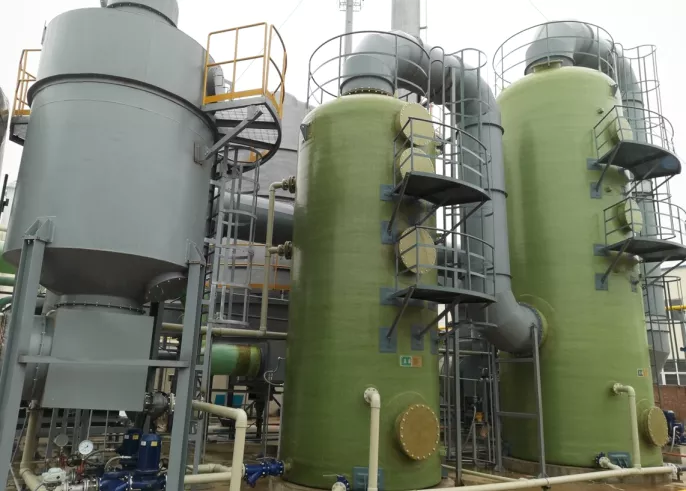
When it comes to wastewater treatment, one size doesn’t fit all—especially in a country as varied as Australia. Ever-Power specializes in bespoke RTO solutions for the unique challenges of Australian wastewater producers—from high-silica dust in outback quarries to coastal humidity in Queensland plants. Our engineering team conducts on-site exhaust profiling to size pre-filters, select corrosion-resistant alloys, and optimize heat recovery based on your utility needs. With service hubs in Sydney and Perth, we offer rapid spare parts delivery, operator training in English, and 24/7 remote diagnostics. Unlike generic suppliers, we deliver full turnkey projects including civil works coordination, commissioning, and compliance documentation aligned with NSW EPA or VIC DELWP requirements. Every system is factory-tested before shipment to ensure seamless startup.
This customization shines in aeration tanks, where RTOs polish biofilter exhausts, destroying 99% of odors without secondary pollution. In biofilters, we integrate RTO as a backup during overloads, preventing breakthroughs that plague humid environments.

7. Customer Success Stories
“We’ve been using Ever-Power’s RTO system in our Sydney wastewater plant, and it’s been a game-changer. The system handles all our VOC emissions and odors effectively, keeping us compliant with the NSW EPA standards. Plus, the energy savings are significant, and the support team has been fantastic throughout the process. Highly recommend it for any facility looking to reduce their environmental impact!” — Chris M., Environmental Manager
“Ever-Power’s RTO system has been crucial for managing odors at our wastewater treatment facility in Auckland. It’s been a smooth installation and the system is running efficiently, handling high loads of VOCs with ease. The team’s local support has been outstanding, and we’re fully compliant with the Resource Management Act now. Great investment for sustainable operations!” — Sophie R., Operations Supervisor,New Zealand
“We installed Ever-Power’s RTO system at our São Paulo wastewater facility, and we’ve seen remarkable results. The system has handled VOCs and odors efficiently, helping us stay compliant with CONAMA 430/2011. The local support was fantastic, and the system’s energy-saving features are a big win for us in the long run. Highly recommended for any wastewater plant!” — Rodrigo T., Facility Manager,Brazil
“At our wastewater treatment plant in California, Ever-Power’s RTO system has been a reliable solution for managing high VOC emissions. It’s been crucial in meeting the EPA’s stringent standards for VOC reduction. The system operates smoothly, and the energy recovery helps us cut costs. Their team has provided excellent support throughout the installation and beyond.” — David P., Plant Director,United States
“We’ve been using Ever-Power’s RTO system in our wastewater plant in Guangdong, and it’s been a great choice for controlling odors and VOCs. The system has performed well in compliance with China’s environmental regulations, and it’s helping us reduce emissions effectively. The installation was seamless, and the ongoing maintenance support has been top-notch.” — Li X., Operations Manager,China
8. Innovative Applications and Sustainability Insights
Beyond basics, consider RTOs in hybrid setups with biofilters for ultra-low emissions. In a novel twist, we’re exploring RTO integration with microbial fuel cells—harnessing wastewater bacteria to generate electricity for the system, potentially offsetting 10-20% of power needs. This aligns with Australia’s renewable targets.
On sustainability: Calculate your footprint. A mid-sized plant emitting 100 tonnes VOC/year via aeration could cut it to 1 tonne with RTO, equating to avoiding 500 car-years of emissions. Add heat recovery, and you’re saving $50,000 annually on energy—real numbers from our Perth installs.
Another viewpoint: RTOs enable circular economy plays, like recovering heat for digester warming, boosting biogas yields by 15%. In Indonesia’s palm oil wastewater plants (a neighbor’s industry leader), this has slashed methane leaks, a model for Aussie agribusiness tie-ins.
Finally, think preventive: AI-driven predictive maintenance in RTOs flags bed fouling early, extending life by 20%—a boon for remote NT sites where downtime costs dearly.
9. Related Solutions


FAQ: Your Questions on RTO in Wastewater Treatment Answered
Q1. How much does an RTO system cost for a medium-sized aeration tank in Sydney wastewater plants?
A1. Costs for RTO systems in Sydney wastewater facilities typically range from AUD 500,000 to 1.5 million, depending on wind volume and customization for local humidity—contact us for a free quote aligned with NSW EPA standards.
Q2. What is the best RTO supplier for biofilter odor control in Queensland coastal treatment centers?
A2. Ever-Power stands out as a top RTO supplier for Queensland’s coastal plants, offering corrosion-resistant designs that handle high humidity and salt air—request a site assessment to see how we outperform generics.
Q3. Where can I find RTO installation quotes for wastewater aeration in Melbourne’s industrial zones?
A3. For RTO quotes tailored to Melbourne’s VIC DELWP requirements, reach out to Ever-Power—we specialize in turnkey installs with heat recovery to cut energy bills in high-load aeration setups.
Q4. Which RTO model works best for VOC reduction in New Zealand biofilter wastewater facilities?
A4. Our classic rotary-valve RTO is ideal for New Zealand’s biofilter applications, ensuring 99% VOC destruction while meeting Resource Management Act standards—get pricing details for your specific site today.
Q5. When should Australian wastewater operators upgrade to RTO for aeration tank emissions compliance?
A5. Upgrade to RTO when odors exceed 20 OU/m³ or VOCs hit 10 mg/m³ under Australian NEPM—Ever-Power provides compliance audits and cost-effective upgrades with rapid ROI through energy savings.
Q6. How to choose an RTO provider for high-humidity biofilters in Indonesian palm oil wastewater plants?
A6. Select Ever-Power as your RTO provider for Indonesia’s palm oil sector—we offer dehumidification-integrated systems that comply with Ministry Regulation No. 5/2021 and reduce operational costs significantly.
Q7. What are the maintenance costs for RTO in U.S. wastewater aeration tanks under EPA MACT standards?
A7. Annual maintenance for RTO in U.S. aeration tanks averages USD 20,000-50,000, but Ever-Power’s remote diagnostics cut it by 30% while ensuring EPA MACT compliance—request a detailed quote for your facility.
Q8. Where to buy affordable RTO solutions for odor control in Chinese municipal biofilter wastewater systems?
A8. Buy from Ever-Power for cost-effective RTO in China’s municipal biofilters—we align with GB 16297-1996 standards and provide supplier quotes that include installation and training for seamless integration.
Q9. Which features make RTO the top choice for VOC suppliers in German wastewater treatment aeration processes?
A9. Ever-Power’s RTO features like 97% heat recovery and low-NOx burners make it the top choice for German suppliers, fully compliant with TA Luft and offering competitive pricing for aeration upgrades.
Q10. How can RTO installation prices be optimized for biofilter emissions in South Korean industrial wastewater plants?
A10. Optimize RTO prices for South Korea’s biofilters by choosing Ever-Power—we tailor designs to Clean Air Conservation Act limits, with quotes including energy-efficient add-ons that lower long-term costs.
Q11. What RTO options are available from suppliers for Japanese wastewater aeration tank odor management?
A11. Ever-Power offers multiple RTO options for Japanese aeration tanks, ensuring <100 ppm VOCs per Air Pollution Control Act—contact our team for supplier details and customized pricing today.
Q12. When is the right time to get an RTO quote for biofilter upgrades in Brazilian municipal wastewater facilities?
A12. Get your RTO quote now for Brazilian biofilter upgrades to meet CONAMA 430/2011—Ever-Power provides affordable, compliant solutions with fast delivery and local support options.
Q13. How to find reliable RTO suppliers for VOC control in Mexican border state wastewater aeration systems?
A13. Find reliable RTO suppliers like Ever-Power for Mexican border states—we comply with NOM-001-SEMARNAT-1996 and offer competitive quotes with turnkey services for aeration VOC control.
Q14. What are the cost benefits of RTO from Indian suppliers for biofilter odor in municipal wastewater plants?
A14. RTO from Ever-Power suppliers in India delivers cost benefits like 70% energy savings while meeting CPCB limits—request a quote to see how it fits your municipal biofilter needs.
Q15. Where can South African wastewater operators source RTO for aeration tank emissions under national standards?
A15. Source RTO from Ever-Power for South African aeration tanks—we align with National Environmental Management: Air Quality Act and provide supplier quotes with sustainability-focused designs.
Editor: PXY