


CO-Catalytic Oxidizer
Catalytic Oxidizer Equipment is an advanced solution designed to efficiently treat volatile organic compounds (VOCs) and hazardous air pollutants (HAPs) in industrial emissions. Unlike traditional thermal oxidizers, CO systems operate at lower temperatures (typically between 280°C – 350°C), utilizing a catalyst to accelerate the oxidation process, thereby reducing fuel consumption and energy costs. CO equipment is ideal for industries with clean, stable air streams, such as printing, packaging, and chemical processing, where it offers a cost-effective and environmentally friendly way to comply with stringent air quality regulations while minimizing operational expenses.
1. Technical Specifications of EP-Catalytic Oxidizer
| Item | RTO (Regenerative Thermal Oxidizer) | CO (Catalytic Oxidizer) | RCO (Regenerative Catalytic Oxidizer) | SCR (Selective Catalytic Reduction) | TO (Thermal Oxidizer) |
|---|---|---|---|---|---|
| Applicable Pollutants | VOCs (benzene, toluene, xylene, Z hydrocarbons, etc.) | VOCs (low concentration, easy to catalyze) | VOCs (not easy S, Cl catalysis) | NOx (in VOCs processing equipment) | VOCs (various combustible pollutants) |
| VOCs Removal Rate | ≥98% (up to 99.5%) | ≥95% (low concentration advantage) | ≥95% | – | ≥95% |
| Safety Design | Below LEL design, explosion-proof design (explosion prevention); suitable for corrosive gases (HCl/HF) | Safe and non-toxic, no S/Cl, selectivity/poisoning | Western design, chlorine-containing waste gas (easy catalyst deactivation) | Needs to control the flue gas temperature port, select the catalyst form | No special restrictions, but high operating costs |
| Typical Application Fields | Automotive painting, petrochemical, large printing, pharmaceutical (such as Russia, USA, Belarus, Korea) | Small furniture manufacturing, metal, printing, and textile | Pharmaceutical field, food packaging printing (low concentration waste gas domestic) | RTO/TO tail gas denitrification (such as an incinerator producing NOx) | Multi-field, international small-scale equipment, flexible application |
2. Regional policy analysis and its compatibility with CO
| Country | Key 2025 VOC/Environmental Regulations & Targets | Emission Limits / Policy Goals | EP Catalytic Oxidizer Advantages | Local SEO Keywords |
|---|---|---|---|---|
| United States (USA) | EPA’s 2025 VOC standards under 40 CFR 59 require 10–20% reduction in consumer product VOCs; aerosol coatings limited to 0.5–1.5% VOC by weight (Federal Register, Jan 2025). Oregon-style rules (aligned with GB 37822-2019) target 90,000 tpy reduction, phasing out non-compliant sources by 2030. Oil & gas sector methane/VOC limits under ETS 2 delay Waste Emissions Charge to 2034. | Aerosol coatings: 0.5–1.5% VOC (wt); Industrial reductions vary by state | 99% VOC destruction efficiency, 95% heat recovery—exceeds EPA standards; ideal for CA/TX industrial use | "USA RTO VOC reduction regulations compliance equipment", "EPA 2025 VOC emissions standards rotary oxidizer." |
| China | 14th Five-Year Plan targets 10% national VOC reduction from 2020 levels; enforces GB 37822-2019 (≤50 mg/m³ in key industries). Guangdong imposes carbon taxes on high-VOC paints/adhesives; NOx/VOC coordinated cuts >10% for PM2.5 control. Low-VOC coating demand in petrochemicals projected to grow 20%. | ≤50 mg/m³ (key industries) | Priced at 35% of Western models; <5 kW/m³ energy use; 99% VOC removal; supports 2030 neutrality goals | "China RTO VOC emission standards GB 37822-2019", "Beijing 2025 VOC reduction policies catalytic oxidizer." |
| Germany | 2025 Climate Action Law mandates 65% GHG reduction by 2030; TA Luft caps industrial VOC emissions at 50 mg/m³. EU ETS 2 integrates VOC/NOx controls, targeting 15% vehicle emission cuts by 2025. Agricultural ammonia/VOC reductions via CEMS aim for net-zero by 2045. | ≤50 mg/m³ (industrial, TA Luft) | 316L stainless steel construction; torque range 500–2000 Nm; DIN-compliant; reduces operational costs by 30% in manufacturing | "Germany VOC emissions regulations 2025 TA Luft", "EU ETS 2 compliant RTO oxidizer Berlin." |
| Brazil | 2025 NDC update targets 50% GHG cuts by 2030; SBCE emissions trading starts in 2025 for VOC/CO₂ from fuels. CONAMA resolutions limit industrial VOCs to 20–50 mg/Nm³, focusing on PM2.5 and VAM in biofuels. Forestry offsets enable 37–50% reductions vs. 2005. | 20–50 mg/Nm³ (industrial) | 99% efficiency supports Salvador’s LOW-M methane reduction; ideal for Amazon industrial zones | "Brazil VOC reduction policies 2025 SBCE", "CONAMA compliant RTO equipment Sao Paulo." |
| Australia | 2025 Emissions Reduction Plan mandates 62–70% cuts by 2035; Euro 6/VI vehicle VOC standards effective Jan 2025. APVMA limits coatings to <500 g/L VOC; net-zero government operations by 2030. QFleet strategy targets fleet emissions via CCE. | Coatings: <500 g/L; Vehicles: Euro 6/VI | Exceeds regulatory limits with 95% heat recovery; reduces operating costs by 30% in mining | "Australia VOC regulations 2025 Euro 6", "QFleet compliant rotary RTO Sydney." |
| South Africa | 2025 Carbon Budget Regulations require emitters ≥30,000 t CO₂e to cut 398–440 Mt by 2030. MES under the Air Quality Act limits VOCs to 50–100 mg/m³. Carbon tax offsets rise to 20% in 2026. NDC targets net-zero by 2050. | 50–100 mg/m³ (MES) | 99% VOC destruction; aligns with Sakhalin-style neutrality; suited for the petrochemical sector | "South Africa VOC emission standards 2025 MES", "Carbon Tax compliant RTO Johannesburg." |
| Saudi Arabia | 2025 Green Initiative targets 278 Mt emissions cuts by 2030; VOC controls in petrochemicals under RCJY. Ammonia/VOC reductions target 50% via offsets, supporting net-zero by 2060. | Sector-specific (RCJY framework) | Low-cost (35% of Western equivalents); 99% efficiency; meets Riyadh industrial compliance needs | "Saudi Arabia VOC reduction policies 2025 RCJY", "Green Initiative compliant RTO Riyadh." |
| Russia | 2025 decree targets 65–67% GHG reduction by 2035 (vs. 1990); Sakhalin achieves carbon neutrality by 2025. Federal law caps VOCs at 100 mg/m³ for oil/gas. | ≤100 mg/m³ (oil & gas) | Complies with low-emission requirements; reduces operational costs by 30% in Siberian plants | "Russia VOC regulations 2025 Sakhalin", "GHG reduction compliant rotary oxidizer Moscow." |
| Thailand | 2025 Climate Change Act introduces a carbon tax/ETS from 2027; targets 47% GHG cuts by 2035. Ministry of Industry limits chemical-sector VOC emissions to 50–100 ppm. | 50–100 ppm (chemical industry) | Ensures 99% compliance for Bangkok factories | "Thailand VOC emission standards 2025 catalytic oxidizer Bangkok." |

3. Five Key Facts of EP-Catalytic Oxidizer.
Destruction Efficiency: Achieves 95%+ VOC removal rate, ensuring compliance with U.S. EPA, EU REACH, and standards.
Catalyst Lifespan: Durable catalysts last 5 to 10 years with proper maintenance, minimizing downtime and operational costs.
Flow Capacity: Wide processing range suitable for industrial applications from small to large scale.
Material Construction: Manufactured from AISI 304/316 stainless steel for corrosion resistance and durability in harsh environments.
Environmental Policy Compliance: Strict adherence to local environmental protection regulations.
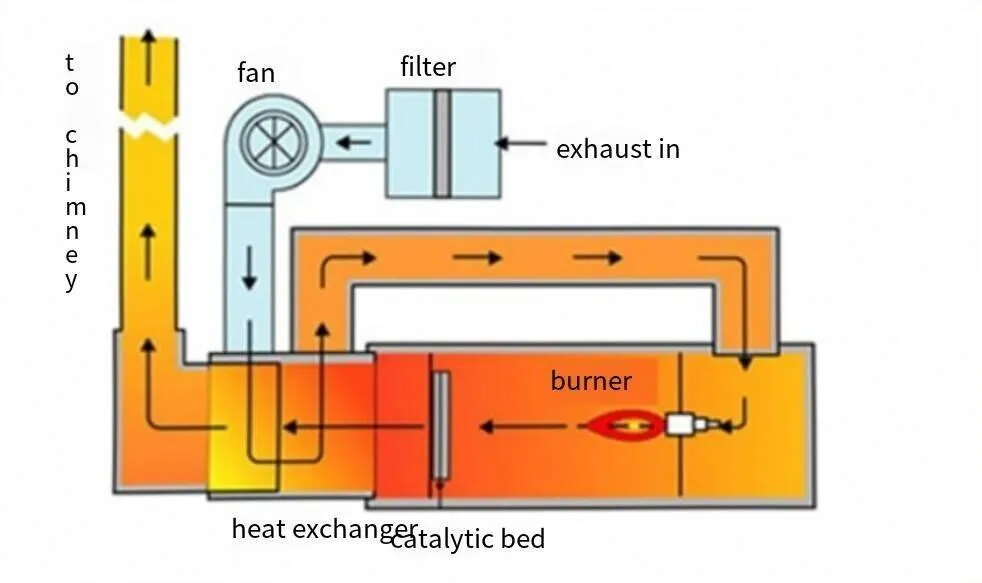
4. EP-CO equipment operating principle.
Absorption-Desorption Process Flow
1. The system begins with VOC-containing waste gas entering through a dry filter to remove particulates and impurities.
2. The gas is drawn into the system by an adsorption fan and sequentially passes through three activated carbon adsorption/desorption towers. VOCs are adsorbed by the activated carbon within the towers, purifying the gas.
3. After adsorption, the cleaned gas passes through a dry filter to meet emission standards before being expelled through the chimney.
4. When the activated carbon becomes saturated, the desorption process initiates:
- A desorption fan activates to provide airflow
- Cool air is introduced via internal circulation ducts and a mixed-flow heat exchanger
- Electric heaters or a catalytic combustion chamber provide additional heat to accelerate desorption
- Desorbed VOCs are oxidized in the catalytic combustion chamber (converting to CO₂ and H₂O)
- Exhaust heat is recovered via heat exchangers for energy efficiency
5. Replenishing air maintains stable internal pressure and airflow during operation.
6. An emergency bypass pipeline provides an alternative flow path during malfunctions or maintenance, ensuring continuous operation.


5. Advantages of EP-Catalytic Oxidizer
High Destruction Efficiency:
Typically achieves up to 99% removal rates for VOCs and HAPs. This performance level helps Australian industries meet stringent regulatory requirements under the National Pollutant Release Inventory (NPI) and state Environmental Protection Agencies (EPAs). In sectors such as manufacturing, mining, and petrochemicals, VOC emissions often originate from solvent or fuel handling processes. Catalytic oxidation solutions enable effective emission reductions with lower energy consumption.
Energy Efficiency Advantages:
Fuel requirements can be reduced by up to 50% compared to regenerative thermal oxidizers (RTOs). Electric catalytic oxidizers rely on electricity rather than gas heating, further minimizing secondary emissions like nitrogen oxides (NOx) and aligning with the nation's clean air initiatives. For remote mining operations in Western Australia or Queensland, the compact design of these systems facilitates installation and maintenance, minimizing downtime.
Cost Efficiency:
Lower operational and maintenance costs stem from reduced fuel consumption and durable catalysts. This technology adapts to varying airflow rates and VOC types, making it suitable for diverse processes including printing, automotive, and chemical manufacturing.
Safety and Environmental Benefits:
Explosion-proof design and low secondary pollutant generation support sustainable practices. For Australian businesses subject to annual NPI reporting requirements, these systems ensure consistent emission reductions.
6. Selection Guide: Why choose EP-Catalytic Oxidizer for Australia VOC Compliance?
Catalytic oxidizers (CO) serve as effective tools for controlling volatile organic compound (VOC) emissions in industrial production. These devices utilize catalytic oxidation technology to convert harmful pollutants into harmless byproducts—such as carbon dioxide and water—under moderate temperature conditions.
For instance, the Environmental Protection Agencies (EPA) of New South Wales and Victoria have established stringent emission limits under the Environmental Protection Operations Act, focusing on VOC emissions from sectors like manufacturing, mining, and petrochemicals. Catalytic oxidizers typically achieve degradation efficiencies exceeding 95%, fully meeting these regulatory requirements.
Catalytic oxidation technology demonstrates high applicability in Australian industrial settings. For instance, processes like solvent usage and fuel handling in mining and refineries generate VOC emissions. Catalytic oxidation systems (CO), with their compact design and efficient emission reduction capabilities, serve as an ideal solution.
7. EP-Catalytic Oxidizer Product Applications:80+ Use Cases
1. Paper Manufacturing:
Paper mills can treat odors from reductive sulfides and volatile organic compounds (VOCs) in exhaust gases, achieving emission reduction rates exceeding 90%.
2. Cement Production:
Cement plants utilize catalytic oxidation technology to control VOCs generated during kiln operations, significantly lowering pollutant concentrations.
3. Edible Oil Processing:
Food processing plants utilize catalytic oxidation units for deodorization of refining emissions, effectively eliminating organic odors to meet health and safety standards.
4. Aquatic Fertilizer Production:
Fertilizer plants implement specialized treatment for volatile organic compounds and sulfides generated during fish waste processing, significantly improving air quality.
5. Petroleum Refining:
Refineries employ catalytic wet air oxidation to treat wastewater, decomposing organic pollutants and minimizing environmental emissions.
6. Mining Applications:
Used to reduce methane emissions from mine ventilation shafts. This system oxidizes low-concentration methane, aiding in meeting emission targets and enhancing operational safety.
8. Customer Reviews and Case Studies of EP-Catalytic Oxidizer.
Application Scenarios in Melbourne
Client1 Profile: Melbourne
Customer Reviews:
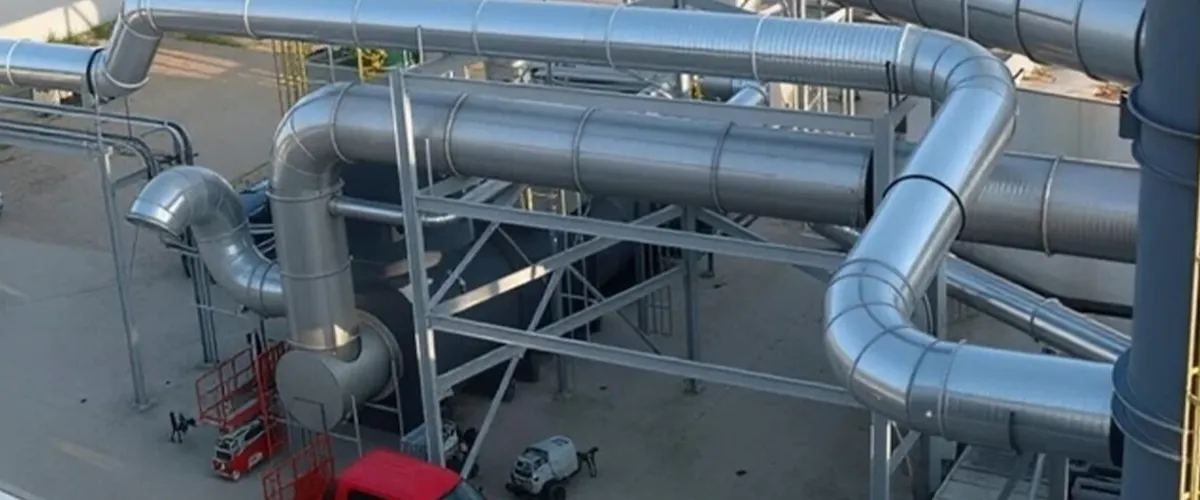
“In Melbourne's automotive painting shop, VOC emissions from solvents were a constant headache under EPA rules. We used to rely on basic ventilation, but it wasn't enough to meet NPI reporting. Switching to the catalytic oxidizer cut our VOC levels by 98%, turning pollutants into clean air without high fuel bills. The system's compact design fits right into our limited space, and the platinum catalyst has held up for three years with minimal upkeep. It's saved us on fines and energy costs, making operations smoother.”
Application Scenarios in Adelaide
Client2 Profile: Adelaide
Customer Reviews:
“We operate a petrochemical plant, fuel handling led to high VOC releases, challenging NPI thresholds. Conventional thermal units were too energy-intensive for our setup. The catalytic oxidation system breaks down pollutants at moderate heat, recovering energy to reduce bills by 50%. It's versatile for our mixed streams, and the explosion-proof design adds safety in volatile areas. Maintenance is straightforward, with the catalyst showing no wear after heavy use in two years.”
9. About Us
We specialize in industrial waste gas treatment, providing a full range of air pollution control equipment including regenerative thermal oxidizers (RTO), regenerative catalytic oxidizers (RCO), direct thermal oxidizers (TO), catalytic oxidation systems, and hybrid combined solutions, complemented by pretreatment and auxiliary modules such as rotary concentrators, wet scrubbers, SCR denitrification, and solvent recovery units, which address complex industrial emissions with varying concentrations, volumes, and compositions through standalone or integrated systems achieving ultra-deep purification of VOCs, NOx, odors, HAPs, particulate matter, acid gases, and coal mine VAMs at removal efficiencies exceeding 99.9999%, fully compliant with domestic and international regulations like the 2025 Global GHG Reduction Agreement and Best Available Technology (BAT) principles, leveraging core technologies such as regenerative thermal oxidation, heat recovery, direct combustion, and catalytic oxidation to deliver energy-efficient, customized solutions for diverse sectors including manufacturing, mining, petrochemicals, and chemical production, ensuring compliance, cost optimization, and environmental responsibility.
10. Related products and replacement parts.
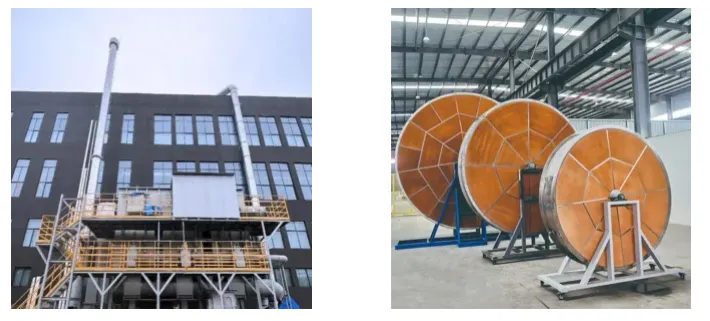
Related products:We also offer a range of RTO products, such as Classic Rotary Valve RTO, Bed RTO, Toptank Rotary Valve RTO, High Air Volume Rotary RTO, and Zeolite Molecular Sieve Rotor.

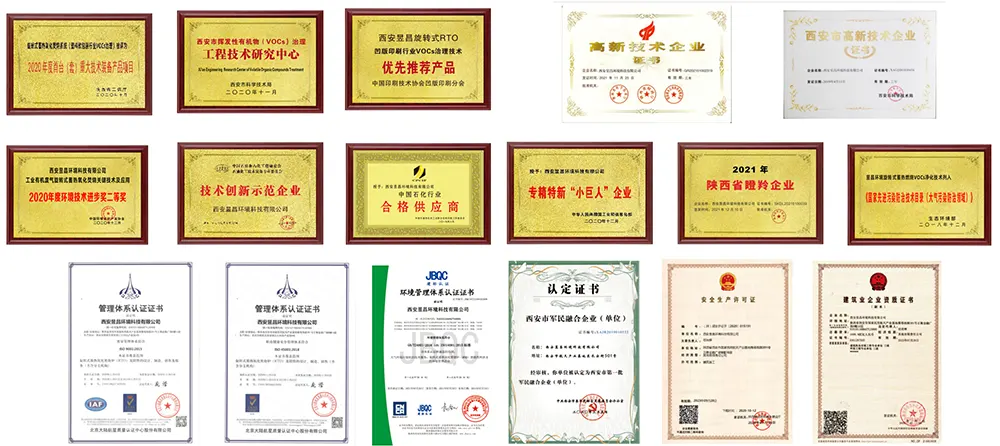
11. Certificates and Honors

FAQ:
Q1.What is a Catalytic Oxidizer?
A1: A catalytic oxidizer is a specialized device employed in industrial settings to eliminate harmful pollutants from exhaust streams. It operates through catalytic oxidation, a process that converts volatile organic compounds (VOCs), hazardous air pollutants (HAPs), and odors into benign byproducts such as carbon dioxide and water. This technology relies on a catalyst, typically composed of precious metals like platinum or palladium, to facilitate the reaction at reduced temperatures compared to conventional thermal methods.
Q2.What is an electric catalytic oxidizer?
A2: Electric catalytic oxidizers represent an advanced variant, using electricity for heating instead of gas combustion, thus eliminating secondary NOx emissions. This design offers benefits like flexible installation and reduced maintenance costs, making it ideal for remote or grid-connected sites common in Australian operations. With Australia's push toward firmed renewable electricity, electric models enhance compatibility by aligning with decarbonization targets outlined in recent sector pathways reviews.
Q3.How does it compare to RTO?
Q3: Lower energy use, but for lower VOC concentrations.r?
Q4.Q1: What VOCs can the CO Series destroy?
A4: Aromatics (benzene, toluene), oxygenates (alcohols, ketones), aliphatics (hexane), and some chlorinated compounds (with 316L SS option). Not suitable for silicones or heavy particulates.
Q5.Q2: How often must the catalyst be replaced?
A5: Every 2–5 years, depending on VOC composition. Halogen-free streams achieve 20,000+ hours; chlorinated streams reduce life to 8,000–12,000 hours.
Q6. How does a catalytic oxidizer work?
A6: It directs exhaust gases over a catalyst bed, typically made of precious metals, where oxidation occurs in the presence of oxygen, breaking down pollutants efficiently without high heat or excessive fuel.
Q7. Are catalytic oxidizers compliant with Australian regulations?
A7: Yes, they help meet standards under the National Pollutant Inventory (NPI) and the Protection of the Environment Operations Act, ensuring industries in states like New South Wales and Victoria avoid fines for VOC emissions.
Q8. What industries in Australia benefit most from catalytic oxidizers?
A8: Sectors such as manufacturing, mining, petrochemicals, printing, and automotive use them to control emissions from solvents, fuels, and processes, supporting compliance and sustainability.
Q9. Can catalytic oxidizers handle variable VOC concentrations?
A9: Yes, they are versatile for low to medium concentrations, with designs that adapt to fluctuating air flows, making them reliable for processes like chemical mixing or painting.
Q10. What maintenance is required for a catalytic oxidizer?
A10: Routine tasks include monitoring temperature and pressure, inspecting the catalyst for buildup, and periodic regeneration or replacement, typically every few years, to ensure optimal performance.
Get Free RTO solutions now
Contact Us Now
Editor: PXY