

1. Summary
The electronics and semiconductor manufacturing sectors demand ultra-high purity environments, yet their processes release complex Volatile Organic Compounds (VOCs) like PGMEA, Isopropanol (IPA), and acidic etchants.
Regenerative Thermal Oxidizers (RTO), particularly when paired with Zeolite Rotor Concentrators, offer the viable solution for treating these high-volume, low-concentration exhaust streams efficiently.
Ever Power’s customized abatement systems ensure >95%+ destruction efficiency, robust corrosion resistance against HF/HCl, and full compliance with Australian EPA standards, securing your license to operate in a highly regulated market.
2. Five Key Facts
Wafer Fab Ready: Treats Lithography & Etching Exhaust.
Zeolite Rotor: 20/1 Concentration Ratio.
Corrosion Proof: Resists HF, HCl, and Acid Mists.
EPA Compliant: Meets strict Australian Standards.
High Uptime: Redundant systems for 24/7 operation.
3. The Critical Role of Abatement in Microelectronics
The production of semiconductors, printed circuit boards (PCBs), and flat panel displays (FPD) involves some of the most complex chemical processes in modern manufacturing. From Wafer Lithography using photoresists to Wet Etching with strong acids, the industry generates a unique profile of exhaust gases. These streams typically feature massive air volumes (due to cleanroom ventilation requirements) but relatively low concentrations of organic solvents like PGMEA (Propylene Glycol Monomethyl Ether Acetate), Isopropanol (IPA), and Acetone. Additionally, acid gases such as Hydrogen Fluoride (HF) and Sulfuric Acid mist are often present, posing severe corrosion risks to standard abatement equipment.
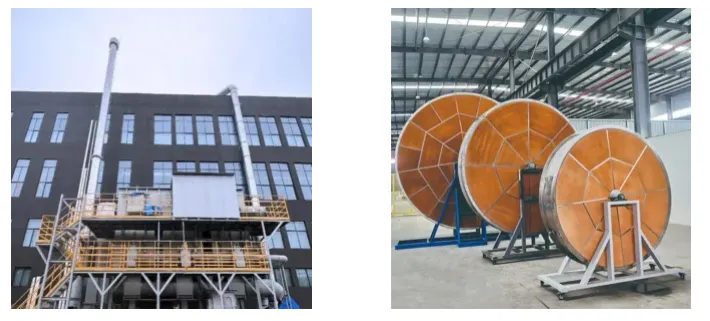
For Australian technology parks and manufacturing hubs, simply venting these gases is illegal under environmental protection laws. The challenge lies in treating these “dilute” streams economically. Direct thermal oxidation would require astronomical fuel costs to heat millions of cubic meters of cleanroom air. The solution, pioneered by industry leaders and perfected by Ever Power, is the Zeolite Rotor Concentrator coupled with a 3-Bed RTO. This hybrid system first adsorbs the VOCs onto a rotating wheel, then desorbs them into a tiny, concentrated stream (reducing volume by up to 20 times) before oxidation.

4. Summary of the RTO Process Flow:
-
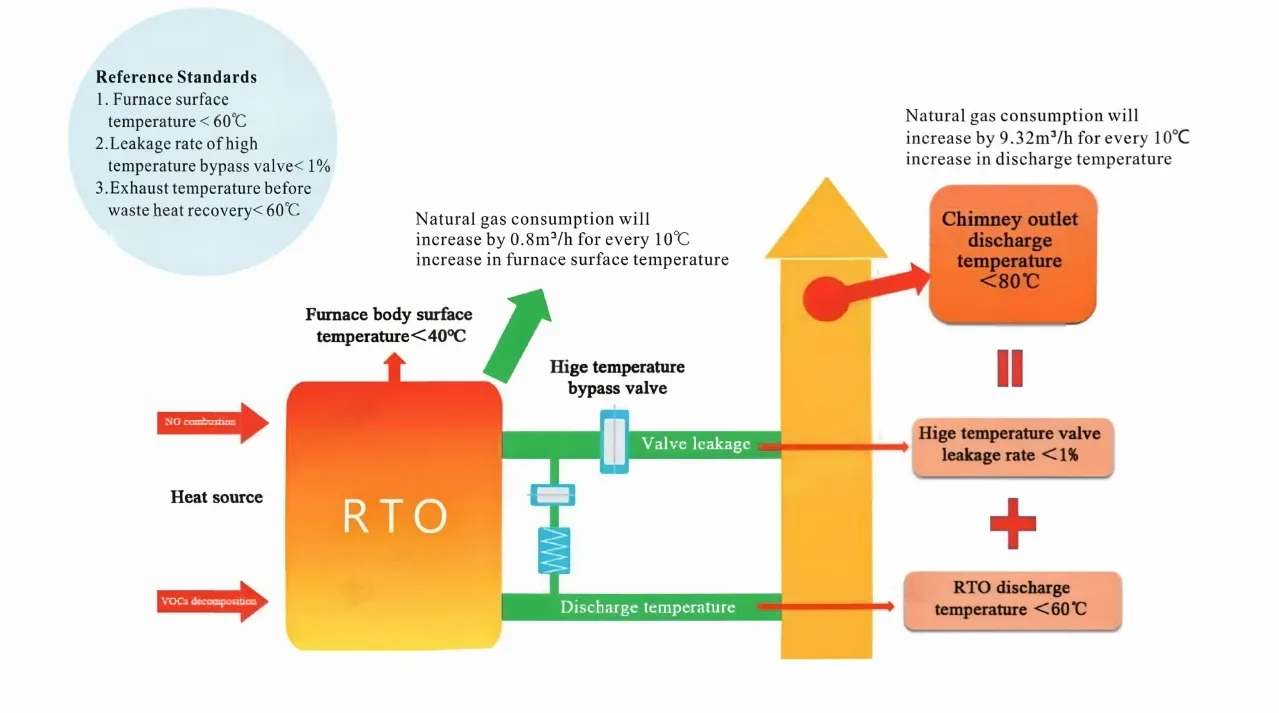
Heat Source and VOC Decomposition:
-
The RTO receives natural gas (NG) as a combustion source to help break down VOCs (Volatile Organic Compounds) in the exhaust stream.
-
-
Furnace Surface Temperature:
-
The furnace surface temperature should be maintained below 60°C to avoid excessive heat loss.
-
For every 10°C increase in the furnace surface temperature, the natural gas consumption increases by 0.8m³/h.
-
-
Bypass Valve Leakage:
-
A high-temperature bypass valve should have a leakage rate of less than 1%. This ensures minimal heat loss and optimal system performance.
-
-
Discharge Temperature:
-
The discharge temperature from the chimney should be kept below 80°C.
-
For every 10°C increase in discharge temperature, the natural gas consumption increases by 9.32m³/h.
-
-
Waste Heat Recovery:
-
The temperature before waste heat recovery should be maintained below 60°C to prevent heat inefficiency.
-

5. Application Scenarios: Precision Engineering for Tech
5.1 Wafer Front-End Lithography/Development
• Exhaust Components: PGMEA (propylene glycol methyl ether acetate), IPA, etc., at relatively low concentrations.
• Treatment Method: Utilizes a highly stable triple-bed RTO, ensuring continuous operation through sealed rotary valves and redundant controls.
• Representative Cases: Intel Arizona Fab (USA), TSMC (Taiwan), Samsung Pyeongtaek Fab (South Korea), Intel Penang Fab (Malaysia), GlobalFoundries (UAE), Egypt Silicon Valley Project.
5.2 Wafer Cleaning/Etching
• Exhaust composition: Alcohols and fluorides.
• Treatment method: HF removal via scrubbing before RTO entry to prevent corrosion.
5.3 PCB Wet Processes
• Exhaust composition: Formaldehyde, alcohols, etc.
• Treatment Method: Three-bed RTO with heat recovery.
• Representative Cases: TTM Technologies (USA), Unimicron (Taiwan, China), Viettel High Tech (Vietnam), Flextronics (Brazil), Circuitronix (Dubai), Circuit Worx (South Africa).
5.4 LCD/OLED Coating/Curing
• Exhaust composition: Ester solvents.
• Treatment method: Rotary concentrator + RTO.
5.5 FPD Polarizer/Optical Film Production
• Exhaust composition: Ester solvents similar to printing/lamination processes.
• Treatment method: Rotary concentrator + RTO, meeting low-concentration emission requirements.
*Disclaimer: The other brand names mentioned above are provided solely for illustrative purposes. We do not offer original products or equipment bearing these brand names.
6. Exclusive Data Technical Specifications Table: Ever Power Systems
| Performance | 2-bed RTO | 3-bed RTO | Rotary Valve RTO | Notes |
|---|---|---|---|---|
| Technicality | First generation | Second generation | Third generation | |
| Number of chambers | 2 | 3 | 12 | Rotary valve operates continuously |
| Number of valves | 4 | 9 | / | |
| Reliability | Valve switching times per year | 350,000 | 520,000 | / |
| Piping pressure fluctuation | ±500pa | ±250pa | ±25pa | |
| Discharge compliance | Total purification efficiency | 95% | 99% | 99.5% |
| Maximum treating range | < 1g | < 5g | < 10g | 50mg/m³ discharge standard |
| Heat dissipation surface area | 100m² | 145m² | 95m² | |
| Energy saving | Thermal efficiency | 90% | 95% | 96% |
| Start-up heating time | 2.5h | 2.5h | 2h | Cold furnace start-up (Ethyl acetate) |
| Self-operation concentration | 2.5g/m³ | 2.2g/m³ | 1.8g/m³ | |
| Economy | Regenerative ceramic filling volume | 18m³ | 26m³ | 17m³ |
| Practicality | Occupation of land | L12×W7 | L16×W7 | L12×W7 |
7. Australian Regulatory Compliance: A Non-Negotiable Standard
- EPA Victoria & NSW EPA: These state bodies enforce strict licensing conditions for VOC emissions. For instance, in Victoria, the Environment Protection Act 2017 requires a “General Environmental Duty” to minimize risks. RTOs are considered “Best Practice” control technology for meeting discharge limits, often set below 20 mg/m³ for organic compounds.
- National Pollutant Inventory (NPI): Facilities using significant quantities of chemicals like Acetone, Ethanol, or n-Hexane must report annual emissions. Implementing an Ever Power RTO can reduce reportable emissions by over 99%, significantly improving your facility’s environmental scorecard.
- Safe Work Australia: The handling of hazardous chemicals like HF and Isopropanol is governed by WHS laws. Our systems ensure that exhaust gases are safely removed from the workplace, and our LEL controls prevent the accumulation of explosive atmospheres in ductwork, directly supporting WHS compliance.
8. Technology Compatibility & Replacement Guide
Is your current abatement system costing you too much in fuel or maintenance? See how Ever Power solutions compare and replace legacy technologies.
| Existing Legacy System | Ever Power Upgrade Solution | Upgrade Benefit |
|---|---|---|
| Activated Carbon Adsorption | Zeolite Rotor Concentrator + RTO | Eliminates frequent carbon replacement costs, safer handling of flammable solvents, and higher destruction efficiency. |
| Wet Scrubber (Only) | Scrubber + Acid-Resistant RTO | Scrubbers miss VOCs. Adding an RTO destroys the organic fraction while the scrubber handles the acids, ensuring total compliance. |
| Direct Thermal Oxidizer (TO) | 3-Bed RTO | Reduces natural gas consumption by >95% via thermal energy recovery. |
| Standard RTO (Corroded) | Hastelloy-Lined RTO | Longer lifespan in etching applications; resistance to HF and HCl attack. |
9. Strategic Analysis: RTO in Microelectronics
💪 Strengths (Ever Power)
- Efficiency: Rotor technology reduces treated air volume by 95%, slashing fuel bills.
- Reliability: Redundant fan/burner designs ensure zero downtime for critical fab ops.
- Compliance: Guaranteed to meet strict Australian EPA VOC and odour limits.
📉 Weaknesses (Generic Options)
- Carbon Footprint: Old-style oxidizers consume vast amounts of gas.
- Corrosion: Standard steel units fail quickly against etching acids (HF/HCl).
🚀 Opportunities
- Energy Reuse: Waste heat can be recycled for cleanroom humidity control or DI water heating.
- Green Fab: Enhances corporate ESG ratings by minimizing environmental footprint.
⚠️ Threats
- Regulation: Emission limits are becoming stricter annually; legacy systems will become obsolete.
- Cost Volatility: Rising energy prices make inefficient abatement systems a financial liability.
10. Industry Trends: The Green Fab Revolution
The global semiconductor industry is undergoing a massive shift towards “Green Fabs.” The focus is no longer just on yield, but on sustainable manufacturing. A key trend is the integration of energy recovery. Modern fabs are not just destroying waste; they are harvesting the heat from RTO stacks to power desiccant wheels for cleanroom air conditioning or to pre-heat ultra-pure water.
Another trend is Smart Abatement—systems that communicate directly with process tools (lithography scanners, etchers) to throttle up or down based on real-time production, saving energy during idle periods. Ever Power is at the forefront, offering RTOs with advanced PLC integration ready for Industry 4.0 smart factories.
11. Ever Power: Customization & Engineering Excellence
We don’t just sell off-the-shelf units. Ever Power engineers work directly with your facility management team to design a bespoke solution.
- Custom Rotor Sizing: We size the Zeolite Rotor precisely to your specific airflow and VOC loading to maximize concentration ratios.
- Material Selection: We offer various grades of stainless steel and exotic alloys (Hastelloy, Inconel) based on the specific acid profile of your exhaust.
- Footprint Flexibility: We design vertical or skid-mounted units to fit into tight facility basements or crowded rooftops common in tech parks.
- Integration: Seamless integration with your existing Building Management System (BMS) for centralized monitoring.
12. Customer Success Case: PCB Manufacturer in Melbourne
“Ever Power’s RTO system allows us to reduce exhaust emissions. The system’s design, which complies with GMP standards, is crucial for us, and its performance is very powerful; we are very impressed with it.”
— Director of Sustainability, Arizona, USA
13. Related Solutions
14. Frequently Asked Questions (FAQ)
Q1. How does a Zeolite Rotor improve RTO efficiency for semiconductor fabs?
A1. Semiconductor exhaust typically has huge air volumes but very low VOC concentrations (e.g., cleanroom air). A Zeolite Rotor concentrates this air by a factor of 15:1 to 20:1. This means the downstream RTO can be 20 times smaller, significantly reducing capital costs and allowing the RTO to run largely on the energy of the concentrated solvents themselves (auto-thermal).
Q2. What materials are used to handle corrosive etching gases like HF?
A2. For exhaust streams containing Hydrogen Fluoride (HF) or hydrochloric acid (HCl) from etching processes, standard steel is insufficient. Ever Power utilizes Hastelloy C276 or high-grade Duplex Stainless Steel for the combustion chamber and specialized acid-resistant ceramic media. We also integrate upstream wet scrubbers to neutralize the majority of acids before they reach the thermal oxidizer.
Q3. Can the RTO system maintain 99% uptime for 24/7 wafer production?
A3. Yes, uptime is critical in chip manufacturing. Our Semi-Grade RTOs feature redundant fans, dual-burner configurations, and a hot-standby mode. We also use high-reliability pneumatic valves and a predictive maintenance PLC system to ensure the abatement system never bottlenecks your continuous wafer fabrication process.
Q4. Does Ever Power provide local support for EPA compliance in Melbourne?
A4. Absolutely. We understand the specific requirements of EPA Victoria, including odour units and VOC limits. Our local engineering partners in Melbourne and Sydney can assist with installation, commissioning, and generating the necessary emission reports to ensure your facility remains fully compliant.
Q5. What is the typical ROI for replacing a carbon adsorption system with an RTO?
A5. While carbon adsorption has a lower initial cost, the operational expense of replacing saturated carbon is immense. An RTO with a Zeolite Concentrator typically sees a Return on Investment (ROI) in 18 to 24 months due to the elimination of carbon disposal fees and the massive reduction in energy consumption through thermal heat recovery.
Q6. How do you handle the safety risks of flammable solvents like IPA and Acetone?
A6. Safety is paramount. Our systems include multiple LEL (Lower Explosive Limit) sensors throughout the ductwork. If solvent concentrations approach 25% LEL, the system automatically introduces fresh dilution air or diverts the flow to a safety bypass. We also install flame arrestors and explosion relief vents as per Australian Standards.
Q7. Can the RTO heat recovery be used for cleanroom humidity control?
A7. Yes, this is a highly efficient application. The high-grade heat recovered from the RTO stack can be passed through a heat exchanger to provide hot water or steam for your facility’s HVAC system, specifically for desiccant wheel regeneration or reheating air for precise cleanroom humidity control.
Q8. How does Ever Power’s RTO system help reduce operational costs for semiconductor manufacturing?
A8. Ever Power’s RTO system with Zeolite Rotor Concentrators reduces operational costs by concentrating VOCs, allowing the RTO to be significantly smaller and more energy-efficient. This reduction in volume leads to lower fuel consumption and operating costs, as the system can operate auto-thermally by utilizing the heat from the concentrated solvents.
Q9. What makes Ever Power’s RTO system suitable for high-corrosion environments like wafer etching?
A9. Ever Power’s RTO systems are specifically designed with corrosion-resistant materials like Hastelloy and Duplex Stainless Steel. These materials ensure that the system can handle harsh chemicals such as Hydrogen Fluoride (HF) and Hydrochloric Acid (HCl), which are commonly present in wafer etching processes, while maintaining optimal performance over time.
Q10. What is the typical lifespan of Ever Power’s RTO systems in semiconductor fabs?
A10. Ever Power’s RTO systems are built for longevity, especially in challenging environments like semiconductor fabs. With features such as corrosion-resistant materials, redundant systems, and high-quality components, the RTO systems can reliably operate for over 10 years with minimal maintenance, ensuring long-term performance and cost-effectiveness.
*Disclaimer: The other brand names mentioned above are provided solely for illustrative purposes. We do not offer original products or equipment bearing these brand names.
Editor: PXY