1. Summary
This engineering-grade guide explores the critical application of Regenerative Thermal Oxidizers (RTO) in the oil refining sector, specifically targeting Fluid Catalytic Cracking (FCC), Hydrogenation, and Delayed Coking units. We analyze compliance with strict environmental regulations in Australia, New Zealand, and global markets, demonstrating how Ever-Power’s 3-Chamber and Rotary RTO systems offer a superior, cost-effective alternative to traditional Western brands, ensuring 99%+ VOC destruction efficiency.
2. Five Key Facts
3. The Critical Role of RTOs in Modern Refinery Emission Control
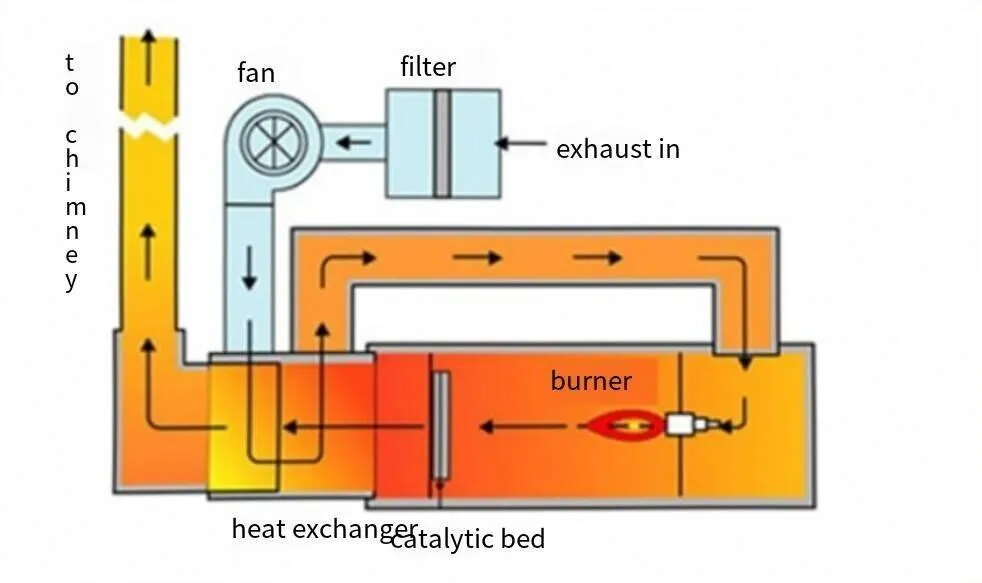
In the high-stakes world of petroleum refining, managing Volatile Organic Compounds (VOCs) and Hazardous Air Pollutants (HAPs) is no longer just a regulatory checkbox—it is a fundamental operational license. The refining landscape, particularly in processes like Fluid Catalytic Cracking (FCC), Hydrogenation, and Delayed Coking, generates complex exhaust streams characterized by fluctuating flow rates, high particulate loads, and variable VOC concentrations. Traditional thermal oxidizers or simple flaring systems are increasingly insufficient to meet the tightening standards of the 21st century. This is where the Regenerative Thermal Oxidizer (RTO) technology becomes pivotal. Unlike direct incineration, RTOs utilize ceramic heat exchange media to recover up to 95-97% of thermal energy, making the destruction of pollutants thermally self-sustaining at low fuel consumption rates.
For refinery engineers and plant managers in Australia and the broader Asia-Pacific region, the challenge is twofold: maintaining continuous uptime in critical units like the FCC while ensuring emission levels remain well below the thresholds set by local environmental protection agencies. A failure in the emission control system can lead to forced shutdowns, costing millions in lost production. Ever-Power has engineered specific RTO solutions that address the unique chemistry of refinery exhaust—specifically handling the tar aerosols from coking and the catalyst fines from cracking units. By leveraging advanced flow dynamics and robust metallurgy, our systems provide the reliability required for 24/7 refinery operations while significantly reducing the Total Cost of Ownership (TCO) compared to legacy European or North American systems.
4. Navigating Environmental Regulations: Australia and Global Standards
Operating a refinery in Australia requires navigating a complex web of state and federal regulations. The National Pollutant Inventory (NPI) and the National Environment Protection Measure (NEPM) set rigorous reporting standards for air quality. Specifically, for refineries operating in states like Victoria, the EPA Victoria’s stringent guidelines on VOC emissions and odor control are among the toughest in the Southern Hemisphere. Similarly, New South Wales (NSW EPA) enforces strict load-based licensing. Ever-Power RTO systems are designed explicitly to meet and exceed these local requirements, ensuring that emissions of Benzene, Toluene, Ethylbenzene, and Xylene (BTEX) are virtually eliminated. We understand that compliance in Australia is not static; it is an evolving target that requires adaptable technology capable of handling future, tighter limits.
Beyond Australia, our design philosophy incorporates the regulatory frameworks of the world’s top refining nations and Australia’s neighbors. For clients in New Zealand, we adhere to the Resource Management Act (RMA) standards for air discharge. In the broader context, our RTOs are engineered to comply with the rigorous Industrial Emissions Directive (IED) of the European Union and the MACT (Maximum Achievable Control Technology) standards enforced by the US EPA. We also closely monitor regulations in high-production markets like China (GB 31570-2015), India (CPCB standards), and Brazil (CONAMA). Whether your facility is located in the Kwinana Industrial Area of Western Australia, the petrochemical hubs of Singapore, or the expanding refining sectors in Saudi Arabia and Russia, our equipment comes with the assurance of global compliance capability, protecting your facility from regulatory fines and reputational damage.
5. Technical Analysis: RTO Integration in FCC, Hydrogenation, and Coking
Fluid Catalytic Cracking (FCC): The FCC unit is the heart of the modern refinery, converting heavy gas oils into valuable gasoline and distillates. However, the regeneration of the catalyst releases substantial flue gas containing CO, NOx, and fine particulates. While CO boilers are common, RTOs are increasingly used for downstream polishing of VOCs and effective odor control from fugitive emissions in tank farms associated with FCC products. The Ever-Power Rotary RTO is particularly suited here due to its ability to handle large air volumes with minimal pressure fluctuation, ensuring the delicate pressure balance of the FCC unit is not disturbed.
Delayed Coking: This process is notorious for its “coke cutting” cycle, which releases massive surges of steam and hydrocarbons. This cyclic nature creates a headache for steady-state oxidizers. Our 3-Chamber RTO design utilizes a specialized puff-chamber and rapid-response valve switching to manage these concentration spikes without tripping High-Temperature limits. Furthermore, the exhaust from coking often contains sticky aerosols; our RTOs feature specialized bake-out modes and wider-pitch ceramic media to prevent clogging, a common failure point in competitor models.
Hydrogenation & Sulfur Recovery: In hydrotreating and hydrocracking units, the risk involves not just VOCs but the presence of sulfur compounds which can form acidic byproducts (SOx) upon combustion. Ever-Power engineers RTOs for these applications with high-grade stainless steel alloys (316L or higher) and internal refractory linings resistant to acid dew-point corrosion. We also integrate upstream scrubbers or downstream quenchers as a complete turnkey package, ensuring that the thermal oxidation process does not inadvertently create a secondary pollution problem.

4. Engineering Specifications & Performance Metrics
| Performance | 2-bed RTO | 3-bed RTO | Rotary Valve RTO | Notes |
|---|---|---|---|---|
| Technicality | First generation | Second generation | Third generation | |
| Number of chambers | 2 | 3 | 12 | Rotary valve operates continuously |
| Number of valves | 4 | 9 | / | |
| Reliability | Valve switching times per year: 350,000 | Valve switching times per year: 520,000 | / | |
| Piping pressure fluctuation | ±500pa | ±250pa | ±25pa | |
| Discharge compliance | Total purification efficiency: 95% | Total purification efficiency: 99% | Total purification efficiency: 99.5% | 99.5% |
| Maximum treating range | < 1g | < 5g | < 10g | 50mg/m³ discharge standard |
| Heat dissipation surface area | 100m² | 145m² | 95m² | |
| Energy saving | Thermal efficiency: 90% | Thermal efficiency: 95% | Thermal efficiency: 96% | 96% |
| Start-up heating time | 2.5h | 2.5h | 2h | Cold furnace start-up (Ethyl acetate) |
| Self-operation concentration | 2.5g/m³ | 2.2g/m³ | 1.8g/m³ | |
| Economy | Regenerative ceramic filling volume: 18m³ | Regenerative ceramic filling volume: 26m³ | Regenerative ceramic filling volume: 17m³ | 17m³ |
| Practicality | Occupation of land: L12×W7 | Occupation of land: L16×W7 | Occupation of land: L12×W7 | L12×W7 |
*Disclaimer: The other brand names mentioned above are provided solely for illustrative purposes. We do not offer original products or equipment bearing these brand names.
5. Why Choose Ever-Power RTO? A Comparative Analysis
In the global market, refinery procurement managers often default to established Western brands like Dürr, Anguil, or John Zink. While these companies produce quality equipment, the premium attached to their brand name often results in inflated CAPEX without a proportional increase in performance. Ever-Power offers a distinct value proposition: our RTO systems function as high-performance replacements for these legacy brands but at approximately 35% of the cost. We utilize the exact same critical components—Honeywell or Maxon burners, Siemens PLCs, and high-grade ceramic media—assembled with precision in our state-of-the-art manufacturing facilities.
The “Western Premium” often covers excessive marketing and overheads. At Ever-Power, your investment goes directly into steel quality, valve technology, and engineering customization. For example, where some competitors might use standard carbon steel for the oxidation chamber shell, we standardly assess the acid gas potential and upgrade to corrosion-resistant alloys without the massive markup. Furthermore, our lead times are significantly shorter. We understand that in a refinery turnaround (TAR) schedule, waiting 20 weeks for emission control equipment is unacceptable. Our agile manufacturing process allows us to deliver fully customized, modular RTO units to Australian ports or other global destinations in record time, ensuring your project critical path remains secure.
6. Industry Trends: The Future of Refinery Emission Control
The trajectory for refinery emissions is moving towards “Near-Zero” targets. We are observing a significant shift towards the integration of AI and Machine Learning in RTO operation (AIO). Modern refineries are demanding “Smart RTOs” that can predict incoming VOC spikes from upstream process changes (like switching crude slates) and pre-adjust combustion parameters to maintain compliance. Ever-Power is at the forefront of this trend, integrating IoT sensors that feed data into broader plant Distributed Control Systems (DCS), allowing for predictive maintenance on valves and ceramic media before failure occurs.
Another emerging trend is the “Energy Neutral” refinery. RTOs are no longer seen just as waste treatment devices but as energy recovery units. By integrating waste heat boilers or oil thermal oil heat exchangers into the RTO exhaust, the excess heat generated from VOC destruction can be recycled back into the refinery’s steam loop or used for pre-heating crude oil. This aligns with the global push for decarbonization and improves the overall Energy Intensity Index (EII) of the refinery. Our latest designs focus heavily on this Multi-Mode Optimization (MMO), ensuring that the environmental asset also serves as a financial asset by reducing the plant’s overall fuel gas consumption.
7. Factory Customization & OEM Capabilities
Ever-Power is not just a distributor; we are a vertically integrated manufacturer with deep OEM capabilities. We understand that no two refineries are identical. A delayed coker in Queensland processing light sweet crude has a different exhaust profile than a hydrocracker in Saudi Arabia processing heavy sour crude. Therefore, we do not push “off-the-shelf” products. Our engineering team conducts thorough CFD (Computational Fluid Dynamics) modeling for every project to optimize airflow and heat distribution. We offer full customization on footprint (vertical vs. horizontal layouts), material selection, and interface standards (DIN, ANSI, JIS).
In addition to complete systems, we provide a robust supply chain for critical spare parts compatible with most major RTO brands. This includes high-thermal-mass ceramic media (saddles and honeycombs), pneumatic poppet valves, sealing gaskets, and burner management systems. We also supply related mechanical transmission components often found in refinery conveyor systems and auxiliary equipment, such as heavy-duty industrial gearboxes, couplings, and chains. Our goal is to be your single-source partner for both environmental and mechanical reliability.
8. Customer Success Story:
“Switching to Ever-Power’s RTOs has been a game-changer for us. Their system has consistently maintained >99% VOC destruction efficiency, ensuring we stay compliant with local regulations in Australia. The best part? We saw a 60% reduction in natural gas consumption, which has had a huge impact on our operational costs. Highly recommend for refineries looking to improve both efficiency and compliance.”
“We were skeptical about switching from our existing system to Ever-Power’s Rotary RTO, but the performance has been outstanding. The reliability is second to none, and we’ve saved a significant amount compared to Western brands like Dürr. The quick installation and seamless integration into our existing setup were big pluses.”
“What really impressed us was Ever-Power’s dedication to customization. Their team took the time to understand the unique challenges we faced with our FCC unit. The 3-Chamber RTO they delivered has been a great fit, and the support they provided during installation and commissioning was top-notch.”
“We’ve been using Ever-Power’s RTO system for about six months now, and I can confidently say that it’s been one of our best investments. The performance is at par with the top Western brands, but the price point is much more reasonable. Plus, the system is smart enough to predict VOC spikes, which has made our plant operations a lot more stable.”
“Managing fluctuating exhaust flow during the coking process has always been a challenge. Ever-Power’s 3-Chamber RTO, with its rapid-response valve switching, has been fantastic at handling these fluctuations without disrupting operations. This system is definitely built for tough environments.”
9. Related Solutions
10. Frequently Asked Questions (FAQ)
Q1. How does an RTO specifically handle the variable exhaust flow from a Delayed Coking unit?
A1. That is a great question regarding process stability. In Delayed Coking, the flow can fluctuate wildly. Our RTOs utilize a Variable Frequency Drive (VFD) on the main fan combined with a pressure control loop to adjust fan speed instantly. This maintains a constant pressure upstream, ensuring the coking drum operations aren’t affected by backpressure, while the RTO’s thermal mass absorbs the VOC spikes.
Q2. Can Ever-Power RTOs replace my aging Dürr or Anguil system in Australia?
A2. Yes, absolutely. We design our systems as direct “drop-in” replacements for major Western brands like Dürr or Anguil. We match the flange dimensions, footprint, and communication protocols (like Modbus or Profibus) of your existing setup. You get the same or better performance metrics but at a significantly lower capital cost, typically around 35% of the price of the original manufacturers.
Q3. What are the maintenance requirements for the ceramic media in a refinery setting?
A3. Maintenance depends heavily on your particulate load. In clean streams, ceramic media can last 5-10 years. However, in refinery applications with potential soot or catalyst fines, we recommend a “bake-out” cycle (heating the unit to ~400-500°C offline) periodically to burn off organic buildup. We also include access doors for easy physical inspection and media top-ups if settling occurs.
Q4. Is the RTO effective against sulfur compounds found in hydrogenation units?
A4. An RTO is very effective at oxidizing sulfur-containing VOCs, but it converts them into SO2 (Sulfur Dioxide) and SO3. While the RTO destroys the organic hazard, the acidic output must be managed. We usually recommend and can supply a downstream caustic scrubber (Quench Tower) to neutralize the SOx acids before the final release to the atmosphere, protecting both the environment and your equipment.
Q5. How much does a 50,000 Nm³/h RTO cost compared to US suppliers?
A5. Pricing varies based on metallurgy and control complexity, but generally speaking, a 50,000 Nm³/h RTO from a top-tier US supplier might cost upwards of $800,000 to $1 million USD. An equivalent Ever-Power system, using the same quality components (burners, PLCs) and meeting the same ISO standards, would typically land in the $300,000 to $400,000 USD range, offering massive savings.
Q6. What safety features are included to prevent explosions in the RTO?
A6. Safety is our number one priority in refining. Our systems strictly follow NFPA 86 standards. We install LEL (Lower Explosive Limit) analyzers on the inlet. If the VOC concentration exceeds 25% LEL, the system automatically triggers a fresh air dilution valve or diverts the gas to a safety bypass stack to prevent any risk of explosion within the hot oxidation chamber.
Q7. Do you provide installation and commissioning services in New Zealand or Southeast Asia?
A7. Yes, we provide global support. While we manufacture in China to keep costs low, we have a team of traveling engineers for supervision. For installation in New Zealand or Southeast Asia, we often partner with local mechanical contractors for the physical erection, while our experts handle the cold/hot commissioning, PLC programming, and operator training to ensure everything runs perfectly.
Q8. How does the Rotary RTO differ from the 3-Chamber design for refineries?
A8. The Rotary RTO is the 3rd generation technology. It uses a single rotating valve instead of multiple poppet valves. This means fewer moving parts and a smaller physical footprint, which is great for space-constrained refineries. It also provides a steady pressure profile without the “pulses” seen in chamber switching, making it ideal for sensitive upstream processes like catalytic cracking.
Q9. Can I customize the PLC system to integrate with our Honeywell DCS?
A9. Definitely. We understand refineries have standardized control systems. While our standard is Siemens, we can program our RTO controls using Allen-Bradley (Rockwell) or integrate seamlessly with your plant-wide Honeywell DCS via Ethernet/IP or OPC protocols. We provide full signal lists and logic diagrams to your instrumentation team for seamless integration.
Q10. What is the typical delivery time for a custom RTO to the Australian market?
A10. Speed is one of our key strengths. Once the engineering drawings are approved, our typical manufacturing time is 8 to 12 weeks. Shipping to major Australian ports like Fremantle, Melbourne, or Sydney takes approximately 3 to 4 weeks. So, you can expect to have the unit on-site in roughly 3 to 4 months, which is significantly faster than many European competitors.
Ready to Upgrade Your Refinery’s Emission Control?
Don’t let outdated equipment compromise your compliance or efficiency. Partner with Ever-Power for engineering excellence, rapid delivery, and unbeatable value. Whether you need a replacement for a Dürr system or a new installation for a Delayed Coker, our engineering team is ready to simulate your process conditions.
Editor: PXY