

1. Summary
Advanced VOC Abatement: Our 3rd Generation Rotary RTO systems deliver up to 99.5% destruction efficiency for solvents used in silk screen printing (e.g., Isophorone, Cyclohexanone), exceeding strict EPA Australia standards.
Energy Efficiency: Featuring a specialized ceramic heat exchange media, our units achieve 95%+ thermal efficiency, drastically reducing natural gas consumption compared to traditional 2-bed oxidizers.
Mechanical Precision: The rotary valve drive system utilizes high-precision gearboxes (compatible with SEW/Nord replacements) ensuring stable operation and low noise (<80dB).
2. Key Facts
- Compliance: Meets AS/NZS standards and EPA Victoria/NSW regulations regarding odour and VOC limits.
- Cost Advantage: Direct from our OEM factory, priced at approximately 35% of Western competitors without compromising quality.
- Application: Specifically tuned for the high-volume, intermittent exhaust characteristics of textile and industrial screen printing dryers.
3. Regulatory Landscape: Navigating VOC Compliance in Australia and Globally
Strict adherence to environmental mandates is no longer optional for the silk screen printing industry; it is a license to operate. In Australia, the regulatory framework regarding Volatile Organic Compounds (VOCs) is stringent, particularly under the purview of state bodies like EPA Victoria (under the Environment Protection Act 2017) and NSW EPA (Protection of the Environment Operations Act 1997). These regulations specifically target solvent emissions typical in screen printing, such as toluene, xylene, and various ketones, which contribute to ground-level ozone and offensive odours. Failure to comply can result in severe penalties, operational shutdowns, and significant reputational damage. Our RTO systems are engineered to ensure your facility not only meets but exceeds the “General Environmental Duty” (GED) requirements by maintaining VOC output concentrations well below the typical 20mg/m³ threshold often cited in Australian licenses.
Globally, the pressure to reduce carbon footprints and eliminate hazardous air pollutants (HAPs) is intensifying, driving the need for universally compliant technology. For our clients exporting or operating branches in the European Union, our equipment aligns with the Industrial Emissions Directive (IED) 2010/75/EU, ensuring that Best Available Techniques (BAT) are utilized for solvent management. Similarly, for the North American market, our systems are designed to satisfy US EPA Method 25A standards for destruction efficiency. By integrating an EVER-POWER Rotary RTO, silk screen printing businesses effectively future-proof their operations against tightening regulations in key markets like South Africa, Brazil, and Southeast Asia (Thailand/Vietnam), where emerging environmental laws are rapidly modeling Western standards.

4. The Engineering Behind 3rd Gen Rotary RTOs in Screen Printing
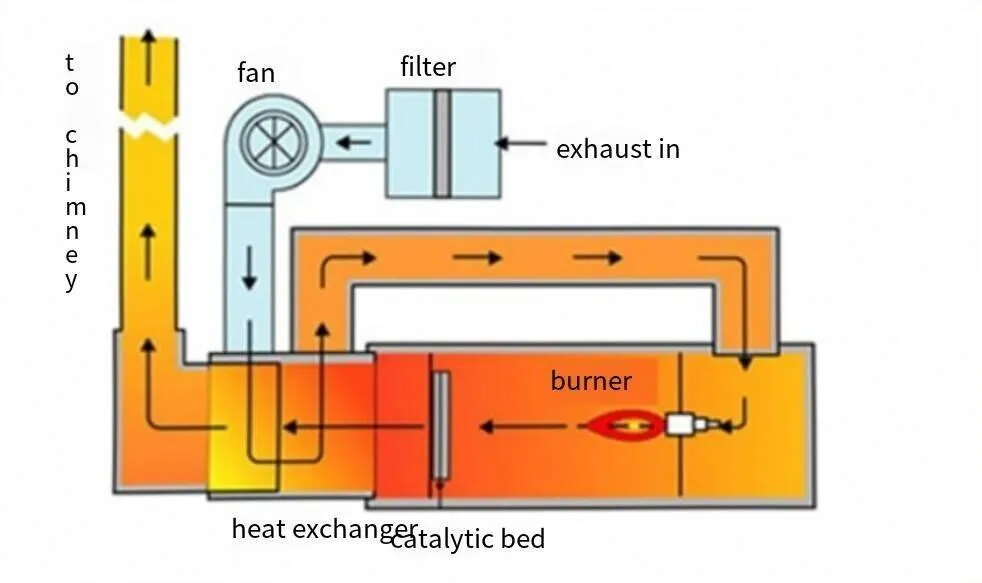
Silk screen printing processes, particularly during the curing and drying phases, release a high volume of exhaust gas with relatively low to medium concentrations of VOCs, creating a specific challenge for thermal treatment. The 3rd Generation Rotary Regenerative Thermal Oxidizer (RTO) addresses this by utilizing a single rotating diverter valve rather than the heavy, maintenance-prone poppet valves found in older 3-bed systems. The process works by directing the solvent-laden air through a hot ceramic heat exchange bed, preheating it to near-combustion temperatures before it enters the combustion chamber. Here, the VOCs are oxidized at approximately 850°C into harmless CO2 and water vapour. The purified, hot air then passes down through a second ceramic bed, transferring its thermal energy for the next cycle. This regenerative process recovers up to 95% of the heat, often allowing the system to run in a “self-sustaining” mode without additional fuel when solvent concentrations exceed 1.5-2 g/m³.
The mechanical integrity of the rotary valve determines the reliability of the entire system, which is why we utilize industrial-grade gearboxes and drive systems synonymous with high-end machinery. The drive unit for our rotary valve is engineered with the same precision as our agricultural and industrial gearboxes, featuring AISI 4140 steel shafts and carburized gears (20CrMnTi). This ensures zero-leakage sealing and smooth rotation, effectively eliminating the “pressure pulse” issues common in older RTO designs that can disrupt sensitive screen printing drying ovens. Furthermore, the compact footprint of the rotary design makes it ideal for retrofitting into existing factory layouts where space is at a premium, a common scenario in established printing facilities in Sydney and Melbourne industrial zones.
5. Ever Power RTO Technical Specifications
| Performance | 2-bed RTO | 3-bed RTO | Rotary Valve RTO | Notes |
|---|---|---|---|---|
| Technicality | First generation | Second generation | Third generation | |
| Number of chambers | 2 | 3 | 12 | Rotary valve operates continuously |
| Number of valves | 4 | 9 | / | |
| Reliability | Valve switching times per year: 350,000 | Valve switching times per year: 520,000 | / | |
| Piping pressure fluctuation | ±500pa | ±250pa | ±25pa | |
| Discharge compliance | Total purification efficiency: 95% | Total purification efficiency: 99% | Total purification efficiency: 99.5% | 99.5% |
| Maximum treating range | < 1g | < 5g | < 10g | 50mg/m³ discharge standard |
| Heat dissipation surface area | 100m² | 145m² | 95m² | |
| Energy saving | Thermal efficiency: 90% | Thermal efficiency: 95% | Thermal efficiency: 96% | 96% |
| Start-up heating time | 2.5h | 2.5h | 2h | Cold furnace start-up (Ethyl acetate) |
| Self-operation concentration | 2.5g/m³ | 2.2g/m³ | 1.8g/m³ | |
| Economy | Regenerative ceramic filling volume: 18m³ | Regenerative ceramic filling volume: 26m³ | Regenerative ceramic filling volume: 17m³ | 17m³ |
| Practicality | Occupation of land: L12×W7 | Occupation of land: L16×W7 | Occupation of land: L12×W7 | L12×W7 |
6. Compatibility & Brand Replacement Guide
Many Australian and global facilities are currently running aging abatement systems from Western manufacturers. We provide high-quality replacement parts and complete system overhauls that offer equivalent or superior performance at a significantly lower cost. Our components, especially the critical mechanical drive systems and ceramic media, are designed to be cross-compatible.
| Original Brand / Equipment | EVER-POWER Replacement Solution | Compatibility Notes |
|---|---|---|
| Dürr / Eisenmann (Rotary Valve Systems) | Complete Rotary Valve Assembly or Drive Gearbox Replacement | Matching flange dimensions and torque specifications. |
| Anguil (2-Bed/3-Bed RTO) | Ceramic Media Retrofit & Poppet Valve Actuators | Upgraded structured packing for lower pressure drop. |
| Megtec (CLE Switch Valve) | Heavy-Duty Pneumatic or Electric Drive Conversion | Improved sealing materials for longer lifespan. |
| SEW Eurodrive / Nord (Drive Motors) | HZPT/EVER-POWER High-Efficiency Gear Motors | Direct drop-in replacement with identical shaft sizes and mounting patterns. |
*Disclaimer: The other brand names mentioned above are provided solely for illustrative purposes. We do not offer original products or equipment bearing these brand names.
7. Industry Trends: The Shift Towards Sustainable Printing
The silk screen printing industry is undergoing a paradigm shift driven by both regulatory pressure and consumer demand for “green” supply chains. We are observing a distinct trend where major global brands (Nike, Adidas, etc.) are auditing their upstream suppliers for carbon footprint compliance. This means printing workshops in Australia and Asia are now required to demonstrate not just VOC compliance, but also energy efficiency. The trend is moving away from gas-guzzling thermal recuperative oxidizers towards high-efficiency Rotary RTOs because of the latter’s ability to reuse heat. Furthermore, there is a growing demand for intelligent IIoT (Industrial Internet of Things) integration. Modern RTOs are no longer standalone black boxes; they must integrate with the factory’s SCADA system to provide real-time emission data for automated carbon reporting—a feature standard in our latest control panels.

8. Customer Success Case: Transforming a Melbourne Print House
“We had been searching for an efficient and cost-effective exhaust gas treatment system, and EVER-POWER’s RTO system perfectly met our needs. The system’s heat recovery function has saved us a significant amount of natural gas, offering far better value for money than similar European products.”
“Since installing this RTO system, both exhaust gas treatment and energy efficiency have improved significantly. It operates very quietly, meeting our city’s noise standards, and the installation process was very smooth. Most importantly, it has helped us avoid potential environmental fines and ensured compliance with regulations.”
“This RTO system not only meets EPA environmental standards but also significantly reduces our factory’s operating costs. Since using it, our energy expenses have decreased by over 40%, and the system’s precise control has made our production process more stable.”
“As a long-established printing factory, we had been using traditional exhaust gas treatment equipment, but their maintenance costs were very high. After switching to EVER-POWER’s Rotary RTO, not only did we reduce maintenance frequency, but the equipment’s efficiency also greatly improved. Our production environment is cleaner, and our customers are more satisfied.”
“After installing EVER-POWER’s RTO system, our factory’s VOC emissions have been greatly reduced, fully complying with Australian environmental requirements. The heat recovery design has also helped us save a lot of energy, significantly reducing production costs – truly excellent value for money.”
“We are very satisfied with the performance of this system, especially its excellent performance in handling high-concentration solvents. By using this equipment, we not only meet strict emission standards but can also use the heat from the exhaust gas to power our drying equipment – a win-win solution for energy saving and environmental protection.”
9. Factory Capabilities & OEM Customization
As a source factory with over 20 years of experience in both mechanical transmission and environmental protection equipment, we offer capabilities that trading companies cannot match. Our manufacturing facility is equipped with advanced CNC machining centers, allowing us to produce the critical rotary valves and gear drive systems in-house. This vertical integration ensures strict quality control over the most moving parts of the RTO. We offer comprehensive OEM customization: whether you need a compact footprint for a rooftop installation in Sydney or a heavy-duty, weather-proof housing for a mining-adjacent site in Western Australia. We can tailor the RTO’s airflow, burner type, and control logic (Siemens/Allen-Bradley) to your specific requirements.
10. Related Solutions


11. Frequently Asked Questions (FAQ)
Q1. How does the installation of a Rotary RTO comply with NSW EPA regulations for screen printing workshops?
A1. Our Rotary RTO systems are specifically engineered to achieve over 99% destruction efficiency, which reliably keeps VOC emission levels significantly below the strict limits enforced by the NSW Protection of the Environment Operations Act, ensuring your screen printing workshop avoids costly environmental fines and shutdown orders.
Q2. What is the estimated ROI and price range for a customized RTO system delivered to Sydney?
A2. While the initial price depends on airflow capacity (Nm³/h), our factory-direct model typically offers prices 35% lower than European competitors; combined with 95% thermal energy recovery that drastically cuts gas bills, most Australian clients see a complete Return on Investment (ROI) within 18 to 24 months of operation.
Q3. Which specific silk screen printing solvents can your RTO system effectively destroy?
A3. Our high-temperature combustion chamber (850°C+) effectively oxidizes a wide range of common screen printing solvents including toluene, xylene, isophorone, cyclohexanone, and various alcohols, breaking them down into harmless CO2 and water vapour to eliminate both toxicity and odour.
Q4. Can I replace my existing Dürr or Anguil RTO ceramic media with your products?
A4. Yes, we supply high-quality structured ceramic packing and saddles that are fully compatible replacements for major brands like Dürr, Anguil, and Megtec, often providing better thermal storage capacity and lower pressure drop at a fraction of the original OEM replacement cost.
Q5. How much maintenance does the rotary valve drive system require compared to poppet valves?
A5. The single rotary valve design simplifies maintenance significantly compared to multi-poppet systems because it has fewer moving parts; our precision-engineered gearbox drive requires only routine oil changes and inspection every 3,000 to 5,000 hours, drastically reducing downtime and maintenance labor costs.
Q6. Do you provide installation support and commissioning services for RTO projects in Australia?
A6. We offer comprehensive support including detailed 3D installation guides, remote technical assistance during commissioning, and can coordinate with local Australian engineering partners to ensure your RTO system is installed correctly and calibrated to meet local safety standards (AS 3814).
Q7. What happens if the VOC concentration in my dryer exhaust fluctuates significantly during the day?
A7. Our smart control system (PLC) automatically adjusts the burner output and rotary valve speed to handle fluctuations in VOC concentration; if concentrations rise high enough, the system enters “self-sustaining” mode, utilizing the energy from the solvents themselves to maintain heat without consuming additional natural gas.
Q8. How does your RTO handle the particulate matter sometimes found in textile printing exhaust?
A8. For textile printing applications where lint or oil mist might be present, we recommend and can integrate an upstream filtration or ceramic filter stage to prevent clogging of the RTO media, and we utilize a specific ceramic block design that resists fouling and allows for bake-out cleaning cycles.
Q9. Is it possible to integrate a heat recovery system to use waste heat for my drying ovens?
A9. Absolutely, we can design a secondary heat exchanger integration that captures the clean, hot exhaust air from the RTO stack and redirects it back to your drying ovens, further improving the overall energy efficiency of your printing plant and reducing your total carbon footprint.
Q10. What are the noise levels of the Rotary RTO, and is it suitable for urban zones?
A10. Thanks to our precision-machined rotary valve and high-quality insulation, our units operate quietly (typically under 80dB at 1 meter), making them perfectly suitable for screen printing businesses located in urban or mixed-use industrial zones where noise pollution regulations are strictly enforced.
Ready to Upgrade Your Emission Control System?
Contact EVER-POWER today for a customized RTO solution that meets Australian standards and fits your budget. Our engineers are ready to analyze your exhaust parameters and provide a free proposal.
Editor: PXY