

1. Summary
2. Five Key Facts
Flexo & Gravure: Tailored for Ethanol, Acetates & Toluene.
Rotor Concentrator: Reduces air volume by 15:1 for efficiency.
Aus Compliance: Meets NPI & State EPA Limits (< 20mg/m³).
Heat Recovery: Recycles heat for drying ovens.
Solvent Recovery: Optional condensation for high-value solvents.
3. Navigating the gov Framework: Australian & Global Standards
Australian Environmental Mandates
In Australia, environmental regulation is primarily state-based, but aligned with the National Environment Protection Measures (NEPM).
- EPA Victoria (Environment Protection Act 2017): The General Environmental Duty (GED) requires businesses to eliminate or minimize risks of harm to human health and the environment so far as reasonably practicable. For composite manufacturers, this means implementing “state-of-the-art” controls like RTOs to manage styrene odours, which have a very low odour detection threshold.
- NSW EPA (Protection of the Environment Operations Act 1997): Under the POEO Act, strict licensing conditions limit the discharge of VOCs. The “Group 6” standards for new plants typically require VOC concentrations to be below 20 mg/m³. Furthermore, odour is treated as a nuisance pollutant, and “no offensive odour” conditions are common in operating licenses.
- National Pollutant Inventory (NPI): Facilities using more than 10 tonnes of certain substances (like styrene or ethanol) per year must report emissions. Implementing an RTO significantly reduces reportable air emissions, improving the company’s public environmental profile.
Global Benchmarks (EU & USA)
To compete globally, Australian manufacturers often align with international best practices:
- USA (EPA NESHAP): Under 40 CFR Part 63 Subpart WWWW (Reinforced Plastic Composites Production), Maximum Achievable Control Technology (MACT) standards necessitate organic HAP destruction efficiencies of 95% or higher, which is the baseline performance for Ever-Power RTOs.
- EU (Industrial Emissions Directive 2010/75/EU): The Best Available Techniques (BAT) reference documents for the chemical and surface treatment sectors mandate thermal oxidation as a primary method for VOC abatement, setting the gold standard for destruction efficiency at >99% for high-concentration streams.
4. Ever-Power RTO Technology: Engineered for Composites
Working Principle & Material Science
The Ever-Power RTO operates on the principle of high-temperature oxidation (typically 800°C – 850°C) combined with regenerative heat exchange. The system consists of ceramic heat recovery beds connected to a combustion chamber.
1. The Cycle: Process gas enters an inlet bed, absorbing heat from pre-heated ceramic media. It enters the combustion chamber, where VOCs are oxidized into CO2 and H2O. The purified, hot gas then passes through an outlet bed, transferring its heat to the ceramic media for the next cycle.
2. The Media: For composite applications, where “sticky” particulate matter (like condensed resin fumes) is a risk, we utilize Structured Ceramic Packing (MLM/Honeycomb) rather than random saddles. This ensures straight-through airflow channels, minimizing blockage risks and pressure drop.
3. The Valves: We employ rapid-acting, zero-leakage poppet valves or a rotary valve design to strictly separate dirty and clean gas streams, ensuring a Destruction Removal Efficiency (DRE) of >99%, crucial for eliminating the pungent smell of acrylates and styrene.
EVER POWER Exclusive Specifications and Parameters
| Performance | 2-bed RTO | 3-bed RTO | Rotary Valve RTO | Notes |
|---|---|---|---|---|
| Technicality | First generation | Second generation | Third generation | |
| Number of chambers | 2 | 3 | 12 | Rotary valve operates continuously |
| Number of valves | 4 | 9 | / | |
| Reliability | Valve switching times per year | 350,000 | 520,000 | / |
| Piping pressure fluctuation | ±500pa | ±250pa | ±25pa | |
| Discharge compliance | Total purification efficiency | 95% | 99% | 99.5% |
| Maximum treating range | < 1g | < 5g | < 10g | 50mg/m³ discharge standard |
| Heat dissipation surface area | 100m² | 145m² | 95m² | |
| Energy saving | Thermal efficiency | 90% | 95% | 96% |
| Start-up heating time | 2.5h | 2.5h | 2h | Cold furnace start-up (Ethyl acetate) |
| Self-operation concentration | 2.5g/m³ | 2.2g/m³ | 1.8g/m³ | |
| Economy | Regenerative ceramic filling volume | 18m³ | 26m³ | 17m³ |
| Practicality | Occupation of land | L12×W7 | L16×W7 | L12×W7 |


5. Application Scenarios in Fiber & Composites
5.1 FRP Hand Lay-up/Pultrusion/Filament Winding
• Exhaust gas composition: High styrene peak, requiring dilution for explosion prevention.• Treatment method: Thermal bypass + three-bed RTO, with pneumatic valves for rapid switching.• Representative cases: Ashland (USA), Hexion (Germany), several Vietnamese FRP factories, Marcopolo (Brazil), Sabic Composites (Saudi Arabia), Fiberglass Egypt (Egypt).
5.2 Carbon Fiber Prepreg/Autoclave
• Exhaust gas composition: Epoxy resin volatiles, curing agent gases.• Treatment method: Three-bed RTO with fast valves to prevent solvent condensation.• Representative cases: Hexcel (USA), SGL Carbon (Germany), Toray Weihai (China), Embraer supplier (Brazil), Strata (UAE), TUSAŞ (Turkey).
5.3 Rock Wool/Glass Wool
• Exhaust gas composition: Phenolic resin pyrolysis gases and dust.• Treatment method: Bag filter + RTO.• Representative cases: Owens Corning (USA), Rockwool (Denmark), Knauf Insulation Thailand (China), Saint-Gobain (Brazil), Rockwool ME (UAE), Isover (South Africa).
5.4 EPS/EPP Pre-expansion/Molding
• Exhaust gas composition: Pentane, highly flammable.• Treatment method: Dilution for explosion prevention + RTO, or using a gas recovery system.
6. Component Compatibility & Brand Integration
Ever-Power RTOs are designed with open-architecture control systems to seamlessly integrate with existing plant machinery, including high-end Japanese and European equipment.
| Component / System | Ever-Power RTO Compatibility / Equivalent | Integration Note |
|---|---|---|
| Precision Slitters (e.g., Watanabe) | Pressure Control Dampers & VFD Fans | RTO maintains constant negative pressure (-50Pa ±10) to ensure oven stability upstream of the slitter. |
| Ceramic Media (e.g., Lantec) | Ever-Power High-Alumina Honeycomb | Direct replacement with higher thermal shock resistance and anti-clogging design. |
| Burners (e.g., Maxon/Eclipse) | Ever-Power Low-NOx Industrial Burners | Fully compatible gas trains; available with EN 746-2 safety standards. |
| PLC Controls | Siemens S7 / Rockwell Logix | Seamless handshake signals (Start/Stop/Fault) with main line SCADA. |
7. Market Trend Analysis: The Future of Composites in Australia
The Australian composites market is shifting towards high-performance materials for defense, mining, and civil infrastructure. There is a marked trend towards “Green Composites”—using bio-resins and natural fibers. However, bio-based resins still emit VOCs that require treatment. Furthermore, the rising cost of natural gas in Eastern Australia is driving manufacturers to replace aging thermal oxidizers with high-efficiency RTOs to slash operational expenditure (OPEX).

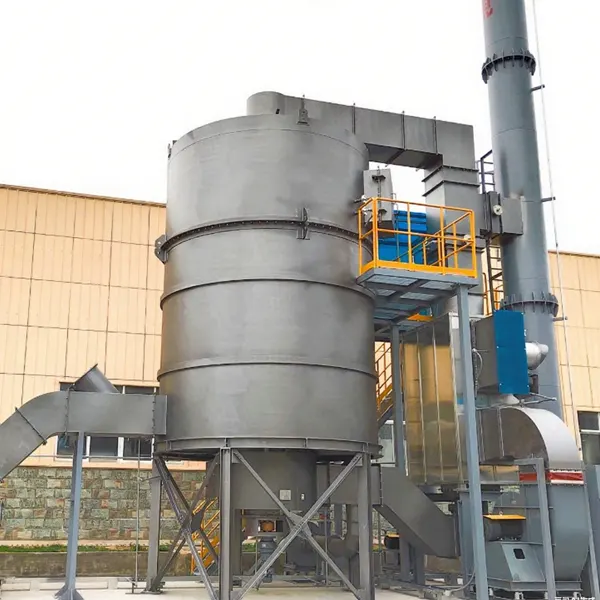
8. Factory Strength & Customization


Ever Power is a source manufacturer with a state-of-the-art facility featuring laser cutting, robotic welding, and a dedicated R&D center for airflow simulation. We don’t just sell standard boxes; we engineer solutions.
- Custom Footprints: Vertical or horizontal layouts to fit tight factory spaces.
- Material Selection: SS316L, Hastelloy, or PTFE coatings for acid-resistant applications (e.g., pickling lines).
- Validation: Pre-shipment FAT (Factory Acceptance Test) and 3D modeling available.
9. Global Customer Success Case:
“Ever Power’s RTO system transformed our resin curing process. Not only did it meet Australian EPA standards, but the energy efficiency and odour control exceeded our expectations. Highly recommend!”
— Production Manager, Composite Manufacturer, Sydney, Australia
“We installed Ever Power’s 3-Bed RTO for our carbon fiber pre-preg line, and the performance has been outstanding. The system runs efficiently, and the integration with our existing equipment was seamless.”
— Operations Director, Aerospace Composite Plant, Melbourne, Australia
“The Ever Power RTO helped us reduce styrene emissions significantly while saving on energy costs. It’s a great solution for food-grade compliance and industrial scale production.”
— Environmental Compliance Officer, FRP Manufacturer, Brisbane, Australia
“We were facing odour complaints from our neighbours, but after installing Ever Power’s RTO, we’ve received zero complaints. The system works reliably, and the heat recovery feature is a game-changer!”
— Factory Manager, Resin Manufacturer, Melbourne, Australia
“Ever Power’s RTO system was a perfect fit for our fiberglass production line. The system’s high efficiency and low fuel consumption are exactly what we needed. Plus, the seamless integration with our plant’s SCADA system was crucial for us.”
— Plant Supervisor, FRP Production, Adelaide, Australia
10. Why Choose Ever Power?
Ever Power isn’t just a vendor; we are your engineering partner. With a manufacturing base capable of producing robust, heavy-duty systems at 35% less cost than European competitors.
- Source Manufacturer: Direct from factory to site, ensuring strict quality control (ISO 9001).
- Custom Layouts: We design vertical or skid-mounted RTOs to fit constrained factory footprints in Sydney or Melbourne industrial zones.
- Testing: Every unit undergoes rigorous Pre-Shipment Inspection (PSI) and airflow simulation.
- Partners: Trusted by global packaging leaders for reliability and performance.
- 25 Core Safety Measures:
25 Core Safety Measures Fire prevention facilities Concentration detection Dilution measures Emergency bypass Safety bypass High temperature bypass valve Explosion relief facilities Temperature control Differential pressure monitoring Temperature difference monitoring Flame detection Gas dual control Valve dual control Electrical explosion-proof Ignition control Power failure control Emergency stop control APP remote monitoring Exhaust temperature control Waste heat recovery control Equipment self-inspection Fault self-stop Abnormal alarm Intelligent interlock Overall plan
11. Related Solutions
Frequently Asked Questions (FAQ)
Q1. How much does an RTO cost for a typical composite manufacturing facility in Australia?
A1. The cost of an RTO varies significantly based on airflow (Nm³/h) and VOC concentration. For a typical composite line handling 15,000 Nm³/h, capital investment is competitive. However, the real value lies in OPEX; our high thermal efficiency (TER > 95%) means the system can often run fuel-free during production. Contact us for a precise ROI calculation and quote.
Q2. Can your RTOs handle the “sticky” exhaust from resin curing without clogging?
A2. Absolutely. This is a common issue with standard oxidizers. We utilize specialized “bake-out” cycles and wide-channel ceramic media designed specifically for condensing organics like resins and oligomers. This prevents fouling, maintains pressure stability, and ensures long-term operational uptime for your critical lines.
Q3. Where can I find a supplier of RTO parts compatible with my existing Japanese equipment?
A3. Ever-Power provides a comprehensive range of compatible parts. Whether you are running precision lines with components like Watanabe slitters or other specialized machinery, our control systems and ducting interfaces are designed for seamless integration. We ensure our RTOs do not disrupt the delicate pressure balance required for high-quality film and fiber processing.
Q4. What maintenance is required to comply with EPA Victoria or NSW EPA license conditions?
A4. Compliance requires regular preventative maintenance. We recommend quarterly inspections of valves, burners, and thermocouples, along with an annual ceramic media check. Our systems come with remote monitoring capabilities, allowing us to assist with diagnostics and reporting to help you meet your NPI and EPA license obligations effortlessly.
Q5. Which RTO design is better for styrene emissions: 2-Bed or 3-Bed?
A5. For styrene, which has a very low odour threshold, we strongly recommend a 3-Bed RTO or a Rotary Valve RTO. A 2-Bed system has a “puff” of untreated gas during valve switching that can lead to odour spikes. A 3-Bed design includes a purge cycle that captures this gas, ensuring constant >99% destruction efficiency and keeping your neighbors happy.
Q6. How long does it take to manufacture and install an RTO unit in Sydney or Melbourne?
A6. Typically, manufacturing takes 12-16 weeks, depending on customization. Shipping and installation on-site in Australia can take an additional 4-6 weeks. We offer modular, skid-mounted units that significantly reduce on-site assembly time, minimizing downtime for your production facility.
Q7. Do you offer energy recovery solutions to utilize the waste heat from the RTO?
A7. Yes, waste heat recovery is a key trend. We can integrate a secondary heat exchanger to channel clean, hot air back into your curing ovens or resin drying zones. This “closed-loop” energy approach can reduce your facility’s total natural gas consumption by up to 30-40%, further improving your bottom line.
Ready to Upgrade Your Emissions Control?
Contact Ever-Power today for a technical consultation and a customized proposal for your composite or fiber manufacturing line.
*Disclaimer: The other brand names mentioned above are provided solely for illustrative purposes. We do not offer original products or equipment bearing these brand names.
Editor: PXY