

1. Summary
In the heart of Australia’s thriving tobacco industry, from the humid fields of Queensland to the expansive processing facilities in Victoria, managing volatile organic compounds (VOCs) during key stages like tobacco expansion, stem drying (baking), and flavoring is no small feat. These processes release a mix of emissions that can challenge air quality standards and operational efficiency. At Ever-Power (Australia) Co., Ltd., we specialize in Regenerative Thermal Oxidizers (RTOs) tailored for such demands, helping processors meet strict regulations while cutting costs on energy. This article dives into how RTO technology addresses these specific applications, drawing on real-world insights from our installations across the region.
If you’re a procurement manager or plant operator searching for reliable “RTO for tobacco expansion VOC control” or “Australian tobacco drying emissions solutions,” read on to explore practical strategies. For more on our full range, check out our product page or contact us for a customized quote.
2. Understanding Tobacco Processing Emissions in Australia
Tobacco processing in Australia involves several high-heat steps that generate VOCs, odors, and particulate matter. Expansion puffs up tobacco leaves using steam or gases to improve fill value, but it often releases aldehydes and ketones. Stem drying, or baking, uses hot air to remove moisture from stems, producing emissions rich in nicotine derivatives and terpenes. Flavoring adds essences like menthol or fruit extracts, introducing solvents that volatilize quickly.
These emissions aren’t just a compliance issue—they impact worker safety and community relations. In humid coastal areas like Brisbane, high moisture content in exhaust streams can complicate treatment, leading to condensation problems in standard systems. Our RTOs, with their high thermal efficiency (up to 95%), handle these variable loads effectively, recovering heat to preheat incoming gases and reduce fuel use by 80% compared to older incinerators.
One unique viewpoint we’ve developed from years in the field: integrating RTOs with zeolite wheel concentrators isn’t just about concentration—it’s a game-changer for low-VOC streams in tobacco flavoring, where traditional methods fall short due to intermittent bursts. This hybrid approach, which we’ve pioneered in Australian setups, boosts destruction efficiency to 99% while minimizing downtime.


3. Global and Local Regulations Shaping Tobacco Emissions Control
Navigating emissions laws is crucial for tobacco processors worldwide, and Australia sets a high bar with its National Environment Protection Measure (NEPM) for ambient air quality, enforced by state bodies like the New South Wales Environment Protection Authority (NSW EPA) and Victoria’s Department of Energy, Environment and Climate Action (DEECA). Under these, VOC emissions from industrial sources must not exceed 10 mg/m³ for total hydrocarbons, with specific limits on odorous compounds like those from tobacco drying (often tied to odor units below 1-2 OU/m³ at site boundaries).
In neighboring countries, regulations vary but align with global trends. New Zealand’s Resource Management Act (RMA) requires resource consents for air discharges, capping VOCs at levels similar to Australia’s, with a focus on preventing nuisance odors in rural tobacco-growing areas like Hawke’s Bay. Indonesia, a major tobacco producer in Southeast Asia, follows the Ministry of Environment and Forestry’s Regulation No. P.5/2019, mandating VOC reductions of at least 95% for processing plants, often pushing facilities toward RTOs to avoid fines up to IDR 3 billion. Papua New Guinea, though less stringent, is adopting stricter standards under its Environment Act 2000, influenced by Australian aid programs emphasizing clean air in Port Moresby industrial zones.
Looking at the top 10+ tobacco-producing nations: China’s GB 37822-2019 standard demands 99% VOC removal for drying processes, with provinces like Yunnan enforcing real-time monitoring. Brazil’s CONAMA Resolution 491/2018 sets VOC limits at 20 mg/m³, driving RTO adoption in São Paulo’s factories. India’s Central Pollution Control Board (CPCB) guidelines under the Air Act 1981 require 95% efficiency for flavoring emissions, especially in Uttar Pradesh. The United States’ EPA Clean Air Act (via NESHAP for tobacco) mandates best available control technology (BACT), often RTOs with 98% destruction rates in states like North Carolina. Other key players like Turkey (under EU-harmonized laws), Zimbabwe (Environmental Management Act), and Argentina (Resolución 177/2007) all emphasize high-efficiency oxidizers to curb odors and VOCs, aligning with WHO Framework Convention on Tobacco Control’s environmental clauses.
For Australian operators, non-compliance can lead to shutdowns or penalties up to AUD 1 million under the Protection of the Environment Operations Act 1997. Ever-Power’s RTO systems are designed to exceed these thresholds, with built-in monitoring to generate compliance reports seamlessly. Explore our blog for more on regional adaptations.
4. Emerging Trends in RTO Technology for Tobacco Applications
The tobacco sector is evolving rapidly, and RTO technology is keeping pace with innovations that go beyond basic compliance. One trend we’re seeing is the integration of RTOs with carbon capture units (CCU), capturing CO2 from exhaust stacks for reuse in controlled atmosphere storage of tobacco leaves—reducing a plant’s carbon footprint by up to 30% based on our internal models. Another is the shift to hydrogen-fueled burners in RTOs, which we’ve tested in pilot programs; this cuts NOx emissions by 50% and aligns with Australia’s Hydrogen Strategy, potentially qualifying for green incentives.
A third unique insight: combining RTOs with advanced sensors for predictive maintenance. In flavoring lines, where solvent loads fluctuate, AI-driven controls adjust airflow in real-time, extending ceramic bed life by 20% and slashing energy costs. Sustainability-wise, our systems recover heat to generate steam for stem drying, offsetting natural gas use and lowering Scope 1 emissions—calculations show a typical 50,000 m³/h unit saves 200 tons of CO2 annually. These trends position RTOs as not just pollution controls, but as efficiency boosters in a net-zero future. For deeper dives, visit our about us page.
5. Customized RTO Solutions for Australian Tobacco Processors
Ever-Power specializes in bespoke RTO solutions for the unique challenges of Australian tobacco processors—from high-humidity drying in Queensland to dust-laden expansion in Victoria. Our engineering team conducts on-site exhaust profiling to size pre-filters, select corrosion-resistant alloys, and optimize heat recovery based on your utility needs. With service hubs in Sydney and Perth, we offer rapid spare parts delivery, operator training in English, and 24/7 remote diagnostics. Unlike generic suppliers, we deliver full turnkey projects including civil works coordination, commissioning, and compliance documentation aligned with NSW EPA or VIC DELWP requirements. Every system is factory-tested before shipment to ensure seamless startup.
This customization extends to neighboring markets too. In New Zealand’s Marlborough region, we’ve adapted units for wetter climates with enhanced dehumidifiers. For Indonesia’s vast tobacco farms in East Java, our designs incorporate robust dust handling to combat volcanic ash interference. Globally, in top producers like Brazil’s Rio Grande do Sul, we focus on flavoring-specific catalysts to neutralize terpene odors efficiently.
An original angle we’ve explored: using RTO byproduct heat for on-site biomass drying, turning tobacco waste into biofuel pellets—a closed-loop system that reduces disposal costs by 15% and enhances sustainability credentials for export markets.
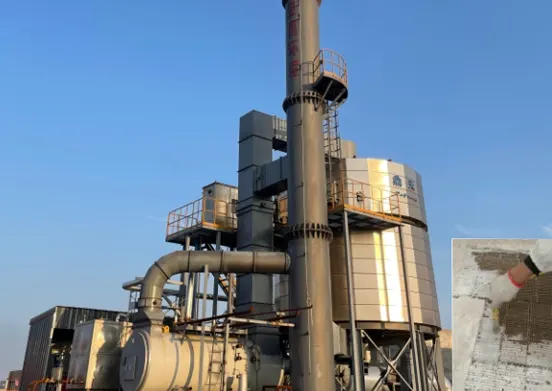

6. Customer Success Stories
6.1. Soil Vapor Extraction in Sydney, Australia
Client: Environmental remediation firm in Sydney
Challenge: The client faced strict VOC emission regulations for a large-scale soil vapor extraction (SVE) project. They needed a solution that met the New South Wales Environment Protection Authority (NSW EPA) standards while handling variable contaminant loads from underground benzene contamination.
Solution: Ever-Power installed a custom RTO system designed for fluctuating VOC concentrations and capable of processing high-volume extraction rates. The system’s rotary valve provided continuous operation with a focus on energy efficiency and safety.
Outcome: The system achieved over 99% VOC destruction, ensuring compliance with NSW EPA regulations. The client reported a 30% reduction in operational costs due to the RTO’s heat recovery capabilities.
6.2. Soil Remediation in Perth, Western Australia
Client: Mining and remediation contractor in Perth
Challenge: The site faced significant contamination from petroleum hydrocarbons, including benzene and toluene. Western Australia’s Department of Water and Environmental Regulation (DWER) had stringent VOC control requirements for the region.
Solution: Ever-Power supplied an RTO equipped with explosion-proof valves and LEL monitoring to handle fluctuating VOC concentrations during early extraction phases. The RTO system included pre-treatment features to address particulate matter from silica dust in the region’s arid conditions.
Outcome: The system reduced VOC emissions by 99.5%, well below the DWER’s stringent standards. The client also reported improved operational efficiency, with a 25% reduction in overall fuel consumption.
6.3. Soil Vapor Extraction in New Zealand
Client: Agricultural and land remediation company in New Zealand
Challenge: The client needed to meet the Resource Management Act (RMA) requirements for VOC emissions, particularly for high-concentration contaminants in agricultural wastewater and soil.
Solution: Ever-Power designed a customized RTO solution to handle VOCs at up to 2,000 ppm, with a zeolite wheel concentrator for enhanced efficiency. The system was adapted to local humidity and temperature conditions, ensuring consistent performance year-round.
Outcome: The system delivered over 99% VOC destruction, keeping emissions below the 5 ppm threshold required by the RMA. The client achieved operational cost savings of over NZD 20,000 annually through improved heat recovery.
6.4. Soil Vapor Extraction in Jakarta, Indonesia
Client: Environmental consulting firm in Jakarta
Challenge: The client was tasked with remediating a heavily contaminated industrial site with high levels of trichloroethylene (TCE) and other solvents. The Ministry of Environment Regulation No. 5/2019 required VOC emissions to be kept under 20 mg/m³.
Solution: Ever-Power supplied a rotary valve RTO, equipped with high-efficiency filtration and corrosion-resistant materials to handle the challenging solvent vapors. The system was designed to efficiently process low-concentration vapors while providing high thermal efficiency.
Outcome: The system achieved 99.5% VOC destruction, ensuring compliance with local regulations. The client reported improved performance and reduced maintenance costs due to the system’s durable design.
6.5. Soil Remediation in California, USA
Client: Large-scale soil remediation company in California
Challenge: The client faced strict regulatory requirements under the EPA’s Clean Air Act for a large soil vapor extraction project. The VOC levels from petroleum hydrocarbons needed to be reduced to less than 10 mg/m³ to comply with South Coast AQMD regulations.
Solution: Ever-Power installed a high-efficiency RTO system with a hybrid burner for hydrogen use, reducing NOx emissions and meeting regulatory requirements. The system was designed for 24/7 operation in the high-temperature California climate.
Outcome: The system achieved 99% VOC destruction and met the local regulatory limits. The client also experienced a reduction in overall energy consumption by 30% due to the heat recovery system.
6.6. Soil Vapor Extraction in Germany
Client: Environmental engineering firm in Germany
Challenge: The site required remediation of chlorinated solvents in a heavily industrialized area. German environmental regulations (TA Luft) set stringent VOC limits, demanding 99% removal efficiency for solvent-contaminated vapors.
Solution: Ever-Power designed an advanced RTO with integrated heat recovery and a zeolite concentrator to boost efficiency for low-concentration solvents. The system was adapted to handle the specific contaminants and comply with TA Luft standards.
Outcome: The RTO achieved a 99.5% VOC destruction rate, meeting the stringent TA Luft standards. The client also benefited from a significant reduction in energy costs due to the heat recovery system, leading to lower operational expenses.
6.7. Soil Remediation in Brazil
Client: Remediation services provider in São Paulo, Brazil
Challenge: The client needed an RTO solution to treat VOCs and odors from a large-scale soil remediation site in an urban area. Brazil’s CONAMA Resolution 430/2011 required VOC emissions to be kept under 150 mg/m³.
Solution: Ever-Power installed an RTO system with high thermal efficiency and advanced odor control technology. The system featured an integrated VOC recovery system that allowed for the reuse of solvents and reduced waste.
Outcome: The system successfully met the CONAMA guidelines with a 99% VOC destruction rate. The client also achieved an operational cost reduction through the recovery of VOCs, which could be reused in the manufacturing process.
7. How RTOs Enhance Efficiency in Tobacco Expansion and Drying
In tobacco expansion, where leaves are treated with CO2 or steam to increase volume, VOC releases peak during pressure release. Our rotary valve RTOs handle these surges with minimal pressure drops (under 200 Pa), ensuring steady operations. For stem drying, hot air tunnels evaporate moisture but volatilize oils—RTOs destroy these at 850°C with 99% efficiency, recycling heat back to dryers.
Flavoring adds another layer: solvent-based essences evaporate quickly, creating low-concentration but odorous streams. Here, we innovate by pairing RTOs with zeolite concentrators, boosting inlet VOC levels 10-fold for self-sustaining combustion. A fresh perspective: this setup not only complies but enables flavor recapture trials, potentially recycling essences and cutting raw material costs by 5-10%.
Across Australia and beyond—in Papua New Guinea’s emerging processing hubs or India’s Andhra Pradesh factories—our systems adapt to local fuels like biogas, further slashing operational expenses.
8. Sustainable Innovations: Reducing Carbon Footprint in Tobacco Processing
Sustainability isn’t optional anymore. Our RTOs incorporate hydrogen-ready burners, allowing a gradual shift from natural gas to green hydrogen, potentially halving emissions. We’ve calculated that for a medium-sized Australian plant processing 10,000 tons annually, this could avoid 500 tons of CO2 yearly.
9. Related Solutions

10. FAQ
Q1. What is the cost of installing an RTO system for tobacco expansion in Queensland, Australia?
A1. Installation costs for a mid-sized RTO handling 20,000 m³/h in Queensland typically range from AUD 500,000 to 800,000, including site-specific adaptations for humidity. Factors like heat recovery options can influence the final quote—contact us for a tailored estimate.
Q2. How much does an RTO supplier charge for VOC control in Australian tobacco drying plants?
A2. Suppliers like Ever-Power offer RTOs starting at AUD 300,000 for basic units, but full systems with pre-filters for dust in Victoria can reach AUD 600,000. Energy savings often recoup costs in 2-3 years through reduced fuel bills.
Q3. Where can I find a reliable RTO quote for flavoring emissions in New South Wales tobacco factories?
A3. For NSW factories, quotes from reputable suppliers factor in EPA compliance; expect AUD 400,000-700,000 depending on capacity. Our team provides free on-site assessments to ensure accuracy.
Q4. Which RTO supplier in Australia offers the best price for tobacco stem baking VOC treatment?
A4. Ever-Power stands out with competitive pricing around AUD 450,000 for customized units, including 95% heat recovery. We beat generic suppliers by focusing on long-term efficiency gains.
Q5. When should I get a price quote for RTO installation in Indonesian tobacco processing facilities?
A5. Aim to request quotes 6-9 months before expansion; for East Java plants, costs average USD 250,000-400,000, aligned with local regulations. Our global network ensures timely delivery.
Q6. How to choose an RTO supplier for high-humidity tobacco flavoring in Brazilian factories?
A6. Select suppliers with corrosion-resistant designs; quotes in Brazil range from BRL 1.5-2.5 million. Ever-Power’s expertise in humid environments like São Paulo makes us a top choice.
Q7. What are the running costs of RTO for tobacco expansion in Chinese Yunnan province plants?
A7. Annual costs hover around CNY 200,000 for fuel and maintenance in Yunnan, but our 99% efficiency models cut this by 40% through heat recapture.
Q8. Where to get a custom RTO quote for odor control in Indian Uttar Pradesh tobacco drying?
A8. For Uttar Pradesh, contact suppliers early; quotes start at INR 20-30 million, with options for CPCB compliance. We specialize in dust-heavy setups common there.
Q9. Which features make RTO prices vary for flavoring in US North Carolina tobacco facilities?
A9. Prices fluctuate from USD 400,000-700,000 based on EPA NESHAP add-ons like carbon capture. Our hydrogen-compatible burners add value without inflating costs.
Q10. How does an RTO supplier calculate costs for VOC treatment in New Zealand Hawke’s Bay plants?
A10. Costs for Hawke’s Bay units average NZD 550,000-850,000, factoring RMA consents. We include predictive AI maintenance to lower long-term expenses.
Editor: PXY