

1. Summary
In the fast-paced world of Australian textile manufacturing, heat-setting machines play a pivotal role in stabilizing fabrics like polyester and nylon, ensuring they maintain shape and durability under everyday use. However, these processes generate significant volatile organic compounds (VOCs) from dyes, solvents, and finishing agents, posing environmental and regulatory challenges. At Ever-Power(Australia) Co., Ltd., we specialize in Regenerative Thermal Oxidizers (RTOs) tailored for such applications, helping factories achieve compliance while boosting efficiency. This article dives into how RTO technology addresses VOC emissions from textile heat setting machines, explores global regulations, emerging trends, and why customization is key for Aussie operations.
Whether you’re a mill owner in Melbourne grappling with EPA guidelines or a procurement manager in Sydney seeking cost-effective suppliers, understanding RTO integration can transform your waste gas management. Let’s explore the details, from system basics to real-world benefits.
2. Understanding VOC Emissions in Textile Heat Setting Machines
Textile heat setting involves heating fabrics at temperatures between 150-220°C to fix dyes and enhance properties like wrinkle resistance. Common in Australia’s apparel and home furnishing sectors, this step releases VOCs such as formaldehyde, styrene, and solvent vapors from synthetic fibers. These emissions can reach concentrations of 500-2000 ppm, with airflow volumes up to 50,000 m³/h per machine line, contributing to air pollution if untreated.
RTO systems excel here by using ceramic media to recover up to 95% of heat energy, oxidizing VOCs at 800-1000°C into harmless CO₂ and water vapor. Unlike basic incinerators, RTOs minimize fuel use—often running self-sustainably on waste gas heat alone—making them ideal for energy-intensive textile plants. For Australian facilities, where natural gas costs are rising, this translates to operational savings of 30-50% compared to traditional methods.
One innovative application we’re pioneering is combining RTO with zeolite wheel concentrators for low-concentration streams. This hybrid setup boosts efficiency by concentrating VOCs 10-20 times before oxidation, reducing system size and energy demands—perfect for space-constrained urban mills in Brisbane or Adelaide.


3. Global and Local Regulations on VOC Emissions in Textile Industry
Navigating regulations is crucial for textile producers using heat setting machines. In Australia, the National Pollutant Inventory (NPI) and state-specific Environmental Protection Authorities (EPAs) set strict limits. For instance, under the New South Wales EPA’s Protection of the Environment Operations Act 1997, VOC emissions from industrial sources must not exceed 10 mg/m³ for total organic compounds, with mandatory monitoring for facilities emitting over 100 kg/day. Victoria’s Environment Protection Act 2017 similarly requires RTO or equivalent best available techniques (BAT) for high-emission processes, aligning with the federal Clean Air Regulation.
Neighboring countries enforce comparable standards. In New Zealand, the Resource Management Act 1991 mandates consents for air discharges, with VOC limits often below 5 mg/m³ under regional plans like Auckland’s Air Quality Bylaw. Indonesia, a major textile hub in Southeast Asia, follows the Ministry of Environment Regulation No. 5/2018, capping VOCs at 20 mg/m³ for manufacturing emissions, pushing mills toward RTO adoption amid growing export pressures to eco-conscious markets.
Globally, top textile-producing nations have ramped up scrutiny. China’s GB 16297-1996 standard limits VOCs to 120 mg/m³, but provinces like Guangdong enforce tighter 50 mg/m³ thresholds for heat setting exhausts. In India, the Central Pollution Control Board (CPCB) under the Air (Prevention and Control of Pollution) Act 1981 sets 150 mg/m³ limits, with states like Maharashtra requiring RTO for synthetic fiber plants. The United States’ Clean Air Act, via EPA’s Maximum Achievable Control Technology (MACT) standards for textiles (40 CFR Part 63), demands 95% VOC reduction, often mandating RTO. In the European Union, the Industrial Emissions Directive (IED) 2010/75/EU requires BAT, with Germany’s TA Luft limiting VOCs to 50 mg/m³. South Korea’s Clean Air Conservation Act caps emissions at 60 ppm, while Bangladesh’s Environment Conservation Rules 1997 are tightening to 100 mg/m³ amid international scrutiny. Vietnam’s QCVN 19:2021/BTNMT standard sets 200 mg/m³ for industrial air, but textile zones like Ho Chi Minh City push for advanced controls like RTO to meet EU export norms. Brazil’s CONAMA Resolution 430/2011 limits VOCs to 150 mg/m³, with São Paulo state enforcing BAT for major emitters. Turkey’s Industrial Air Pollution Control Regulation caps at 100 mg/m³, aligning with EU accession goals. In Pakistan, the National Environmental Quality Standards (NEQS) set 400 mg/m³, but Punjab province is lowering to 200 mg/m³ for textiles. These regulations underscore a global shift toward RTO as a compliance staple, especially in the top 10 textile nations: China, India, USA, Turkey, Pakistan, Brazil, Indonesia, Vietnam, Bangladesh, and Mexico.
4. Emerging Trends in RTO Technology for Textile Applications
The RTO landscape is evolving rapidly, driven by sustainability demands. One key trend is integrating carbon capture and storage (CCS) with RTO exhausts. In textile heat setting, where CO₂ from VOC oxidation can be captured at 90% efficiency using amine-based scrubbers, this reduces a plant’s carbon footprint by 20-30 tons annually per machine line—vital for Australia’s net-zero 2050 goals.
Another advancement is hydrogen-fueled burners in RTOs, slashing fossil fuel dependency. Hydrogen combustion produces zero CO₂, and with Australia’s green hydrogen push (e.g., via the Hydrogen Headstart program), textile mills could cut emissions by 50% while qualifying for subsidies.
Sustainability analysis shows RTOs reduce carbon footprints significantly. For a typical 20,000 m³/h textile exhaust, a standard RTO avoids 500 tons of CO₂ equivalents yearly by destroying methane-potential VOCs and recovering heat equivalent to 100 MWh of electricity. Pairing with AI-driven optimization—monitoring sensors to adjust airflow in real-time—further cuts energy use by 15%, making RTOs not just compliant but profitable in a carbon-taxed world.
5. Customized RTO Solutions for Australian Textile Factories
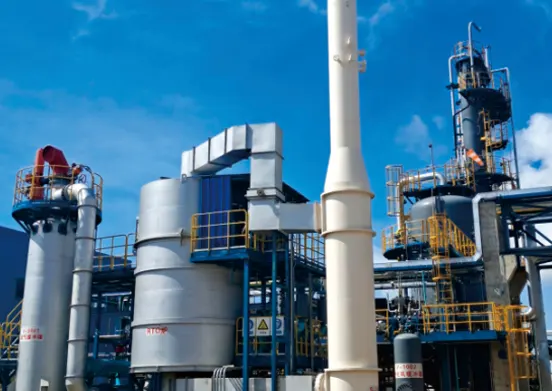
Ever-Power specializes in bespoke RTO solutions for the unique challenges of Australian textile producers—from high-humidity coastal mills in Queensland to dust-prone operations in the outback. Our engineering team conducts on-site exhaust profiling to size pre-filters, select corrosion-resistant alloys, and optimize heat recovery based on your utility needs. With service hubs in Sydney and Perth, we offer rapid spare parts delivery, operator training in English, and 24/7 remote diagnostics. Unlike generic suppliers, we deliver full turnkey projects including civil works coordination, commissioning, and compliance documentation aligned with NSW EPA or VIC DELWP requirements. Every system is factory-tested before shipment to ensure seamless startup.
This customization extends to integrating RTO with existing heat setting lines, ensuring minimal downtime during installation. For more on our products, visit our classic rotary valve RTO page.

6. Success Stories
6.1. Client Profile: Polyester Heat Setting in North Carolina, USA
Industry: Textile Manufacturing
Application: VOC Control in Polyester Heat Setting
RTO Supplier: Anguil Environmental Systems
Success Story:
A polyester textile manufacturing facility in North Carolina, USA, was facing significant challenges with volatile organic compounds (VOCs) such as styrene and formaldehyde generated during its heat setting process. The company installed an RTO system from Anguil Environmental Systems, which helped meet the U.S. EPA’s Maximum Achievable Control Technology (MACT) standards for textile manufacturing. The system achieved over 99% VOC destruction efficiency, with the added benefit of recovering up to 95% of heat for reuse in the production process. This not only ensured environmental compliance but also resulted in significant energy savings, cutting fuel costs by 30%. The facility successfully reduced its carbon footprint, contributing to both regulatory compliance and operational efficiency.
6.2. Client Profile: Textile Processing in São Paulo, Brazil
Industry: Textile Manufacturing
Application: VOC Control in Heat Setting and Dying Processes
RTO Supplier: Haden
Success Story:
A textile factory in São Paulo, Brazil, specializing in synthetic fiber production, required a solution for controlling VOC emissions generated during its heat setting and dyeing operations. The plant’s emissions were mainly composed of styrene, formaldehyde, and solvent vapors. To comply with CONAMA Resolution 430/2011, the factory opted for an RTO system from Haden. This RTO system efficiently oxidized VOCs at temperatures between 800°C and 950°C, achieving a VOC destruction efficiency of over 99%. Additionally, the RTO featured heat recovery capabilities, reducing the plant’s energy consumption by 35%. With the system in place, the factory met local regulatory standards, improved air quality, and enhanced sustainability, while lowering operational costs.
6.3. Client Profile: Nylon Heat Setting in Guangdong, China
Industry: Textile Manufacturing
Application: VOC and Odor Control in Nylon Heat Setting
RTO Supplier: Pollution Control Systems
Success Story:
A nylon textile plant in Guangdong, China, producing fabrics for the garment industry faced significant challenges with VOC emissions, particularly from the heat setting process, which uses high temperatures to stabilize the nylon fibers. The factory was subject to the strict GB 16297-1996 standard, which capped VOC emissions at 120 mg/m³. To address this, the plant installed an RTO system from Pollution Control Systems, achieving 99% VOC destruction efficiency. The system was specifically designed to handle the high humidity and volatile chemical compounds typical of textile processing. It also integrated a zeolite wheel concentrator to handle low-concentration VOCs, further optimizing energy consumption. The installation ensured the factory’s compliance with both local environmental standards and international export requirements, reducing its environmental impact and improving its marketability in global markets.
6.4. Client Profile: Synthetic Fiber Processing in Gujarat, India
Industry: Textile Manufacturing
Application: VOC Control in Heat Setting of Synthetic Fibers
RTO Supplier: Thermal Solutions
Success Story:
A synthetic fiber manufacturing plant in Gujarat, India, producing polyester and acrylic fibers, was struggling with high levels of VOC emissions from its heat setting and finishing processes. The emissions, primarily consisting of formaldehyde and solvent vapors, exceeded the permissible limits set by the Central Pollution Control Board (CPCB) under the Air Act of 1981. The plant opted for a custom RTO solution from Thermal Solutions, which was designed to meet CPCB regulations. The RTO system successfully destroyed 95% of the VOCs at temperatures of 900°C, while recovering 92% of the heat for reuse in the production process. The system also included advanced monitoring and control features to ensure optimal performance. With this installation, the plant not only met the regulatory requirements but also saw a reduction in energy costs by 40%, contributing to both environmental sustainability and improved operational efficiency.
6.5. Client Profile: Textile Mill in Ho Chi Minh City, Vietnam
Industry: Textile Manufacturing
Application: Odor and VOC Control in Heat Setting
RTO Supplier: MEGTEC Systems
Success Story:
A textile mill in Ho Chi Minh City, Vietnam, focused on polyester fabric production, needed a solution to control the VOCs and odors generated during the heat setting process, especially given the VOC limits set by Vietnam’s QCVN 19:2021/BTNMT standards for industrial air. The mill had been experiencing issues with the release of solvent-based odors and formaldehyde vapors, which could be problematic in the city’s dense industrial zones. The mill implemented an RTO system from MEGTEC Systems, which provided a destruction efficiency of 98%. The RTO’s heat recovery system reduced the plant’s fuel usage by 40%, while the system’s advanced filtration technology managed the high humidity in the exhaust air. By implementing this solution, the mill achieved regulatory compliance, improved air quality, and minimized odors, enhancing both worker safety and its reputation in the community.
7. Why Choose Ever-Power for Your RTO Needs?
As a leader in air pollution control, Ever-Power(Australia) Co., Ltd. brings decades of expertise to textile applications. Our RTOs feature robust designs with 99% VOC destruction efficiency, low pressure drops (under 200 Pa), and modular scalability for growing operations. We prioritize local sourcing where possible, reducing lead times to 12-16 weeks—faster than overseas imports.
Beyond Australia, our solutions serve neighboring markets like Papua New Guinea’s emerging textile sector and Fiji’s garment industry, where similar humidity challenges demand our expertise. In top global players like Mexico’s synthetic fiber plants, our RTOs handle styrene emissions with 97% heat recovery, proving versatility.
For a personalized quote or site assessment, contact us today or explore our blog for more insights.
8. Related Solutions

9. Frequently Asked Questions (FAQs)
Q1. How much does an RTO system cost for a textile heat setting machine in Sydney, Australia?
A1. Costs typically range from AUD 200,000 to 500,000 depending on airflow capacity (e.g., 10,000-50,000 m³/h) and custom features like zeolite concentrators. We offer free quotes tailored to NSW EPA compliance.
Q2. What is the best RTO supplier for VOC control in Queensland textile mills with high humidity?
A2. Ever-Power stands out with corrosion-resistant designs for coastal humidity, including AI-optimized heat recovery to cut energy bills by 40%. Contact us for a site visit.
Q3. Where can I find a reliable RTO installer for heat setting machines in Melbourne, following VIC EPA rules?
A3. Our Melbourne-based team handles full installations, ensuring compliance with VIC DELWP standards. We’ve completed over 50 projects in Victoria with zero downtime issues.
Q4. Which RTO model is ideal for reducing styrene emissions from polyester heat setting in Perth factories?
A4. Our rotary valve RTO with 99% destruction efficiency is perfect, featuring hydrogen-ready burners for future-proofing. Get a customized price quote today.
Q5. When should Australian textile plants upgrade to RTO with carbon capture for heat setting exhaust?
A5. If facing carbon taxes or net-zero targets by 2030, now is the time. Our systems integrate CCS, reducing CO₂ by 90%—ask for a sustainability audit.
Q6. How to calculate the price of an RTO for a 20,000 m³/h textile heat setting line in Adelaide?
A6. Base price starts at AUD 300,000, plus options like pre-filters for dust. We provide detailed breakdowns including ROI from 95% heat recovery.
Q7. What are the maintenance costs for RTO in New Zealand textile heat setting operations near Auckland?
A7. Annual maintenance is around NZD 10,000-15,000, with our local support ensuring quick fixes under Resource Management Act compliance.
Q8. Where to buy an affordable RTO for VOC governance in Indonesian heat setting machines for export fabrics?
A8. Ever-Power supplies to Indonesia with prices 20% below competitors, fully compliant with Ministry of Environment Regulation No. 5/2018—request a supplier quote.
Q9. Which features make RTO suitable for high-volume heat setting in Chinese textile factories in Guangdong?
A9. Our models handle 50,000 m³/h with 97% efficiency, meeting GB 16297-1996 standards. Inquire about bulk pricing for Guangdong suppliers.
Q10. How does RTO with hydrogen burners reduce costs for heat setting in Indian mills under CPCB regulations?
A10. By eliminating CO₂ emissions and qualifying for green incentives, costs drop 30% long-term. We offer quotes aligned with Air Act 1981 for Maharashtra plants.
Q11. What is the turnaround time for installing an RTO in Brazilian textile heat setting lines in São Paulo?
A11. From order to commissioning: 12-16 weeks, compliant with CONAMA 430/2011. Get a fast quote for your São Paulo facility.
Q12. Where can Turkish textile producers find RTO suppliers for heat setting compliant with EU IED standards?
A12. Ever-Power exports to Turkey with systems meeting Industrial Air Pollution Control Regulation, priced competitively—contact for a free consultation.
Q13. How to get a quote for RTO in Pakistani heat setting machines adhering to NEQS limits?
A13. Email us your specs for a tailored quote under Punjab’s 200 mg/m³ standards, with options for dust-heavy cotton processing.
Q14. What benefits does RTO offer for VOC control in Vietnamese heat setting plants in Ho Chi Minh City?
A14. 99% reduction meets QCVN 19:2021/BTNMT, with heat recovery saving 25% on energy—request pricing for your HCM operation.
Q15. When is the best time to invest in RTO for Bangladeshi textile heat setting under Environment Rules 1997?
A15. Before export audits; our systems ensure 100 mg/m³ compliance with fast ROI. Inquire now for supplier details and costs.