Descrição
Ultimate Versatility: The Advanced Rotary Kiln Waste Incinerator
In the complex field of industrial waste treatment, facilities across Australia require highly adaptable, robust solutions capable of managing unpredictable waste streams. Whether you are dealing with highly toxic chemical byproducts, viscous pharmaceutical sludges, or complex industrial residues, the Ever-power waste incinerator—utilising state-of-the-art rotary kiln technology—stands as the definitive answer for volume-reducing, harmless, and resource-recovering disposal.
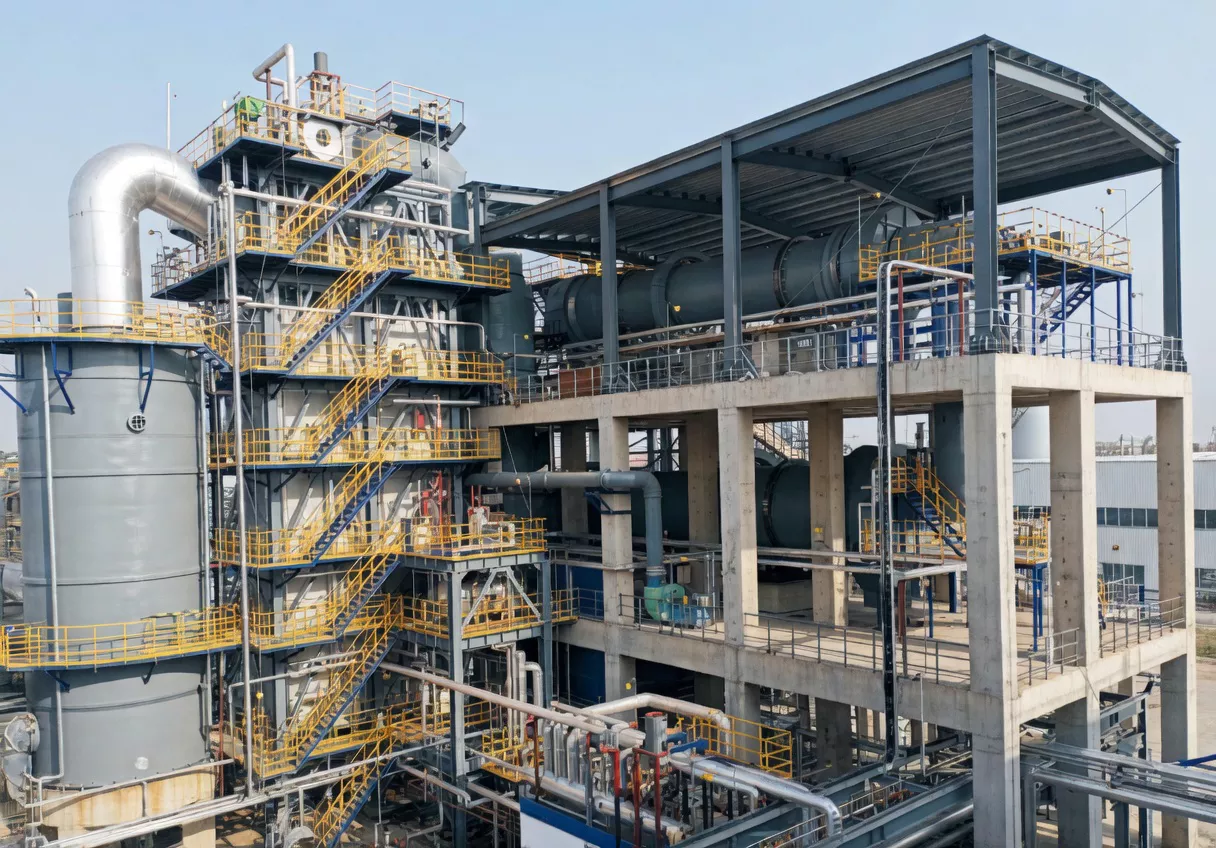
The Ever-power rotary kiln incinerator system, engineered for broad applicability and simple operation.
As a widely used specialized incineration system, the core strength of our rotary kiln design lies in its unparalleled ability to handle waste in multiple physical states simultaneously—solid, semi-solid, and liquid. For facilities seeking a versatile waste incinerator that doesn’t falter when solid sludge or industrial residues are introduced into the feed, this system offers a highly reliable and efficient solution, often serving as a dramatic operational upgrade and a superior replacement of [European Brand] systems.
Why Choose the Ever-power Rotary Kiln System?
Multi-State Waste Processing
Unlike static liquid injection systems, our rotary kiln acts as a universal waste liquid incinerator that simultaneously accepts drums of solid waste, bulk sludge, and pumped waste liquids. The slow rotation provides excellent mechanical agitation, ensuring even heat distribution and complete carbon burnout across all waste states.
Exceptional Destruction Efficiency
Achieve a Destruction and Removal Efficiency (DRE) of >99.99%. The combination of a primary rotary combustion chamber and a high-temperature secondary combustion chamber ensures that even the most resilient halogenated compounds and toxic organic liquids are completely mineralised.
Resource Recovery Focus
Disposal is only half the equation. Our systems are deeply integrated with waste heat boilers, allowing your organisation to recover massive amounts of thermal energy from the incineration of high-calorific waste liquids and solids, converting it into process steam for your plant.
Simple Operation & Management
Equipped with advanced PLC control architectures, the Ever-power system automates temperature regulation, kiln rotation speed, and draft control. This ensures continuous, stable operation with minimal manual intervention, drastically reducing your operational risk profile.
Comprehensive 10-Step Process Flow Architecture
To guarantee zero environmental harm and strictly adhere to Australian EPA regulations, the Ever-power waste liquid incinerator and rotary kiln platform utilise a highly sophisticated, multi-stage processing train. Below is the detailed visual representation and breakdown of our proprietary 10-step sequence, from initial feeding to final stack emission.
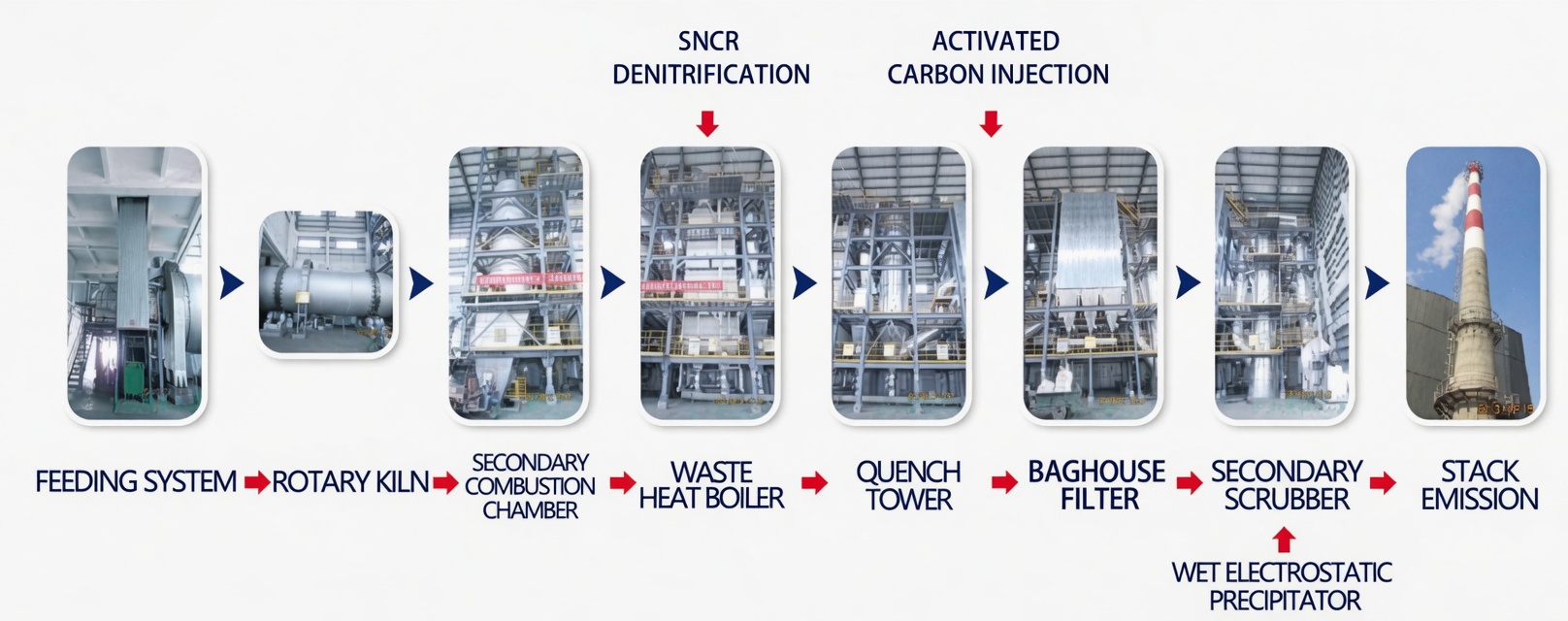
Detailed visual map of the entire thermal oxidation and pollution control sequence.
Advanced Feeding System
A dual-entry feeding mechanism allows for the continuous pumping of atomised waste liquids while simultaneously using hydraulic pushers or grab cranes to introduce solid industrial residues and semi-solid sludges into the kiln.
Rotary Kiln (Primary Combustion)
The heart of the system. The slow-turning, refractory-lined cylinder operates between 850°C and 1000°C. The rotation constantly turns the waste, exposing new surface areas to oxygen and heat, evaporating moisture from sludges, and gasifying organic components.
Secondary Combustion Chamber (SCC)
Unburned volatile gases and liquid aerosols from the primary kiln enter the SCC. Here, temperatures are elevated to 1100°C – 1200°C with a strict retention time of > 2.0 seconds, ensuring the absolute destruction of dioxins, furans, and complex VOCs.
Waste Heat Boiler
The intense thermal energy of the 1100°C flue gas is passed through a high-efficiency waste heat boiler, converting water into valuable process steam or hot water, significantly offsetting the plant’s broader energy consumption.
Quench Tower
To strictly prevent the de-novo synthesis (re-formation) of dioxins, the exhaust gas is rapidly cooled from ~500°C down to below 200°C in less than one second using high-pressure atomised water sprays.
SNCR Denitrification & Activated Carbon Injection
Selective Non-Catalytic Reduction (SNCR) reduces NOx emissions. Simultaneously, activated carbon and dry alkaline powders are injected into the gas stream to actively adsorb heavy metals and neutralise acidic precursors.
Baghouse Filter
A high-temperature, PTFE-coated pulse-jet baghouse filter physically captures all particulate matter (fly ash), spent activated carbon, and neutralised salts, ensuring pristine clarity in the exhaust.
Secondary Scrubber
A packed-bed wet scrubber uses alkaline solutions (like NaOH) to rigorously wash the gas, chemically absorbing any remaining acid gases such as HCl, SO2, and HF, common in industrial chemical waste incineration.
Wet Electrostatic Precipitator (WESP)
As a final, ultimate polishing step, the WESP uses high-voltage electrical fields to capture ultra-fine sub-micron particles, heavy metal aerosols, and acid mists, guaranteeing visual transparency of the exhaust plume.
Stack Emission & CEMS
The clean, purified gas is safely drawn by an induced draft fan and released through the stack. A Continuous Emissions Monitoring System (CEMS) actively tracks parameters in real-time to guarantee documented compliance.
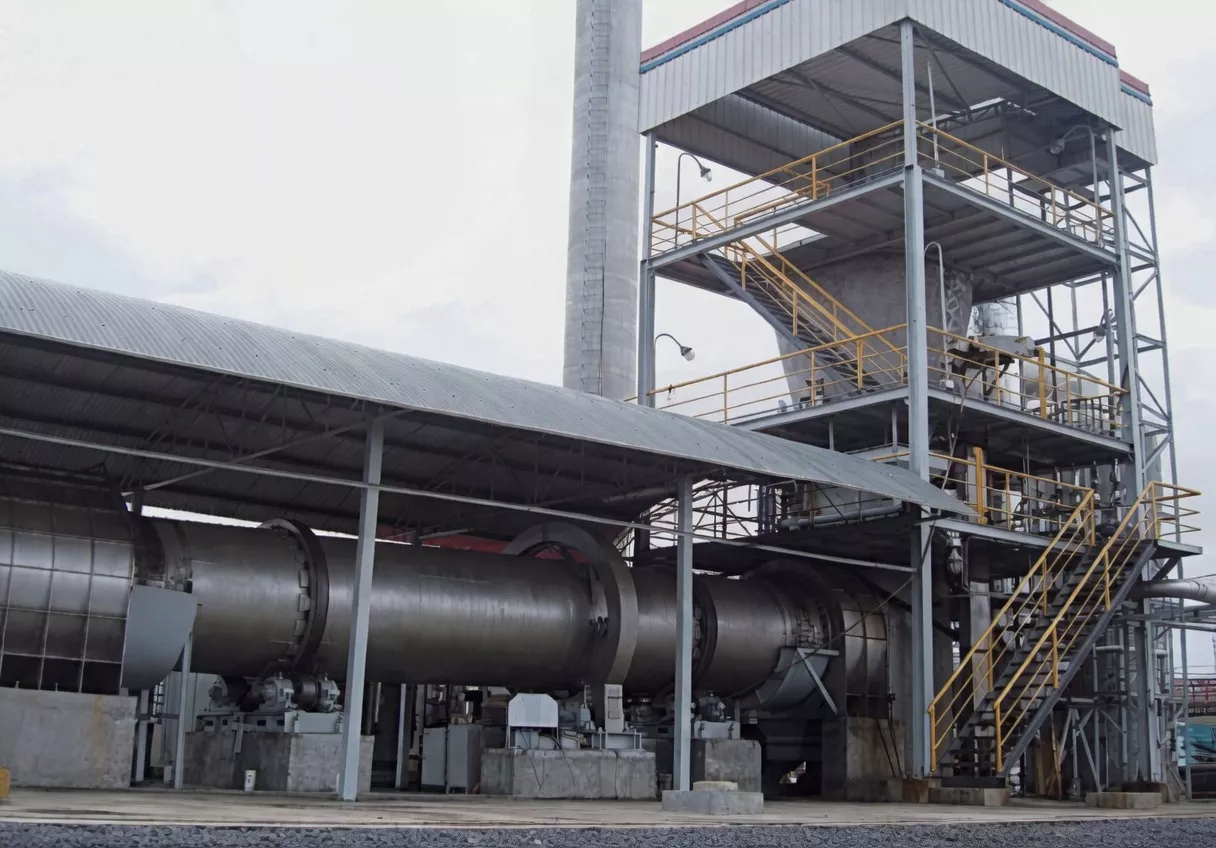
Robust kiln construction with high-grade refractory lining.
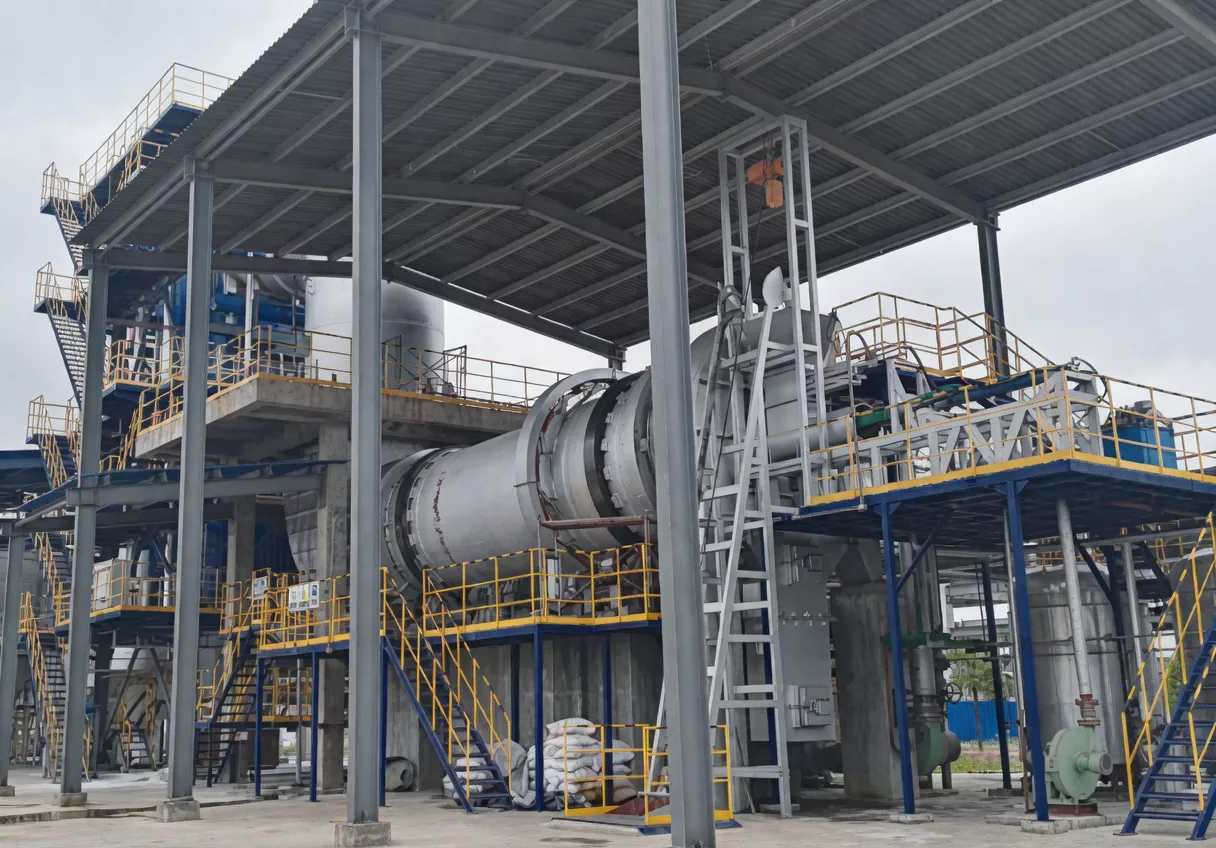
Comprehensive pollution control train ensuring EPA compliance.
Technical Specifications & Capacities
Ever-power engineers solid waste incinerator systems tailored exactly to your facility’s waste characterisation. The below table outlines our standard operational parameters for large-scale industrial rotary kilns.
| Parameter | Standard Specification Range | Engineering Notes |
|---|---|---|
| Processing Capacity | 10 Tons/Day to 150+ Tons/Day | Highly scalable. Custom designed based on calorific value and moisture content. |
| Kiln Operating Temperature | 800 °C – 1000 °C | Ensures complete volatilisation of solids and primary combustion. |
| SCC Operating Temperature | 1100 °C – 1200 °C | Guarantees thermal destruction of hazardous VOCs and halogens. |
| Gas Residence Time (SCC) | > 2.0 Seconds | Strict legal requirement to prevent dioxin/furan recombination. |
| Kiln Rotation Speed | 0.2 – 2.0 rpm (Variable) | Adjusted automatically via VFD based on solid waste retention needs. |
| Combustion Efficiency (CE) | ≥ 99.9% | Results in an inert, sterile bottom ash safe for landfill or structural reuse. |
Why Choose Ever-power?
Ever-power is not just an equipment assembler; we are comprehensive environmental engineering partners. For more information on our corporate history, visit our Company Page, or explore our wider range of thermal oxidation technologies on our Home Page.
- ★
Two Decades of Rigour: Over 20 years dedicated to the continuous optimisation of industrial incineration systems, mastering the nuances of complex chemical waste. - ★
Turnkey Execution: From the initial waste characterisation and 3D CFD modelling to manufacturing, full onsite installation, and operator training programmes. - ★
Superior Refractory Technology: We utilise proprietary high-alumina and silicon carbide refractory linings designed specifically to withstand severe chemical attacks from molten salts and acid gases. - ★
Strict EPA Compliance Guaranteed: We design our flue gas treatment trains to exceed the most stringent requirements set by global bodies and all Australian state-level environmental protection authorities.
Australian Success Stories: Local Compliance & Reliability
Project: Centralised Hazardous Waste Processing Hub (Victoria)
The Challenge: A major commercial waste disposal facility in Victoria needed a highly versatile system capable of processing incoming waste streams that changed daily. They received everything from bulk liquid solvents and highly viscous paint sludges to solid contaminated PPE and medical waste.
The Solution: Ever-power engineered a 60 Ton/Day rotary kiln waste liquid incinerator equipped with dual liquid injection lances and an automated ram feeder for solid drums. The system included our full 10-step flue gas treatment train to manage the highly variable chlorine and sulphur loads.
The Impact: The facility successfully expanded its waste acceptance criteria, increasing revenue by 35%. The system proved to be a highly resilient replacement of [US Brand] kilns that had previously suffered from severe refractory spalling. Stack emissions consistently test 40% below the strict limits set by EPA Victoria.
Project: Agrochemical Plant Waste Management (Queensland)
The Challenge: An agrochemical manufacturer in QLD was generating large volumes of toxic wastewater containing high levels of organic phosphates and recalcitrant salts, costing millions annually in third-party liquid disposal fees.
The Solution: Installation of an Ever-power waste liquid incinerator (rotary kiln type) with a specialised rapid-quench system and a robust wet scrubber specifically tuned for phosphorus pentoxide (P2O5) and hydrogen chloride (HCl) recovery.
The Impact: The plant achieved a zero-liquid-discharge (ZLD) status for their hazardous streams. The integrated waste heat boiler now provides enough steam to power their entire distillation column array, reducing total site energy costs by 18%.
Frequently Asked Questions (FAQ)
1. Can this rotary kiln act purely as a waste liquid incinerator?
2. What prevents the formation of Dioxins and Furans in your system?
3. How does the system handle waste with high moisture or sludge?
4. Is the bottom ash safe for normal disposal?
5. Can Ever-power custom-design the flue gas treatment system?
6. How long does the refractory lining typically last?
Ready to Future-Proof Your Waste Management Strategy?
Do not let escalating off-site disposal fees and tightening EPA regulations threaten your plant’s profitability. Upgrade to the ultimate multi-state waste liquid incinerator and rotary kiln platform with Ever-power. We deliver robust engineering, guaranteed compliance, and lucrative energy recovery.
Contact us today. Our thermal oxidation engineers will review your waste characterisation data and provide a detailed 3D process flow model tailored to your facility.