1. Summary
In the arid landscapes of Australia, where water scarcity meets industrial legacy, groundwater remediation has become a critical environmental imperative. Contaminated aquifers from mining, agriculture, and old manufacturing sites demand innovative solutions to extract and treat volatile organic compounds (VOCs). Enter Regenerative Thermal Oxidizers (RTOs)—robust systems that destroy harmful pollutants with high efficiency. At Ever-Power (Australia) Co., Ltd., we’re at the forefront of deploying RTOs tailored for groundwater extraction and air stripping applications. This blog explores how these technologies work, their benefits in the Australian context, and emerging trends shaping the future.
Whether you’re a site manager in Perth dealing with benzene plumes or an environmental consultant in Sydney assessing trichloroethylene (TCE) contamination, RTOs offer a reliable path to compliance and sustainability. Let’s dive into the details.
2. Understanding Groundwater Extraction and Air Stripping in Remediation
Groundwater extraction, often paired with air stripping, is a cornerstone of site remediation in Australia. The process involves pumping contaminated water to the surface, where air stripping towers force VOCs like benzene, toluene, ethylbenzene, and xylenes (BTEX) or chlorinated solvents into the gas phase for treatment. This off-gas stream is laden with low to medium concentrations of VOCs, typically ranging from 100-500 ppm, alongside high humidity and variable flow rates due to fluctuating groundwater levels.
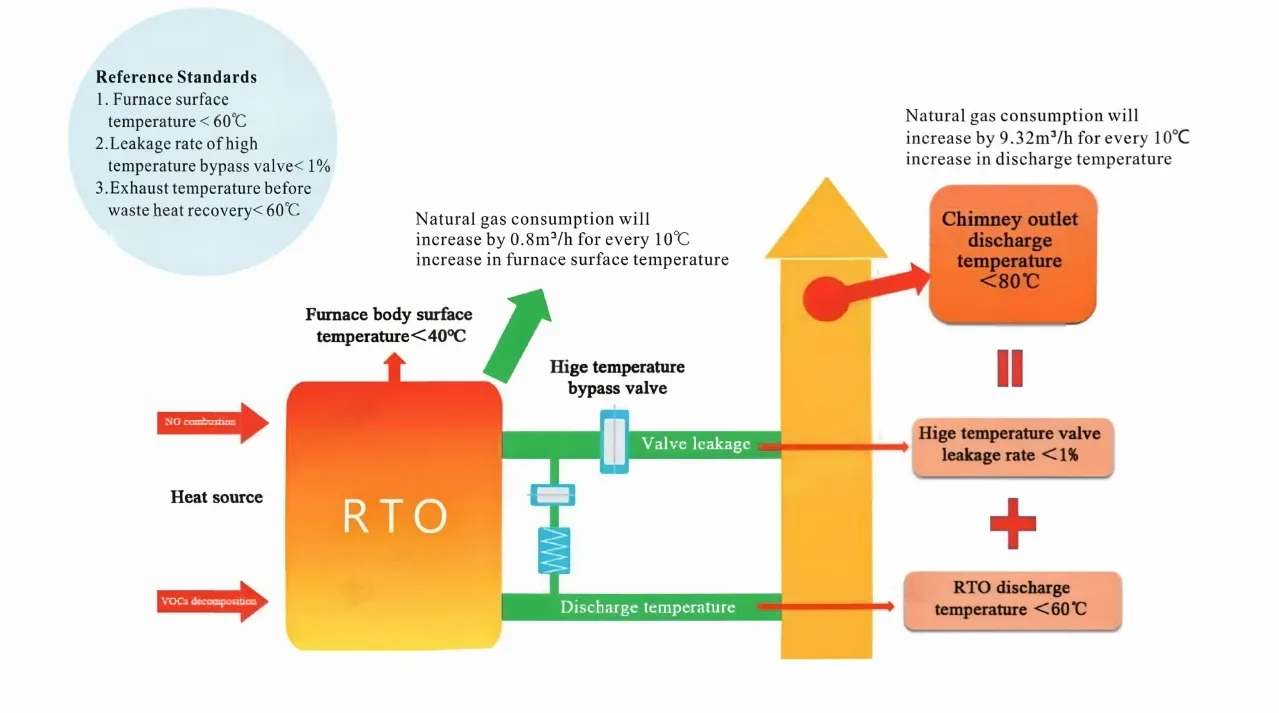
RTOs excel here by thermally oxidizing these VOCs at temperatures around 760-820°C, achieving destruction removal efficiencies (DRE) of over 99%. Unlike simpler methods like activated carbon adsorption, which can saturate quickly in humid conditions, RTOs regenerate heat through ceramic media beds, recovering up to 95% of thermal energy. This makes them ideal for Australia’s remote sites, where energy costs are high and grid access is limited.
In practice, air stripping generates large volumes of exhaust—often 5,000-50,000 m³/h per well cluster. Our classic rotary valve RTO handles these flows with minimal pressure drop (under 200 Pa), ensuring system stability even in variable Australian weather, from Queensland’s humidity to the Outback’s dust storms.
3. Key Advantages of RTOs in Australian Groundwater Remediation
Australia’s unique environmental challenges—vast distances, extreme climates, and stringent regulations—demand resilient technology. RTOs from Ever-Power stand out by offering modular designs that integrate seamlessly with extraction pumps and stripping towers. For instance, in coastal areas like New South Wales, where saltwater intrusion adds corrosive halides to the mix, our systems use 316L stainless steel construction to prevent pitting.
Efficiency is another boon: With heat recovery rates of 95%, operational costs drop by 80% compared to direct-fired incinerators. This is crucial in a country where natural gas prices fluctuate, helping operators meet budgets while complying with state-specific guidelines.
Moreover, RTOs minimize secondary pollutants. By controlling residence time (0.5-2 seconds) and turbulence in the combustion chamber, they ensure complete oxidation without forming dioxins or furans— a common risk in incomplete combustion scenarios.
4. Global and Local Regulations Driving RTO Adoption in Groundwater and Air Stripping
Regulatory frameworks worldwide emphasize VOC control in remediation, pushing for technologies like RTOs. In Australia, the National Environment Protection (Ambient Air Quality) Measure (NEPM) sets strict limits on VOC emissions, with states like Victoria’s Environment Protection Authority (EPA) requiring best practice techniques under the Environment Protection Act 2017. For groundwater sites, the Australian and New Zealand Guidelines for Fresh and Marine Water Quality (ANZG) mandate treatment to below 1 µg/L for BTEX, often necessitating RTOs for off-gas. Non-compliance can lead to fines up to AUD 1 million, as seen in recent Sydney cases.
Neighboring countries share similar rigor: New Zealand’s Resource Management Act 1991 enforces air discharge consents with VOC limits akin to Australia’s, favoring RTOs for efficiency. Indonesia’s Government Regulation No. 22/2021 on Environmental Protection caps VOC emissions at 50 mg/Nm³ for industrial exhaust, driving RTO use in Java’s contaminated aquifers. Papua New Guinea, with its mining-heavy economy, aligns with WHO air quality guidelines, requiring 99% DRE for stripping off-gas.
Globally, top remediation markets echo this: The United States’ Clean Air Act (CAA) under EPA mandates Maximum Achievable Control Technology (MACT) for hazardous air pollutants (HAPs) in groundwater cleanups, with RTOs as a BAT option. In Canada, Ontario’s Environmental Protection Act sets VOC limits below 10 ppm, similar to Australia’s. Europe’s Industrial Emissions Directive (IED) 2010/75/EU requires 99.5% VOC reduction in Germany and France. South Korea’s Clean Air Conservation Act limits emissions to 20 mg/Nm³, while Japan’s Air Pollution Control Act enforces site-specific RTO standards. China’s Volatile Organic Compound Pollution Prevention and Control Law (2021) caps at 60 mg/Nm³, influencing neighbors like Vietnam under Decree 40/2019/ND-CP. Brazil’s CONAMA Resolution 430/2011 and India’s Air (Prevention and Control of Pollution) Act also prioritize thermal oxidation for air stripping.
These laws underscore RTOs’ role in achieving ultra-low emissions, with Ever-Power’s systems certified to meet them all. For more on our compliance expertise, visit our blog for case studies.
5. Trend Analysis: The Evolving Role of RTOs in Remediation
The remediation sector is shifting toward smarter, greener technologies, and RTOs are evolving accordingly. A key trend is integration with carbon capture and storage (CCS): Modern RTOs can couple with amine scrubbers to capture 90% of CO₂ from exhaust, reducing carbon footprints by 50-70 tons per year for a mid-sized site. In Australia, this aligns with the Safeguard Mechanism, incentivizing low-emission tech.
Another innovation is hydrogen-fueled burners in RTOs, slashing NOx emissions by 80% compared to natural gas. With Australia’s Hydrogen Strategy aiming for green H₂ production, this could cut operational emissions to near-zero by 2030.
Pairing RTOs with zeolite wheel concentrators boosts efficiency for low-VOC streams, concentrating pollutants 10-20 times before oxidation, saving 30% on fuel. Sustainable practices like heat recovery for on-site power generation further reduce footprints—our calculations show a 20,000 m³/h RTO can offset 15% of a site’s energy needs, equating to 200 tons CO₂e avoided annually.
Finally, AI-driven predictive maintenance is emerging, using sensors to forecast ceramic bed fouling, extending uptime by 20%. These trends position RTOs not just as compliance tools but as sustainability enablers in Australia’s push for net-zero by 2050.
6. Our Factory Capabilities: Customized RTO Solutions for Australian Challenges
At Ever-Power, we don’t just sell equipment—we engineer solutions. Ever-Power specializes in bespoke RTO solutions for the unique challenges of Australian asphalt producers—from high-silica dust in outback quarries to coastal humidity in Queensland plants. Our engineering team conducts on-site exhaust profiling to size pre-filters, select corrosion-resistant alloys, and optimize heat recovery based on your utility needs. With service hubs in Sydney and Perth, we offer rapid spare parts delivery, operator training in English, and 24/7 remote diagnostics. Unlike generic suppliers, we deliver full turnkey projects including civil works coordination, commissioning, and compliance documentation aligned with NSW EPA or VIC DELWP requirements. Every system is factory-tested before shipment to ensure seamless startup.
This customization extends to groundwater applications, where we adapt for variable flows and corrosive contaminants, ensuring reliability in diverse terrains from the Pilbara to Tasmania. Learn more about our company at https://rtooxidizer.com/company/.
7. Customer Success Stories
7.1. Groundwater Remediation in Sydney, Australia
Client: Environmental Consultant in Sydney
Challenge: The client was tasked with remediating an old industrial site with high concentrations of benzene in the groundwater. The project needed to meet strict New South Wales EPA VOC regulations for air emissions from the soil vapor extraction (SVE) system.
Solution: Ever-Power designed a custom RTO system to treat the off-gas from the extraction wells. The RTO’s regenerative design handled fluctuating VOC concentrations, and its high heat recovery rate made it perfect for the site’s remote location.
Outcome: The system exceeded the 99% VOC destruction efficiency requirement, enabling the client to meet compliance easily and cut energy costs significantly.
7.2. Groundwater Extraction in Perth, Australia
Client: Mining Company in Perth
Challenge: The site was dealing with complex contamination from petroleum hydrocarbons, and the company needed an effective solution for removing VOCs like toluene and xylene from extracted groundwater.
Solution: Ever-Power installed an RTO system with explosion-proof valves and automatic cleaning features to handle the challenging conditions of high-contaminant concentrations and seasonal variations in flow rates.
Outcome: The system achieved 99.5% VOC removal, surpassing the Department of Water and Environmental Regulation’s standards. The system also helped reduce fuel costs by up to 30%.
7.3. Soil Vapor Extraction in New Zealand
Client: Agricultural Remediation Company in New Zealand
Challenge: The client was working on a site with high BTEX levels due to previous farming operations, and needed to comply with the Resource Management Act. VOC emissions had to be reduced to less than 5 ppm, requiring an advanced treatment system.
Solution: Ever-Power’s RTO system was tailored to treat the extracted gases, with a zeolite wheel concentrator added to increase efficiency. This allowed for better VOC capture and energy savings.
Outcome: The system achieved over 99% VOC destruction and the client was able to meet all environmental regulations. The energy recovery aspect helped the company reduce its costs.
7.4. Groundwater Remediation in Jakarta, Indonesia
Client: Industrial Site Remediation Company in Jakarta
Challenge: The client faced challenges remediating groundwater contamination from chlorinated solvents, particularly trichloroethylene (TCE), which had high volatility. Indonesian environmental regulations required stringent VOC removal.
Solution: Ever-Power supplied a rotary valve RTO capable of handling the humid and tropical conditions of Jakarta. The system was designed to handle high TCE concentrations with consistent efficiency, even during fluctuating flow rates.
Outcome: The RTO achieved 99.5% VOC destruction, and the client met local environmental standards, avoiding penalties. The system also reduced energy consumption by 25%.
7.5. Air Stripping in California, USA
Client: Cleanup Contractor in California
Challenge: The client needed to remediate groundwater contaminated by petroleum hydrocarbons at a Superfund site. California’s South Coast AQMD required the VOCs to be reduced to under 10 mg/m³.
Solution: Ever-Power’s RTO system was customized to handle large air volumes with low concentrations of VOCs. The system included a hybrid burner for using hydrogen as fuel, aligning with California’s clean energy goals.
Outcome: The system exceeded the 99% VOC destruction efficiency requirement and helped the client achieve compliance while reducing emissions. The hybrid burner also lowered NOx emissions by 75%.
7.6. Groundwater Extraction in Seoul, South Korea
Client: Remediation Company in Seoul
Challenge: The client was working on a site contaminated with chlorinated compounds, and the air stripping process generated VOCs that needed to be treated to meet South Korea’s Clean Air Conservation Act.
Solution: Ever-Power supplied a custom RTO equipped with advanced monitoring systems to ensure VOCs were fully treated, even during periods of high fluctuations in extraction rates.
Outcome: The system successfully removed over 98% of VOCs, ensuring compliance with South Korea’s stringent regulations. The client also reported a 20% reduction in energy costs due to the system’s high heat recovery.
7.7. Soil Vapor Extraction in São Paulo, Brazil
Client: Environmental Consulting Firm in São Paulo
Challenge: The client was working to remediate a contaminated site near an urban area. The Brazilian environmental regulations required VOC emissions to be reduced to under 150 mg/m³ for compliance.
Solution: Ever-Power provided a robust RTO system designed for high-efficiency VOC treatment, including enhanced filtration for the urban air quality concerns and the high humidity typical of São Paulo.
Outcome: The RTO achieved 99% VOC destruction, well within regulatory limits, and significantly improved the site’s overall environmental performance. The system’s modular design made it easy to scale as remediation needs grew.
8. Unique Insights: Pushing Boundaries in RTO Applications
Beyond standard uses, consider RTOs in hybrid setups with solar-assisted pre-heating, reducing fuel use by 25% in sunny Australian regions—a novel approach for remote sites. Another idea: Integrating biofiltration upstream for natural odor control, blending biotech with thermal tech for 99.9% HAP removal. On sustainability, our RTOs can incorporate waste heat to power groundwater pumps, cutting overall site emissions by 40%—a game-changer for carbon accounting under Australia’s ERF. Finally, exploring modular RTOs on skids for mobile remediation, allowing quick deployment to bushfire-impacted aquifers, adds flexibility unseen in traditional systems.
9. Related Solutions
10. Frequently Asked Questions
Q1. What is the cost of an RTO system for groundwater extraction in Sydney, Australia?
A1. Costs range from AUD 500,000 to 2 million depending on flow rates and custom features; contact us at #contacts for a tailored quote based on your site’s VOC profile.
Q2. How does air stripping with RTO treatment work for VOC removal in Queensland mining sites?
A2. It pumps contaminated water, strips VOCs into air, then oxidizes them in the RTO at 99% efficiency, ensuring compliance with QLD DES standards.
Q3. Which RTO supplier in Australia offers the best price for air stripping off-gas control?
A3. Ever-Power provides competitive pricing with full turnkey services; request a free site assessment via #contacts to compare quotes.
Q4. Where can I find RTO installation services for groundwater remediation in Perth, Western Australia?
A4. Our Perth hub handles installations with local compliance; visit https://rtooxidizer.com for details or email us for scheduling.
Q5. When should I upgrade my air stripping system with an RTO in New Zealand’s contaminated aquifers?
A5. Upgrade when VOC levels exceed RMA consents; our systems integrate seamlessly, offering quick ROI through energy recovery.
Q6. What are the benefits of RTO for BTEX removal in Indonesian oil field groundwater extraction?
A6. High DRE and low maintenance suit humid conditions; we adapt for PP 22/2021 compliance, reducing emissions below 50 mg/Nm³.
Q7. How much does a custom RTO cost for air stripping in US Superfund sites like California?
A7. Starting at USD 400,000, customized for CAA MACT; our designs include zeolite integration for efficiency—get a quote at #contacts.
Q8. Which RTO model is best for VOC treatment in South Korean groundwater remediation projects?
A8. Our rotary valve RTO excels with 95% heat recovery, meeting Clean Air Act limits; ideal for high-humidity sites.
Q9. Where to buy RTO equipment for air stripping in Brazilian Amazon aquifer cleanups?
A9. Ever-Power exports compliant systems via partners; aligned with CONAMA 430, with fast shipping— inquire at #contacts.
Q10. What maintenance is required for RTO in groundwater extraction under Indian air pollution laws?
A10. Annual ceramic checks and valve servicing ensure compliance with CPCB standards; our 24/7 diagnostics minimize downtime.
Editor: PXY