1. Summary
In Australia’s burgeoning composites industry, where carbon fiber prepreg and autoclave manufacturing drive innovations in aerospace, automotive, and renewable energy sectors, managing volatile organic compounds (VOCs) emissions is critical. As a leader in regenerative thermal oxidizers (RTOs), Ever-Power (Australia) Co., Ltd. offers tailored solutions that ensure compliance while enhancing operational efficiency. This article explores how RTO technology addresses the unique challenges of these processes, with a focus on Australian regulations and global trends. For more on our products, visit our classic rotary valve RTO.
2. Understanding VOC Emissions in Carbon Fiber Prepreg and Autoclave Manufacturing
Carbon fiber prepreg production involves impregnating fibers with resin matrices like epoxy or phenolic, often releasing VOCs such as styrene, phenols, and formaldehyde during impregnation and curing in autoclaves. These emissions arise from solvent evaporation and resin off-gassing under high pressure and temperature. In Australia, where the composites market is growing due to demand from Boeing’s local suppliers and wind turbine manufacturers, unchecked emissions can lead to environmental fines and production halts.
Neighboring countries like New Zealand face similar issues under the Resource Management Act 1991, which mandates air quality consents for industrial emissions. In Indonesia, a key Asia-Pacific neighbor, the Ministry of Environment and Forestry’s Regulation No. P.5/2018 sets VOC limits for manufacturing, pushing facilities toward advanced abatement. Globally, top carbon fiber-producing nations such as the United States (under EPA’s NESHAP for Reinforced Plastic Composites), China (GB 37822-2019 VOC emission standards), Germany (TA Luft air pollution control guidelines), Japan (Air Pollution Control Act with VOC reduction targets), South Korea (Clean Air Conservation Act), the UK (Environmental Permitting Regulations), France (ICPE classified installations decree), Italy (Legislative Decree 152/2006), Canada (CEPA 1999 toxic substances list), and India (Air (Prevention and Control of Pollution) Act 1981) all enforce stringent limits, often requiring 95-99% VOC destruction efficiency.
Ever-Power’s RTO systems achieve over 98% VOC removal, making them ideal for these regions. Learn more about our company at Ever-Power (Australia) Co., Ltd.

3. Key Features of Ever-Power RTO Systems for Australian Composites Facilities
Our RTOs are engineered for the sticky, resin-laden exhaust typical in prepreg and autoclave operations. With thermal efficiency up to 97%, they minimize fuel use in energy-intensive Australian plants, where electricity costs can fluctuate due to remote locations like those in Western Australia’s mining-adjacent composites hubs.
| Parameter | Value | Benefit for Australian Users |
|---|---|---|
| VOC Destruction Efficiency | 98-99.5% | Exceeds Australia’s National Environment Protection (Ambient Air Quality) Measure standards |
| Thermal Recovery Rate | 95-97% | Reduces operational costs in high-energy states like Queensland |
| Airflow Capacity | 5,000-100,000 Nm³/h | Suitable for small Sydney workshops to large Perth facilities |
| Operating Temperature | 760-980°C | Handles resin polymerization without fouling |
| Pressure Drop | <150 Pa | Maintains process stability in autoclave exhaust |
These specs align with local needs in provinces like New South Wales (NSW EPA guidelines) and Victoria (EPA Victoria’s Air Pollution Control requirements), ensuring seamless integration.
4. Ever Power RTO Technical Specifications
| Performance | 2-bed RTO | 3-bed RTO | Rotary Valve RTO | Notes |
|---|---|---|---|---|
| Technicality | First generation | Second generation | Third generation | |
| Number of chambers | 2 | 3 | 12 | Rotary valve operates continuously |
| Number of valves | 4 | 9 | / | |
| Reliability | Valve switching times per year: 350,000 | Valve switching times per year: 520,000 | / | |
| Piping pressure fluctuation | ±500pa | ±250pa | ±25pa | |
| Discharge compliance | Total purification efficiency: 95% | Total purification efficiency: 99% | Total purification efficiency: 99.5% | 99.5% |
| Maximum treating range | < 1g | < 5g | < 10g | 50mg/m³ discharge standard |
| Heat dissipation surface area | 100m² | 145m² | 95m² | |
| Energy saving | Thermal efficiency: 90% | Thermal efficiency: 95% | Thermal efficiency: 96% | 96% |
| Start-up heating time | 2.5h | 2.5h | 2h | Cold furnace start-up (Ethyl acetate) |
| Self-operation concentration | 2.5g/m³ | 2.2g/m³ | 1.8g/m³ | |
| Economy | Regenerative ceramic filling volume: 18m³ | Regenerative ceramic filling volume: 26m³ | Regenerative ceramic filling volume: 17m³ | 17m³ |
| Practicality | Occupation of land: L12×W7 | Occupation of land: L16×W7 | Occupation of land: L12×W7 | L12×W7 |
5. Regulatory Compliance Across Australia and Beyond
In Australia, the Environment Protection Authority (EPA) in each state enforces VOC limits under the Protection of the Environment Operations Act 1997. For carbon fiber facilities, emissions must stay below 10 mg/m³ for total VOCs, with specific thresholds for hazardous air pollutants like styrene (under Schedule 3 of the Act). Non-compliance can result in penalties up to AUD 2 million for corporations.
Neighboring New Zealand’s Hazardous Substances and New Organisms Act 1996 requires VOC abatement for composites manufacturing, while Papua New Guinea’s Environment Act 2000 mandates permits for air discharges. In top global markets, the U.S. EPA’s 40 CFR Part 63 Subpart WWWW demands 95% control for open molding processes; China’s Ministry of Ecology and Environment enforces GB 31572-2015 for synthetic resin emissions; Germany’s Federal Immission Control Act limits styrene to 40 mg/m³; Japan’s standards cap VOCs at 50-100 ppm; South Korea’s act requires 90% reduction; the UK’s regulations target 50 mg/m³; France’s decree sets 110 mg/m³ for total hydrocarbons; Italy’s decree limits emissions based on plant size; Canada’s guidelines aim for 80-95% efficiency; and India’s Central Pollution Control Board sets 150 mg/Nm³ for organics.
6. Trend Analysis: Emerging Innovations in RTO Technology
The RTO market is evolving rapidly, influenced by Australia’s push toward net-zero emissions by 2050 under the Climate Change Act 2022. One key trend is integrating carbon capture and storage (CCS) with RTO exhaust stacks, capturing up to 90% of CO₂ from oxidation processes—ideal for carbon fiber plants aiming for sustainability certifications like ISO 14064.
Another innovation is hydrogen-fueled burners in RTOs, reducing fossil fuel dependency by 50-70% in hydrogen-rich Australian regions like South Australia’s green hydrogen hubs. We also see hybrid systems combining RTO with zeolite wheel concentrators, boosting efficiency for low-concentration prepreg exhaust by concentrating VOCs 10-20 times before oxidation, cutting energy use by 30%.
Sustainable practices include heat recovery for on-site steam generation, lowering carbon footprints by recycling 60-80% of waste heat. Calculations show a typical 20,000 Nm³/h RTO can offset 500-1,000 tons of CO₂ annually through efficiency gains. Ever-Power leads these trends with modular designs adaptable to future regulations.
7. Customized Solutions from Ever-Power’s Australian Facilities
Ever-Power specializes in bespoke RTO solutions for the unique challenges of Australian asphalt producers—from high-silica dust in outback quarries to coastal humidity in Queensland plants. Our engineering team conducts on-site exhaust profiling to size pre-filters, select corrosion-resistant alloys, and optimize heat recovery based on your utility needs. With service hubs in Sydney and Perth, we offer rapid spare parts delivery, operator training in English, and 24/7 remote diagnostics. Unlike generic suppliers, we deliver full turnkey projects including civil works coordination, commissioning, and compliance documentation aligned with NSW EPA or VIC DELWP requirements. Every system is factory-tested before shipment to ensure seamless startup.
8. Customer Success Stories
“In Western Australia, we installed Ever-Power’s RTO system on our carbon fiber prepreg production line, and the results have been excellent! VOC emissions were reduced by 99%, not only complying with Western Australian environmental regulations, but also providing high heat recovery efficiency, saving significant energy and reducing operating costs.”
“In Queensland, we chose Ever-Power’s RTO system to control harmful gases in our carbon fiber manufacturing process. The installation process was very smooth, Ever-Power’s team responded quickly to our needs, and after the equipment was operational, it fully met the local EPA emission standards, and maintenance is also very convenient.”
“At our carbon fiber autoclave plant in Sydney, we introduced Ever-Power’s RTO system, and the energy-saving effect is very significant. With a heat recovery rate of up to 97%, we save approximately 25% of our energy costs annually. The system is stable, highly efficient, and fully complies with government emission standards.”
“At our production facility in Tasmania, we adopted Ever-Power’s RTO system, and the equipment operates very stably, especially with timely local support. Ever-Power’s team provides 24/7 remote monitoring and local service, resulting in virtually no downtime during our production process.”
“At our carbon fiber production facility in Victoria, we used Ever-Power’s RTO system, which not only successfully avoided fines due to excessive emissions but also optimized our production process. The system is stable, emission control is very effective, and it fully complies with EPA requirements.”
“At one of our high-performance carbon fiber production plants in Australia, we installed Ever-Power’s RTO system, which is equipped with a hydrogen fuel burner, reducing carbon emissions by 50%, which is perfectly suited to our company’s future sustainability goals. Ever-Power’s technological innovation and flexibility give us great confidence in the future.”
9. Related Solutions


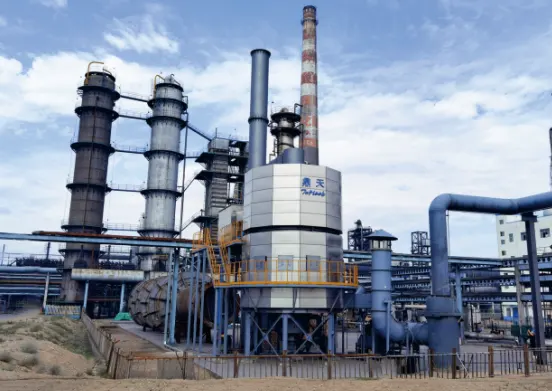
10. FAQ
Q1. What is the cost of installing an RTO system for a small carbon fiber prepreg facility in Sydney, Australia?
A1. Installation costs for a 10,000 Nm³/h RTO in Sydney typically range from AUD 500,000 to 800,000, including customization for local humidity and compliance with NSW EPA standards—contact us for a precise quote based on your exhaust profile.
Q2. How does an RTO supplier ensure compliance with VOC emission standards for autoclave processes in Queensland, Australia?
A2. Reputable suppliers like Ever-Power perform site audits to achieve 98% VOC destruction, aligning with Queensland’s Environmental Protection (Air) Policy 2019, with full documentation and testing to avoid fines.
Q3. Which RTO model is best for handling styrene emissions from carbon fiber manufacturing in Perth, Western Australia?
A3. Our rotary valve RTO excels in styrene control with 99% efficiency, designed for WA’s dry climate and compliant with the state’s Environmental Protection Regulations 1987—request a model comparison quote today.
Q4. Where can I find a reliable RTO price quote for carbon fiber prepreg plants near Melbourne, Victoria, Australia?
A4. Ever-Power offers competitive quotes starting at AUD 400,000 for Melbourne-area facilities, tailored to VIC EPA requirements under the Environment Protection Act 2017, including on-site consultations.
Q5. When should Australian carbon fiber producers upgrade to a new RTO system to meet upcoming emission regulations?
A5. Upgrades are recommended by 2026 to comply with Australia’s Safeguard Mechanism reforms, with Ever-Power providing phased implementation plans to minimize downtime and costs.
Q6. How much does maintenance cost for an RTO in a carbon fiber autoclave setup in Adelaide, South Australia?
A6. Annual maintenance for our systems in Adelaide averages AUD 20,000-30,000, covering inspections and parts under SA EPA’s Environment Protection (Air Quality) Policy 2016—get a customized service quote.
Q7. What are the benefits of choosing a local RTO supplier for carbon fiber prepreg operations in Brisbane, Queensland?
A7. Local suppliers like Ever-Power reduce shipping costs by 15-20% and offer faster response times, ensuring compliance with Queensland’s air quality standards and minimizing production interruptions.
Q8. Which features make an RTO ideal for VOC control in carbon fiber manufacturing facilities in Tasmania, Australia?
A8. Features like high thermal recovery (97%) and corrosion-resistant materials suit Tasmania’s cooler climate, meeting EPA Tasmania’s air emission guidelines—request a feature-specific quote.
Q9. How to get a competitive RTO quote for expanding carbon fiber prepreg production in Darwin, Northern Territory?
A9. Contact Ever-Power for quotes tailored to NT’s tropical conditions, starting from AUD 600,000, with designs compliant to the Territory’s Waste Management and Pollution Control Act 1998.
Q10. What is the average price of a turnkey RTO installation for autoclave exhaust in Canberra, Australian Capital Territory?
A10. Turnkey installations in Canberra cost around AUD 550,000-750,000, fully compliant with ACT Environment Protection Act 1997, including training and ongoing support—schedule a quote consultation.
Editor: PXY
*Disclaimer: The other brand names mentioned above are provided solely for illustrative purposes. We do not offer original products or equipment bearing these brand names.