

1. The Critical Necessity of RTO Technology in Modern Food Processing
In the high-volume production of fried snacks such as potato chips, roasted nuts, and instant noodles, the management of exhaust emissions is no longer a peripheral concern but a central operational imperative. The frying process, typically occurring at temperatures between 150°C and 180°C, generates a complex matrix of Volatile Organic Compounds (VOCs), particulate matter, and intense odours. As oils thermally degrade and interact with food moisture, they release hazardous byproducts including acrolein, hexanal, fatty acids, and various aldehydes. For food manufacturers operating in Australia’s strictly regulated industrial zones, or globally in markets like the USA and Europe, the Regenerative Thermal Oxidizer (RTO) has emerged as the definitive solution. Unlike traditional afterburners that consume excessive fuel, modern RTOs utilize ceramic heat exchange media to recover up to 95-97% of thermal energy, making the destruction of pollutants thermally self-sustaining once the system reaches equilibrium.
The challenge in this specific sector is unique: the exhaust stream is not just laden with VOCs but is also characterized by high humidity and sticky oil mists (aerosols). If uncontrolled, these emissions result in the visible “blue smoke” phenomenon and persistent neighbourhood odour complaints, which can lead to severe penalties from environmental protection agencies. Furthermore, the oil grease tends to condense in ductwork and treatment equipment, posing a significant fire risk and maintenance headache. Therefore, the application of RTOs in this sector requires specialized engineering—incorporating upstream filtration, drainage systems for condensables, and bake-out cycles to clean the ceramic media. At Ever-Power, we have engineered RTO systems specifically designed to handle these greasy, high-humidity streams, ensuring that production lines for snacks and noodles maintain 24/7 uptime while achieving VOC destruction efficiencies exceeding 99%.
2. Navigating the Regulatory Landscape: Australia and Global Standards
For food processors operating in Australia, compliance is governed by a multi-layered framework involving federal guidelines and state-based Environment Protection Authorities (EPAs). In Victoria, the Environment Protection Act 2017 (as amended) imposes a general environmental duty (GED) on businesses to minimize risks to human health and the environment, specifically targeting offensive odours and VOC emissions. Similarly, the NSW EPA strictly enforces the Protection of the Environment Operations (Clean Air) Regulation, which sets stringent concentration limits for solid particles and VOCs. Food manufacturers in industrial hubs like Western Sydney or Melbourne’s northern suburbs face increasing pressure to eliminate odour nuisance, often requiring odour units (OU) to be reduced to near-background levels. An RTO is frequently the only technology capable of meeting these low odour thresholds reliably, unlike biofilters which may struggle with the high temperature and oil load of frying exhaust.
Globally, the standards are equally rigorous, driving the adoption of RTO technology. In the European Union, the Industrial Emissions Directive (IED) mandates Best Available Techniques (BAT) for the food, drink, and milk industries, explicitly recommending thermal oxidation for high-load VOC streams. In the United States, the EPA’s Maximum Achievable Control Technology (MACT) standards and state-level regulations (such as California’s CARB rules) aggressively target “blue smoke” and particulate matter from industrial fryers. Meanwhile, China has implemented standards like GB 18483-2001 for cooking fume emissions and more recent VOC action plans, compelling large-scale instant noodle and snack factories to upgrade from simple scrubbers to advanced RTO systems. Whether you are in Brisbane, Bangkok, or Brazil, the regulatory trajectory is clear: visible smoke and detectable odours are no longer successfully tolerated, necessitating high-efficiency thermal treatment.
3. Engineering the Solution: RTO for Oily & Humid Exhausts
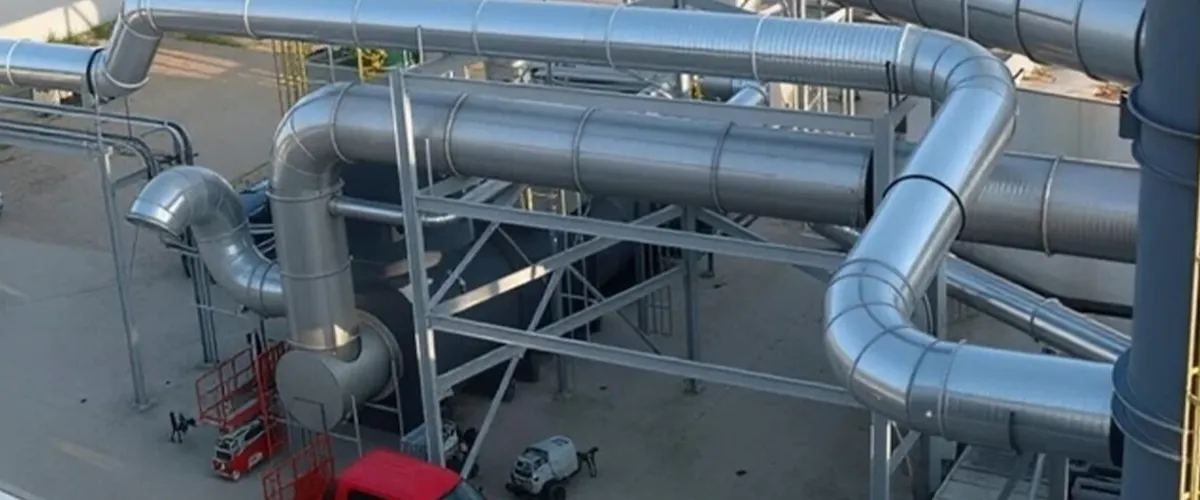
The fundamental working principle of the Ever-Power RTO involves guiding the process exhaust through a bed of ceramic heat exchange media, preheating it to near-combustion temperatures. The gas then enters the combustion chamber, typically maintained at 820°C to 850°C, where VOCs are oxidized into harmless carbon dioxide and water vapor. The purified hot gas then passes down through a second ceramic bed, transferring its heat to the media for the next cycle. For the frying industry, however, standard designs fail. Our systems integrate a crucial pre-treatment stage: Fiber Bed Coalescing Filters or Electrostatic Precipitators (ESP) to remove 90%+ of the oil mist before it enters the RTO. This prevents the ceramic media from becoming coated in polymerized grease, which would otherwise lead to dangerous pressure drops and fire hazards.

4. Ever Power RTO Technical Specifications
| Performance | 2-bed RTO | 3-bed RTO | Rotary Valve RTO | Notes |
|---|---|---|---|---|
| Technicality | First generation | Second generation | Third generation | |
| Number of chambers | 2 | 3 | 12 | Rotary valve operates continuously |
| Number of valves | 4 | 9 | / | |
| Reliability | Valve switching times per year: 350,000 | Valve switching times per year: 520,000 | / | |
| Piping pressure fluctuation | ±500pa | ±250pa | ±25pa | |
| Discharge compliance | Total purification efficiency: 95% | Total purification efficiency: 99% | Total purification efficiency: 99.5% | 99.5% |
| Maximum treating range | < 1g | < 5g | < 10g | 50mg/m³ discharge standard |
| Heat dissipation surface area | 100m² | 145m² | 95m² | |
| Energy saving | Thermal efficiency: 90% | Thermal efficiency: 95% | Thermal efficiency: 96% | 96% |
| Start-up heating time | 2.5h | 2.5h | 2h | Cold furnace start-up (Ethyl acetate) |
| Self-operation concentration | 2.5g/m³ | 2.2g/m³ | 1.8g/m³ | |
| Economy | Regenerative ceramic filling volume: 18m³ | Regenerative ceramic filling volume: 26m³ | Regenerative ceramic filling volume: 17m³ | 17m³ |
| Practicality | Occupation of land: L12×W7 | Occupation of land: L16×W7 | Occupation of land: L12×W7 | L12×W7 |
*Disclaimer: The other brand names mentioned above are provided solely for illustrative purposes. We do not offer original products or equipment bearing these brand names.
5. Comparative Analysis: Global Brands vs. Ever-Power Solutions
In the niche market of food industry emissions, several global players have established a presence. Anguil Environmental (USA) is well-regarded for their integrated filter-RTO systems used by giants like Frito-Lay. Their systems are robust but often come with a high capital expenditure (CAPEX) and longer lead times for Australian clients. Dürr (Germany) offers excellent rotary valve RTOs, often seen in large-scale confectionary and nut roasting facilities (e.g., Richester in Brazil). While their technology is top-tier, the complexity of their proprietary rotary valves can make local maintenance in remote Australian regions costly and dependent on specialized technicians.
Ever-Power positions itself as the optimal balance between engineering excellence and cost-efficiency. Our systems are designed with the specific modularity required for the Asian and Australian markets. We utilize non-proprietary, high-grade components (Siemens PLC, Maxon burners) ensuring that spare parts are locally available in Sydney, Melbourne, or Perth. Furthermore, our specialized “Grease-Resistant” design incorporates wider-channel ceramic media and automated bake-out software features standard, addressing the primary failure mode of competitor RTOs in this sector—clogging. By manufacturing in our advanced facility while adhering to AS/NZS electrical standards, we offer a solution that is 30-40% more cost-effective than US/EU counterparts without compromising on the 99% odour reduction guarantee.
6. Industry Trends: The Future of Sustainable Frying
The fried food industry is currently undergoing a significant shift towards “Energy Circularity.” It is no longer sufficient to simply destroy pollutants; the heat generated from that destruction must be harvested. A major trend we are observing is the integration of Waste Heat Recovery Boilers immediately downstream of the RTO. In a typical potato chip line, the RTO exhaust (clean, hot air) is passed through a thermal oil heat exchanger. This recovered energy is then looped back to heat the frying oil itself, creating a closed-loop energy system. This can reduce the facility’s total natural gas consumption by up to 40%. Ever-Power is at the forefront of this trend, designing RTOs with integrated “plug-and-play” heat recovery modules.
Another emerging trend is the tightening of “Odour Unit” limits due to urban sprawl. Factories that were once isolated are now surrounded by residential developments. This has led to the adoption of Hybrid Systems, where an RTO is followed by a polishing scrubber or carbon filter to tackle inorganic odours (like sulfur compounds from seasonings) that thermal oxidation might not fully address. Additionally, digitalization is key; our systems now feature AI-driven predictive maintenance that monitors the pressure drop across the ceramic bed to predict grease buildup, automatically scheduling a bake-out cycle before performance degrades.

7. Factory Customization & Manufacturing Capabilities
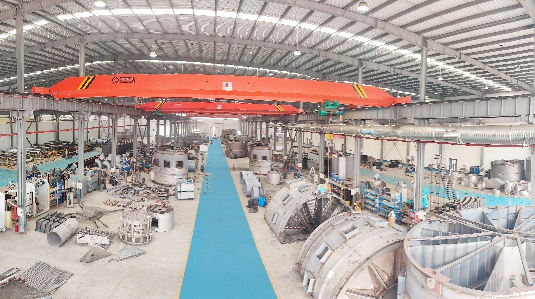
Ever-Power specializes in bespoke RTO solutions for the unique challenges of Australian asphalt producers—from high-silica dust in outback quarries to coastal humidity in Queensland plants. Our engineering team conducts on-site exhaust profiling to size pre-filters, select corrosion-resistant alloys, and optimize heat recovery based on your utility needs. With service hubs in Sydney and Perth, we offer rapid spare parts delivery, operator training in English, and 24/7 remote diagnostics. Unlike generic suppliers, we deliver full turnkey projects including civil works coordination, commissioning, and compliance documentation aligned with NSW EPA or VIC DELWP requirements. Every system is factory-tested before shipment to ensure seamless startup.
8. Customer Success Story: Transforming Emissions for a Global Noodle Giant
“We were struggling with odour complaints from our noodle production line, but after installing Ever-Power’s RTO system, the difference has been night and day. The system has reduced odours by over 99%, and we’re now fully compliant with the strict NSW EPA regulations. The process was seamless, and the support from Ever-Power was fantastic!”
– Emma R., Noodle Production Manager
“We were quoted astronomical prices by European suppliers, but Ever-Power’s RTO came in at 30% less, and the performance is top-notch. The system has been running smoothly with minimal downtime, and we’ve already started seeing savings in energy costs thanks to the thermal efficiency and waste heat recovery!”
– Michael T., Food Processing Plant Supervisor
“Our fried snack production line generates a lot of greasy fumes and moisture. Ever-Power’s RTO was the only solution that could handle the high humidity and oil mists. The pre-filtration system has made a huge difference, and we haven’t had any issues with clogged ceramic beds, unlike other systems we’ve used.”*
– John P., Snack Production Facility Lead
_”We’ve had our Ever-Power RTO running for over a year now, and it’s been great. It’s low maintenance, and the remote monitoring system has made it easy to keep track of performance. The system runs smoothly, and we no longer have to worry about safety risks from grease buildup.”*
– Daniel H., Plant Operations Manager
“We needed an RTO that could handle batch frying and the occasional spikes in VOCs. Ever-Power customized the system for us, and it’s been running perfectly. The ‘puff chamber’ system helps with fluctuations, and we’ve had zero issues. The team really understood our needs and delivered a tailored solution.”
– Chris M., Food Manufacturer
_”Ever-Power’s team made the installation process so easy. We opted for a pre-assembled skid-mounted unit, which saved us a lot of time and hassle on-site. The system was up and running quickly, and the commissioning team made sure everything was perfectly aligned with our production schedule. Great service all around!”*
– Anna K., Plant Manager
9. Related Solutions



10. FAQ
Q1. How does the RTO handle the high grease content from potato chip frying without clogging?
A1. Great question. We don’t send the grease directly into the RTO. We install a high-efficiency coalescing filter or electrostatic precipitator upstream to catch 90-95% of the oil mist. For the remainder, our RTOs use structured ceramic packing (wide channel) instead of random saddles to prevent blockage, and we program automatic “bake-out” cycles to self-clean the bed.
Q2. What is the typical cost of an RTO for a medium-sized nut roasting facility in Sydney?
A2. Cost depends on airflow volume. For a typical nut roaster (approx. 15,000 Nm³/h), a complete turnkey system might range between $250k to $400k AUD. However, an Ever-Power solution is typically 30% more cost-effective than US brands. Contact us for a precise quote based on your specific duct layout.
Q3. Will the RTO eliminate the strong seasoning odours from our instant noodle line?
A3. Yes, thermal oxidation is the gold standard for odour control. By heating the exhaust to 850°C, we break down the complex aldehydes and sulfur compounds from seasonings. We guarantee odour destruction efficiencies of over 99%, which usually solves neighbour complaints immediately.
Q4. Does the system meet the strict EPA Victoria and NSW EPA emission standards?
A4. Absolutely. Our systems are designed to achieve VOC levels well below 20 mg/m³ and remove visible smoke, ensuring full compliance with the NSW POEO Act and Victorian EPA guidelines. We provide guarantee documentation to assist with your EPA licensing approvals.
Q5. How much natural gas does the RTO consume during operation?
A5. surprisingly little! Due to our 95% thermal energy recovery, if your exhaust stream has a VOC concentration above 3% LEL (which is common in frying), the system can often run in “self-sustaining” mode, using the energy from the burning oil fumes to keep the system hot without extra gas.
Q6. Can we recover the heat from the RTO to heat our frying oil?
A6. Yes, this is a smart move. We can install a thermal oil heat exchanger on the clean exhaust side. This captures waste heat and loops it back to your fryer’s heat exchanger, significantly lowering your boiler fuel costs and improving your plant’s carbon footprint.
Q7. What happens if our production stops for cleaning? Does the RTO shut down?
A7. The RTO can go into a “hot standby” mode. We reduce the airflow and maintain temperature using the burner on low fire. This allows for a rapid restart when production resumes, without going through a full cold-start cycle, saving time and thermal stress on the ceramics.
Q8. Is the RTO system compatible with both continuous and batch frying processes?
A8. Yes. Continuous fryers offer stable loads which are ideal for RTOs. For batch fryers, which have spikes in emissions, we might install a “puff chamber” or upgrade the fan VFD controls to handle the pressure fluctuations, ensuring consistent destruction efficiency regardless of the batch cycle.
Q9. Where can we see your equipment running in a food factory?
A9. We have installations globally, including large noodle plants in Nigeria and snack factories in Asia. We can arrange a virtual tour or provide detailed case study references. For Australian clients, we can discuss similar local reference projects during our consultation.
Q10. How long does it take to deliver and install an RTO in Brisbane or Melbourne?
A10. Our typical manufacturing lead time is 3-4 months. Shipping to major Australian ports takes about 3 weeks. Installation and commissioning usually take another 2-3 weeks. We pre-assemble and wire the skid in our factory to minimize onsite disruption.
Ready to Eliminate Odours and Optimize Energy?
Don’t let emissions compromise your production or community relations. Partner with Ever-Power for a customized, cost-effective RTO solution.
Editor: PXY