1. The Challenge of Sticky Emissions in the Australian Market
2. Navigating EPA Regulations in Australia and Beyond
Operating an adhesive or sealant plant in Australia requires navigating a complex web of state and federal environmental regulations. EVER-POWER’s RTO solutions are engineered to exceed the compliance thresholds set by the National Pollutant Inventory (NPI) and state bodies.
2.1. Key Regulatory Frameworks Compliance:
- EPA Victoria (Environment Protection Act 2017): The “General Environmental Duty” (GED) mandates that businesses must minimize risks of harm to human health and the environment. Our systems ensure >99% destruction efficiency (DRE) for Class 3 indicators like Toluene, eliminating odour complaints from neighboring residential zones.
- NSW EPA (Protection of the Environment Operations Act 1997): For facilities in New South Wales, our RTOs meet the strict Group 6 emission standards for solid particles and VOCs, specifically addressing the “opacity” issues often caused by silicone dioxide plumes.
- Safe Work Australia: By maintaining negative pressure in mixing rooms and drying tunnels, our capture systems prevent fugitive emissions of Toluene and MEK, ensuring workplace exposure standards (WES) are never breached.
- Global Standards (EU IED & WGC BREF 2023): We align with the European Industrial Emissions Directive, which is often used as a benchmark by Australian environmental consultants. Our systems are designed to meet the Best Available Techniques (BAT) requirements for organic chemical production.
3. Working Principle: The Anti-Siloxane Strategy
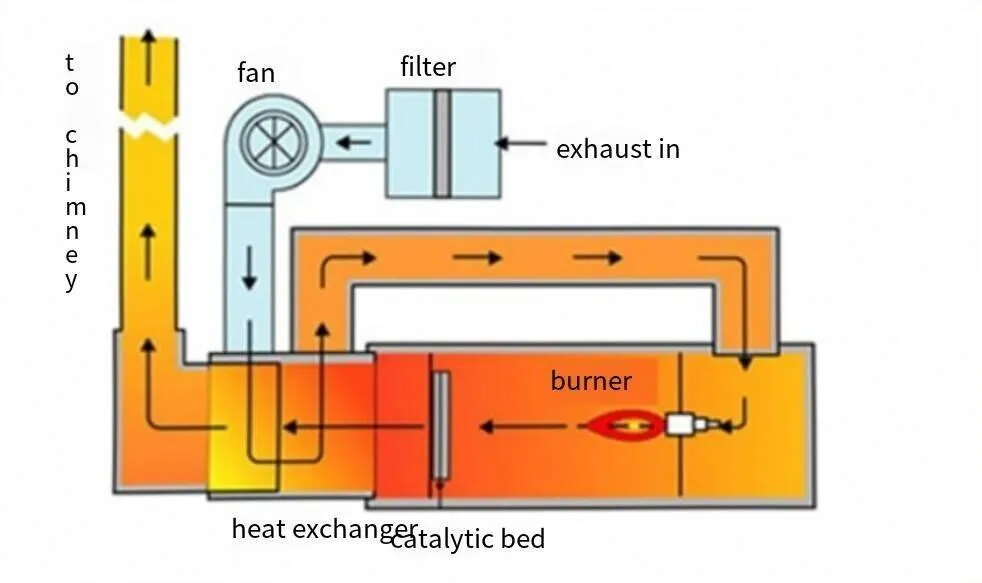
The core innovation in our Adhesive-Grade RTO is the management of Silicon Dioxide (SiO2). In a standard process, exhaust laden with solvents and siloxanes enters the RTO. As it passes through the ceramic bed, it is preheated. In the combustion chamber (850°C+), VOCs oxidize into CO2 and H2O, while siloxanes convert to SiO2 dust. In competitor models, this dust fuses to the hot ceramic media (glazing).
The EVER-POWER Solution: We utilize a specialized “Wide-Channel” Structured Ceramic Packing rather than random saddles. This allows the fine silica dust to pass through the bed without clogging the airways. Additionally, our systems feature a “Bake-Out” and Compressed Air Blowdown cycle that periodically dislodges accumulated dust into a collection hopper, preventing permanent glazing and pressure buildup.
4. Ever Power RTO Technical Specifications
| Performance | 2-bed RTO | 3-bed RTO | Rotary Valve RTO | Notes |
|---|---|---|---|---|
| Technicality | First generation | Second generation | Third generation | |
| Number of chambers | 2 | 3 | 12 | Rotary valve operates continuously |
| Number of valves | 4 | 9 | / | |
| Reliability | Valve switching times per year: 350,000 | Valve switching times per year: 520,000 | / | |
| Piping pressure fluctuation | ±500pa | ±250pa | ±25pa | |
| Discharge compliance | Total purification efficiency: 95% | Total purification efficiency: 99% | Total purification efficiency: 99.5% | 99.5% |
| Maximum treating range | < 1g | < 5g | < 10g | 50mg/m³ discharge standard |
| Heat dissipation surface area | 100m² | 145m² | 95m² | |
| Energy saving | Thermal efficiency: 90% | Thermal efficiency: 95% | Thermal efficiency: 96% | 96% |
| Start-up heating time | 2.5h | 2.5h | 2h | Cold furnace start-up (Ethyl acetate) |
| Self-operation concentration | 2.5g/m³ | 2.2g/m³ | 1.8g/m³ | |
| Economy | Regenerative ceramic filling volume: 18m³ | Regenerative ceramic filling volume: 26m³ | Regenerative ceramic filling volume: 17m³ | 17m³ |
| Practicality | Occupation of land: L12×W7 | Occupation of land: L16×W7 | Occupation of land: L12×W7 | L12×W7 |
*Disclaimer: The other brand names mentioned above are provided solely for illustrative purposes. We do not offer original products or equipment bearing these brand names.
5. Industry Trends: The Shift Towards Solvent Recovery & Automation
The Australian adhesive market is witnessing a distinct shift towards sustainability and operational resilience. One major trend is the move from simple destruction to Solvent Recovery. For high-value solvents like Toluene or Ethyl Acetate, manufacturers are increasingly coupling RTOs with condensation stages or activated carbon desorption cycles to recover liquid solvent for reuse before oxidizing the remainder. This circular economy approach aligns with corporate ESG goals and offsets raw material costs.
Another critical trend is Digital Twin Monitoring. With factories in remote or high-cost labour areas (like mining-support chemical plants in WA), operators demand remote diagnostic capabilities. EVER-POWER’s modern RTOs come equipped with cloud-based IoT modules, allowing our engineers to monitor pressure drops across the ceramic bed in real-time, predicting silica blockage months in advance and scheduling maintenance proactively rather than reactively.

6. Customer Success Story:
“We previously struggled with the treatment of volatile organic compounds in our adhesive production, especially the problems caused by siloxanes. Ever-Power’s RTO system truly solved our problems. Its unique wide-channel ceramic media and online cleaning system ensure that we have no clogging issues, and our production efficiency has significantly improved.”
“As a sealant manufacturer located in Melbourne, we place great importance on environmental compliance. Ever-Power’s RTO system not only helped us meet the EPA Victoria and NSW emission standards, but its highly efficient heat recovery function reduced natural gas consumption, significantly saving on energy costs.”
“Our factory handles high concentrations of Toluene and MEK vapors. Ever-Power’s RTO system effectively avoids explosion risks and achieves LEL concentrations below 25%, ensuring safety. The system’s intelligent features, such as automatic adjustment and online monitoring, have greatly enhanced our operational safety.”
“After using Ever-Power’s RTO system, we found that the equipment’s reliability has greatly improved, especially in handling viscous gases. The ceramic media is very well designed, resisting siloxane fouling and reducing maintenance frequency, extending the equipment’s lifespan.”
“Ever-Power’s customer support is excellent! Our factory encountered some technical issues during the installation process, and their team responded quickly and provided solutions. Now, our production line runs more efficiently and also complies with all Australian environmental requirements.”
“The traditional thermal oxidizers we used before often experienced clogging and maintenance problems, but Ever-Power’s RTO system design addresses these challenges, especially in the efficiency and safety of handling mixed gases. Now, we not only avoid downtime but also recover a large amount of heat for production use, which is very energy-efficient.”
7. EVER-POWER Manufacturing: Tailored for the Australian Climate
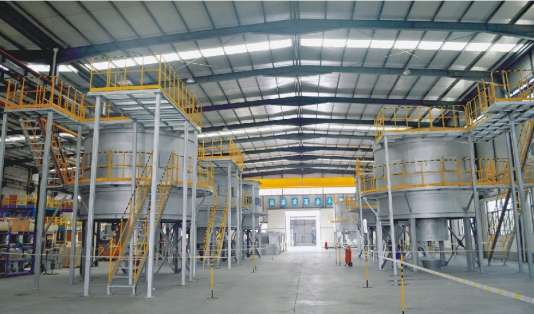
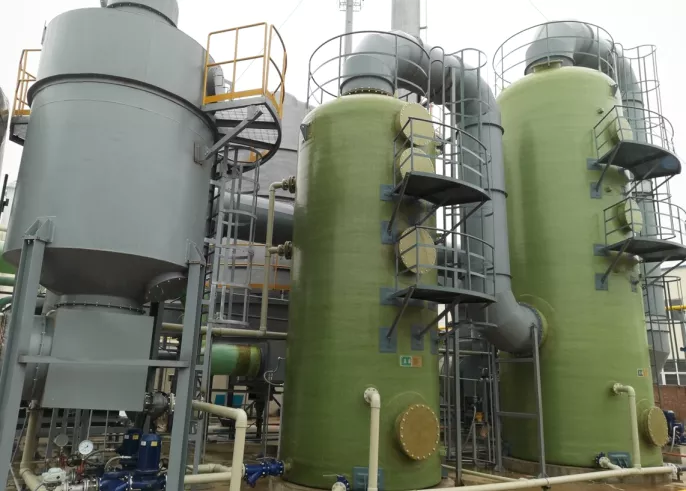
Ever-Power specializes in bespoke RTO solutions for the unique challenges of Australian asphalt producers—from high-silica dust in outback quarries to coastal humidity in Queensland plants. Our engineering team conducts on-site exhaust profiling to size pre-filters, select corrosion-resistant alloys, and optimize heat recovery based on your utility needs. With service hubs in Sydney and Perth, we offer rapid spare parts delivery, operator training in English, and 24/7 remote diagnostics. Unlike generic suppliers, we deliver full turnkey projects including civil works coordination, commissioning, and compliance documentation aligned with NSW EPA or VIC DELWP requirements. Every system is factory-tested before shipment to ensure seamless startup.
10. Frequently Asked Questions (FAQ)
Q1. How much does an RTO cost for a medium-sized sealant factory in Sydney?
A1. The cost varies based on airflow and solvent concentration. However, for a typical 15,000 Nm³/h system handling siloxanes, the investment is often offset within 18-24 months if waste heat recovery is utilized to power your drying ovens. Contact us for a precise quote tailored to your facility.
Q2. What makes your “Special Media” better for silicone sealants than standard ceramic saddles?
A2. Standard saddles have small, irregular voids that clog easily with silica dust. Our special media features wide, straight vertical channels that allow the dust to pass through to the bottom collection chamber, significantly extending the time between cleanings.
Q3. Can this system handle the high explosion risk of Toluene and MEK vapors?
A3. Absolutely. Safety is paramount. Our systems include integrated LEL (Lower Explosive Limit) monitors and fast-acting fresh air dilution valves. If vapor concentrations exceed 25% LEL, the system automatically dilutes the stream to safe levels before it enters the oxidizer.
Q4. Do you provide installation and maintenance support in Australia?
A4. Yes, we work with local Australian engineering partners for installation and commissioning. We also provide remote 24/7 monitoring and can dispatch local technicians for routine maintenance or ceramic media cleaning.
Q5. Is it possible to retrofit your RTO onto our existing Nordmeccanica coating line?
A5. Yes, retrofitting is a core part of our business. We can design the ductwork and control logic to interface directly with your existing Nordmeccanica or Bobst coating lines, ensuring the RTO ramp-up matches your production start-up sequence.
Q6. How do you handle the pressure fluctuations from batch mixing processes?
A6. Batch mixing creates “spikes” in airflow and concentration. We utilize a Variable Frequency Drive (VFD) on the main fan and a pressure control loop to maintain a steady negative pressure in your process lines, regardless of the RTO’s load.
Q7. What happens to the silica dust that passes through the ceramic bed?
A7. Most of the silica dust is collected in the bottom of the RTO chambers and can be vacuumed out during maintenance. For strict particulate emission limits (like in NSW), we can install a secondary baghouse filter after the RTO to capture any fine dust before the stack.
Q8. Can we use the heat from the RTO to heat our warehouse in winter?
A8. Definitely. We can install an air-to-air heat exchanger or a hot water coil on the clean exhaust stack. This captured heat can be ducted into your warehouse or office spaces, providing free heating during the Australian winter.
Q9. Which Australian environmental standards does your equipment meet?
A9. Our systems are designed to meet and exceed the requirements of the National Pollutant Inventory (NPI), Victorian EPA, and NSW EPA Protection of the Environment Operations Act, specifically regarding VOC destruction efficiency and odour units.
Q10. What is the lead time for delivery to the Port of Melbourne?
A10. Typically, manufacturing takes 12-14 weeks. Shipping to Melbourne or Sydney adds approximately 3-4 weeks. We recommend planning about 5-6 months ahead to ensure installation can be scheduled during your planned shutdowns.
Editor: PXY