คำอธิบาย
What Is a Three-Waste Mixed-Combustion Boiler?
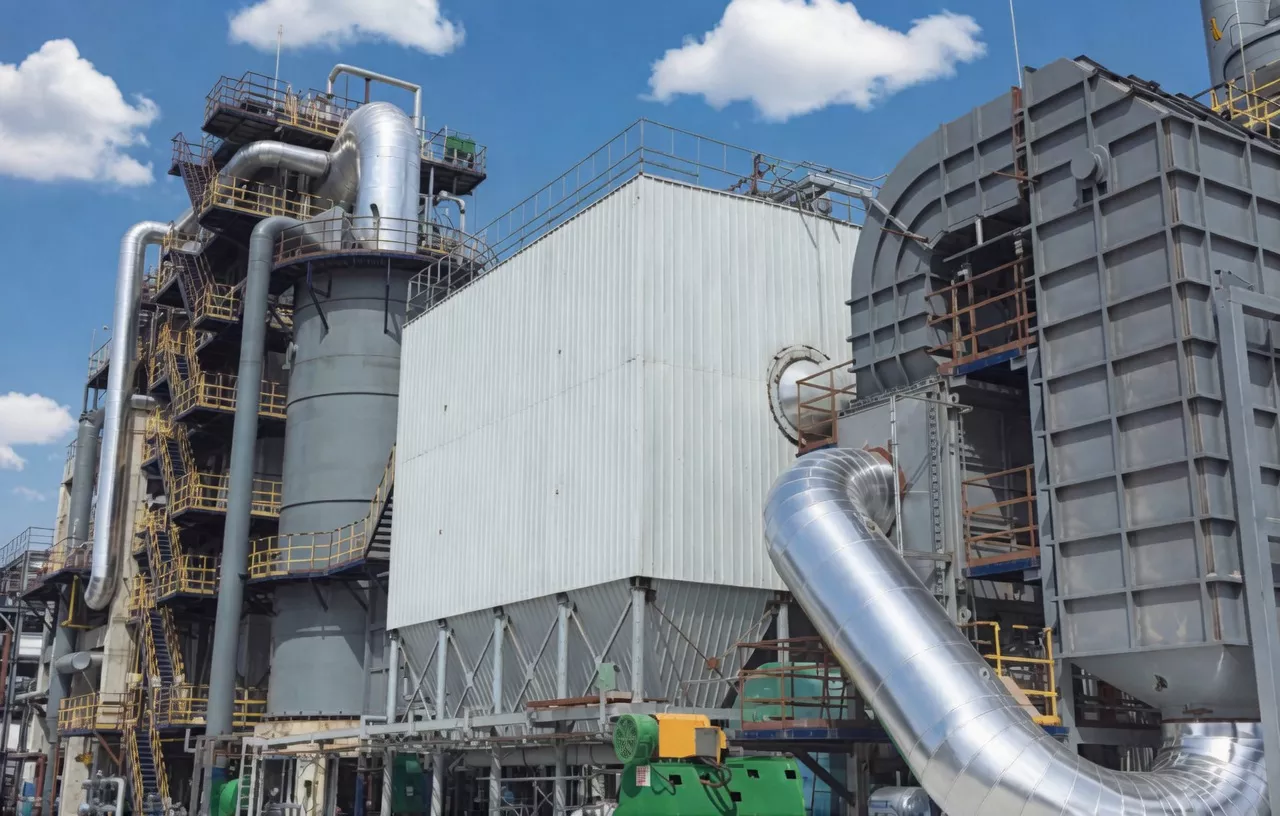
The Ever-power three-waste mixed-combustion boiler is an integrated waste liquid incinerator and energy-recovery unit purpose-built for process industries that generate three streams of waste simultaneously — combustible waste gas, high-COD waste liquid, and combustible waste slag or ash. Instead of paying to haul these streams offsite or running three separate treatment trains, the unit burns all three inside one Class A licensed furnace and converts the released heat into saturated or superheated steam.
The design draws on the same thermal principles used by global waste-to-energy plants: a high-temperature primary combustion zone (≥ 850 °C), a secondary chamber with a minimum 2-second residence time, and a water-tube heat recovery section that captures radiant and convective heat before the flue gas reaches the air pollution control island. The result is a single piece of capital equipment that delivers waste destruction, emission compliance and process steam — three deliverables from one footprint.
For Australian operators, the commercial case is straightforward. Landfill levies in NSW, Victoria and Queensland have climbed year after year, and hazardous liquid disposal now routinely exceeds A$1,200 per tonne in metro areas. A correctly sized three-waste mixed-combustion boiler turns that cost line into an energy credit on the same P&L.
 The Three Waste Streams It Handles
Waste Gas
Combustible VOC streams, reactor vents, tank farm vapours, stripper off-gas and low-calorific tail gas from upstream production.
- Calorific range: 500–30,000 kJ/Nm³
- Feed pressure: 5–50 kPa
- Halogen, sulfur and nitrogen compounds accepted
Waste Liquid
High-COD mother liquor, spent solvents, tar residues, organic salts and recalcitrant process wastewater that defeats biological plants.
- Calorific range: 2,000–25,000 kJ/kg
- Viscosity up to 1,000 cP (heated injection)
- Twin-fluid atomiser with steam or compressed air
Waste Slag & Ash
Filter cake, spent catalyst fines, distillation bottoms, resin waste and other combustible solids from batch and continuous processes.
- Particle size: ≤ 10 mm (pre-crushed)
- Moisture content: up to 40% w/w
- Screw feeder or pneumatic injection
How the Three-Waste Mixed-Combustion Boiler Works
The process flow inside an Ever-power waste liquid incinerator follows five engineered stages. Each stage is tuned to the calorific profile of the feed, so the unit handles seasonal shifts in waste composition without operator intervention.
Feed Preparation
Waste gas is pressure-regulated, waste liquid is preheated and filtered, and waste slag is crushed and metered. Composition analysers send live data to the DCS.
Primary Combustion
The refractory-lined primary chamber operates at 850–950 °C. A multi-fuel burner lights the bed while auxiliary natural gas or diesel holds temperature during low-calorific feed periods.
Secondary Oxidation
Flue gas crosses into the secondary chamber at ≥ 1,100 °C with minimum 2-second residence time, meeting EU and Australian EPA destruction rules for toxic organics and dioxin precursors.
Heat Recovery
A water-tube radiant section, bundled evaporator and economiser cool the flue gas from 1,100 °C to roughly 200 °C, producing saturated or superheated steam at up to 5.3 MPa.
Flue Gas Cleaning
Quench, dry scrubber, bag filter and optional SCR/SNCR bring NOx, SOx, HCl and particulates below Australian NPI reporting thresholds before the ID fan.
Key Features & Engineering Advantages
One Furnace, Three Wastes
Co-firing logic is resolved by independent burner lanes and tangential air registers. You commission once and run mixed feeds forever.
Class A Manufacturing Licence
Full boiler pressure-part certification plus a first-class installation & modification licence — the paperwork your Australian site approval needs, day one.
Membrane Water-Wall Design
Gas-tight welded construction eliminates refractory maintenance in the radiant zone and extends availability beyond 8,000 hours per year.
Turn-Down Ratio 30–110%
Stable combustion across a wide load band, so batch-production plants avoid auxiliary-fuel spikes when feed drops.
Heat-Resistant Refractory
Multi-layer alumina and SiC castables rated for 1,450 °C with a 4–5 year relining cycle under normal duty.
DCS-Ready Controls
Siemens or Rockwell PLC package, CEMS-ready IO, and remote-diagnostics VPN — a drop-in replacement of legacy thermal-oxidiser controls.
Technical Specifications
Every Ever-power three-waste mixed-combustion boiler is configured to the actual feed envelope of your site. The table below shows the standard capacity bands most Australian customers select; custom envelopes are available on request.
| Model | Steam Output (t/h) | Steam Pressure (MPa) | Steam Temp. (°C) | Feed Water Temp. (°C) | Thermal Efficiency |
|---|---|---|---|---|---|
| EP-3W-4 | 4 | 1.6 / 2.5 | Saturated | 104 | ≥ 89% |
| EP-3W-10 | 10 | 2.5 / 3.82 | Sat / 450 | 104 | ≥ 90% |
| EP-3W-20 | 20 | 3.82 / 5.3 | 450 / 485 | 150 | ≥ 91% |
| EP-3W-35 | 35 | 3.82 / 5.3 | 450 / 485 | 150 | ≥ 92% |
| EP-3W-75 | 75 | 5.3 / 9.8 | 485 / 540 | 215 | ≥ 92% |
Performance & Compliance
| Parameter | Ever-power Guarantee | Australian EPA Limit (typical) |
|---|---|---|
| Destruction & Removal Efficiency | ≥ 99.99% | 99.99% |
| Secondary Chamber Residence Time | ≥ 2.0 s @ 1,100 °C | 2.0 s @ 850 °C |
| NOx (as NO₂) | < 200 mg/Nm³ | 350 mg/Nm³ |
| SO₂ | < 50 mg/Nm³ | 200 mg/Nm³ |
| Particulates | < 10 mg/Nm³ | 30 mg/Nm³ |
| Dioxin / Furan (TEQ) | < 0.1 ng/Nm³ | 0.1 ng/Nm³ |
Applications Across Australian Industry
Fine & Specialty Chemicals
Mother liquor, halogenated solvents, sulfonic residues. Typical deployment near Melbourne and Sydney industrial estates.
Pharmaceutical & APIs
Fermentation broth, spent DMF and THF, contaminated filter cake. GMP-compliant boiler-grade steam recovered for reactors.
Refining & Petrochemicals
Tank-bottom sludge, spent caustic, hydrocarbon tail gas. Integrates with existing flare and knockout drum infrastructure.
Paint, Resin & Coatings
Off-spec resin, solvent-laden wash water, pigment sludge. Odour-free compliant operation in urban industrial zones.
Textile & Dyeing
Azo-dye concentrate, high-salinity reject from RO units, filter press cake from finishing lines.
Licensed Waste Centres
Third-party hazardous waste facilities processing Category C and D liquids under state EPA licences.
Why Choose Ever-power
Buying a waste liquid incinerator is not a commodity decision. The wrong supplier leaves you with a warm scrap pile, a stalled site approval, and a steam contract you cannot honour. Here is what separates the Ever-power build from a generic replacement of imported thermal oxidisers.
Learn more about our engineering capabilities and factory footprint on the Ever-power company page, or browse the full equipment catalogue on our home page.
Australian Project Case Studies
Pharmaceutical API Plant — Geelong Region
An Australian API manufacturer was paying A$1.4M per year to truck spent solvent and fermentation broth to a licensed offsite facility. Site steam demand was being met by a separate natural-gas package boiler.
Ever-power solution: EP-3W-10 unit, 10 t/h saturated steam at 2.5 MPa, co-firing 1.8 t/h waste liquid and 400 Nm³/h reactor vent gas.
Result: A$1.1M annual disposal saving, natural gas use reduced by 72%, payback in 28 months.
Specialty Chemical Facility — Brisbane Corridor
A coatings manufacturer needed to retire an ageing thermal oxidiser (non-compliant with the 2023 Queensland air emission standard) and still had 6 t/h of filter cake and 2.5 t/h of solvent waste to process.
Ever-power solution: EP-3W-20 three-waste mixed-combustion boiler with integrated bag filter and SCR, as a direct replacement of legacy oxidiser.
Result: Emissions cut 60% below licence limits, 18 t/h process steam now supplied internally, site avoided A$2.3M in steam purchases in year one.
Frequently Asked Questions
How is a three-waste mixed-combustion boiler different from a standard waste liquid incinerator?
A standard waste liquid incinerator handles one phase of waste — usually liquid or gas. The three-waste version is engineered for simultaneous co-firing of gaseous, liquid and solid streams through independent feed lanes into a shared combustion zone, with a heat-recovery boiler bolted on. You get one permit, one stack, one steam header instead of three separate systems.
What is the typical payback period for an Australian installation?
Most Ever-power customers in Australia see payback between 24 and 42 months. The exact figure depends on current offsite disposal cost, natural gas tariff, and how many operating hours per year your plant runs. Sites above 6,000 hrs/year with disposal cost over A$800/tonne usually sit at the lower end of that range.
Does it comply with Australian EPA and NPI reporting requirements?
Yes. The unit is designed against the stricter of EU 2010/75 Industrial Emissions Directive limits and Australian state EPA conditions. CEMS outputs feed directly into state reporting portals (e.g. NSW EPA, Victoria EPA, Queensland DES), and the stack design already accounts for National Pollutant Inventory quarterly reporting.
Can the boiler handle halogenated or sulfur-bearing waste streams?
Yes, with the correct flue-gas cleaning island. Halogenated streams above 2% Cl require a quench plus two-stage wet scrubber; high-sulfur streams are handled with a dry sorbent injection or wet FGD stage. Our engineering team runs a full material balance at quote stage so the corrosion allowance and tube metallurgy match your actual feed envelope.
What steam pressure and temperature options are available?
Standard offerings are 1.6, 2.5, 3.82, 5.3 and 9.8 MPa, with saturated or superheated steam from 194 °C to 540 °C. Most Australian chemical plants specify 2.5 MPa saturated for process use; refineries and power-coupled sites typically request 5.3 MPa at 485 °C.
How long does engineering, fabrication and commissioning take?
For a mid-size unit (EP-3W-10 to EP-3W-20), basic engineering runs 6–8 weeks, detailed engineering and fabrication 5–7 months, shipping to Australian ports 4–6 weeks, and site erection plus commissioning another 10–14 weeks. A realistic door-to-first-steam programme is 12–14 months.
Do you provide operator training and spare parts support in Australia?
Yes. Every project includes a 2-week classroom plus on-site operator training programme, a recommended 2-year spares list, and remote-diagnostics support. Critical wear parts (burner tips, atomiser nozzles, refractory blocks) are held in our Sydney-accessible consignment pool for 48-hour dispatch.
Need a Tailored Quote for Your Site?
Send your waste stream composition, steam demand and site location to [email protected] or reach our engineering team through the contact page. A full heat and material balance, GA drawing and budget price will be returned within 10 working days — free of charge.