

Applications of RTO in the chemical and pharmaceutical industries
Tablet and capsule coating is a common post-processing step in pharmaceutical manufacturing, where a protective or sustained-release film is formed by spraying coating materials onto tablets or capsules through a fluidized bed. Ethanol, isopropanol, and methylene chloride are typically used as solvents in this process, releasing gaseous emissions with concentrations as high as 20–100 g/Nm³. These emissions have a strong odor and are flammable and explosive. Since the operation is mostly batch-based, airflow and concentration fluctuate significantly over time, potentially reaching 25% of the lower explosive limit (LEL) within a short period. Therefore, waste gas treatment must balance safety and high efficiency.


Major Sources of VOCs (by process step)
| Process Stage | Reason for VOC Emission | Typical VOC Components |
|---|---|---|
| Reaction & Synthesis | Evaporation of unreacted raw materials, intermediates, or by-products during reactor venting or pressure relief. | BTEX (benzene, toluene, ethylbenzene, xylene), chlorinated hydrocarbons (dichloromethane, chloroform), ketones (acetone), alcohols (methanol, ethanol) |
| Solvent Use (extraction, washing, crystallization) |
Volatilization of large volumes of organic solvents during liquid-phase operations. | DMF, THF, ethyl acetate, n-hexane, methanol |
| Drying / Granulation | Release of residual solvents from wet materials during hot-air drying; VOC-laden dust generated during milling and sieving. | VOCs consistent with solvents used in prior steps, often co-emitted with PM10/PM2.5 |
| Distillation / Fractionation | Incomplete condensation leading to light-end vapor escape; vent gases from vacuum systems. | Low-boiling solvents (e.g., acetone, diethyl ether) |
| Storage & Transfer | “Breathing” losses from storage tanks (working & standing losses); fugitive emissions during tanker loading/unloading or drum opening. | All solvents stored or handled on-site |
| Equipment Leaks (Fugitive Emissions) |
Leaks from valves, flanges, pumps, and compressor seals due to wear or poor maintenance (addressed via LDAR programs). | All VOCs present in process streams |
⚠️ Industry Characteristics And Challenges
Extremely Complex Composition
A single exhaust stream may contain dozens to hundreds of different VOCs, often mixed with acidic gases (e.g., HCl, HF), basic gases (e.g., NH₃), particulate matter, and odorous compounds.
Highly Variable Concentrations
Batch production leads to VOC concentrations ranging from tens of mg/m³ to tens of thousands of mg/m³, demanding high adaptability from emission control systems.
High Toxicity and Safety Risks
Many VOCs are carcinogenic, mutagenic, or teratogenic (e.g., benzene, ethylene oxide).
High-concentration solvent vapors (e.g., ethanol, acetone) pose explosion hazards, requiring explosion-proof equipment design.
Extremely Complex Composition
- Stringent Regulatory Requirements
Globally, the chemical and pharmaceutical industries are classified as key sectors for VOC monitoring and control, typically requiring:
• Installation of continuous VOC monitoring systems (e.g., FID or PID analyzers)
• Implementation of LDAR (Leak Detection and Repair) programs
• Achieving VOC removal efficiencies of 90% to over 99%


Air Pollution Control Methods Table


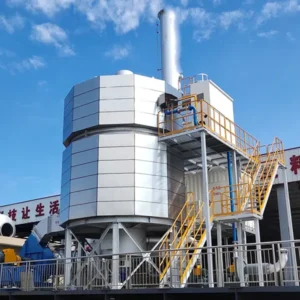
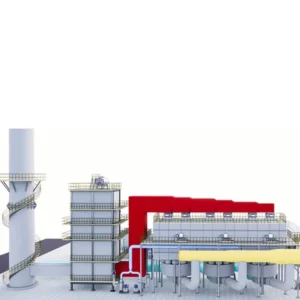
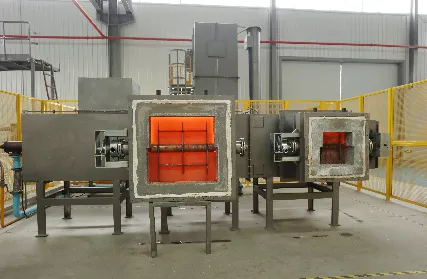
The furnace is equipped with dual thermocouple pairs for real-time temperature monitoring and data analysis.
The main fan speed is automatically controlled by a pressure sensor in the intake duct.
Differential pressure transmitters are installed at the furnace inlet and outlet to monitor the operation of the regenerative ceramic material and detect any blockage or damage.
RTO Process Design and Technical Features
1. Mandatory Dilution & LEL Control: Dilute the waste gas to below 25% of the lower explosive limit (LEL) by introducing a large volume of clean air. An online LEL monitoring and automatic control system is installed to prevent the accumulation of flammable gases.
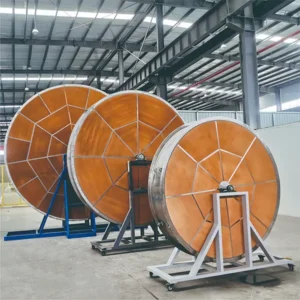
2. Rotary Wheel Concentration: For continuous coating lines, a zeolite rotary wheel can be used to adsorb and concentrate solvents from the air at a ratio of 15:1 before sending the concentrated gas to the RTO for oxidation. This reduces the air volume, recovers heat, and lowers fuel consumption.


RTO Parameter Performance Table
| Indicator | Type | Remarks | ||
|---|---|---|---|---|
| 2-Chamber RTO | 3-Chamber RTO | Rotary RTO | ||
| Technology Generation | First Generation | Second Generation | Third Generation | |
| Number of Heat Storage Chambers | 2 | 3 | 12 | |
| Purification Efficiency | 95% | 99% | 99.5% | |
| Land Area | 100% | 130% | 65% | Based on two-chamber |
| Weight | 100% | 150% | 80% | Based on two-chamber |
| Cost | 100% | 150% | 130% | Based on two-chamber |
| Number of Valves | 4 | 9 | 1 | Failure Rate |
| Maximum Treatment Concentration | <1g | <5g | <10g | 50mg/m³ Emission Standard |

Why You Need RTO?
- EU & WHO Guidelines: The EU IED and VGC BREF 2023 require a solvent removal efficiency of ≥98% for the pharmaceutical industry, while also complying with occupational safety standards. The WHO GMP guidelines and EU EMA impose strict limits on residual solvents.
- U.S. EPA: The Pharmaceutical NESHAP (40 CFR 63 Subpart GG) mandates a VOC control efficiency of ≥90%, with the concentration of organic compounds in the exhaust gas required to be below 20 ppm. OSHA standards set exposure limits for solvents such as methylene chloride.
- China: Pharmaceutical production must meet the requirements of GB 37822-2019 and GMP. NMP and other solvents have an emission limit of 0.2 mg/m³, and waste gas treatment facilities are subject to mandatory monitoring.
- India & Southeast Asia: India’s Central Pollution Control Board (CPCB) mandates that pharmaceutical enterprises handling volatile solvents must adopt thermal oxidation or adsorption recovery for treatment. Countries such as Thailand are in the process of incorporating solvent emissions into VOC licensing schemes.


EP Advantages & Development Trends
- Intelligent Control: An independently developed dilution and dilution ratio control system enables real-time concentration monitoring and rapid valve switching, avoiding over-temperature and explosion risks.
- High-Efficiency Heat Recovery: Thanks to the regenerative structure, the RTO requires almost no additional fuel after reaching operating temperature, achieving an energy recovery rate of up to 97%. Waste heat can be utilized for heating or steam generation.


FAQ:
Q1:What is an RTO (Regenerative Thermal Oxidizer), and how does it work?
A1: An RTO is an air pollution control device used to treat hazardous volatile organic compounds (VOCs) and other toxic gases through a high-temperature oxidation process. In the chemical and pharmaceutical industries, RTOs are used to handle the organic waste gases generated during production. The process works by preheating the waste gases through heat exchangers, then oxidizing them at high temperatures in the presence of oxygen, converting them into water and carbon dioxide, thus purifying the waste gas.
Q2: What are the applications of RTO in the chemical and pharmaceutical industries?
A2: In the chemical and pharmaceutical industries, RTOs are primarily used to reduce harmful emissions such as solvent vapors, chlorine, ammonia, and other hazardous gases released during production. By efficiently oxidizing these pollutants, RTOs help these industries comply with environmental regulations, reduce environmental pollution, and improve overall environmental safety at their facilities.
Q3: How does an RTO system help improve energy efficiency?
A3: RTO systems enhance energy efficiency by recovering heat through a “regeneration” process. Heat exchangers within the system capture some of the heat from the exhaust gases and use it to preheat incoming waste gases, reducing the need for additional heating. In the chemical and pharmaceutical industries, where exhaust gases often contain high-temperature components, this heat recovery significantly reduces the need for external heating energy, improving overall energy efficiency.
Q4: How does an RTO impact environmental regulations in the chemical and pharmaceutical industries?
A4: The chemical and pharmaceutical industries face stringent environmental protection regulations, especially regarding the emission of hazardous gases. RTO systems help companies effectively clean waste gases, ensuring that emissions meet government environmental standards and avoiding penalties for non-compliance. Additionally, RTOs help lower greenhouse gas emissions, aligning with sustainable development goals.
Q5: What are the maintenance and operating costs of an RTO system?
A5: RTO systems require regular maintenance, such as periodic inspections, cleaning, and replacement of components (like catalysts and filters). However, the operating costs are generally low. By improving energy efficiency and reducing energy consumption for waste gas treatment, RTOs provide long-term economic benefits. Although the initial investment may be high, RTOs can deliver significant returns on investment over time due to their low energy consumption and high-efficiency pollutant removal capabilitie