

RTO applications in the coffee and cocoa roasting industry
VOCs Sources In The Coffee And Cocoa Roasting Industry
1. Core Roasting Process
During the high-temperature roasting of green coffee and cocoa beans (coffee roasting temperature is typically 180–240℃, cocoa roasting temperature is 120–150℃), the internal carbohydrates, proteins, fats, organic acids, and other components undergo Maillard reactions, caramelization reactions, and thermal decomposition reactions.
These reactions release volatile organic compounds (VOCs) such as aldehydes (e.g., formaldehyde, acetaldehyde), ketones (e.g., acetone), alcohols (e.g., ethanol), esters, furans, and phenols. These are typical VOC components; simultaneously, aromatic hydrocarbons (e.g., styrene) are also produced and fall into the VOC category.
2. Pre-treatment and Post-treatment Stages
The drying process after raw material washing releases a small amount of water-soluble VOCs; the cooling, grinding, and sieving stages after roasting release VOCs adhering to particulate matter (forming VOC-particulate matter complex pollutants); flavorings and flavorings added by some companies during processing also release additional VOCs.

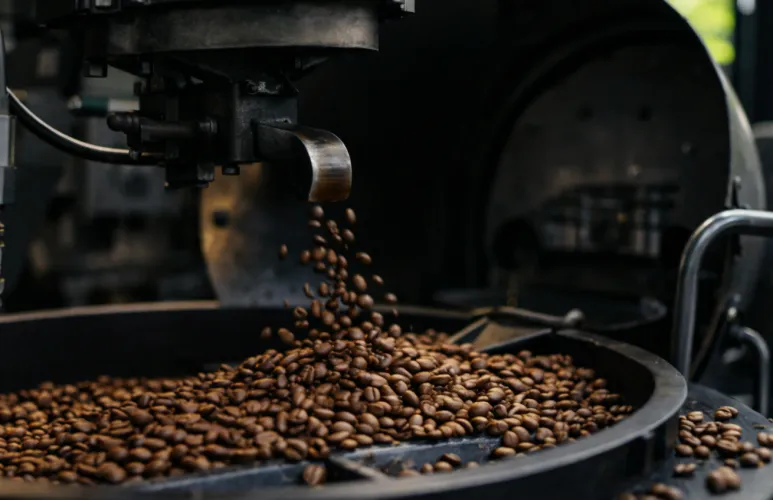
Composition of Exhaust Gas
• Main volatile organic compounds: Pyrazines (such as 2-methylpyrazine), furans, indoles, terpenal, and other aromatic compounds; these are released most abundantly at roasting temperatures of 180–230°C.
• Smoke and dust: Includes tar, oil particles, carbon black, and fine powder, with particle sizes between 0.1–10 μm.
• Water vapor: Coffee beans have a moisture content of approximately 11%, which evaporates after roasting, resulting in high relative humidity in the exhaust gas.
• Airflow fluctuations: The roasting cycle is typically 10–20 minutes, and intermittent exhaust leads to significant fluctuations in exhaust gas volume and concentration.
Core Control Target – VOC
| VOC Component | Source (in Roasting Industry) | Regulatory Basis |
|---|---|---|
| NMHC (Non-Methane Hydrocarbons) | High-temperature dehydration during coffee roasting; cocoa fermentation | NSW EPA Industrial Emissions Guidelines – Food Processing |
| Benzene, Formaldehyde | Lipid oxidation; caramelization of sugars | National Environment Protection (Air Toxics) Measure |
| Acetic Acid, Ethanol | Cocoa fermentation process (not roasting) | Qld EPA Technical Standards for Cocoa Processing |
RTO and Auxiliary Process Design
1. Dust Removal and Pre-filtration: Install a multi-stage dust removal system (such as a cyclone separator, tube bundle demister, or bag filter) before the RTO inlet to remove most of the oil fumes and dust, protecting the regenerator bed from clogging. Mentions that a high-efficiency RTO can recover 97% of its heat energy after self-heating operation, but dust accumulation reduces thermal efficiency.

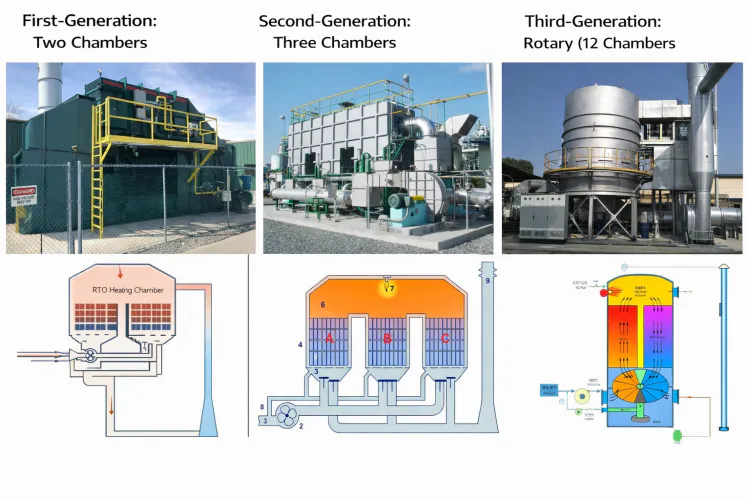
3. Heat Recovery and Utilization: The high-temperature purified gas after exhaust gas treatment can be used to heat air through a heat exchanger for the next batch of roasting or for plant heating, achieving energy conservation and emission reduction.
4. Scrubber assembly: When treating exhaust gas with high oil content, a wet scrubber can be added at the RTO outlet to remove acidic gases and residual oil mist, reducing the impact on the atmosphere.
The Core Of A rotary RTO—The Cotary Valve

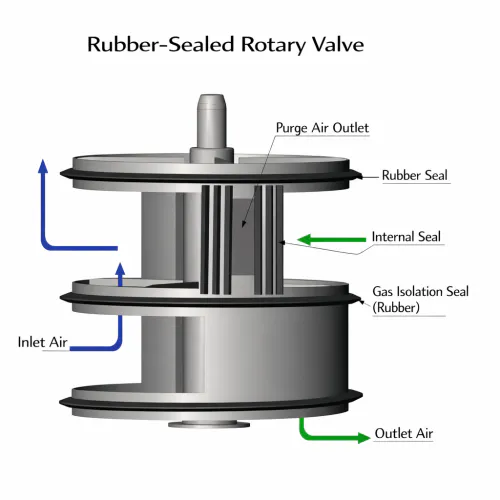
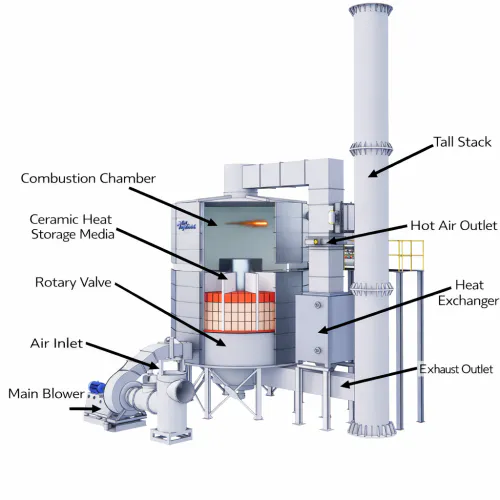
* NOTE: The rotary valve is designed for a 30-year lifespan, and the rubber seals have a lifespan of over 5 years. The rubber gaskets are easy to replace; two people can complete the replacement in 8 hours.
Why You Needs Us?
| Regulatory Level | Regulatory Basis | Emission Limit / Requirement | Applicable Sector |
|---|---|---|---|
| Federal | Environment Protection and Biodiversity Conservation Act 1999 (EPBC Act) National Environment Protection (Air Toxics) Measure (NEPM) |
No fixed concentration limits; requires application of Best Available Techniques (BAT) to minimize VOC emissions. | All food processing industries nationwide (including coffee and cocoa roasting) |
| State – NSW | NSW EPA Industrial Emissions Guidelines (2022) Individual Emission Licences issued under Protection of the Environment Operations Act 1997 |
• NMHC limit: ≤ 10 mg/Nm³ (dry, 25°C, 101.3 kPa) • Specific VOCs (e.g., benzene, formaldehyde): ≤ 0.1 mg/Nm³ • Mandatory VOC abatement system (e.g., RTO/RCO) with ≥95% destruction efficiency |
Coffee roasting and cocoa roasting facilities holding an EPA licence |
| State – QLD (Cocoa-specific) | Queensland EPA Industrial Emissions Licensing Framework Australian Cocoa Association Technical Standards (2023) |
• Total VOC emissions cap: ≤ 500 kg/month (scaled by facility size) • Mandatory quarterly VOC emission reporting to state EPA |
Cocoa processing facilities (especially fermentation and roasting stages) |
| Industry Practice (De Facto Standard) | Compliance benchmarks from leading operators (e.g., St. Ali, Seven Seeds, Cocoa Master) | • RTO/RCO systems achieving ≥99% VOC destruction efficiency • Typical stack NMHC concentrations: ≤ 8 mg/Nm³ |
Large- and medium-scale roasters aiming for best practice compliance |
• EU Food Processing Plant Emission Standards: Based on the Industrial Emissions Directive and national VOCs standards for food processing, EU food processing plants are required to achieve specified removal rates and control specific odor emission levels. Some member states stipulate odor concentrations <1 OU/m³.
• US FDA and EPA: US food processing plants must comply with food safety and odor control regulations; some states include coffee roasting plants in their VOCs emission permitting systems, requiring companies to install RTOs or other high-efficiency treatment equipment.
• Asia and Africa: Japan, South Korea, and Taiwan have specific VOCs and odor standards for coffee factory emissions; Africa and South America mainly rely on permits from local environmental protection departments.

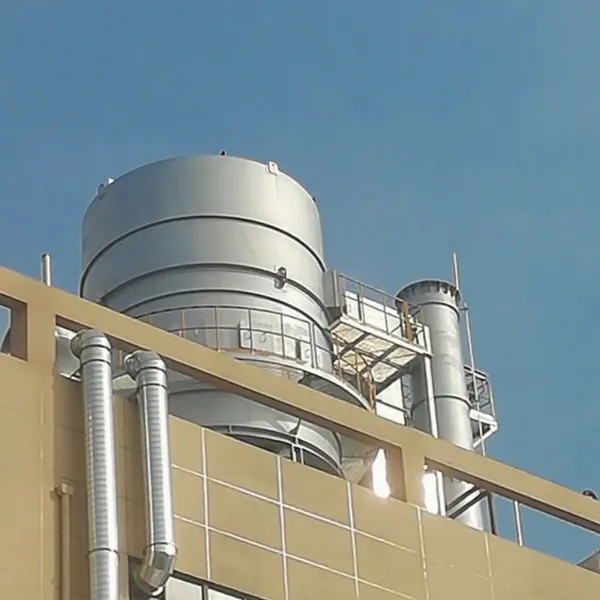
RTO Parameter Performance Table
| Indicator | Type | Remarks | ||
|---|---|---|---|---|
| 2-Chamber RTO | 3-Chamber RTO | Rotary RTO | ||
| Technology Generation | First Generation | Second Generation | Third Generation | |
| Number of Heat Storage Chambers | 2 | 3 | 12 | |
| Purification Efficiency | 95% | 99% | 99.5% | |
| Land Area | 100% | 130% | 65% | Based on two-chamber |
| Weight | 100% | 150% | 80% | Based on two-chamber |
| Cost | 100% | 150% | 130% | Based on two-chamber |
| Number of Valves | 4 | 9 | 1 | Failure Rate |
| Maximum Treatment Concentration | <1g | <5g | <10g | 50mg/m³ Emission Standard |
Our Competitive Advantages
1. Adaptable to high-oil exhaust gases: Utilizes hydrophobic ceramics and a high-temperature self-ignition design to prevent oil condensation and extend maintenance intervals; the dust removal system features a detachable and washable design, reducing operating costs.
2. High waste heat recovery efficiency: A plate heat exchanger and waste heat boiler are installed at the RTO’s downstream end, providing a stable heat source for the baking oven, achieving energy conservation and emission reduction; heat recovery rate reaches up to 95%.
3. Overall cost advantage: Compared to European and American brands, overall investment and operating costs are reduced by 20-40%; local installation guidance and after-sales support are provided, making maintenance more convenient for customers.
4. Safety and compliance: The system is equipped with online concentration monitoring and LFL alarms, meeting the stringent safety and hygiene standards of food factories.
FAQ:
Q1: Will installing an RTO (Remotely Operated Toaster) in a coffee roasting plant alter the flavor of the coffee beans?
A1: The RTO is installed at the end of the exhaust system and does not come into contact with the inside of the roaster, so it will not affect the roasting process or the flavor of the coffee beans. Instead, controlling exhaust emissions reduces odors and pollution within the plant, improving the quality of the production environment.
Q2: How are exhaust fluctuations handled during peak roasting periods?
A2: Our system uses buffer ducts and variable frequency fans to regulate airflow and is equipped with bypass valves to switch the bypass during RTO maintenance or low load periods, ensuring safety. During peak periods, the dust collector and RTO control systems automatically adjust the reversing time to ensure complete combustion.