1. Summary
In the demanding world of industrial wastewater management, petrochemical and pesticide facilities in Australia face unique challenges from volatile organic compounds (VOCs) and odorous emissions during biological treatment processes. At Ever-Power (Australia) Co., Ltd., we specialize in Regenerative Thermal Oxidizer (RTO) solutions tailored to these industries, ensuring compliance, efficiency, and long-term reliability. This article explores how RTO technology addresses these issues, drawing on real-world applications and emerging trends to help facility managers make informed decisions.
2. Understanding VOCs and Emissions in Petrochemical and Pesticide Wastewater Biological Treatment
Petrochemical and pesticide wastewater often contains high levels of organic pollutants, including benzene, toluene, xylene (BTX), phenols, and halogenated compounds from pesticide residues. During biological treatment, these substances volatilize into the air, creating low-to-medium concentration VOC streams mixed with high humidity and bio-aerosols. In Australia, where water scarcity and environmental protection are priorities, untreated emissions can lead to odor complaints, regulatory fines, and operational downtime.
RTO technology excels here by oxidizing VOCs at high temperatures (typically 760-850°C) with heat recovery efficiencies up to 95%, minimizing fuel use. For instance, in a typical Australian petrochemical plant treating 50,000 m³/h of exhaust, an RTO can achieve over 99% VOC destruction efficiency while recovering heat to preheat incoming gases, reducing energy costs by 30-50%. This is particularly vital in pesticide wastewater, where chlorine or sulfur compounds demand corrosion-resistant designs like those using 316L stainless steel or Hastelloy alloys.
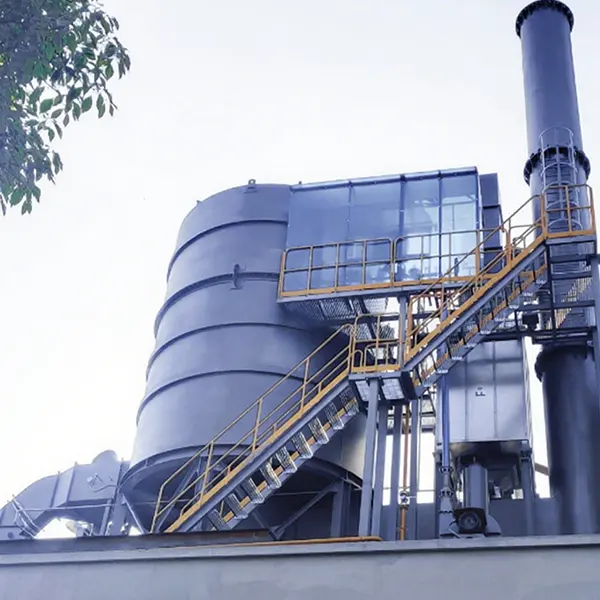
Compared to alternatives like activated carbon adsorption, RTOs offer lower long-term costs and better handling of variable loads from batch biological processes. Our classic rotary valve RTO product is engineered for these scenarios, featuring modular beds that prevent fouling from bio-sludge particulates.

3. Global and Local Regulations Driving RTO Adoption in Wastewater Treatment
Compliance is non-negotiable in Australia’s stringent environmental landscape. The National Pollutant Inventory (NPI) and state-specific guidelines, such as those from the New South Wales Environment Protection Authority (NSW EPA) or Victoria’s Department of Energy, Environment and Climate Action (DEECA), set VOC emission limits often below 20 mg/m³ for petrochemical sites. Pesticide facilities must also adhere to the Agricultural and Veterinary Chemicals Code, which emphasizes minimizing airborne contaminants to protect ecosystems like the Great Barrier Reef catchment areas.
Neighboring countries echo these standards with local nuances. In New Zealand, the Resource Management Act (RMA) requires VOC reductions in wastewater plants near sensitive areas like Auckland’s harbors, often mandating RTO-like technologies for odor control. Indonesia’s Regulation of the Minister of Environment No. 5/2019 limits VOCs to 50 mg/m³, pushing petrochemical firms in Java to upgrade biological treatment exhaust systems. Papua New Guinea’s Environment Act 2000 focuses on preventing pesticide runoff vapors from affecting biodiversity hotspots.
Globally, top industry players like the United States (under EPA’s Clean Water Act and MACT standards for VOCs <10 ppm), China (GB 37822-2019 for non-methane hydrocarbons <4 mg/m³), Germany (TA Luft with BAT requirements for 99% destruction), Japan (Air Pollution Control Act limiting odors to <1 OU/m³), South Korea (Clean Air Conservation Act for VOCs <20 mg/m³), India (Central Pollution Control Board norms for pesticide emissions <50 mg/m³), Brazil (CONAMA Resolution 430 for industrial effluents with VOC caps), Saudi Arabia (Royal Commission Environmental Regulations for petrochemical zones), Canada (CEPA with provincial VOC limits), and the UK (Environmental Permitting Regulations aligning with EU IED for BAT) all favor thermal oxidation for complex wastewater gases. These regulations often incentivize RTOs through carbon credits or subsidies, as seen in Australia’s Safeguard Mechanism, which rewards emission reductions.
4. Emerging Trends in RTO Technology for Wastewater Applications
As the push for net-zero intensifies, RTO systems are evolving beyond basic oxidation. One key trend is integrating carbon capture and utilization (CCU) modules, where post-combustion CO₂ from RTO exhaust is captured using amine solvents and repurposed for enhanced oil recovery in petrochemical operations. In Australia, this aligns with the Carbon Capture and Storage (CCS) initiatives in Queensland’s Surat Basin, potentially reducing a facility’s carbon footprint by 20-30%.
Another innovation is hydrogen-fueled burners in RTOs, replacing natural gas to achieve zero-emission combustion. Trials in South Korea’s petrochemical hubs show hydrogen integration cuts NOx by 50% while maintaining 95% heat recovery. For pesticide wastewater, combining RTOs with zeolite wheel concentrators amplifies efficiency: low-concentration VOCs (e.g., 500 ppm) are concentrated 10-20 times before oxidation, slashing energy use by 40%. Sustainability analyses reveal that a 100,000 m³/h RTO in a Victorian pesticide plant could offset 500 tons of CO₂ annually through heat recovery, equivalent to planting 2,000 trees.
5. Customized RTO Solutions for Australian Petrochemical and Pesticide Challenges
Ever-Power specializes in bespoke RTO solutions for the unique challenges of Australian petrochemical and pesticide wastewater producers—from high-chlorine loads in coastal refineries to variable bio-sludge in outback treatment plants. Our engineering team conducts on-site exhaust profiling to size pre-filters, select corrosion-resistant alloys, and optimize heat recovery based on your utility needs. With service hubs in Sydney and Perth, we offer rapid spare parts delivery, operator training in English, and 24/7 remote diagnostics. Unlike generic suppliers, we deliver full turnkey projects including civil works coordination, commissioning, and compliance documentation aligned with NSW EPA or VIC DEECA requirements. Every system is factory-tested before shipment to ensure seamless startup.
6. Additional Unique Insights: Innovating for Sustainability
Beyond standard applications, consider RTOs paired with bio-scrubbers for hybrid treatment in pesticide wastewater—pre-removing ammonia and sulfides biologically before thermal oxidation, extending equipment life by 25% in humid environments like Brisbane. Another viewpoint: in arid Western Australia, RTO heat recovery can drive evaporative cooling for biological reactors, conserving water amid droughts. For global leaders like Saudi Arabia’s SABIC plants, we’ve seen RTOs reduce flaring by 15%, a model Australia could adopt for offshore petrochemicals.
Sustainably, calculate your RTO’s impact: A system handling 30,000 m³/h at 95% efficiency avoids 1,200 tons of VOC emissions yearly, equivalent to removing 250 cars from roads. In Indonesia’s pesticide hubs, this translates to biodiversity protection in rainforests. These integrations highlight RTOs as not just compliance tools but strategic assets for decarbonization.
7. Related Solutions

8. Frequently Asked Questions (FAQ)
Q1. How much does an RTO system cost for petrochemical wastewater treatment in Sydney, Australia?
A1. Costs typically range from AUD 500,000 to 2 million depending on capacity (e.g., 20,000-100,000 m³/h) and custom features like corrosion resistance. Contact us at #contacts for a tailored quote based on your site’s VOC profile.
Q2. What is the best RTO supplier for pesticide wastewater biological treatment in New South Wales?
A2. Ever-Power (Australia) Co., Ltd. stands out with local service hubs and compliance with NSW EPA standards, offering turnkey solutions that integrate NMP recovery for cost savings.
Q3. Where can I find RTO installation services for petrochemical plants in Perth, Western Australia?
A3. Our Perth hub provides full installation, including on-site profiling and factory-tested systems, ensuring quick startup aligned with WA DER regulations.
Q4. Which RTO model handles high-humidity waste gas from pesticide treatment in Queensland?
A4. Our rotary valve RTO excels in humid conditions, with pre-filters to prevent fouling and 95% heat recovery to combat coastal moisture challenges.
Q5. When should I upgrade my VOC control system for petrochemical wastewater in Victoria?
A5. Upgrade when emissions exceed VIC DEECA limits (e.g., <20 mg/m³ NMHC); our systems achieve 99% destruction with minimal downtime during installation.
Q6. How to calculate energy savings from RTO in pesticide wastewater plants in Indonesia?
A6. For a 50,000 m³/h system, expect 30-40% fuel reduction via 95% heat recovery; we provide free audits to estimate savings under Indonesian Regulation No. 5/2019.
Q7. What are the maintenance costs for RTO in New Zealand’s petrochemical wastewater facilities?
A7. Annual maintenance averages NZD 50,000-100,000, including valve inspections; our 24/7 diagnostics minimize this, complying with RMA odor controls.
Q8. Where to get a quote for RTO suppliers serving pesticide treatment in Papua New Guinea?
A8. Reach out via #contacts for competitive quotes; we handle remote logistics and ensure systems meet PNG Environment Act standards for VOC limits.
Q9. Which features make RTO ideal for biological treatment exhaust in South Korean petrochemical sites?
A9. Features like hydrogen burners for low-NOx and zeolite concentrators for low-VOC streams ensure compliance with Clean Air Conservation Act, with quotes starting at KRW 500 million.
Q10. How does RTO pricing compare for wastewater plants in Brazil versus Australia?
A10. Brazilian systems under CONAMA 430 cost 10-20% less due to scale, but our Australian models include premium alloys for harsher conditions; get a comparative quote today.
Editor: PXY