RTO For Ventilation Air Methane (VAM)
This is one of the last bastions of carbon emission reduction. According to the UNECE 2025 VAM guidelines, mine ventilation air contains 0.1%-1% methane.
Harmful gas components in VAM
| Gas Type | Chemical Formula | Source | Concentration Range | Toxicity/Hazard |
|---|---|---|---|---|
| Methane | CH₄ | Mine ventilation dilution | 0.5–1.0% (typical) | Greenhouse gas (non-toxic but flammable/explosive) |
| Carbon Monoxide | CO | Blasting, coal spontaneous combustion | 0.01–0.1% | Highly toxic, asphyxiating gas (>50 ppm harmful) |
| Nitrogen Oxides | NOₓ | Ventilation system high-temperature reactions | 10–50 ppm | Respiratory irritant, forms photochemical smog |
| Polycyclic Aromatic Hydrocarbons | PAHs (e.g., benzo[a]pyrene) | Byproducts of coal combustion/pyrolysis | 0.1–10 μg/m³ | Strong carcinogen (requires complete decomposition) |
| Acidic Gases | SO₂, H₂S | Sulfur-containing minerals in coal | 0.1–5 ppm | Corrosive, pungent odor |
| Particulate Matter | PM2.5 | Coal dust, combustion residues | 10–100 μg/m³ | Respiratory diseases, reduced visibility |
| Odorous Compounds | H₂S, NH₃ | Coal mine anaerobic environment | 0.5–20 ppm | Strong irritant odor (H₂S: rotten egg smell) |
| Volatile Organic Compounds | VOCs (benzene, toluene, etc.) | Coal tar volatilization | 0.05–5 ppm | Toxic, carcinogenic, photochemically active |
* NOTE: Methane (CH₄) is the main component (>95%), but RTO is not suitable for treating methane (due to low concentration and high energy consumption; catalytic combustion or thermal oxidizers are more commonly used in industry).
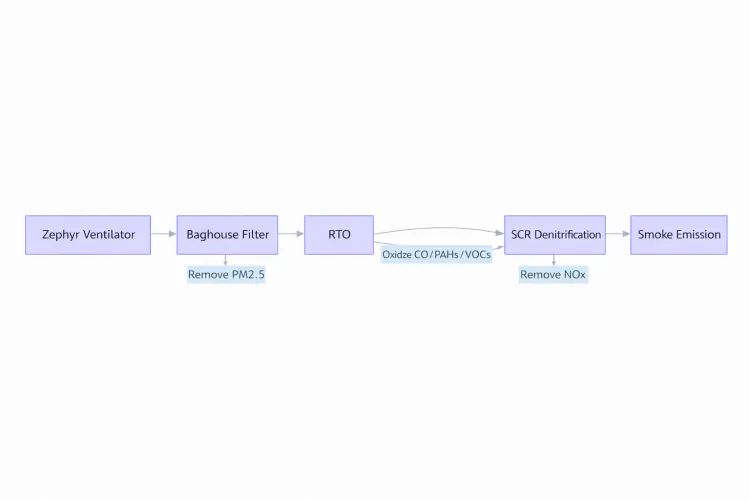
* NOTE: Harmful gases that truly require RTO treatment: CO, PAHs, acidic gases, odors, VOCs, PM2.5 (requires pre-treatment).
Gases that RTO can effectively handle:
%
Gas Purification Rate
| Gas Type | RTO Treatment Effect | Applicable Conditions |
|---|---|---|
| Polycyclic Aromatic Hydrocarbons (PAHs) | >99% decomposition | High-temperature complete oxidation to CO₂ + H₂O |
| Volatile Organic Compounds (VOCs) | >99% removal | Effective for benzene, toluene, etc. |
| PM2.5 | Requires pre-treatment | RTO cannot directly process particulate matter |
| NOx | RTO generates NOx | High-temperature N₂ + O₂ → NOₓ |
Noxs
Odor
Haps
PM 2.5
Wam
Acidic Gas
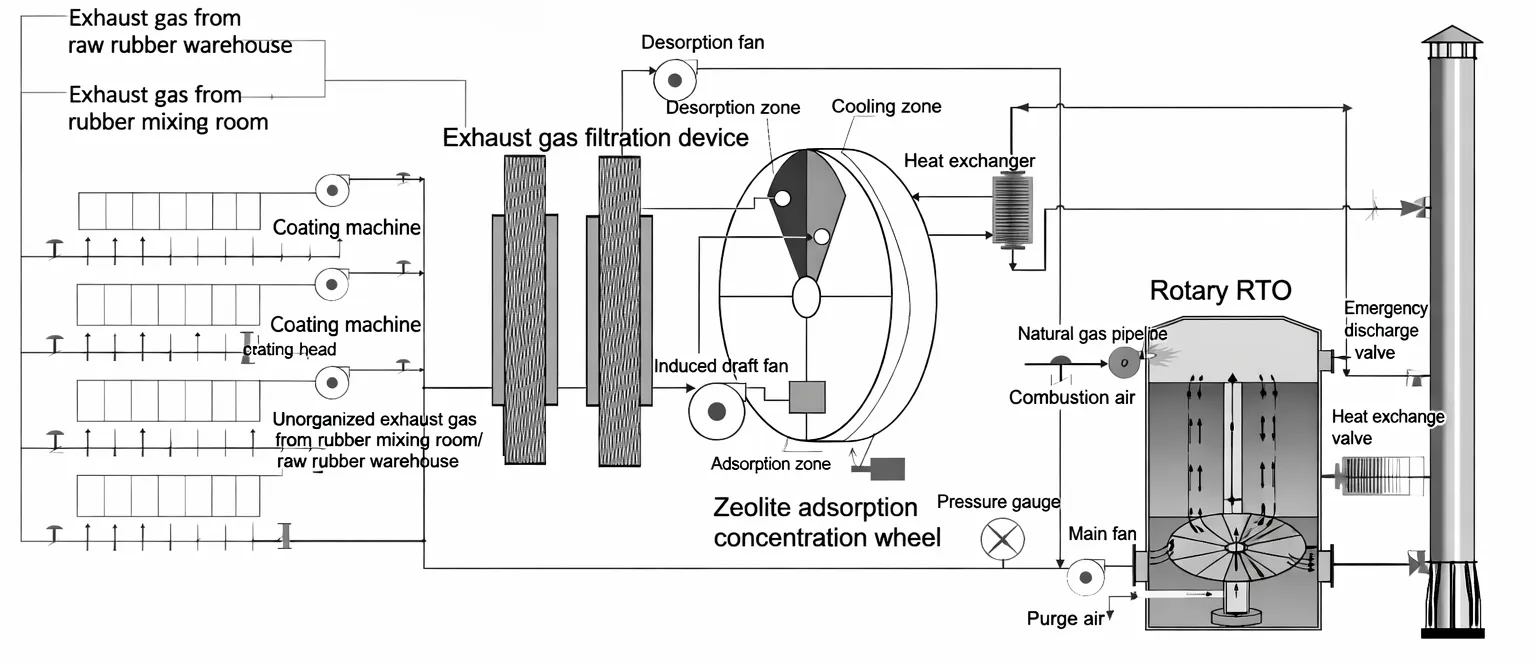
RTO Working Principle Of VAM
Key Technical Considerations in VAM Treatment
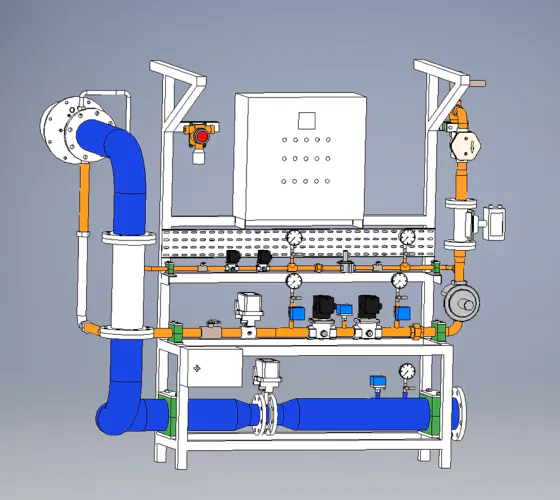
🔹 Explosion Prevention and Safety Control
VAM is a flammable substance; therefore, RTO systems must incorporate the following safety measures:
-
Control the inlet VAM concentration to below 25% of the LEL (Lower Explosive Limit)
-
Install online LEL monitoring systems and emergency bypass ducts
-
Incorporate flashback prevention and flame arrestor designs
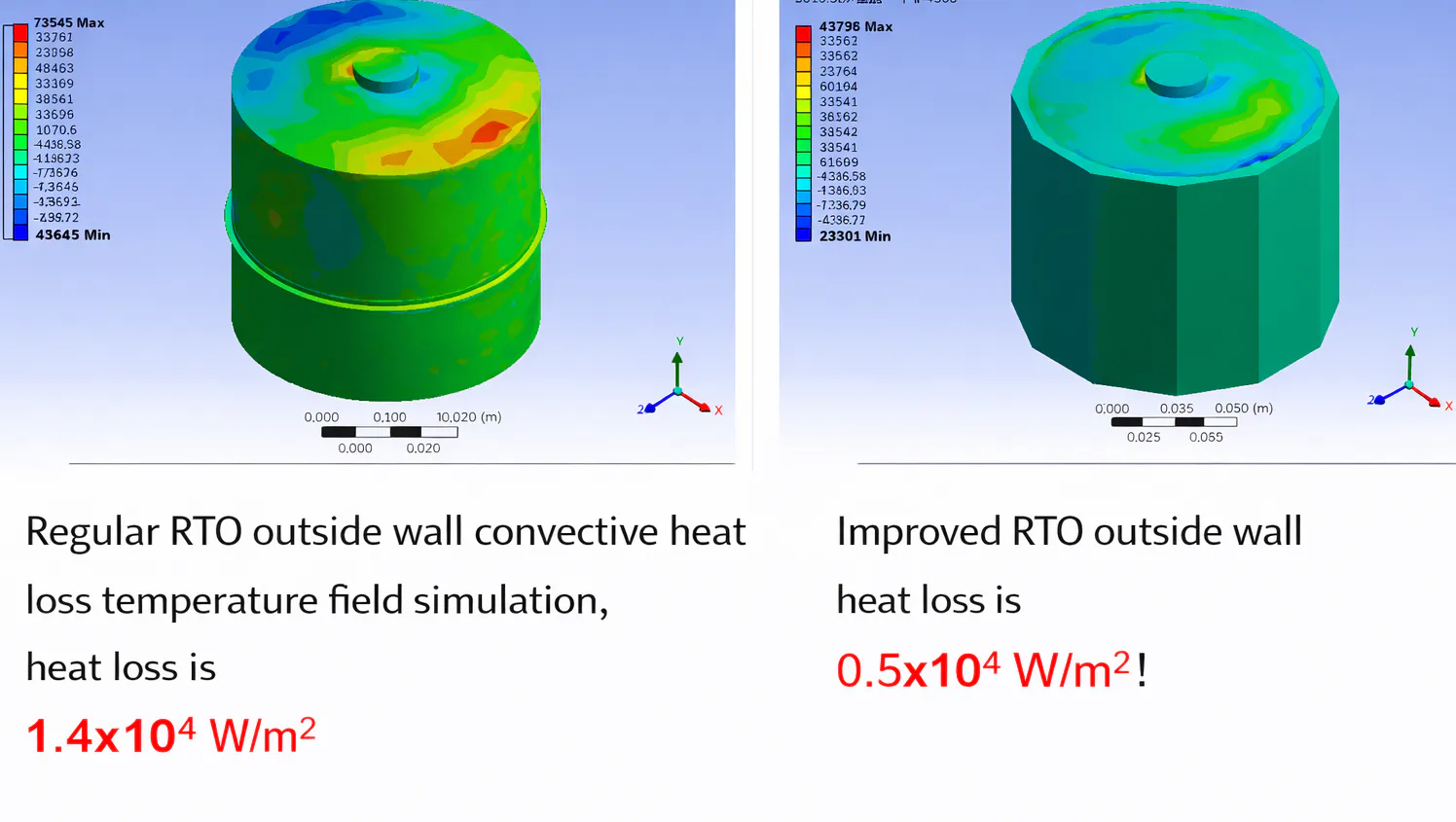
🔹 Autothermal Operation
When the VAM concentration reaches a sufficient level:
-
The heat released from oxidation can sustain the operating temperature of the system
-
The RTO can operate with zero or very low auxiliary fuel consumption
-
Operating costs are significantly reduced
🔹 By-product Control
-
Under normal operating conditions, the primary oxidation products are CO₂ and H₂O
-
Proper temperature control helps suppress side reactions and coke formation
-
Avoid low-temperature operation that may lead to incomplete oxidation
Recommended RTO system integration solution (For VAM)
• Technology: Thermal bypass RTO (VAM-RTO).
• Challenges: Extremely high airflow (>500,000 m³/h), low methane concentration, need to maintain self-sustaining operation (self-heating equilibrium point is usually around 0.2% concentration), and requires extremely high-level flashback prevention safety design.
Comparison of RTO and TO/CO systems in VAM
| Comparison Item | RTO (Regenerative Thermal Oxidizer) |
TO (Thermal Oxidizer) |
CO (Catalytic Oxidizer) |
|---|---|---|---|
| Oxidation Method | High-temperature oxidation + regenerative heat recovery | Direct high-temperature oxidation | Low-temperature catalytic oxidation |
| Typical Operating Temperature | 750–900°C | 750–900°C | 250–400°C |
| Heat Recovery Efficiency | ≥95% (ceramic media) | ≤60% (heat exchanger) | Generally none |
| Catalyst Required | No | No | Yes |
| VAM Destruction Efficiency | ≥99% | ≥99% | 95–98% |
| Adaptability to Concentration Fluctuation | Very strong | Strong | Weak |
| High VAM Concentration Handling | Excellent (autothermal operation possible) | Acceptable but high fuel consumption | Risk of catalyst deactivation |
| Low VAM Concentration Handling | Stable operation | High energy consumption | More suitable |
| Fuel Consumption | Lowest (can be self-sustaining) | Highest | Low |
| Electric Power Consumption | Medium | Low | Medium |
| Long-term Operating Cost | Lowest | High | Medium |
| Sensitivity to Energy Prices | Low | High | Medium |
| LEL Control Requirement | <25% LEL (standard configuration) | <25% LEL | <10–15% LEL |
| Explosion Prevention Capability | Strong | Strong | Relatively weak |
| Flashback Risk | Low | Medium | High (catalyst bed) |
| Continuous Operation Stability | Very high | High | Sensitive to contamination |
| Core Component Service Life | Ceramic media ≥10 years | Burner 5–8 years | Catalyst 2–4 years |
| Main Wear Parts | Valves, seals | Heat exchanger | Catalyst |
| Resistance to Poisoning | Very strong | Strong | Weak (VAM by-products) |
| Maintenance Complexity | Medium | Low | High |
| Initial Investment (CAPEX) | High | Medium | Medium |
| Life Cycle Cost | Lowest | High | Medium to high |
| Suitability for Long-term Operation | Highly suitable | Average | Limited |
Our RTO’s technological iteration

| Performance Comparison Table of Different RTO Types | ||||
|---|---|---|---|---|
| Type | 2-Chamber RTO | 3-Chamber RTO | Rotary Valve RTO | Remarks |
| Technology Generation | 1st Generation | 2nd Generation | 3rd Generation | |
| Technological Advancement Features | Added Purge Function | Adopts Rotary Air Exchange Valve | 2.5-chamber type has purge function; fan power is 1.5 times higher | |
| Number of Regenerators | 2 | 3 | 12 | Airflow design per regenerator ≤ 50,000 m³/h |
| Purification Efficiency | 95% | 99% | 99.5% | |
| Thermal Efficiency | 90% | 95% | 97.0% | Temperature difference between inlet and outlet ≤ 20°C |
| Floor Area | 100% | 130% | 65% | Based on 2-chamber RTO |
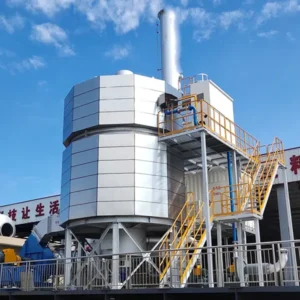
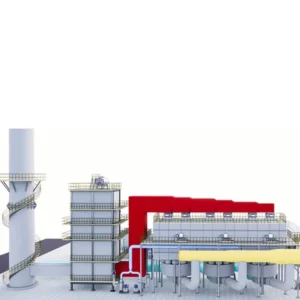
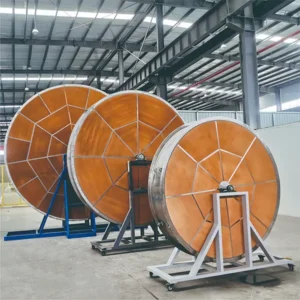
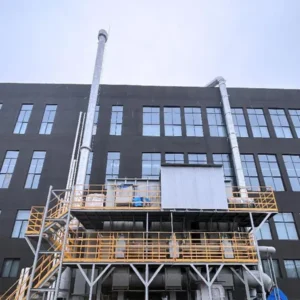
RTO Product – Advantages
Rotary RTO, Third-Generation RTO With 12 Chambers
Small footprint
High thermal efficiency
High purification efficiency
Minimal pipeline pressure fluctuations
Low maintenance frequency and costs
Application Scenarios Summary (for VAM)
✅ RTO — Preferred Solution
Suitable for:
-
VAM production units
-
VAE emulsions, adhesives, and resin industries
-
High/medium VAM concentration, high air volume, continuous operation
-
Projects requiring low long-term operational costs
⚠️ CO — Conditionally Used
Only suitable for:
-
Low concentration, stable conditions
-
Waste gases with single components, no sulfur/halogen/high polymerization risks
-
Scenarios with high safety management requirements
⚠️ TO — Alternative Solution
Suitable for:
-
Low air volume
-
Short operation times
-
Scenarios where energy consumption is less critical
Why Choose Us?

FAQ:
Q1. What is the main advantage of using RTO for VAM treatment?
A1: The primary advantage of using an RTO for VAM treatment is its high removal efficiency, achieving up to 99% VAM destruction. Additionally, RTO systems offer excellent energy recovery, which reduces operational costs and ensures long-term efficiency for handling high-volume, fluctuating VAM emissions.
Q2. How does RTO compare to other VOC treatment technologies for VAM?
A2: RTO is more energy-efficient than many other VOC treatment technologies such as direct thermal oxidizers (TO) or catalytic oxidizers (CO). Unlike TO systems, RTOs regenerate heat from the exhaust gases, minimizing fuel usage and maximizing cost-effectiveness, making it the ideal choice for high-VAM emissions.
Q3. Can RTO handle fluctuating VAM concentrations during production cycles?
A3: Yes, RTO systems are highly adaptable to varying concentrations of VAM. The regenerative process helps maintain a steady treatment temperature, enabling RTO to handle sudden spikes in VAM levels without compromising destruction efficiency.
Q4. What are the typical operating temperatures for RTO when treating VAM emissions?
A4: RTO systems treating VAM generally operate at 750–900°C. This high temperature ensures complete oxidation of VAM into non-toxic by-products such as CO₂ and H₂O, achieving efficient destruction.
Q5. Are there any safety concerns when using RTO for VAM treatment?
A5: RTO systems are designed with several safety features, including explosion-proof mechanisms and fire prevention technologies, to ensure safe operation when handling VAM, which is a highly flammable compound. Proper maintenance and safety controls help mitigate any risks associated with VAM treatment.
Q6. Can RTO systems process other hazardous air pollutants alongside VAM?
A6: Yes, RTO systems can effectively handle a variety of hazardous air pollutants (HAPs) in addition to VAM, including volatile organic compounds (VOCs), polycyclic aromatic hydrocarbons (PAHs), acidic gases (e.g., SO₂, H₂S), and odorous compounds (e.g., H₂S, NH₃), making RTO a versatile solution for complex emission control.
Q7. How often do RTO systems require maintenance when processing VAM?
A7: RTO systems are relatively low-maintenance due to their robust design. However, periodic inspections are needed to check ceramic media for wear, valve seals, and the burner system to ensure optimal performance. Typical maintenance includes annual checks and cleaning to maintain efficiency.
Q8. Is RTO the most cost-effective solution for treating VAM emissions?
Q8: Yes, RTO is considered the most cost-effective solution for treating VAM emissions over the long term. The heat recovery mechanism allows the system to self-sustain its operation, reducing the need for external fuel. This results in lower operational costs compared to other technologies like TO or CO.
Q9. What kind of pre-treatment is required for VAM in RTO systems?
A9: VAM typically requires no pre-treatment before entering the RTO. However, in cases where VAM is combined with particulate matter (e.g., PM2.5), additional filtration or pre-treatment may be needed before the exhaust gas enters the RTO to prevent damage to the system’s components.
Q10. What are the by-products of VAM treatment in an RTO system?
A10: The by-products of VAM treatment in an RTO system are primarily carbon dioxide (CO₂) and water (H₂O), which are harmless and can be safely released into the atmosphere.