Applications of RTO in the composite materials and carbon fiber industries
Carbon fiber reinforced composite materials are widely used in aerospace, automotive lightweighting, and sports equipment manufacturing. During the production process, carbon fiber preforms are impregnated with epoxy resin or phenolic resin in a coating tank and cured, followed by high-temperature curing in an autoclave. As epoxy resin is heated, it releases oxygen-containing organic compounds such as styrene and phenol, with a relatively low airflow rate (3,000–20,000 m³/h) but a high concentration of 1–5 g/Nm³, accompanied by particulate matter. Given the high temperature and flammable nature of the resin, the waste gas treatment system must ensure both removal efficiency and compliance with safety requirements and material performance constraints.
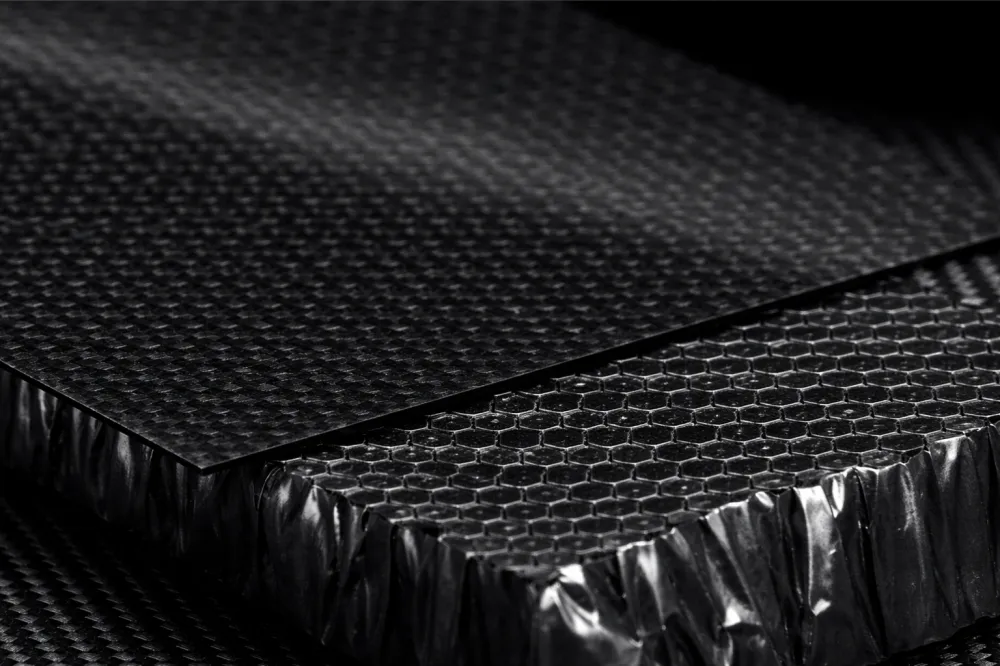
Sources of Hazardous Gases
in the Composites and Carbon Fiber Industries
| Process Stage | Hazardous Gases / Pollutants Emitted | Source Description |
|---|---|---|
| Raw Material Preparation & Sizing |
• Acrylonitrile • Dimethyl Sulfoxide (DMSO) • Dimethylformamide (DMF) • Ammonia (NH₃) |
Residual solvents volatilize during solvent spinning or sizing of polyacrylonitrile (PAN)-based carbon fiber precursor. DMF and DMSO are common spinning solvents; acrylonitrile is residual monomer. |
| Pre-oxidation (200–300°C) |
• Hydrogen Cyanide (HCN) • Ammonia (NH₃) • Carbon Monoxide (CO) • Low-molecular-weight VOCs (aldehydes, ketones) |
PAN fibers undergo cyclization, dehydrogenation, and oxidation reactions during staged heating in air, releasing nitrogen-containing toxic gases (HCN, NH₃) and organic fragments. |
| Carbonization (1000–1500°C, inert atmosphere) |
• Carbon Monoxide (CO) • Carbon Dioxide (CO₂) • Trace BTEX (benzene, toluene, ethylbenzene, xylene) • Tar / carbon black particulates |
Non-carbon elements (H, N, O) are released as gases at high temperature, primarily as CO. Poor temperature control may lead to formation of polycyclic aromatic hydrocarbons (PAHs). |
| Graphitization (>2500°C) |
• Trace amounts of CO and CO₂ • Volatile metal impurities (e.g., from catalysts) |
Gas emissions are significantly reduced, but trace heavy metal vapors may be present if metal-based catalysts are used. |
| Composite Molding (e.g., autoclave, compression molding) |
• Styrene • Toluene, Xylene • Acetone, Ethyl Acetate • Particulates (from cutting/grinding) |
Unsaturated polyester or epoxy resins release monomers (e.g., styrene) during curing; solvent-based mold release agents volatilize; post-processing generates dust. |
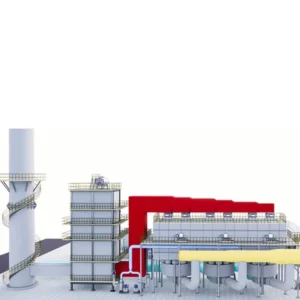
RTO Working Principle Diagram

1. Inlet Gas & Pre-filtration: It first passes through a dry filter to remove dust and particulates.
2. Adsorption Phase: The filtered gas is drawn by the adsorption fan into one of three parallel activated carbon adsorption/desorption towers.
- During this phase:
- VOCs are captured by the activated carbon.
- Cleaned air exits through the chimney and is released to atmosphere.
3. Desorption (Regeneration) Phase: When an adsorption tower becomes saturated:
- The desorption fan starts and draws in replenishing (fresh) air.
- This air is heated to 180–250°C by an electric heater.
- Hot air flows through the saturated carbon bed, desorbing concentrated VOCs.
- The high-concentration VOC-laden gas then enters the catalytic combustion chamber, where it is oxidized into CO₂ and H₂O over a catalyst at lower temperatures (typically 250–400°C).
4. Heat Recovery & Internal Circulation
- The hot treated gas exits the catalytic chamber and passes through a mixed-flow heat exchanger.
- Here, it preheats the incoming desorption air, significantly reducing energy consumption.
- Cooled exhaust gas flows through the discharge pipe to the chimney.
- Ambient cold air may also be introduced to assist in cooling.
RTO Process Design and Technical Features
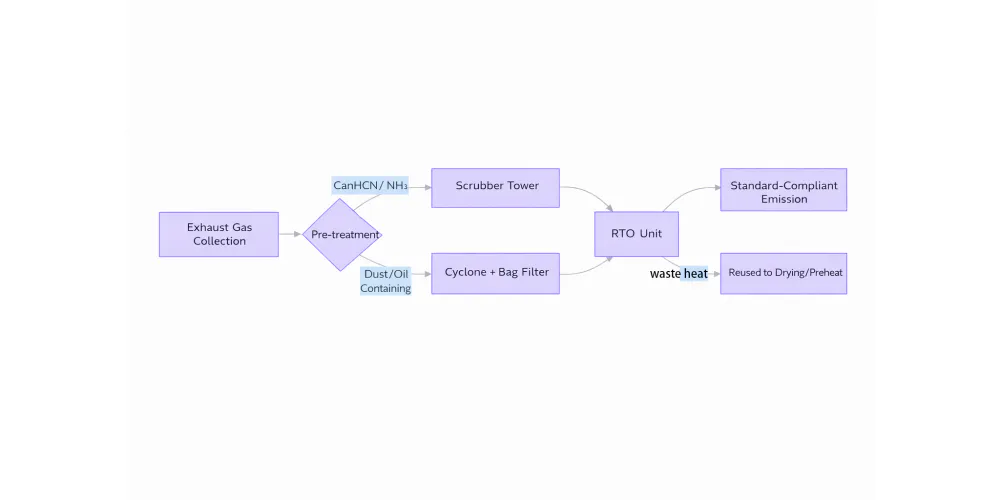
1. High-Temperature Pre-Treatment: To protect the regenerator beds, high-temperature bag filters or cyclone separators are first used to remove carbon fiber dust and resin particles. A heat exchanger is then employed to lower the exhaust gas temperature before it enters the RTO regenerator beds.
2. Dilution & Bypass: Dilute the exhaust gas by introducing cold air to keep the concentration of volatile organic compounds below 25% of the lower explosive limit (LEL). A bypass is installed to divert high-concentration exhaust gas released during autoclave curing, preventing overheating.
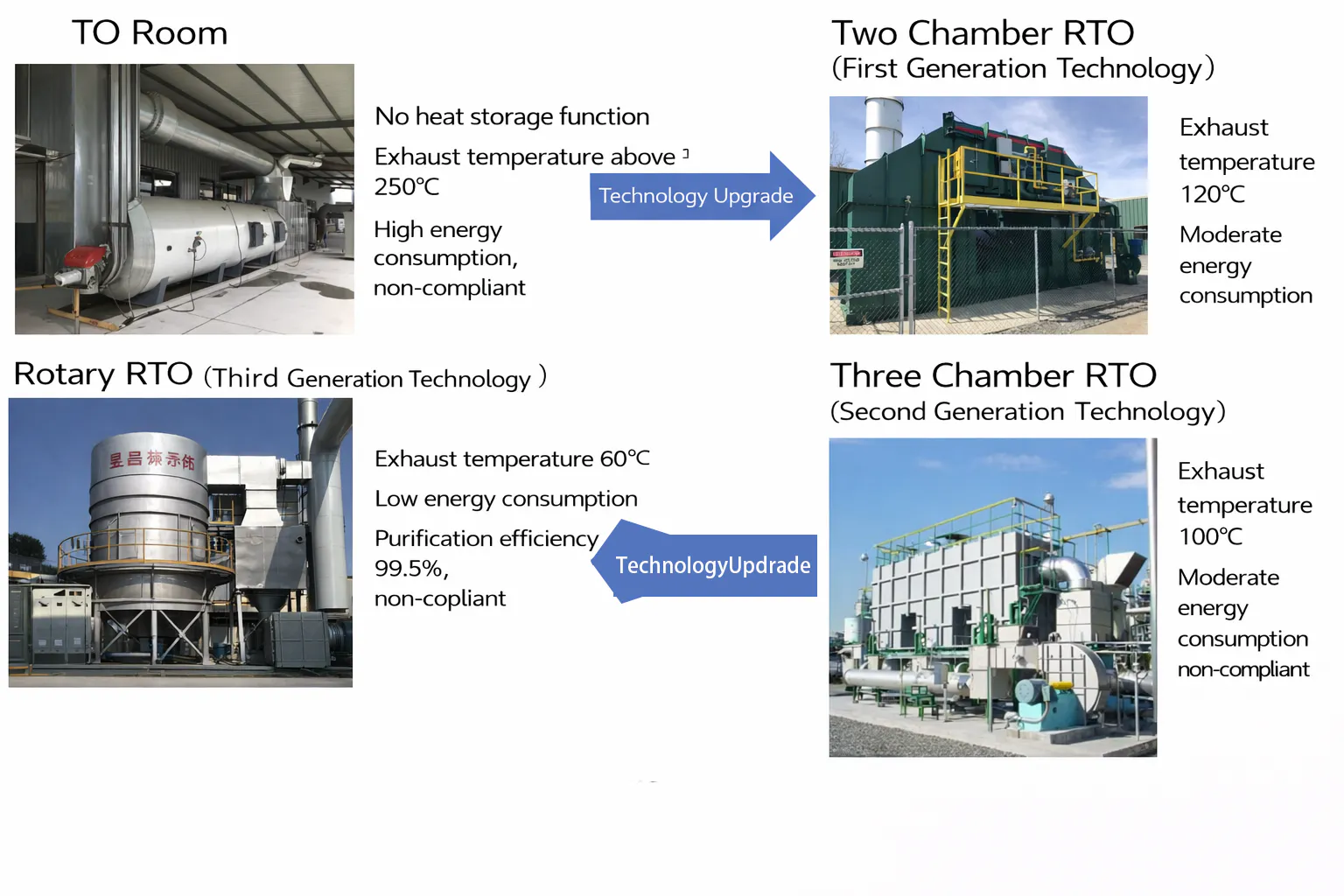

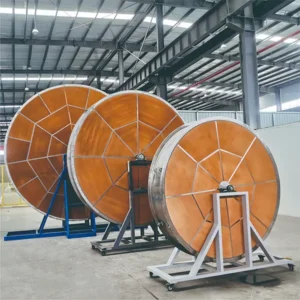
3. Three-Chamber Stainless Steel RTO: Constructed with corrosion-resistant stainless steel and special ceramic packing, featuring a fast-seal design for valve switching. For high-peak loads, fuel control can maintain auto-ignition. Once the modern RTO reaches stable operating temperature, it can run continuously and recover most of the heat.
4. Waste Heat Utilization: High-temperature flue gas from the RTO outlet preheats the hot air entering the production line or provides heat for autoclave preheating via a heat exchanger, improving energy utilization efficiency.
5. Monitoring & Safety: Equipped with LEL monitoring, pressure relief devices, and temperature alarms. For phenolic exhaust gas, an exhaust gas scrubber is also required to remove acidic gases.
Carbon fiber/composite materials industry: mainstream processing and manufacturing solutions.
RTO Parameter Performance Table
| Indicator | Type | Remarks | ||
|---|---|---|---|---|
| 2-Chamber RTO | 3-Chamber RTO | Rotary RTO | ||
| Technology Generation | First Generation | Second Generation | Third Generation | |
| Number of Heat Storage Chambers | 2 | 3 | 12 | |
| Purification Efficiency | 95% | 99% | 99.5% | |
| Land Area | 100% | 130% | 65% | Based on two-chamber |
| Weight | 100% | 150% | 80% | Based on two-chamber |
| Cost | 100% | 150% | 130% | Based on two-chamber |
| Number of Valves | 4 | 9 | 1 | Failure Rate |
| Maximum Treatment Concentration | <1g | <5g | <10g | 50mg/m³ Emission Standard |
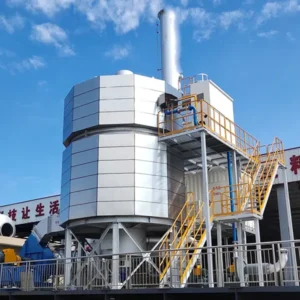
Ever-Power Advantages
1. Specialized Corrosion-Resistant Materials & Self-Cleaning Design: To address the corrosiveness of phenolic and epoxy gases, corrosion-resistant ceramics and high-temperature alloys are selected, paired with automatic spray cleaning, to extend equipment service life.
2. Rapid Response & Energy-Saving Control: The system is designed to warm up and start within minutes, meeting the needs of intermittent production. The bypass design prevents system overheating and reduces fuel consumption.
3. Customized Services: We can provide integrated turnkey solutions such as Dust Removal + RTO or Concentration + RTO based on customer requirements. With technical support centers in Europe, the U.S., and the Middle East, we offer local training and maintenance services for clients.
Why You Needs RTO?
Relevant laws and regulations
| Regulatory Level | Key Requirements |
|---|---|
| State-Level (NSW & VIC) |
|
| Federal Policy |
|
| Industry Compliance |
|
| Key Differences vs. EU/US |
|
FAQ:
Q1. What is an RTO and why is it used in the Australian carbon fiber/composites industry?
A1: An RTO (Regenerative Thermal Oxidizer) is an air pollution control technology that destroys volatile organic compounds (VOCs), hazardous air pollutants (HAPs), and odors by oxidizing them at high temperatures. In carbon fiber and composites manufacturing, RTOs are used to treat emissions from resin curing, solvent evaporation, and surface treatments to meet environmental standards and protect worker health.
Q2: What kinds of emissions from composites manufacturing require RTO treatment?
A2: Typical emissions include styrene (from unsaturated polyester resins), VOCs from epoxy and other resins, solvents from cleaning processes, and thermal decomposition gases. These can be harmful and odorous, prompting the need for thermal oxidation to convert them safely to CO₂ and H₂O.
Q3: How does an RTO help Australian composites manufacturers comply with air quality regulations?
A3: Australian states enforce strict air emissions limits under environmental protection laws. RTO systems reduce VOC and HAP emissions to acceptable levels before release into the atmosphere, helping composites facilities comply with EPA Victoria, NSW EPA, Queensland DES, and National Environment Protection Measures (NEPM).
Q4: Is RTO technology cost‑effective for carbon fiber and composites operations?
A4: Yes. Although initial RTO investment can be significant, energy recovery (via heat regeneration), reduced operating costs, and compliance with environmental regulations make RTOs cost‑effective over the long term. Energy savings from thermal recovery can significantly offset running costs.
Q5: Do RTO systems in this industry capture heat for reuse?
A5: Yes. A key advantage of RTOs is heat regeneration. Ceramic media beds capture thermal energy from exhaust gases and use it to preheat incoming waste gases. This reduces auxiliary fuel use and improves overall energy efficiency in production lines.
Q6: What safety considerations are important when operating an RTO in composites manufacturing?
A6: Safety considerations include:
-
High temperature operation (>800°C)
-
Proper ventilation and gas monitoring
-
Explosion protection for flammable VOC concentrations
-
Regular maintenance of burner systems and ceramic beds
-
Compliance with Australian workplace safety standards (Safe Work Australia)
A7: Can RTO systems handle varying production loads typical in composite facilities?
Q7: Modern RTOs are designed with variable control systems that adjust to changes in VOC concentration and flow rates, so they perform efficiently during low and high production periods, maintaining emissions control without excessive energy use.
Q8: How is RTO performance measured in the carbon fiber/composites sector?
A8: Performance is typically measured by:
-
VOC destruction efficiency (target >95%)
-
Outlet emissions concentrations (ppm levels of regulated compounds)
-
Fuel consumption rates
-
Pressure drop across ceramic media
-
Compliance with permit conditions
Q9: Are there special maintenance needs for RTO units in this industry?
A9:Yes. Key maintenance requirements include:
-
Inspecting and cleaning ceramic heat exchange media
-
Burner tuning and inspection
-
Monitoring and replacing seals
-
Checking control valves and temperature sensors
-
Ensuring proper insulation and duct integrity
Q10: Are there alternative VOC control technologies suitable for carbon fiber/composites operations in Australia?
A10: Alternatives to RTO include:
-
Catalytic oxidizers (effective at lower temperatures)
-
Carbon adsorption systems
-
Biofiltration (for lower‑concentration streams)
-
Thermal recuperative oxidizers